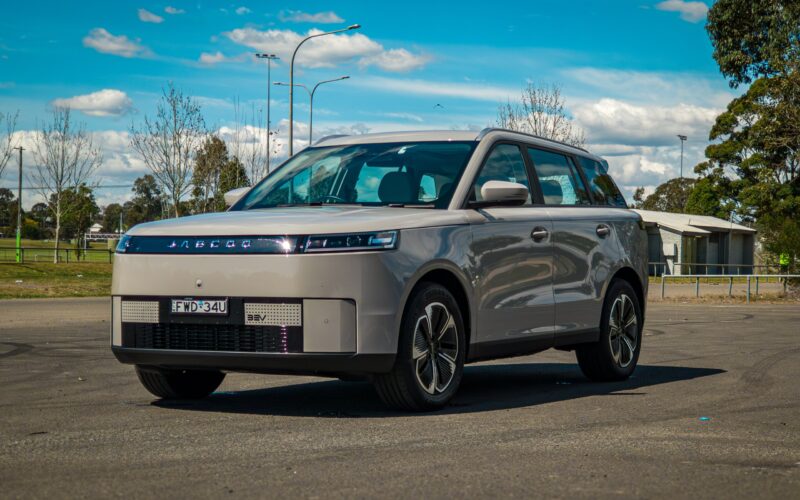
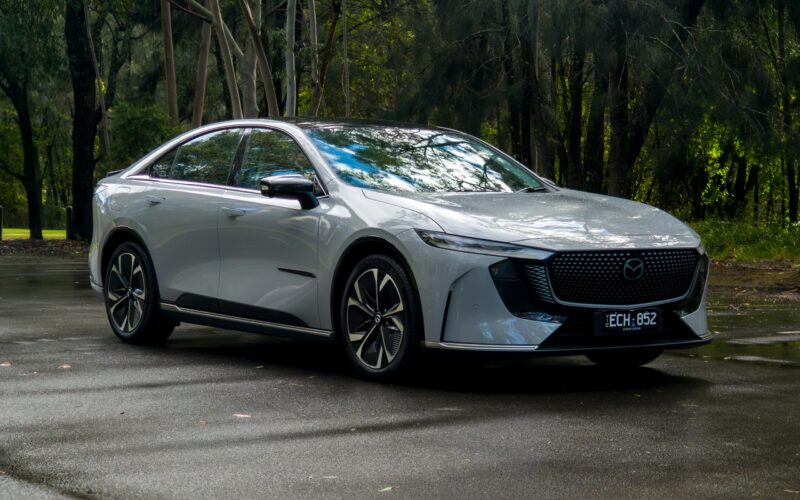
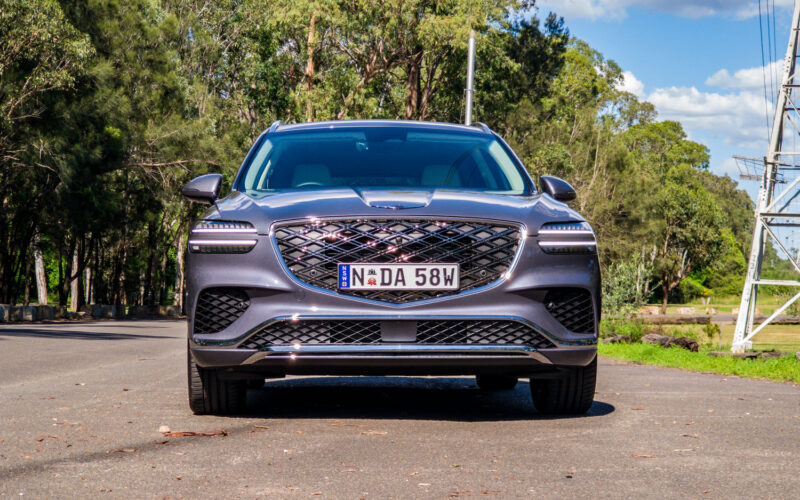
There is a number here that barely makes sense. The 2026 GWM Haval H6 Ultra PHEV AWD is a mid-size family SUV from around $50,990 drive-away, and it sprints to 100km/h in 4.8 seconds while still covering close to 100km on electric power alone.
That is quick-car pace and genuinely frugal running in the one easygoing family SUV. It is smooth, quiet and barely on speaking terms with a petrol station, and it makes a lot of pricier cars look ordinary.
It lands in the fast-filling mid-size plug-in class, where the BYD Sealion 6 has been cleaning up, and undercuts most established petrol and hybrid family SUVs on power for the money. The Ultra AWD sits at the top of the H6 PHEV range, with the twin-motor Hi4 system, a panoramic sunroof, a 14.6-inch screen and the full kit as standard. There is one real catch, which we will get to, but on smoothness, pace and outright value the H6 makes a serious case.
2026 GWM Haval H6 Ultra PHEV AWD — at a glance |
|
|---|---|
| Price (drive-away) | ~$50,990 (PHEV range from ~$47,990) |
| Powertrain | 1.5L turbo plug-in hybrid, twin-motor Hi4 AWD |
| Power / torque | 268kW / 760Nm (combined) |
| 0–100 km/h | 4.8 seconds (claimed) |
| Range / economy | ~100km EV (NEDC) · 1.1 L/100km combined · 5.3 L/100km battery-depleted |
| Warranty | 7 years / unlimited km (battery 8 years) |
| ANCAP | Unrated (PHEV not tested; petrol/hybrid H6 is 5-star, 2022) |
In this review
The Good |
The Not-So-Good |
|---|---|
| Genuinely quick: 268kW, 760Nm and a 4.8-second 0 to 100km/h, for family-SUV money | The plug-in H6 is ANCAP-unrated. The petrol and hybrid versions are 5-star, but this variant has not been tested |
| Around 100km of electric range, DC fast charging and vehicle-to-load, so it can run most of the week without petrol | DC charging tops out at 34kW, so a public top-up is slow. This is really a home and destination charger |
| Loaded for the price: 14.6-inch screen, panoramic sunroof, head-up display, 9-speaker audio and a 360-degree camera | At nearly two tonnes it is about calm comfort, not corners, and GWM’s long-term resale is still an unknown |
What does the 2026 GWM Haval H6 PHEV look like?
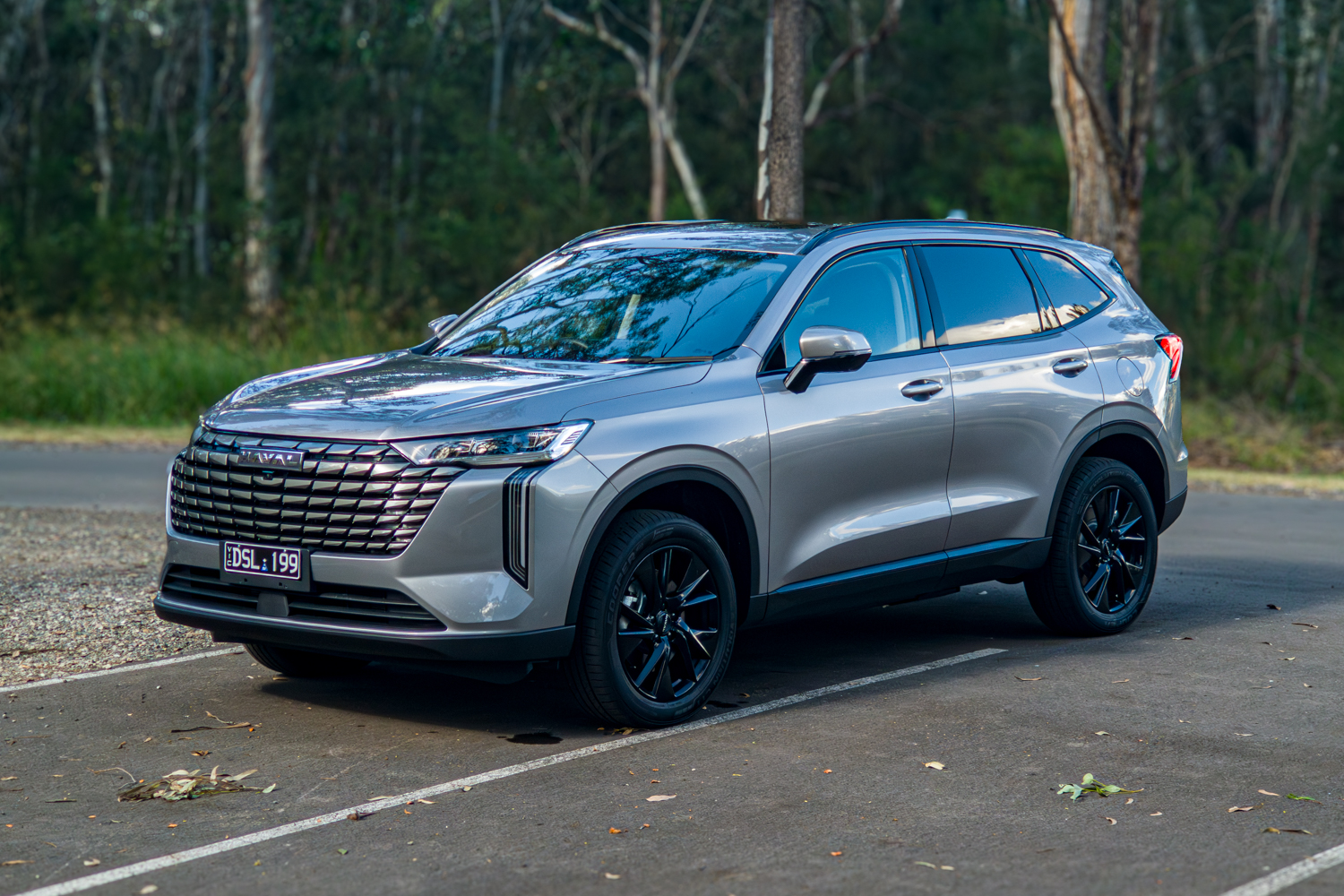
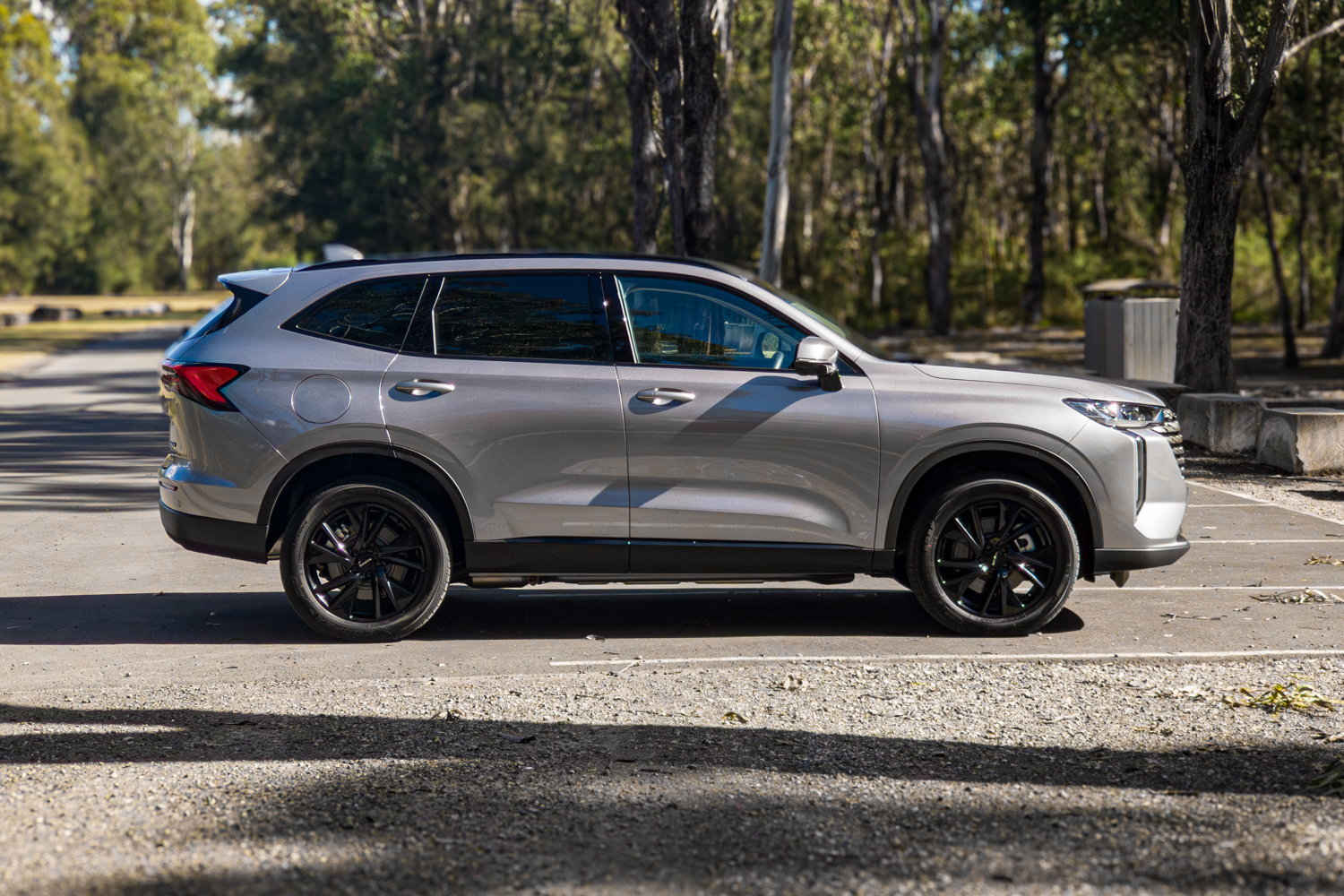
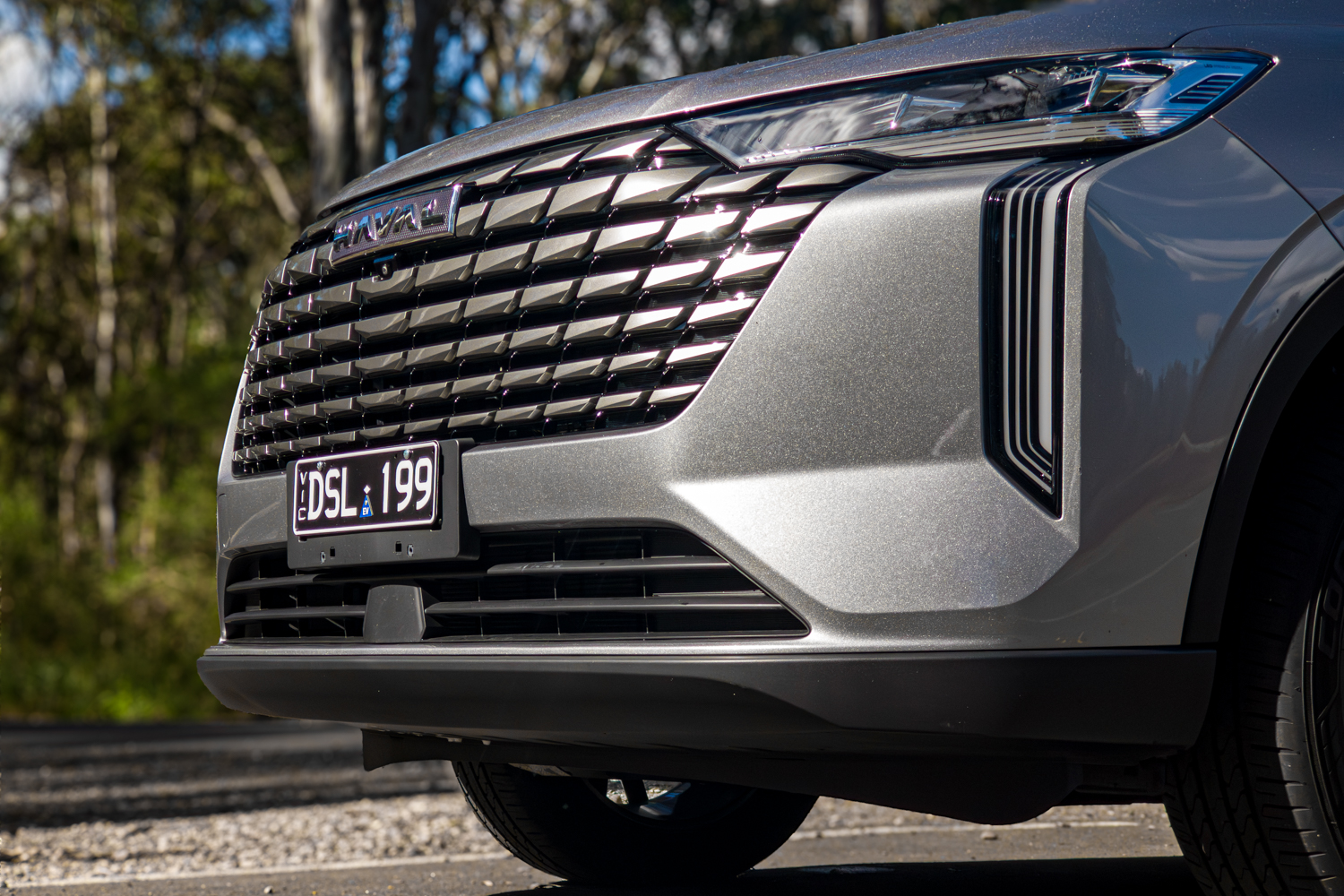
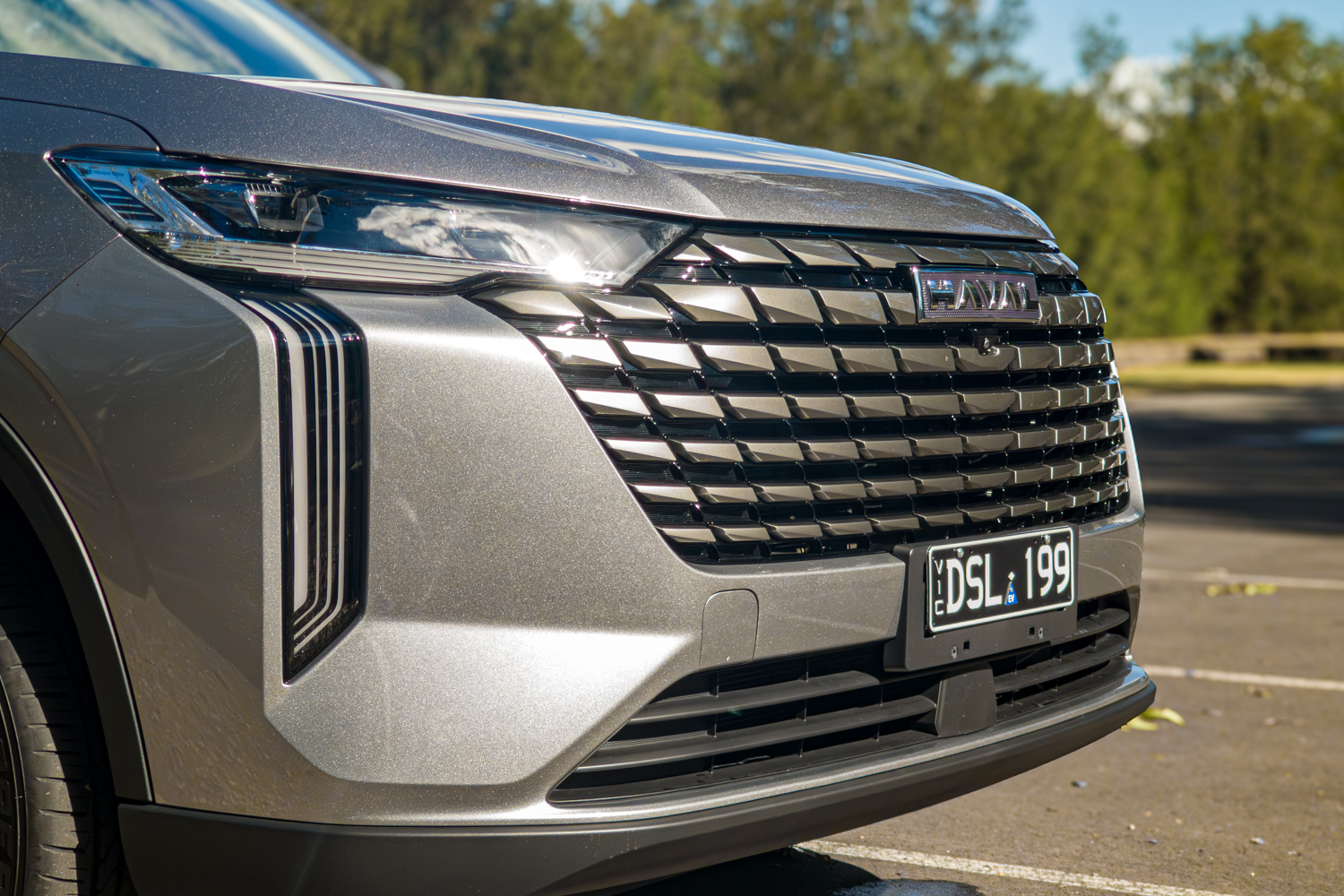
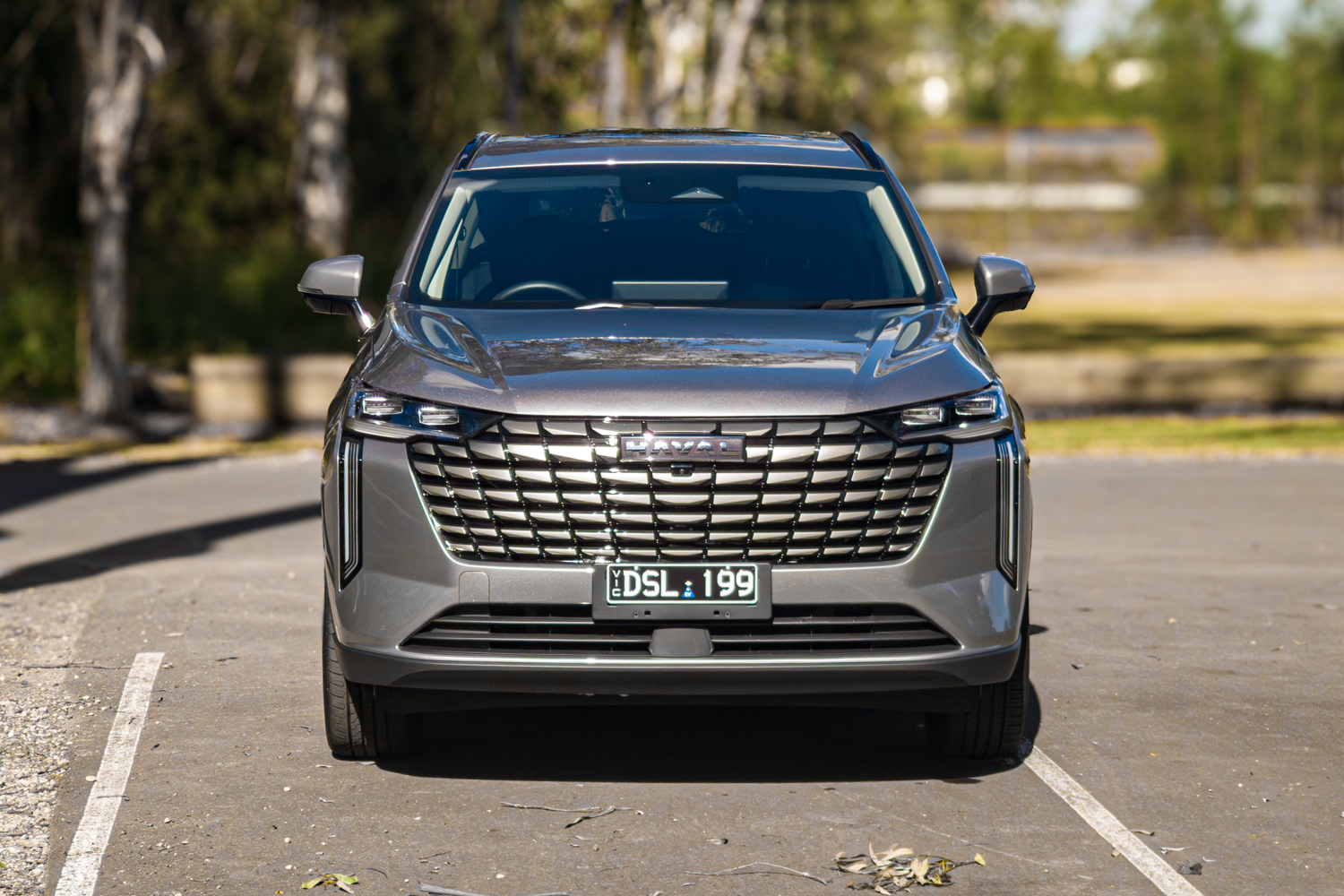
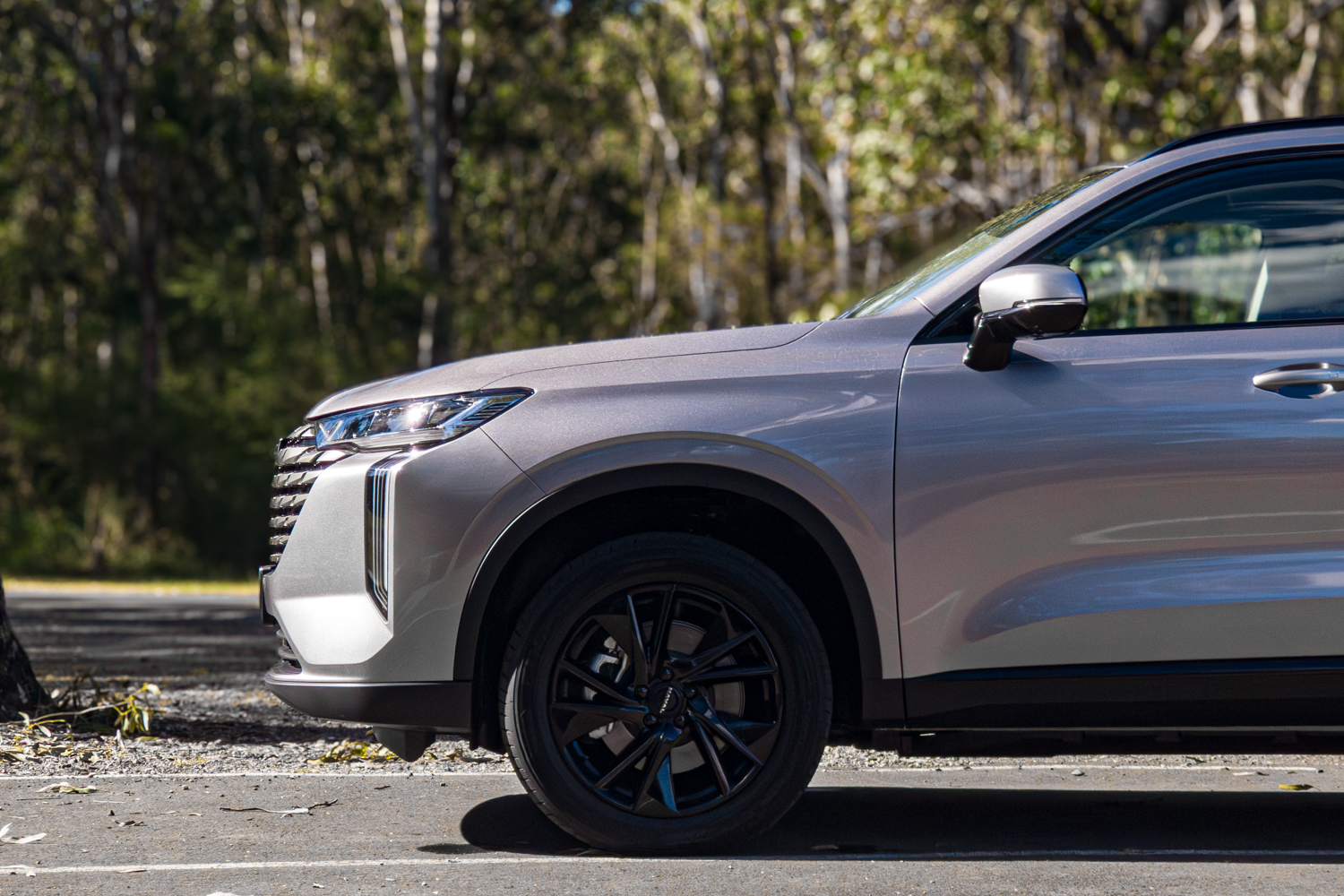
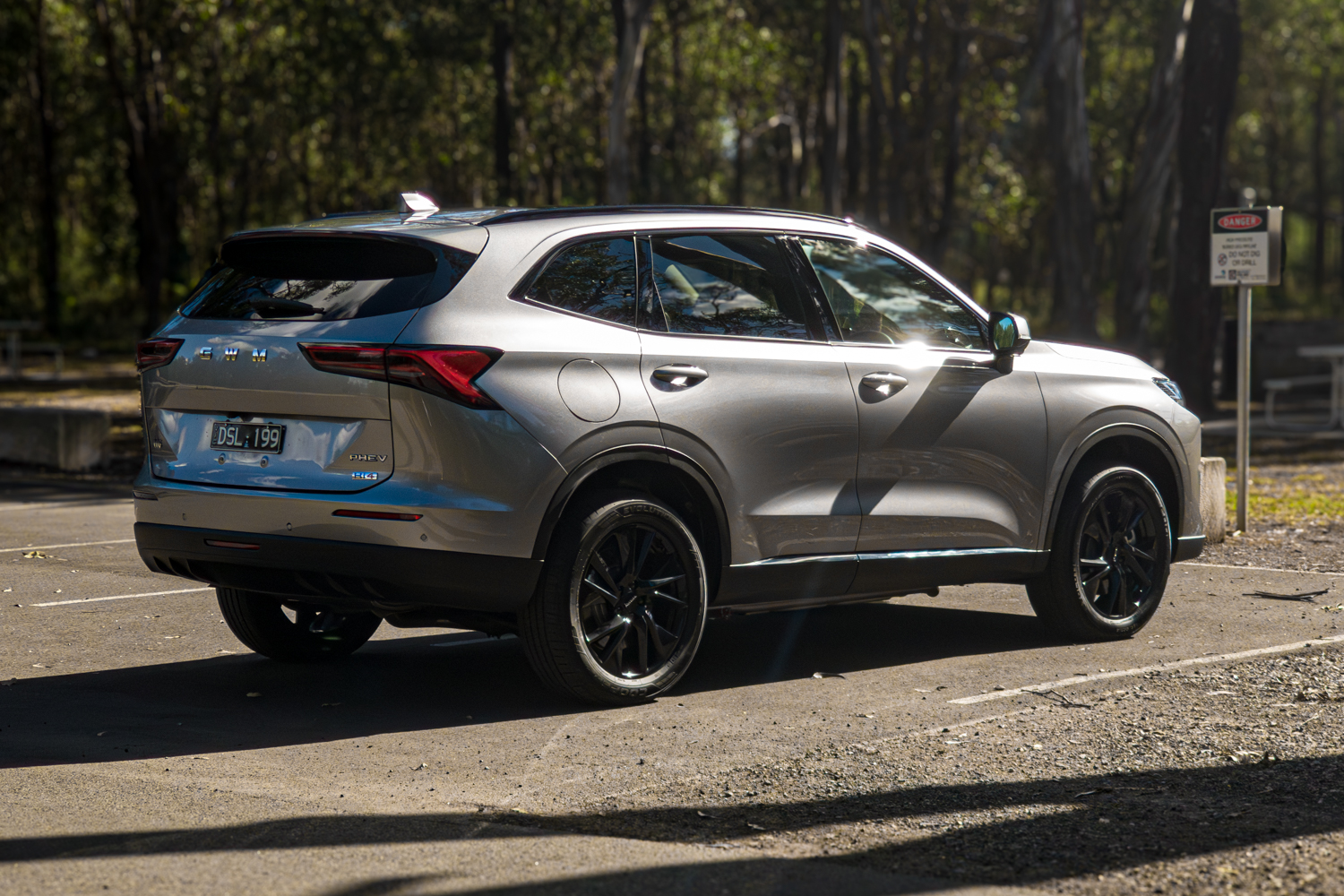
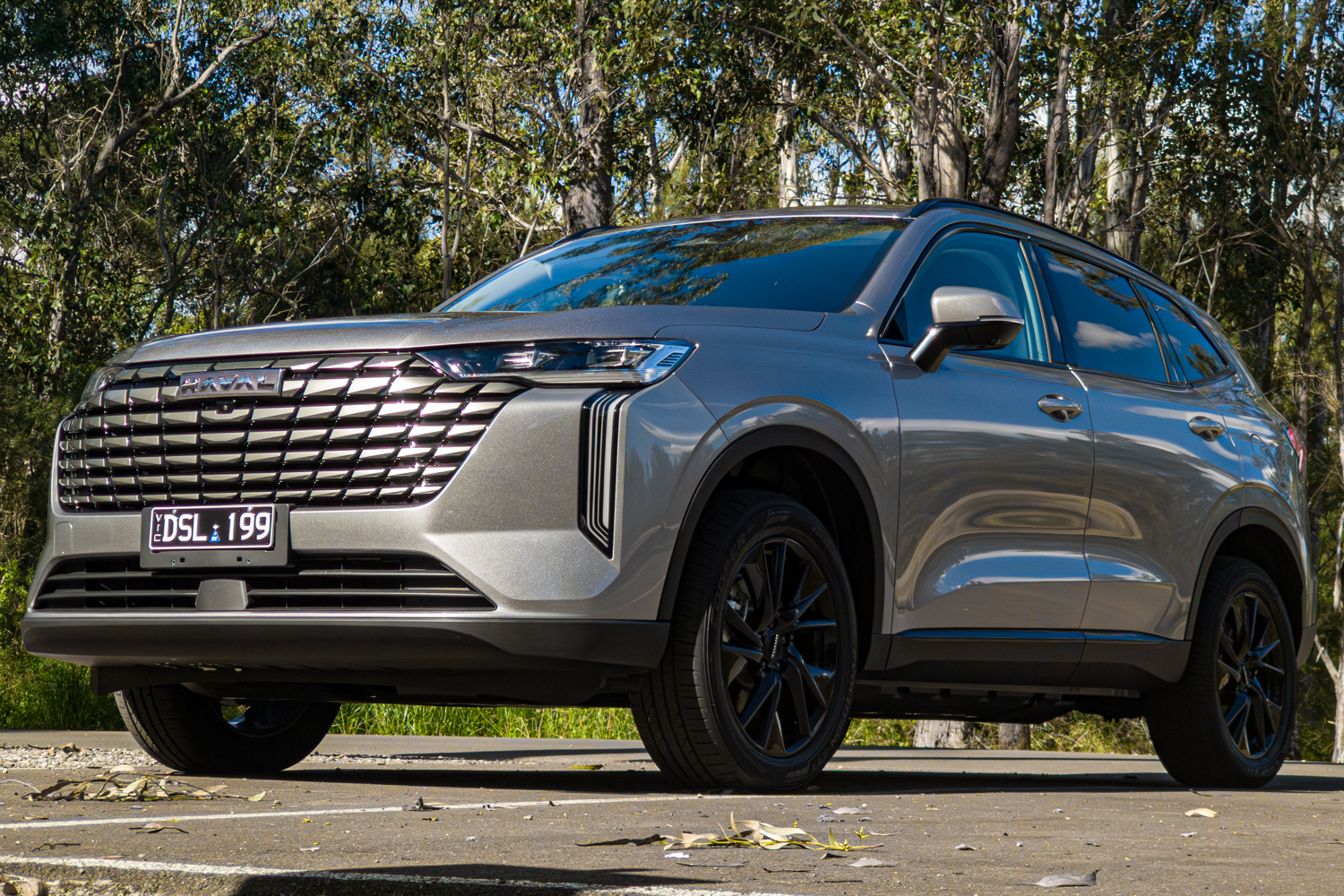
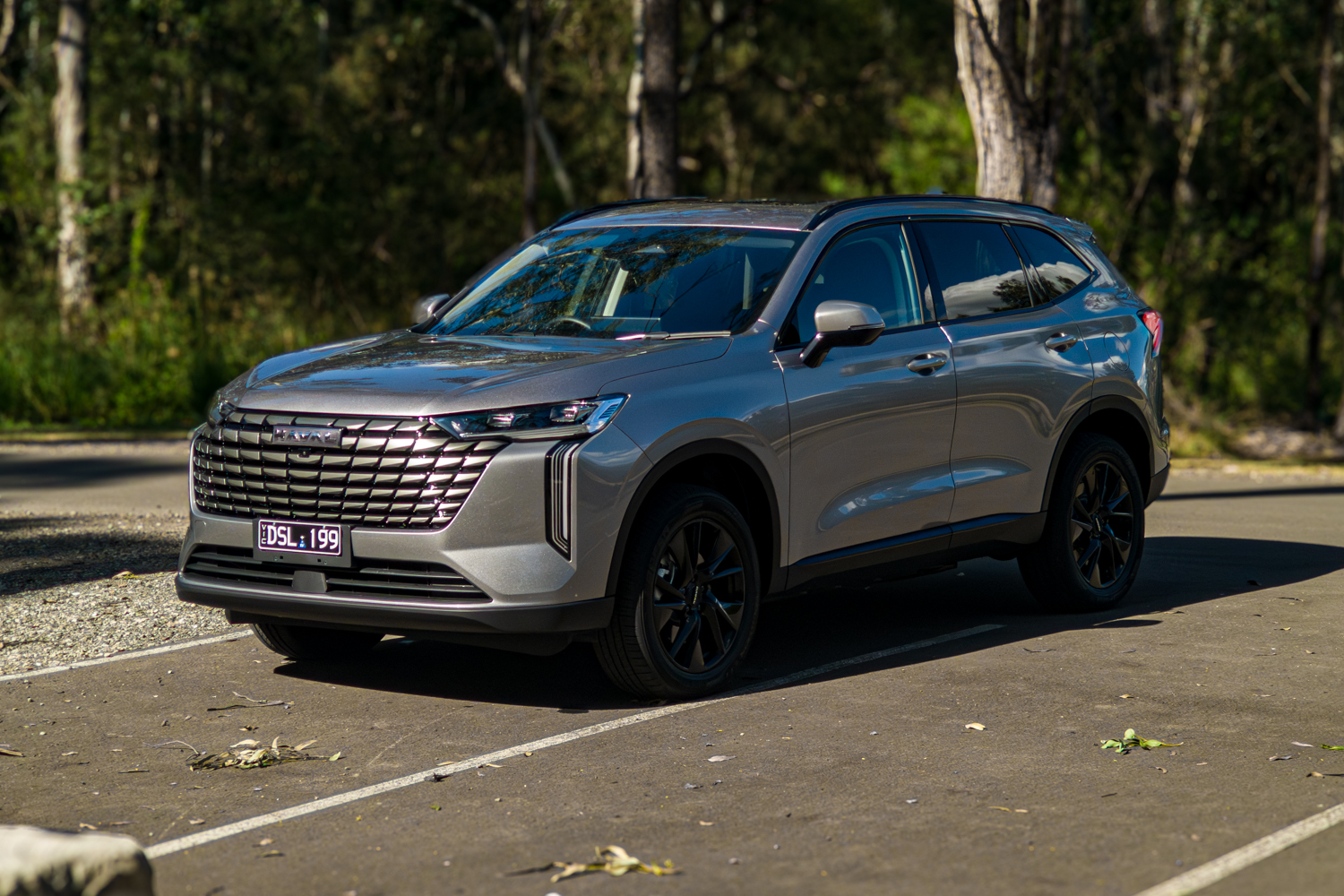
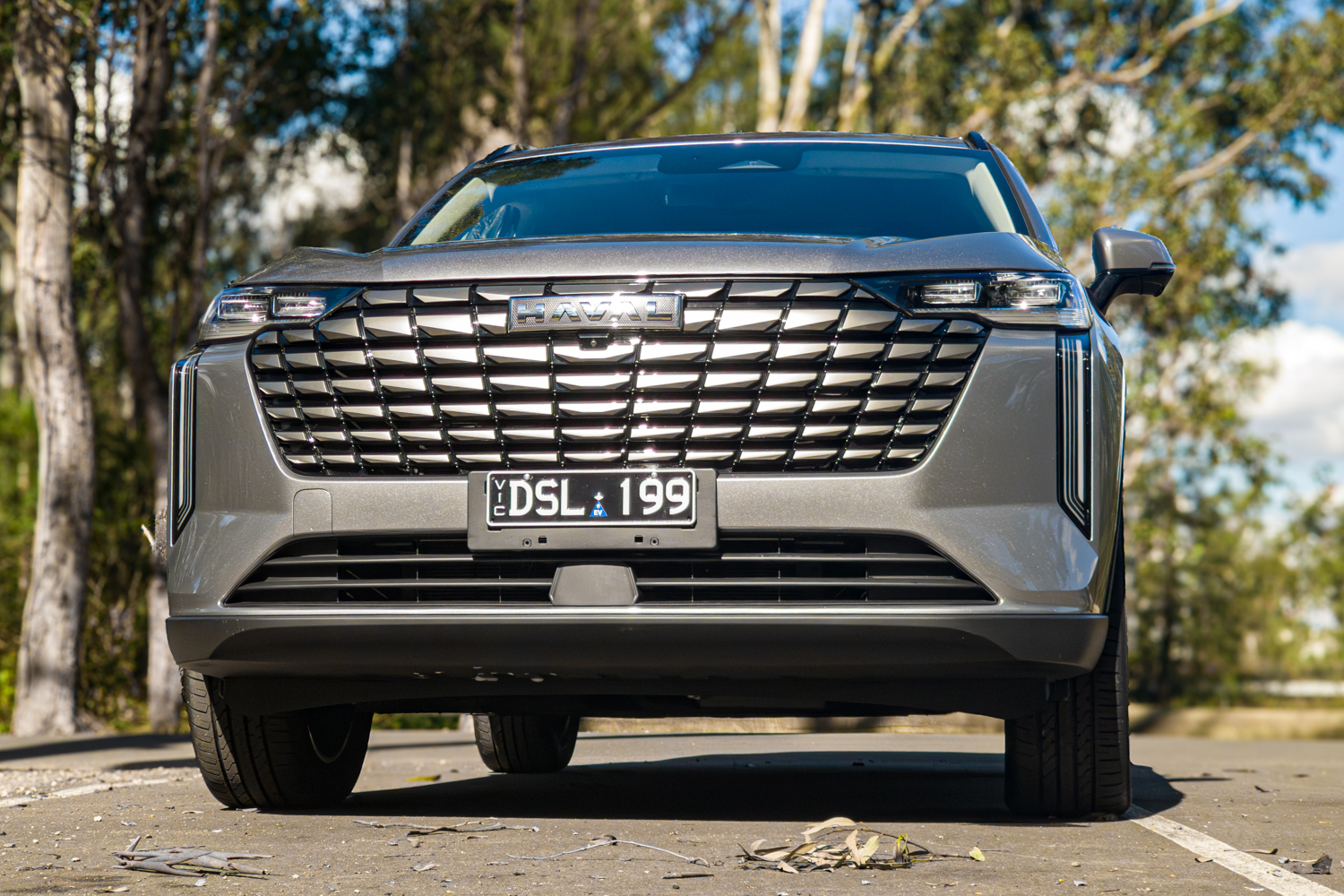
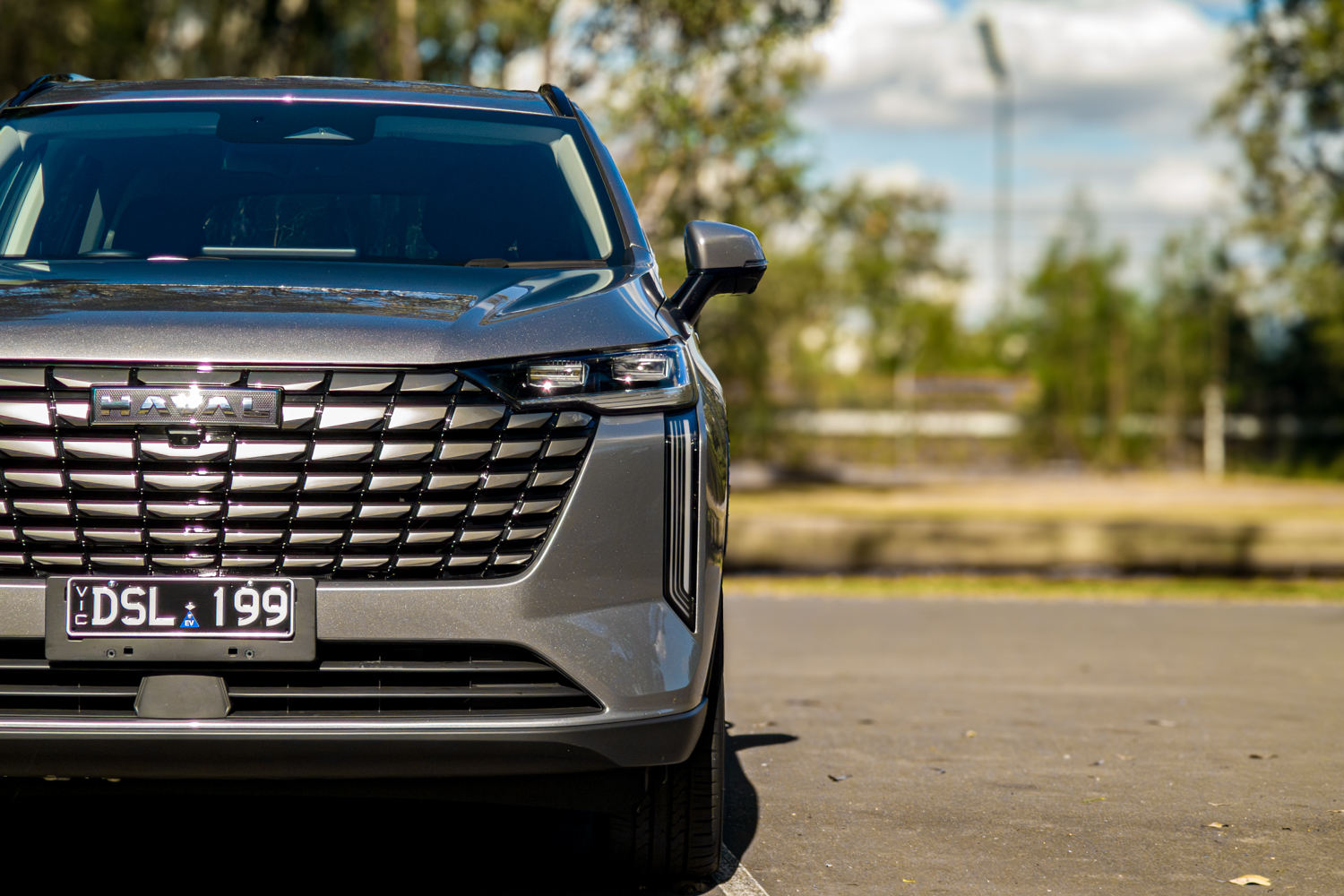
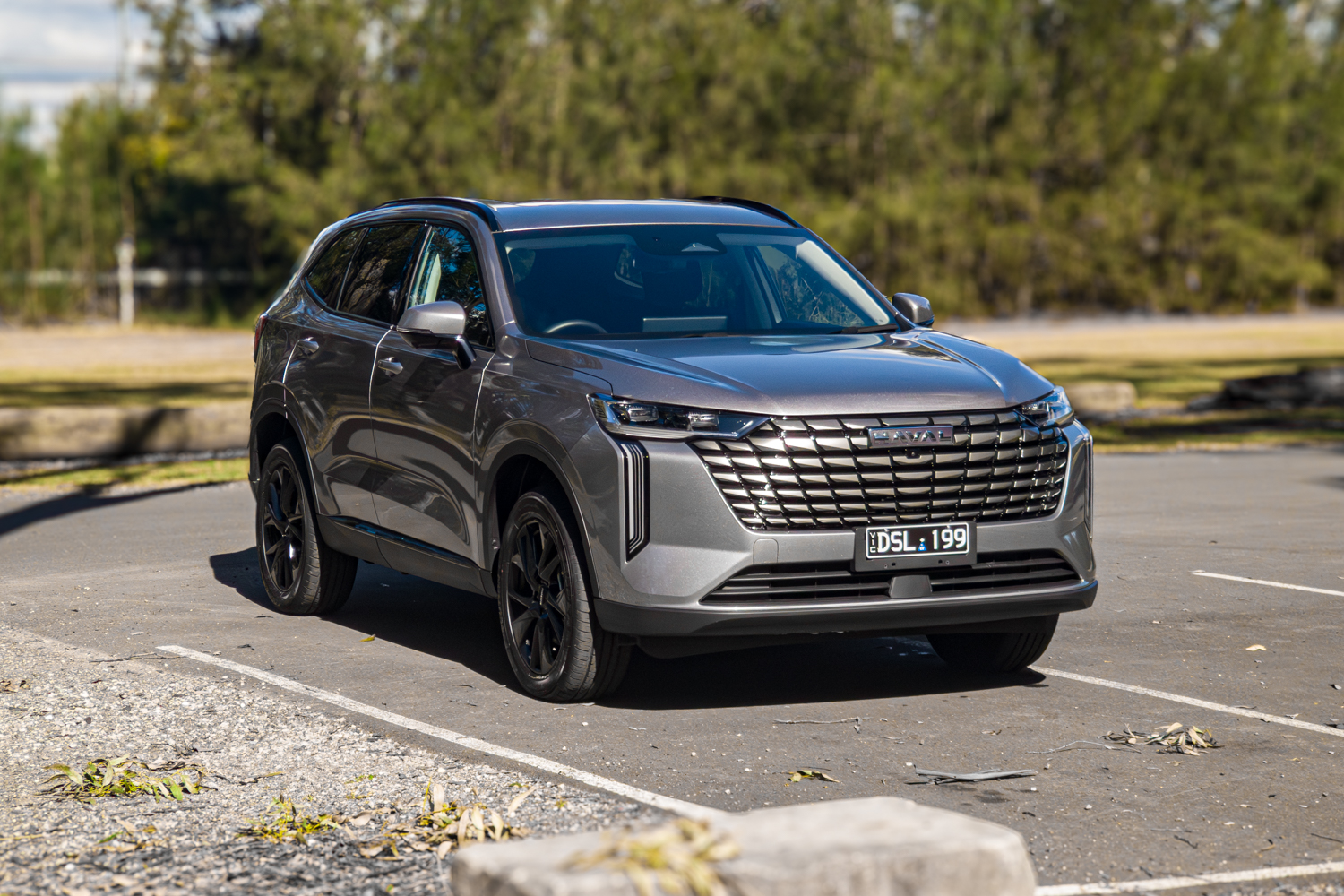
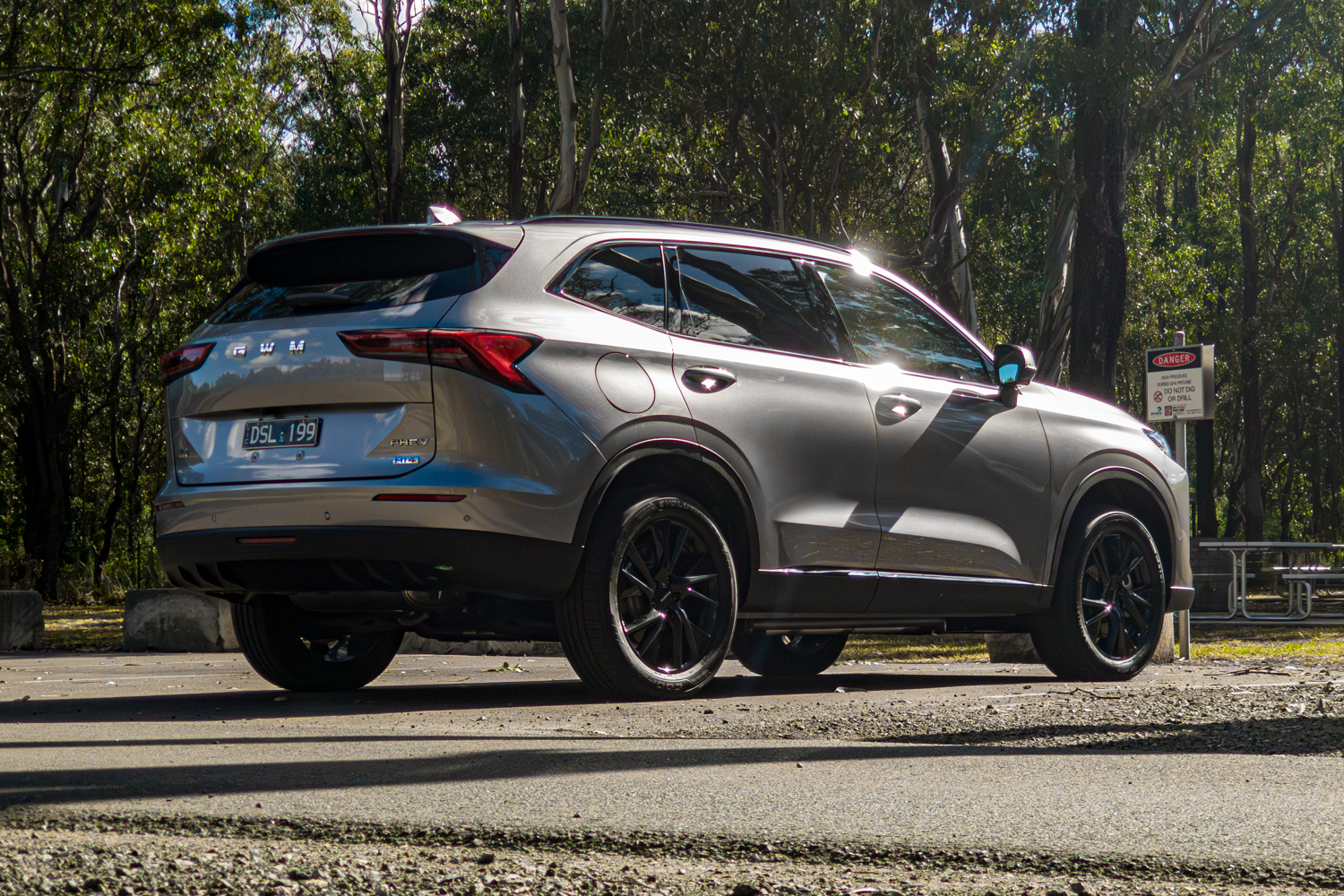
The H6 wears a bolder face than the car it replaces, and it is all the better for it. Up front there is a huge “signature” gloss-black grille, layered like chain-mail, flanked by slim LED headlights and vertical daytime running lights stacked into the bumper. My test car came in grey on gloss-black 19-inch alloys, part of a blacked-out look that suits its size. Head-on, that grille fills the frame and gives the H6 real presence for a mid-size SUV.
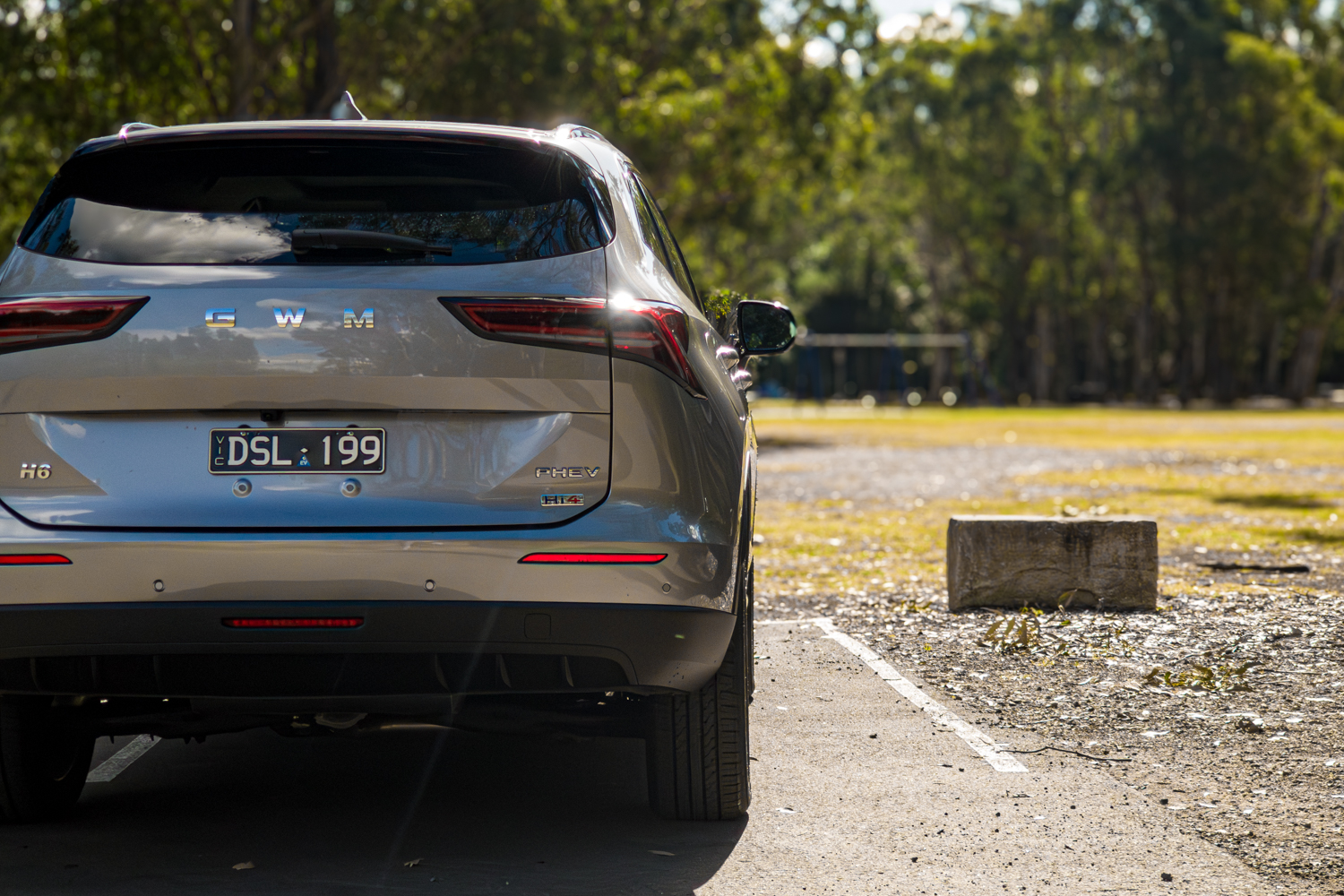
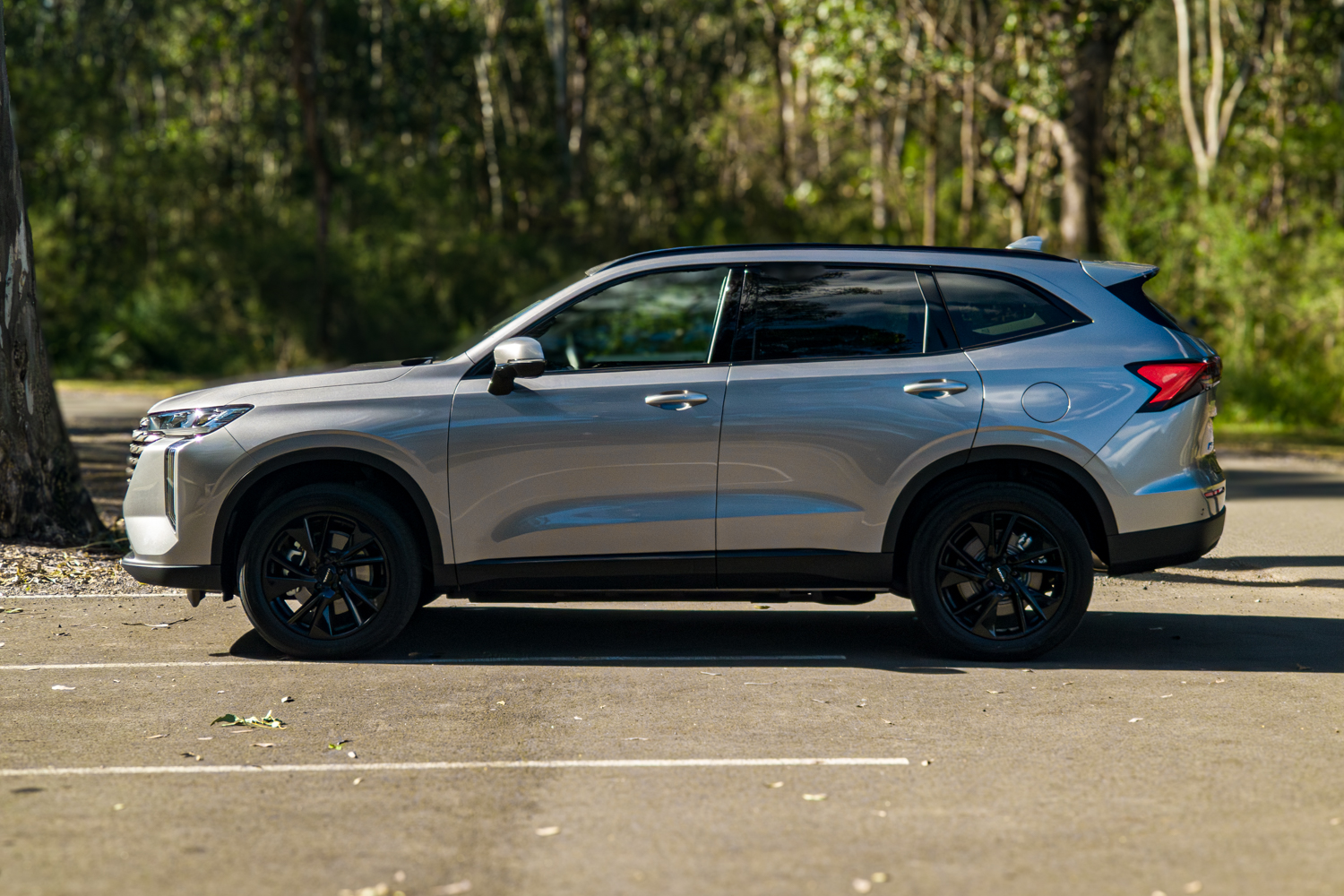
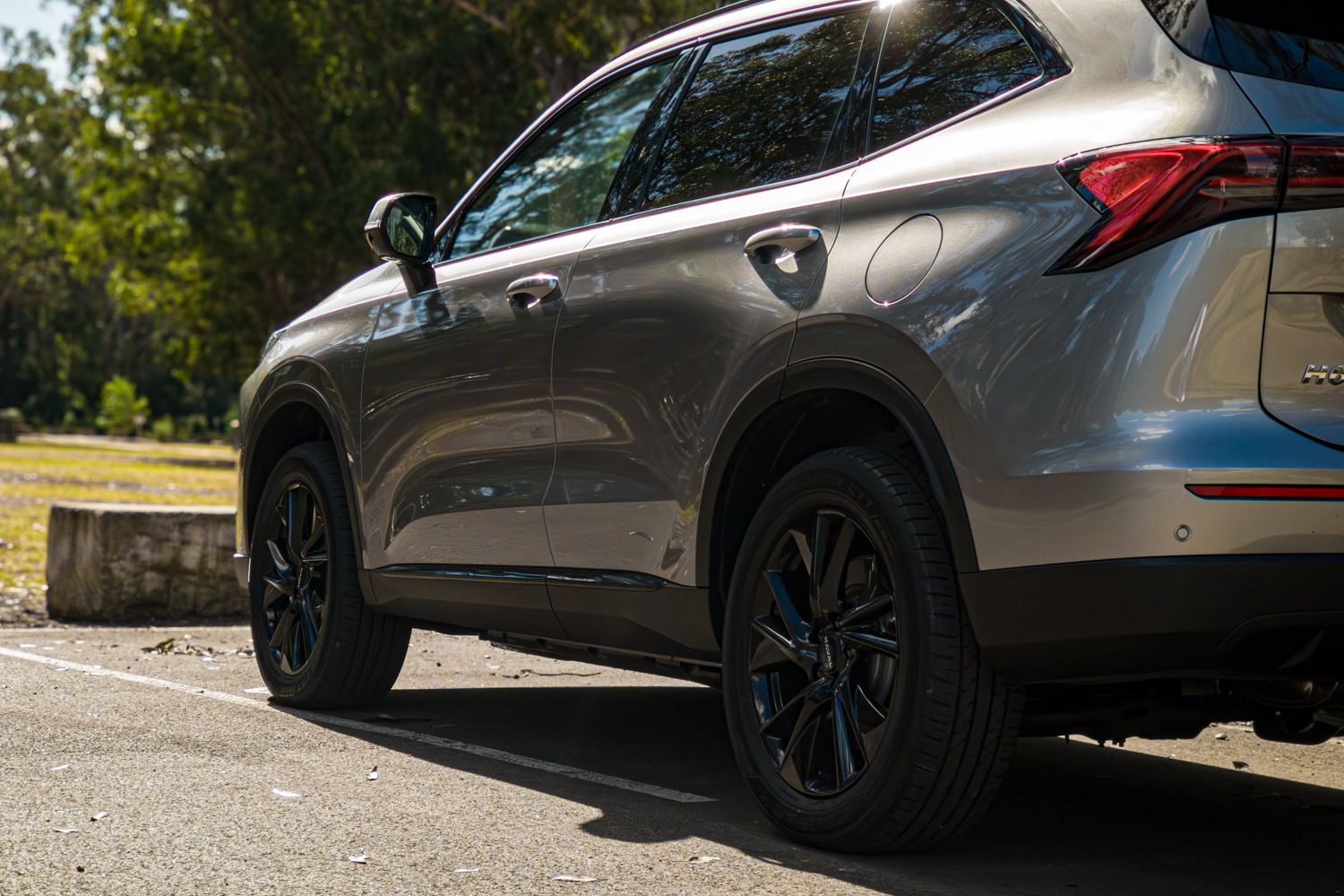
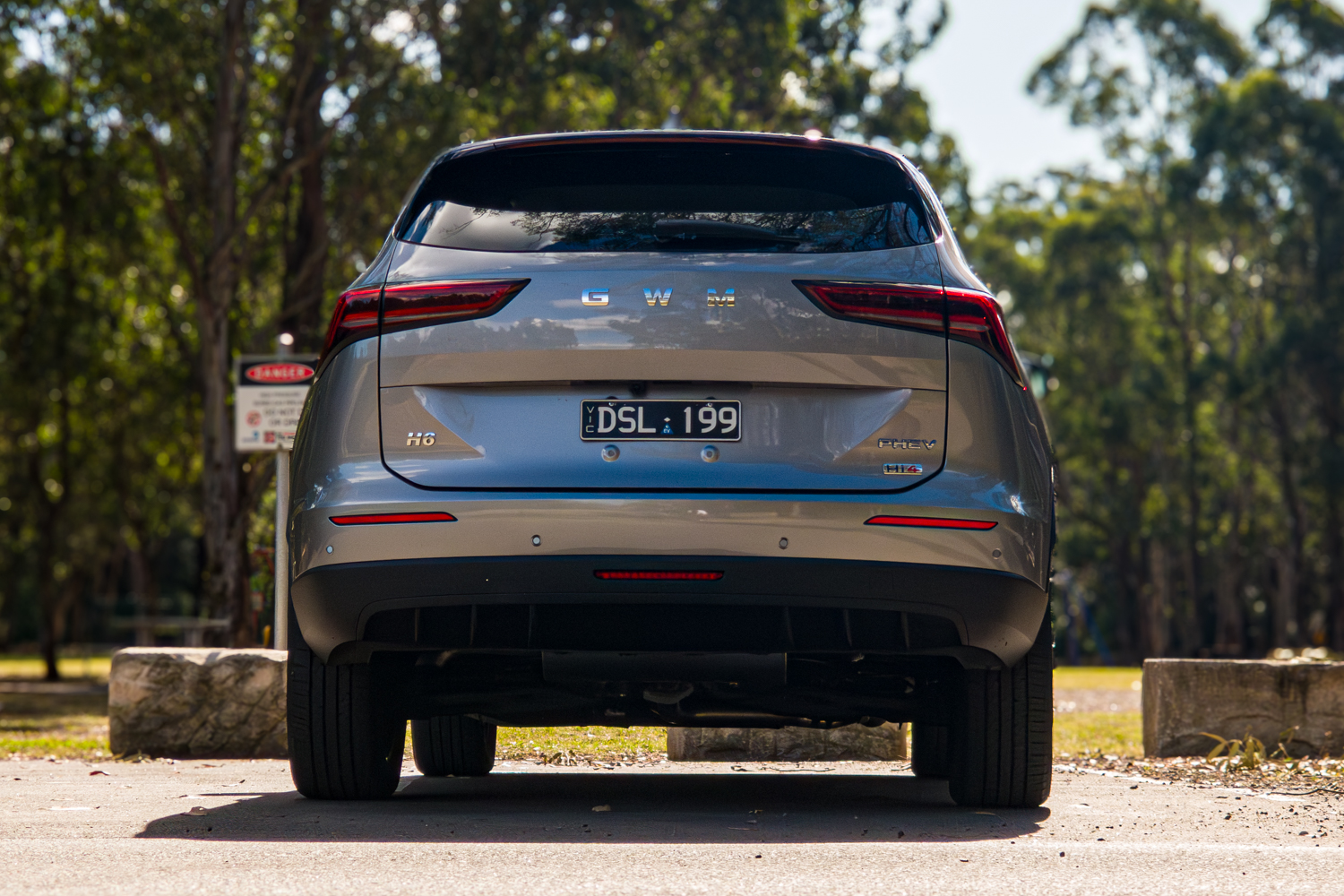
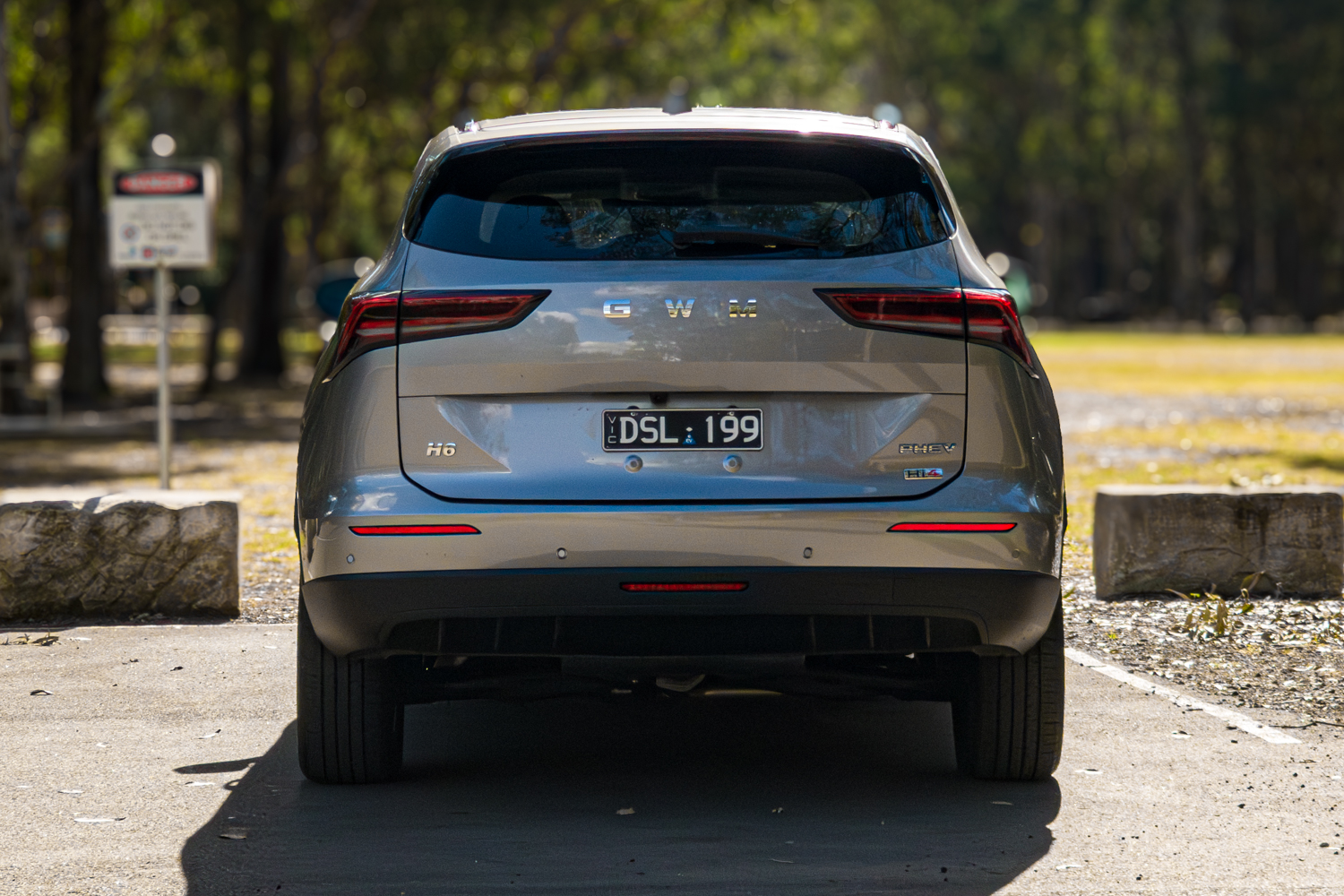
In profile it balances SUV height with a mildly coupe-like roofline that slopes into a full-width tail light bar and GWM lettering across the tailgate. It is a clean, grown-up shape rather than a fussy one, and there is no mistaking what is underneath: the tailgate carries H6, PHEV and Hi4 badges, in case anyone wondered.
What is the 2026 GWM Haval H6 PHEV like inside?
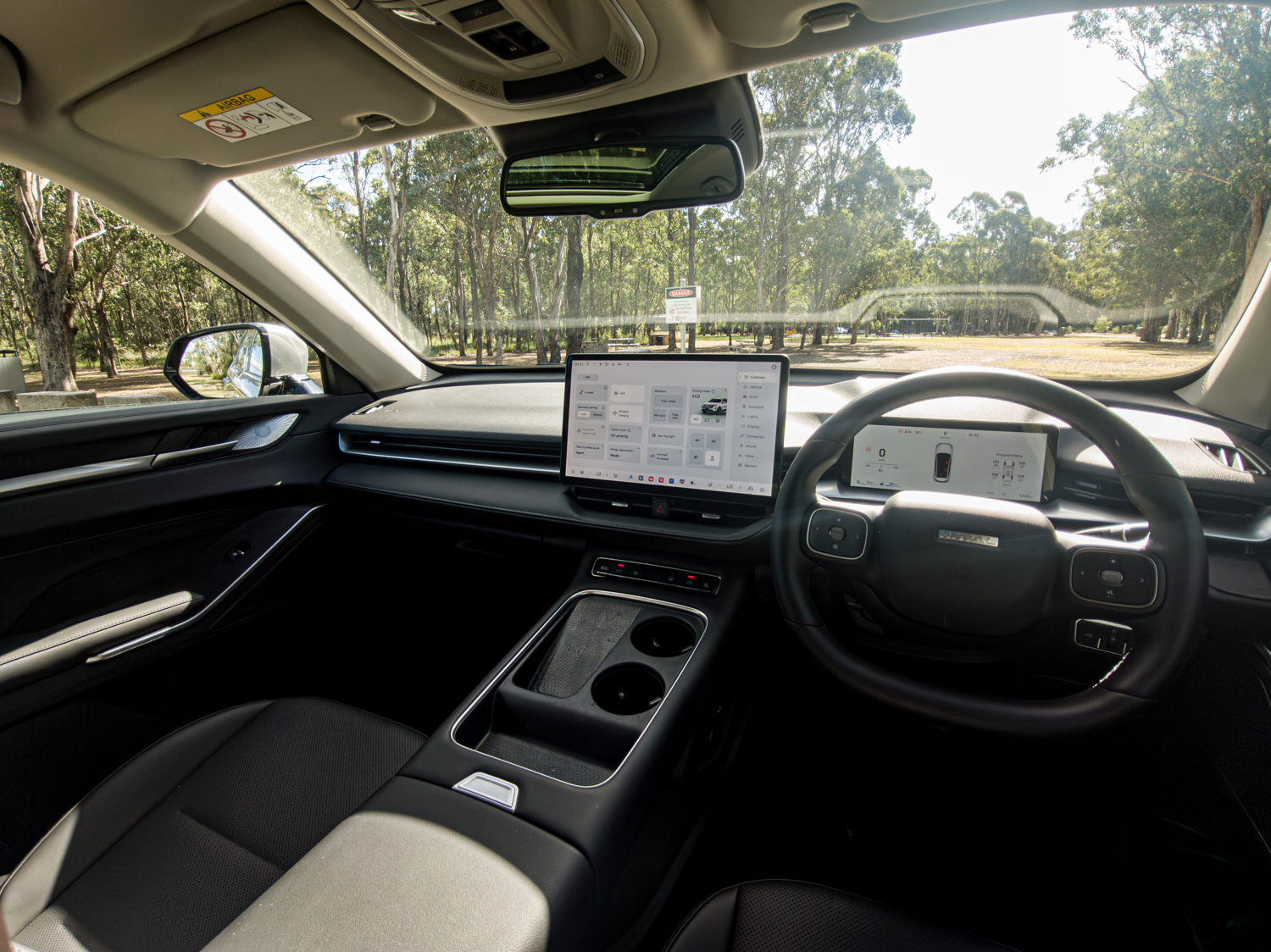
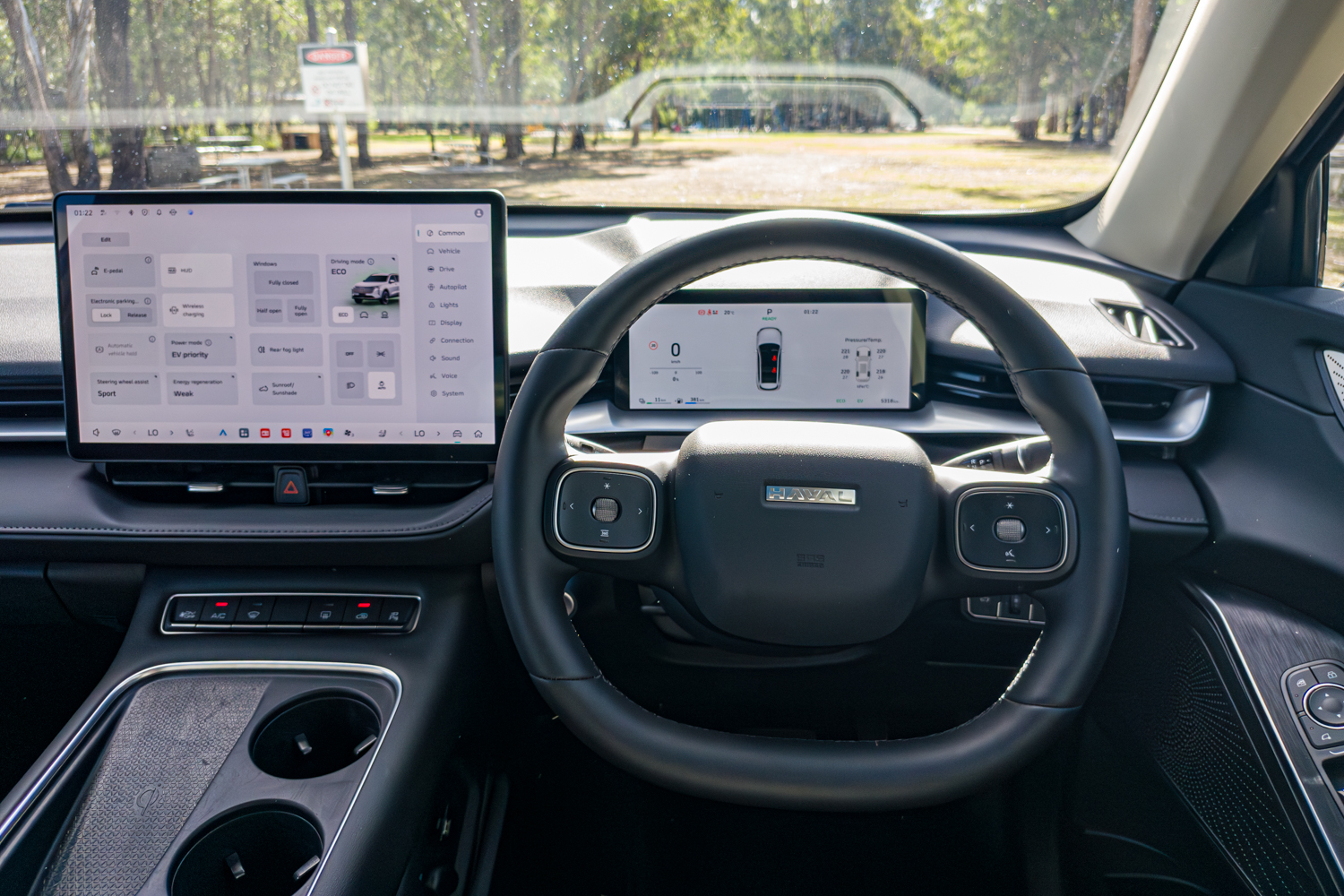
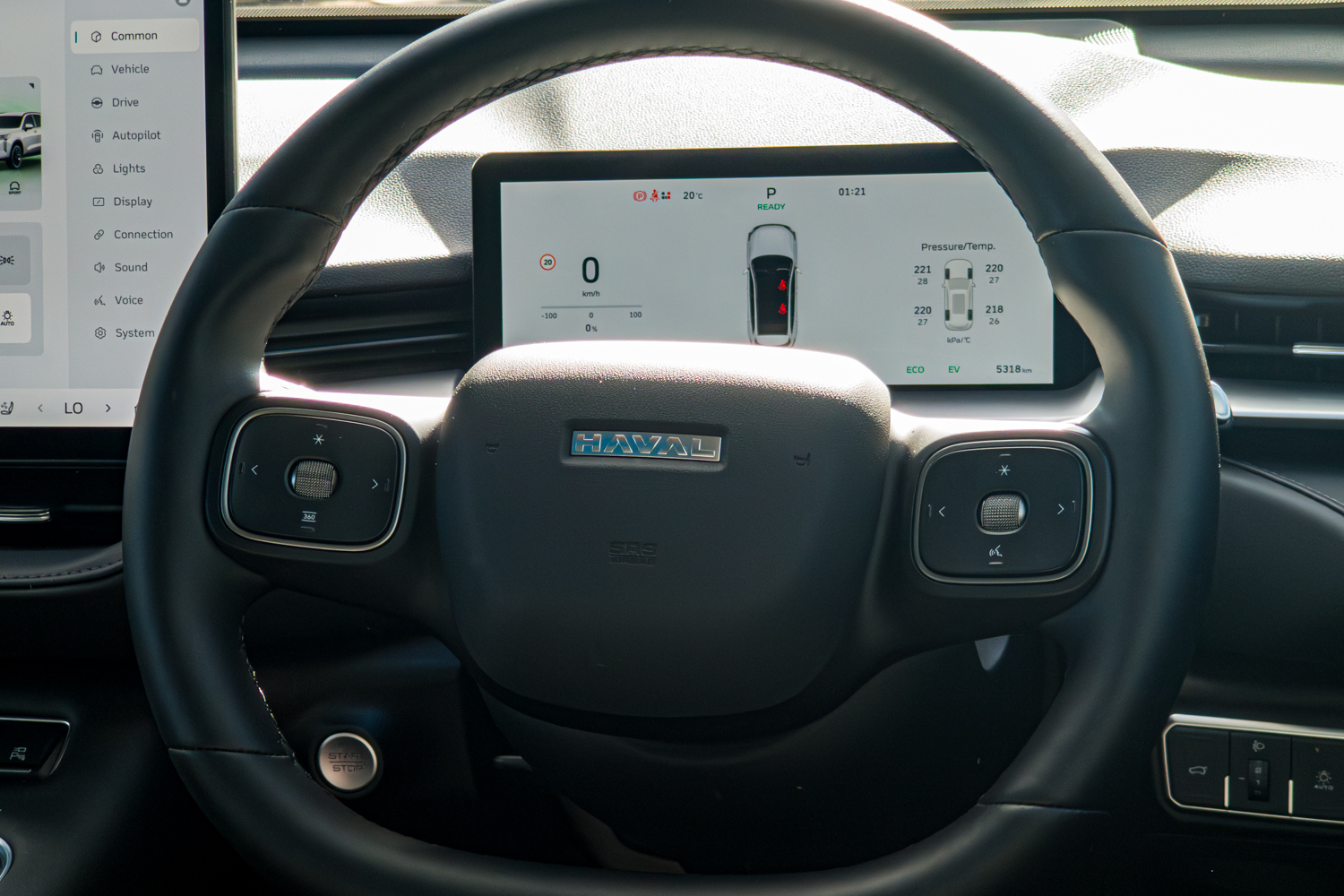
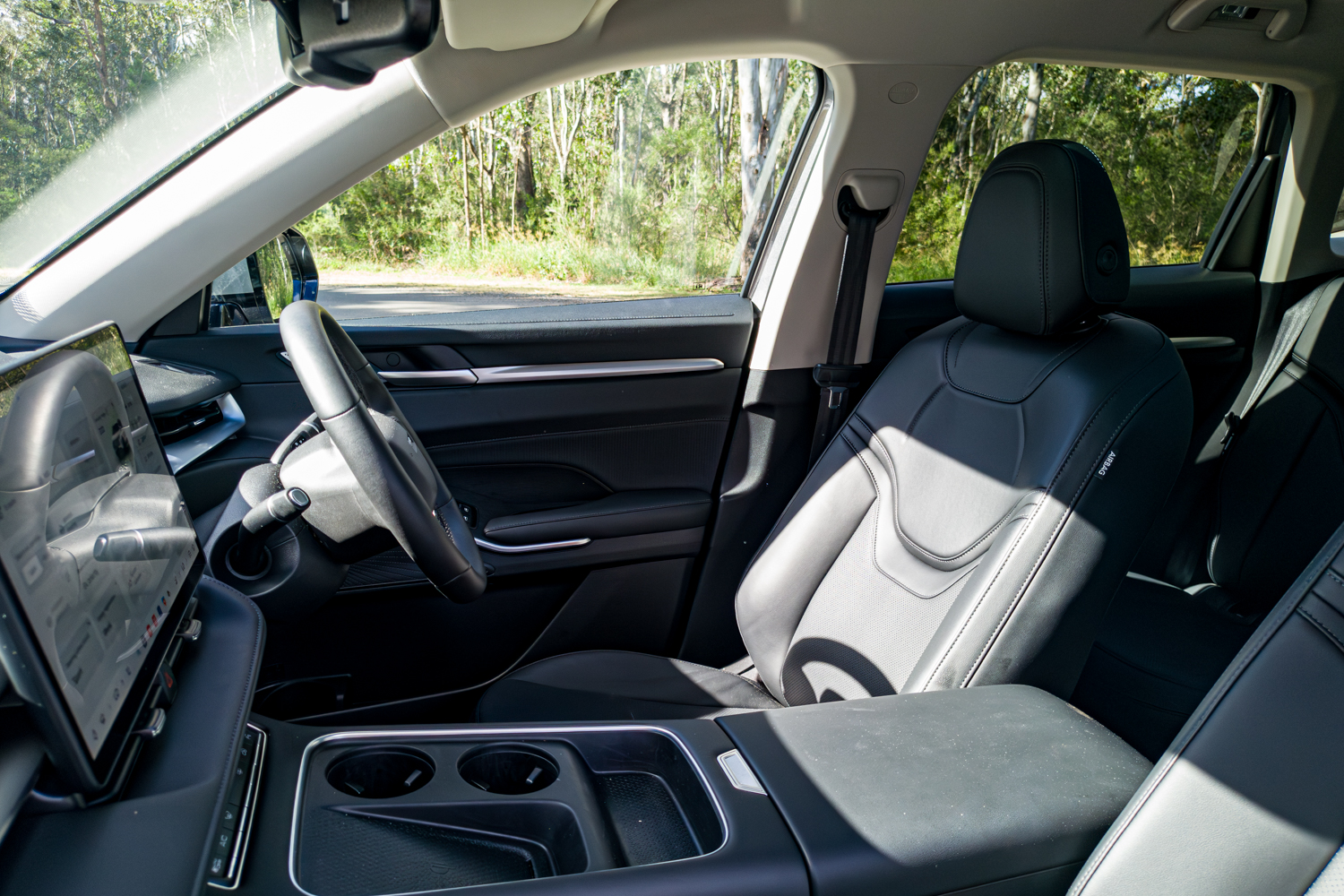
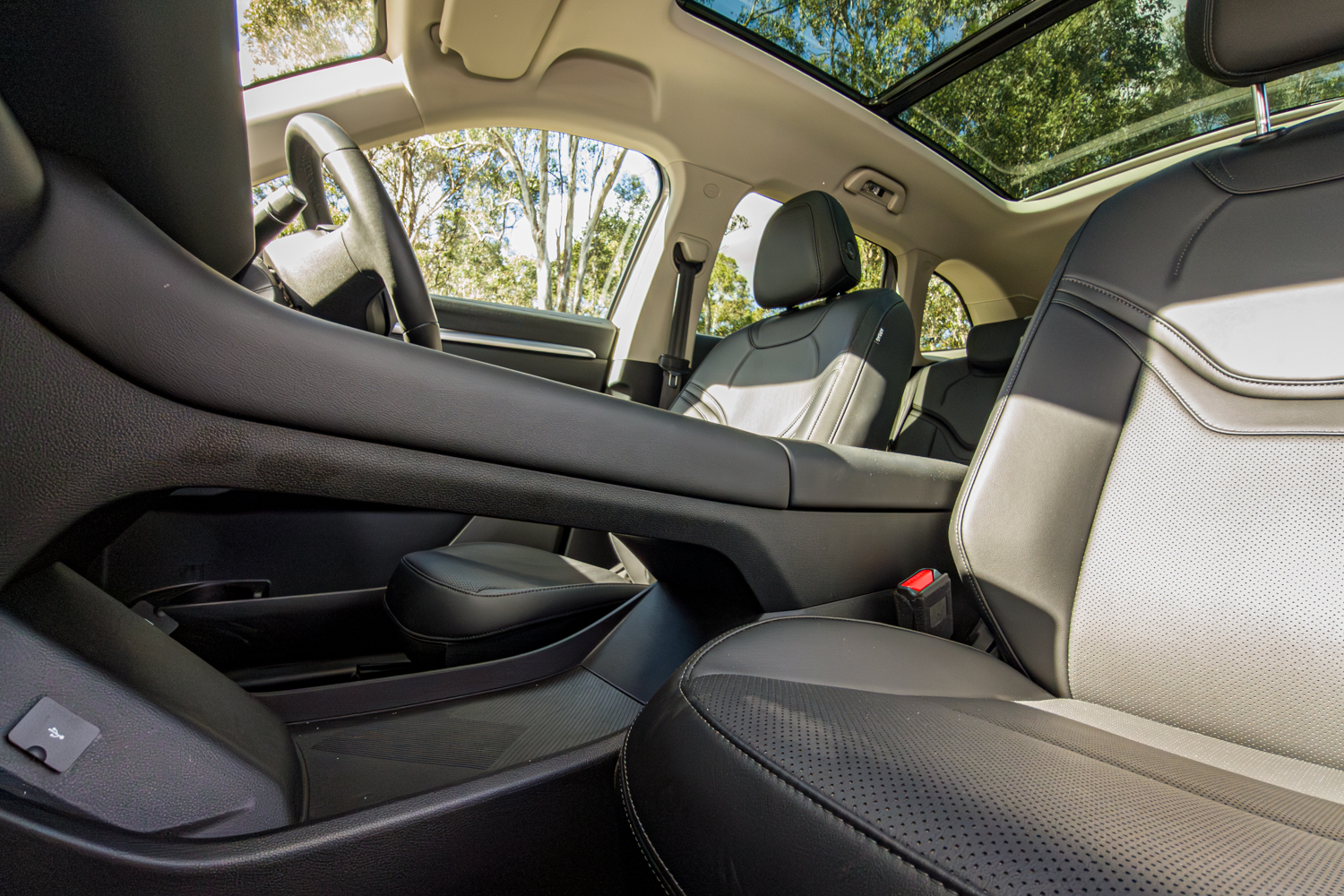
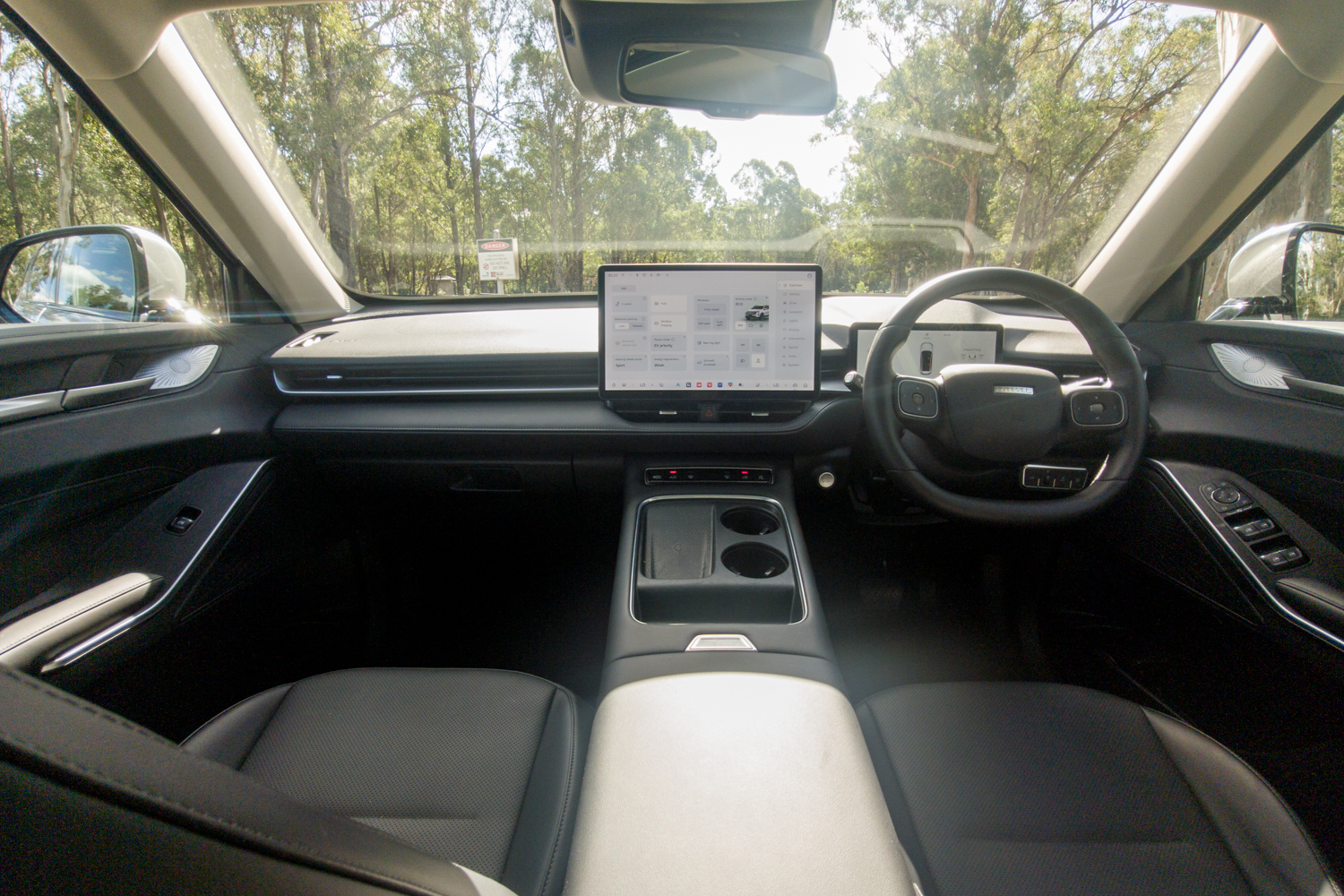
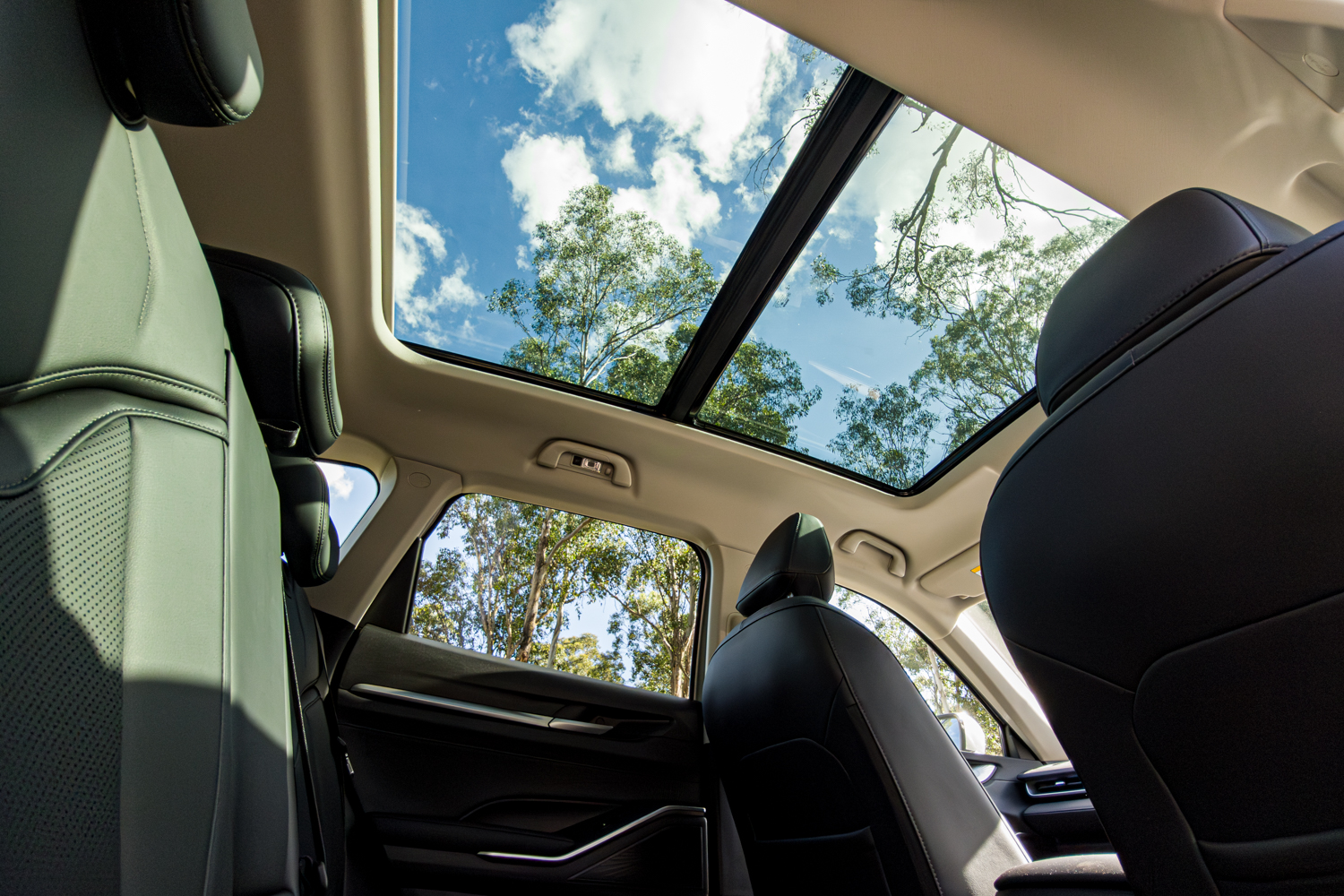
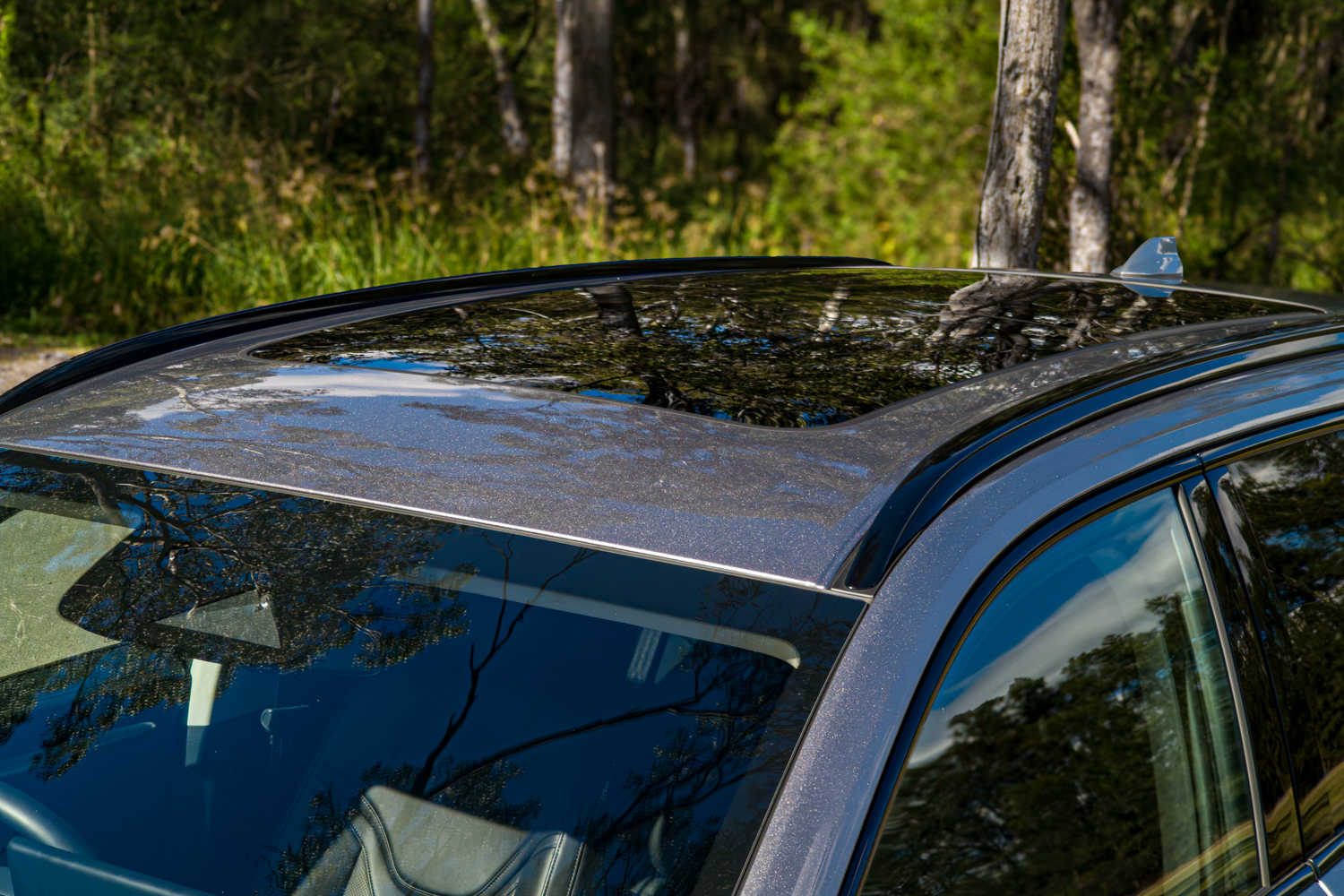
Step inside and it punches above its badge. The dashboard is minimalist and built around a 14.6-inch central touchscreen, with a slim 10.25-inch digital cluster ahead of the driver and a head-up display on top. A panoramic sunroof stretches well past the front seats and floods the cabin with light, and the perforated two-tone Comfort-Tek seats lift the ambience a clear notch above what the price suggests. For a car at this money, it feels genuinely rich.
The kit list backs that up. The Ultra gets a nine-speaker stereo, wireless Apple CarPlay and Android Auto, wireless charging, a heated wheel, heated and ventilated front seats, a 6-way powered driver’s seat with memory, and dual-zone climate. The one thing to know is that GWM leans hard on the screen: almost everything lives in the touchscreen, and the steering wheel uses touch-style control pads rather than proper buttons, which take a little learning.
Storage
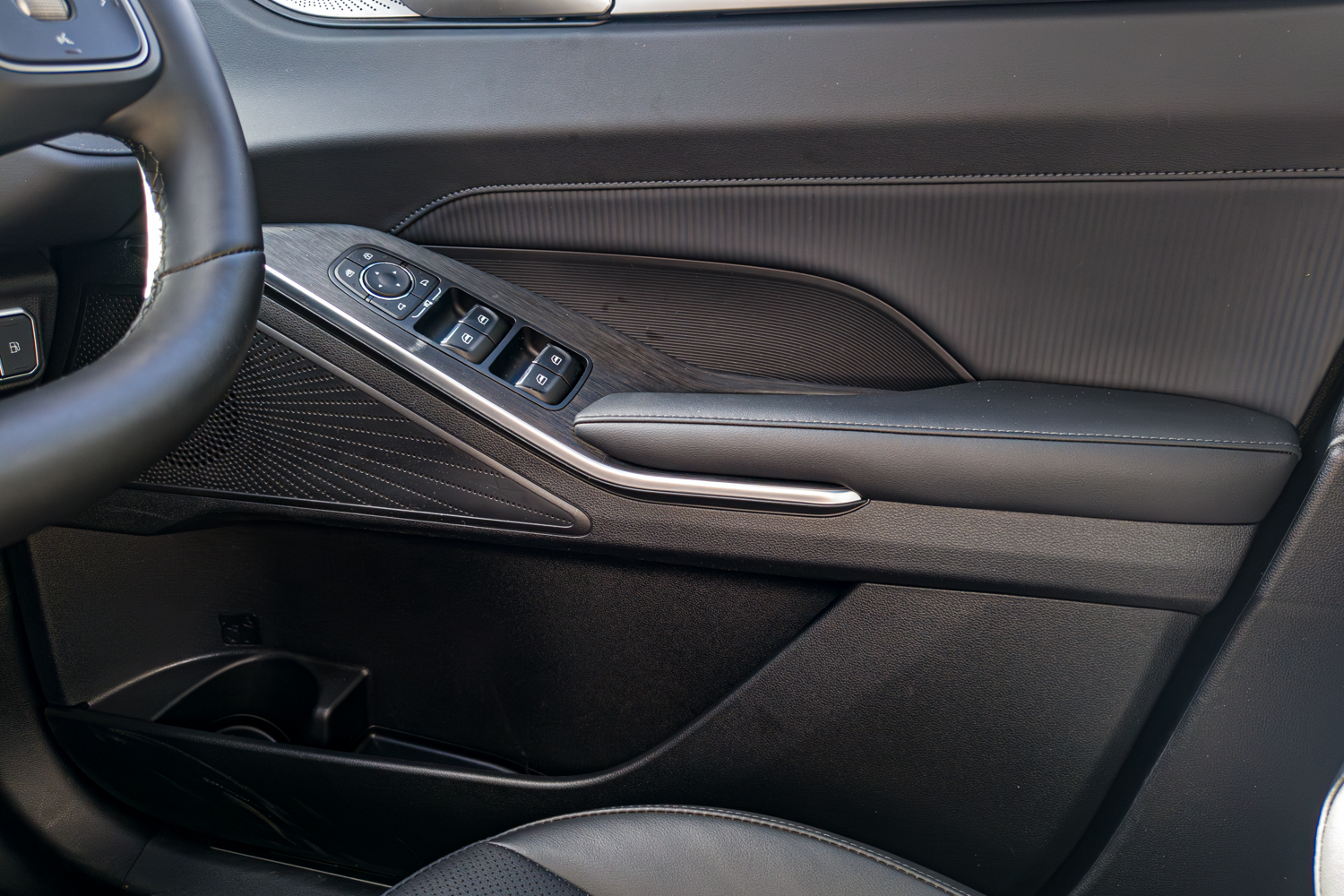
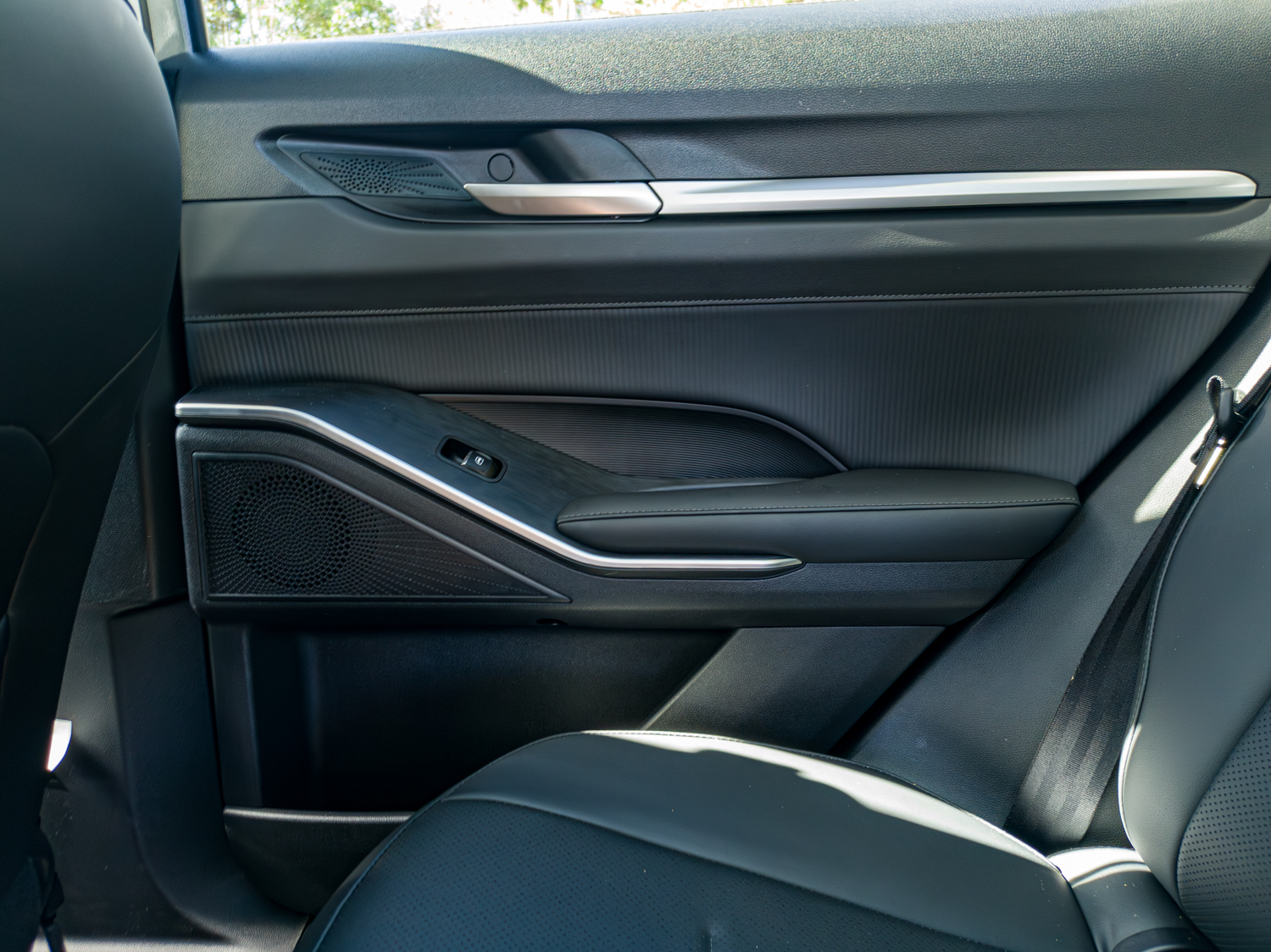
Practical touches are dotted through the cabin. There is a wireless charging pad up front, twin USB ports front and rear, cupholders in the console, a padded armrest and deep door bins with textured trim. It is a sensibly laid-out family cabin rather than a clever one, but nothing important is missing, and there is room for the daily clutter of phones, bottles and the school run.
Rear seat and boot space
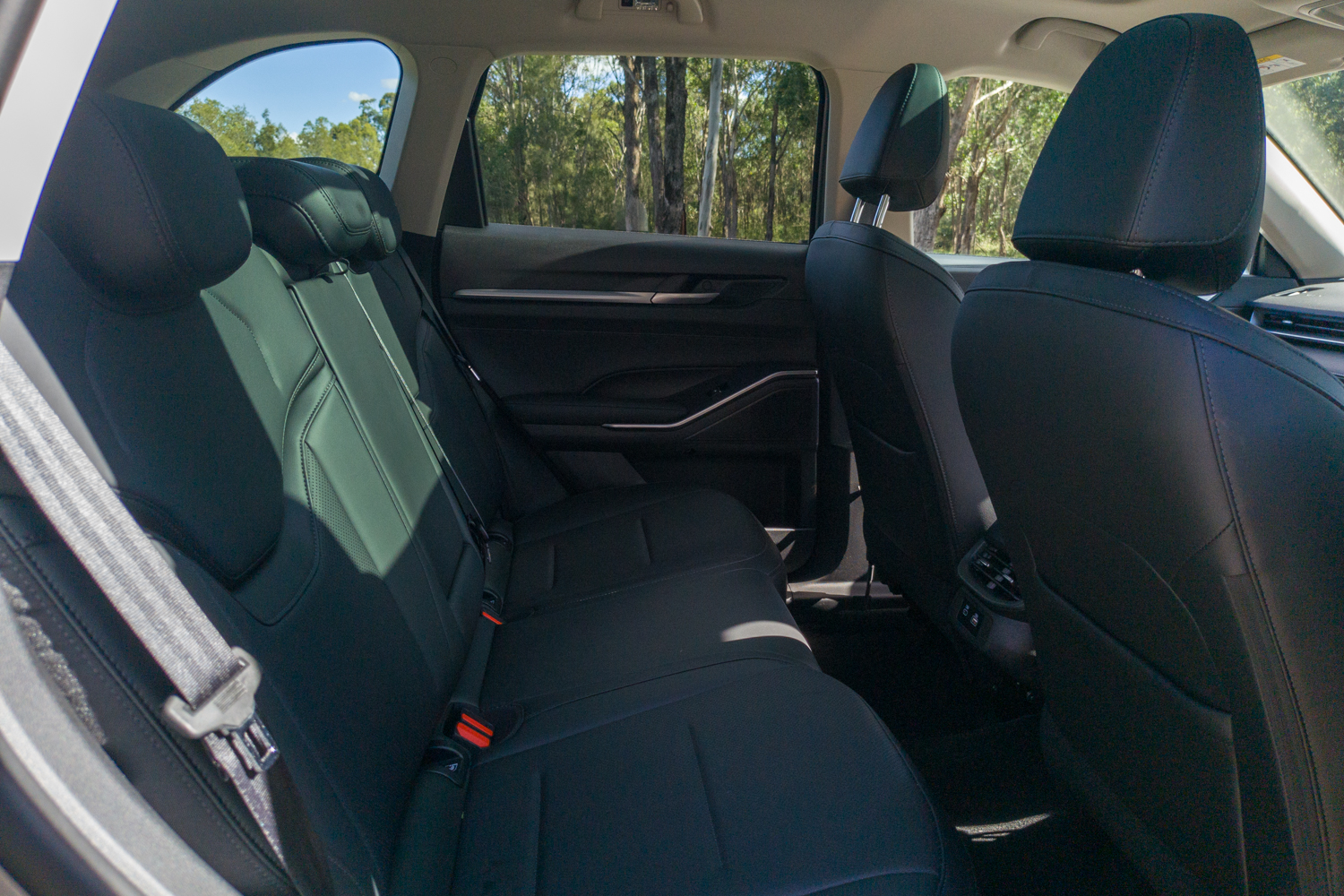
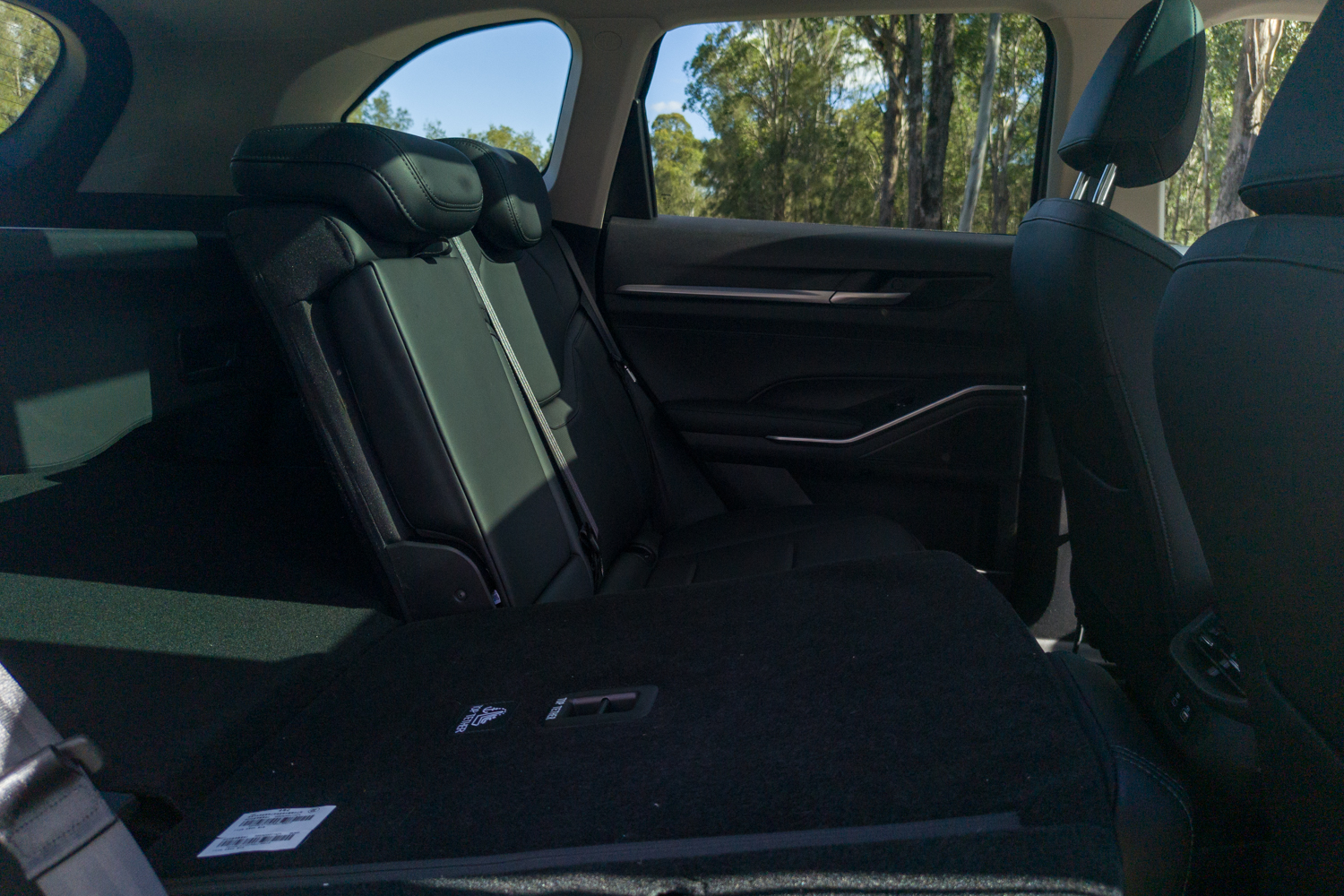
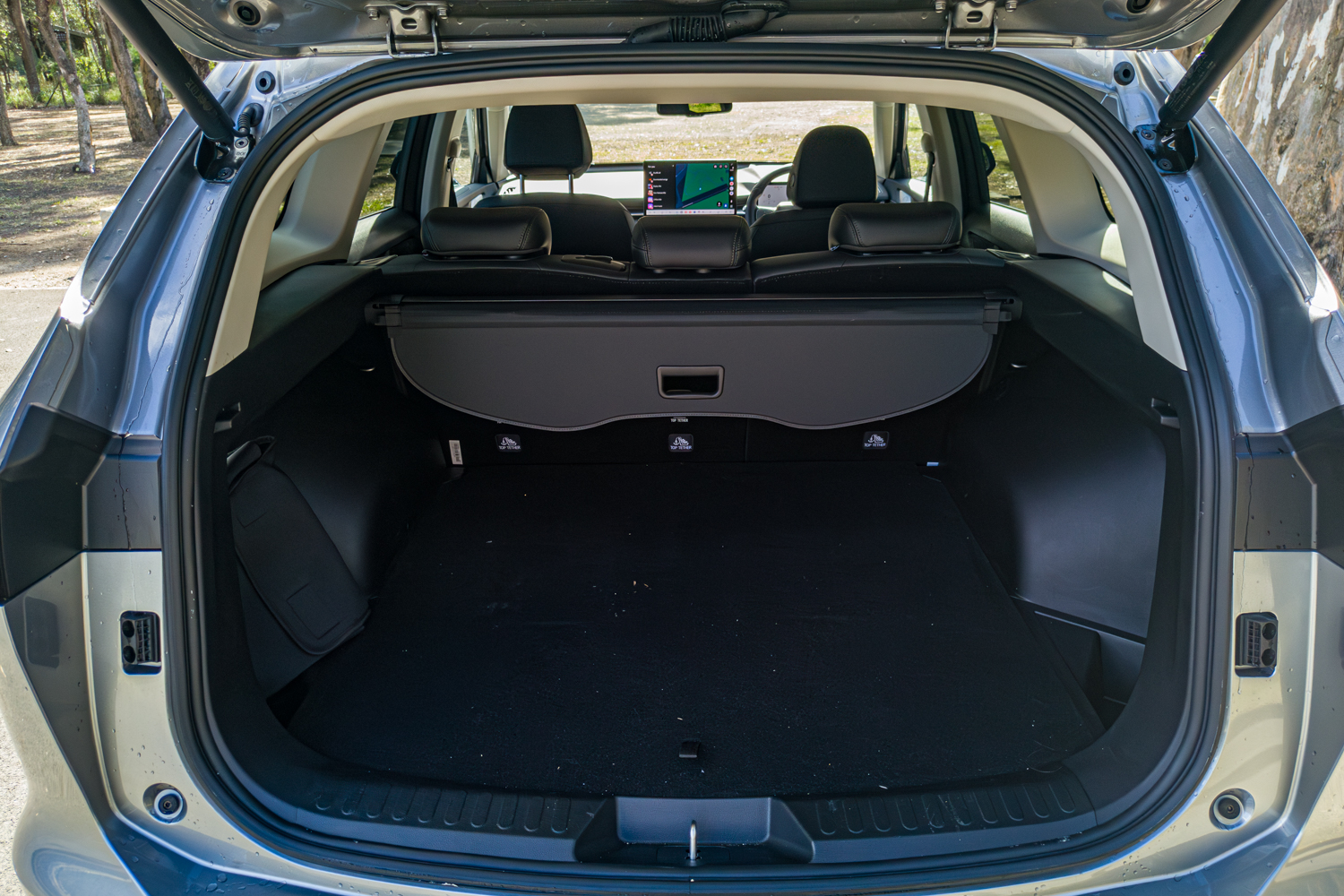
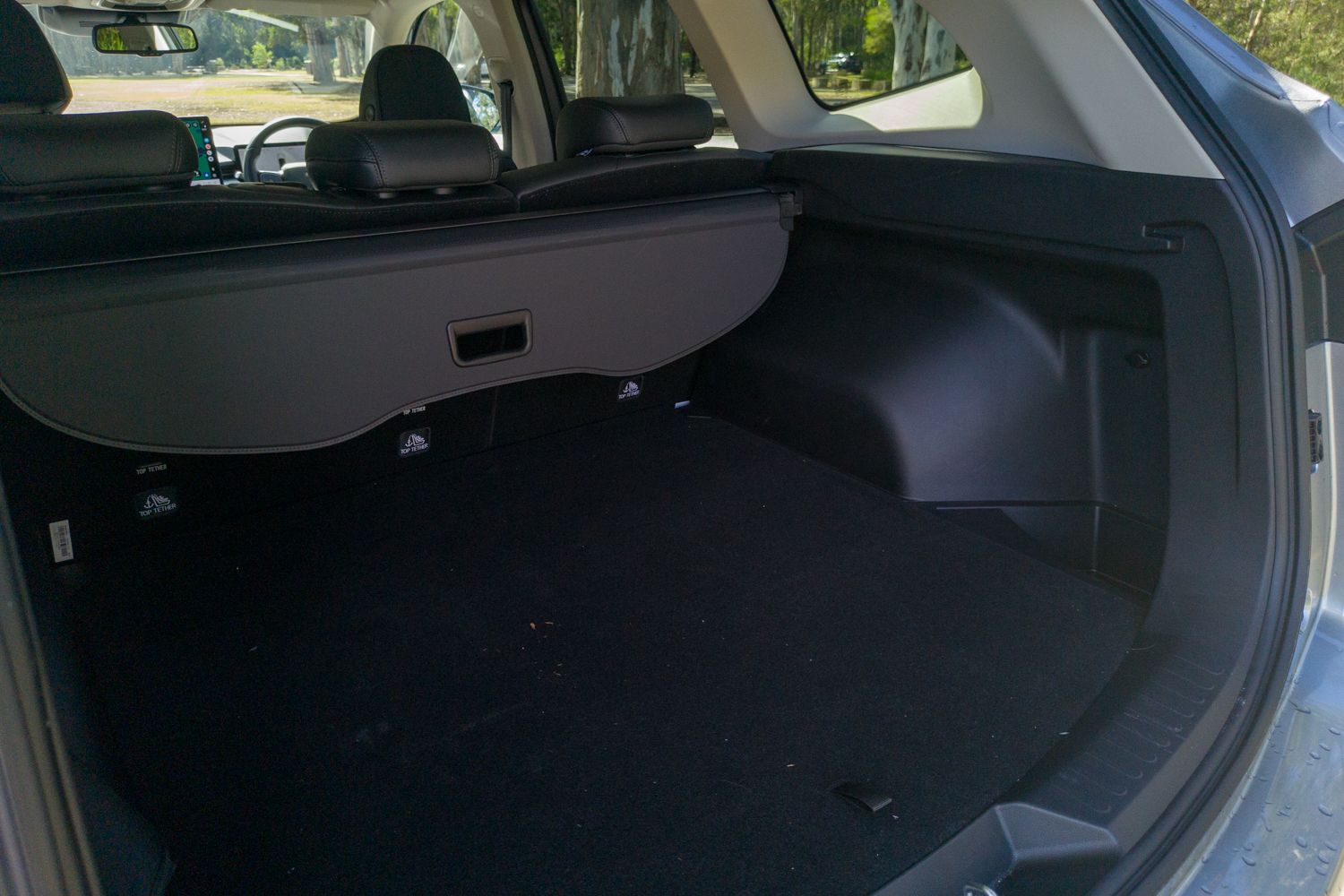
The back seat is where a family SUV earns its keep, and the H6 delivers. The 2,738mm wheelbase opens up a wide, flat-floored rear bench with proper adult legroom, rear air vents and charging outlets, and the panoramic roof makes it feel airy from the second row. The boot holds 560 litres with the seats up, expanding to 1,445 litres with the 60:40 rear seats folded, and there is a powered kick-sensing tailgate and a retractable cargo blind as standard. It is a genuinely usable, square load space that swallows a pram and the weekly shop without fuss.
Technology and connectivity
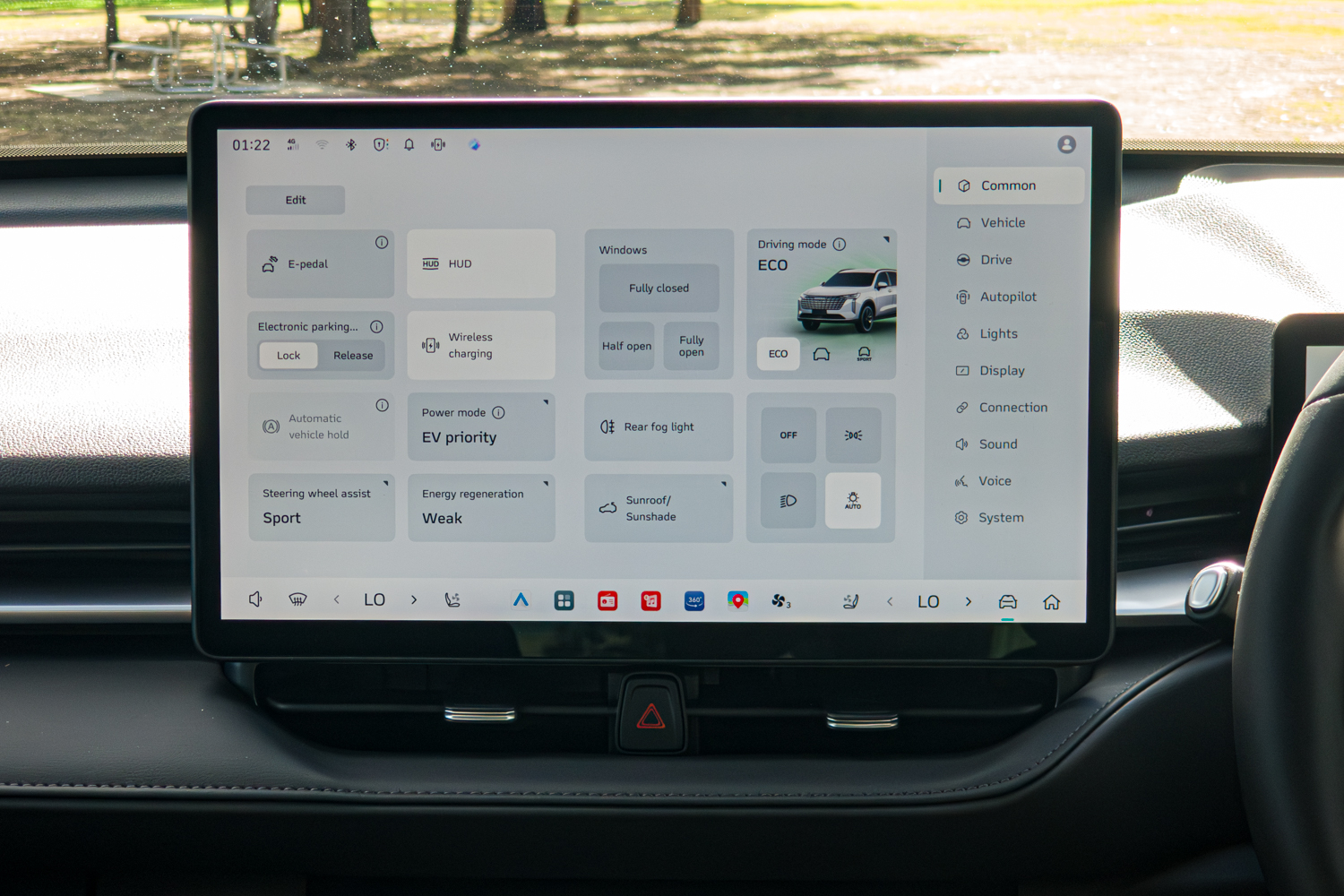
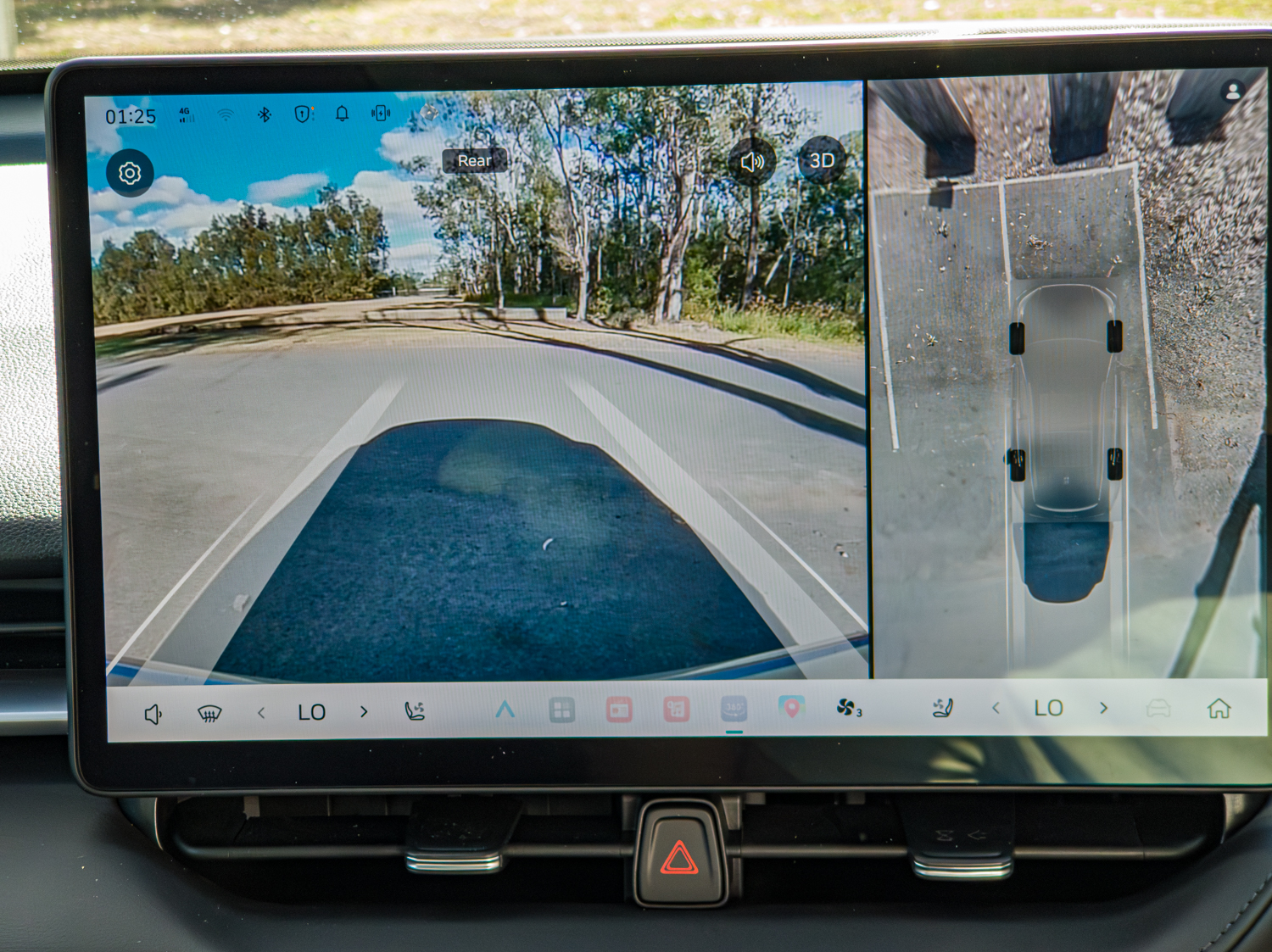
The 14.6-inch screen is the hub of the cabin, running wireless CarPlay and Android Auto, DAB radio, voice control and the settings for the hybrid system. A quick-controls page puts the E-pedal, head-up display, drive modes and EV priority mode a tap away, and the 360-degree camera pairs a reversing feed with a clear top-down view that makes tight parking painless. The nine-speaker stereo is a genuine step up on the class norm at this price.
It is a responsive, feature-rich system. The trade-off, as in most cars going this route, is that folding the climate and most functions into the screen means a few things take an extra tap or two that a physical button would not, and some of the safety chimes are eager. Neither is a dealbreaker, but both are worth a test drive before you commit.
Highlighted Features
- Hi4 twin-motor all-wheel drive: a front and rear electric motor plus the turbo-petrol engine combine for 268kW, 760Nm and genuine surefooted grip.
- Vehicle-to-Load (V2L): run 220-240V appliances straight off the battery, handy for camping, tools or a power cut.
- EV priority and single-pedal driving: hold electric-only for the commute, or drive largely on one pedal with adjustable regen around town.
Engine and drivetrain
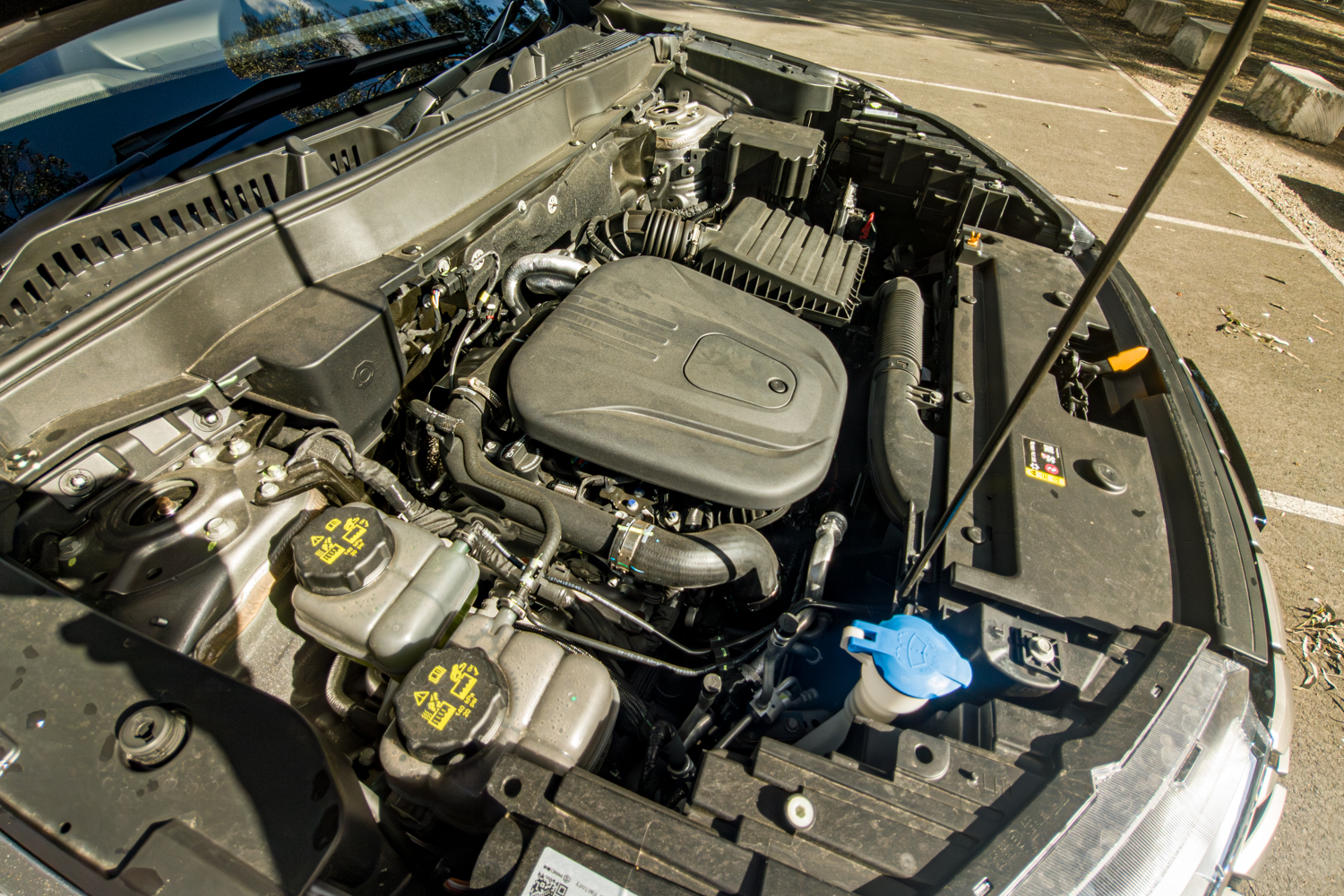
This is the clever part. The Ultra PHEV AWD pairs a 1.5-litre turbo-petrol engine with two electric motors, one on each axle, fed by a 19.09kWh LFP battery through GWM’s Hi4 plug-in hybrid system. Together they make 268kW and 760Nm, which is why a two-tonne family SUV can crack 100km/h in 4.8 seconds. GWM quotes up to 100km of electric-only range on the NEDC cycle; that cycle is optimistic, so in the real world budget closer to 75 to 85km, which is still enough to cover most people’s daily driving on electricity alone.
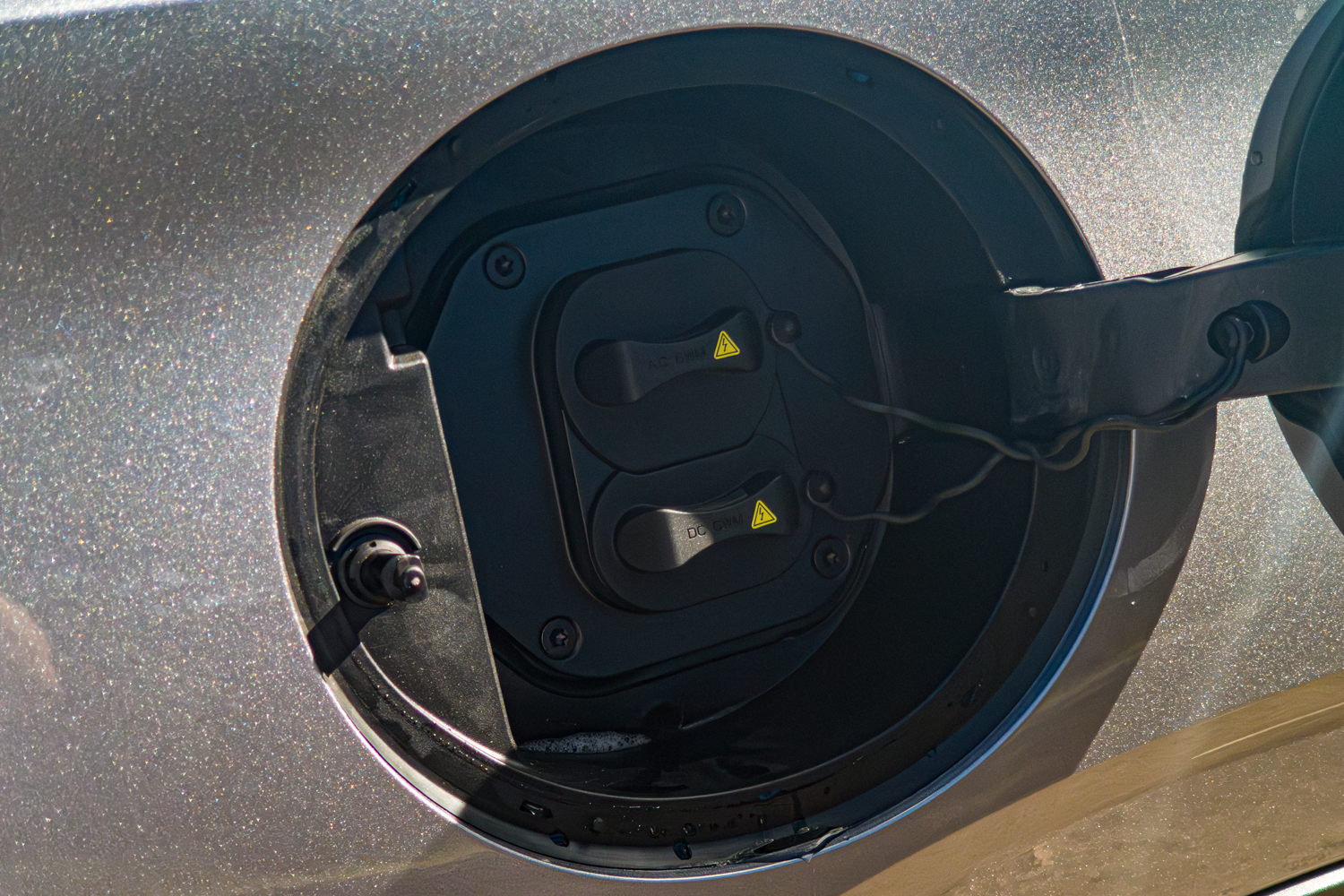
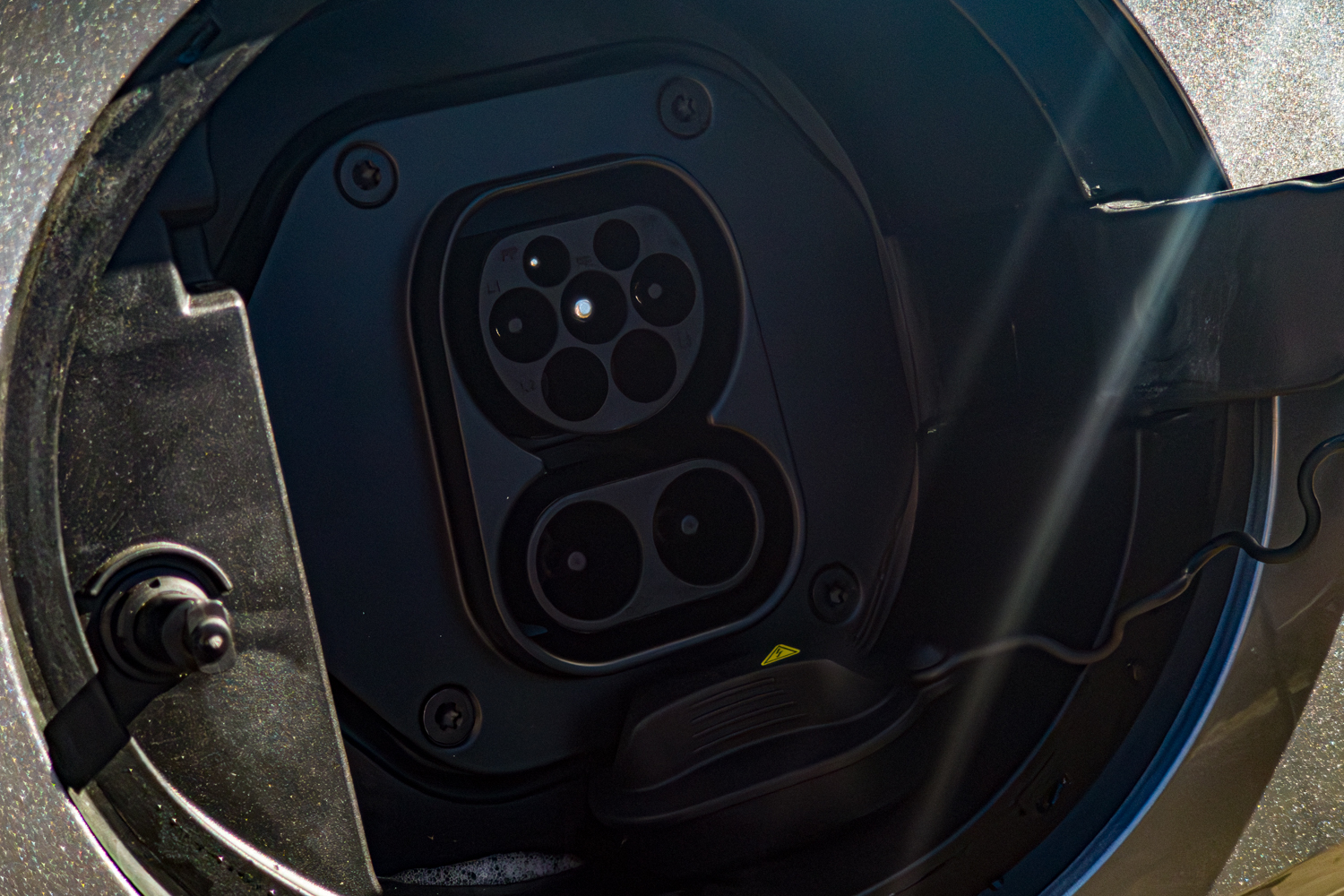
Charging is where the H6 has an edge over some plug-in rivals: as well as home AC charging at 6.6kW (a full top-up in around three hours), it can DC fast charge, taking about 28 minutes from 30 to 80 per cent. The DC rate is capped at 34kW, so it is no road-trip rapid-charger, but the option is there. Run the battery flat and it settles into a frugal hybrid, using a claimed 5.3 litres per 100km, and it runs happily on 91 unleaded.
What’s the 2026 GWM Haval H6 PHEV like to drive?
The headline from my week with it is how smooth and quiet it is. The switch between electric and petrol is so seamless you barely notice it happen, it is hushed around town and stays settled at speed, and for the most part you drive it as a quiet electric SUV. It is tuned for calm family duty first, and it does that well.
Then there is the pace. The headline is a 4.8-second 0 to 100km/h, which the launch control will genuinely deliver, though off a normal roll it feels more relaxed than that number suggests. Either way there is real urge on tap whenever you want it, and the H6 will surprise cars that cost a lot more away from the lights. That performance is a bonus rather than the point: at nearly two tonnes this is a comfortable cruiser, not a back-road weapon, and it is happiest wafting than being hurried. But it means the H6 never feels underdone, which is not something you could always say about a family SUV at this money.
Is the 2026 GWM Haval H6 PHEV safe?
This is the one real catch, and it needs stating plainly. The plug-in hybrid H6 is currently unrated by ANCAP. The petrol and hybrid versions of the H6 hold a 5-star rating from 2022, but that rating does not automatically extend to the heavier PHEV, which has not been crash-tested. For some buyers that will not matter; for others, particularly families, it is a genuine reason to wait for a rating or to look at a 5-star rival.
What the H6 does have is a comprehensive suite of standard safety equipment, the same active systems fitted across the range:
- Autonomous Emergency Braking with pedestrian, cyclist and intersection detection
- Adaptive and intelligent cruise control with Traffic Jam Assist
- Lane Keep Assist, Lane Centring, Lane Departure Warning and Emergency Lane Keep
- Blind Spot Monitor, Rear Cross-Traffic Alert and Braking, and a 360-degree camera
- Seven airbags including a front-centre airbag, plus a driver fatigue monitor
How much does the 2026 GWM Haval H6 PHEV cost?
The range-topping Ultra PHEV AWD lands at around $50,990 drive-away. The plug-in range opens lower, at about $47,990 drive-away for the Ultra PHEV 2WD, and the wider H6 line-up starts from the mid-$30,000s for the petrol. That makes the AWD plug-in one of the cheapest ways into a genuinely quick, electric-capable family SUV, and it undercuts most established rivals on power for the money. At the time of writing GWM is also running sharp drive-away campaigns that have brought the plug-in range down to around $45,990, so it is well worth checking the current offer for your postcode before you buy.
For that price the Ultra wants for very little: the 14.6-inch screen, 10.25-inch cluster and head-up display, panoramic sunroof, nine-speaker audio, heated and ventilated front seats, a heated wheel, 360-degree camera, powered tailgate, wireless charging and the full safety suite are all standard. Just about the only cost option is premium paint, at $495. In a class where the German and Japanese names charge separately for half of this, the value is the whole point.
How much does the 2026 GWM Haval H6 PHEV cost to run?
Ownership is covered by GWM Care: a 7-year, unlimited-kilometre warranty, an 8-year battery-pack warranty, 5 years of roadside assistance and 5 years of capped-price servicing, with visits due every 12 months or 15,000km. For a brand still building trust in Australia, that is a genuinely reassuring package, and among the longest warranties in the class.
Like any plug-in, what it costs to run comes down almost entirely to how you use it. Charge it overnight and keep to shorter trips and you will run on electricity for most of them, at roughly $6 per 100km on a standard home tariff around $0.33/kWh, or far less on a cheap overnight EV plan. Let the battery go flat and it reverts to a frugal hybrid at a claimed 5.3 litres per 100km, about $9 per 100km on 91 unleaded near $1.73 a litre. The worst case here is still cheaper than most petrol SUVs; the best case barely troubles a servo at all.
| Running costs | Details |
|---|---|
| Warranty | 7 years / unlimited km |
| Battery warranty | 8 years |
| Servicing interval | 12 months / 15,000km (5 years capped-price) |
| Roadside assist | 5 years |
| Claimed economy | 1.1 L/100km combined (NEDC); 5.3 L/100km battery-depleted |
| Observed economy / range | Not Published |
| Energy / fuel cost | ~$6/100km on home electricity (EV running); ~$9/100km on 91 petrol (battery flat) |
Final thoughts
The 2026 Haval H6 Ultra PHEV AWD is one of the most compelling value stories in the family-SUV market right now. It is quick enough to embarrass cars costing twice as much, it will run most of the week on electricity, it is loaded with kit, and it is smooth and quiet in the way that actually matters day to day. For a lot of families, that combination at around $50,990 drive-away will be very hard to ignore.
The honest reservation is the ANCAP-unrated status of this plug-in variant. If a five-star rating is non-negotiable, the BYD Sealion 6 is the obvious 5-star alternative, and you would wait to see how the H6 PHEV eventually tests. But if you can look past that, the H6 gives you more power, more equipment and more electric range for the money than almost anything else in the class. It is exactly the sort of car that is quietly changing what buyers expect for their money.
How does the 2026 GWM Haval H6 PHEV compare?
The obvious cross-shop is the BYD Sealion 6, the car that has set the pace in the mid-size plug-in class, and which holds the 5-star ANCAP rating the H6 PHEV lacks. It is worth weighing against the H6’s own Ultra Hybrid AWD too, which drops the plug and the DC charging but saves you money if you cannot charge at home. The figures below are indicative and drawn from manufacturer sources, so confirm drive-away for your postcode.
| Spec | Haval H6 Ultra PHEV AWD | BYD Sealion 6 Performance AWD | Haval H6 Ultra Hybrid AWD |
|---|---|---|---|
| Price (drive-away) | ~$50,990 | ~$52,000 | ~$45,990 |
| Power / torque | 268kW / 760Nm | 238kW / 550Nm | 268kW / 760Nm |
| 0–100 km/h | 4.8s | ~5.9s | ~4.9s |
| EV range | ~100km (NEDC) | ~81km (WLTP) | None (self-charging) |
| ANCAP | Unrated | 5 stars (2023) | 5 stars (2022) |
| Warranty | 7 yr / unlimited km | 6 yr / 150,000km | 7 yr / unlimited km |
2026 GWM Haval H6 PHEV — Frequently Asked Questions
How far does the GWM Haval H6 PHEV go on electric power?
GWM quotes up to 100km of electric range on the NEDC cycle from the 19.09kWh battery. That cycle is optimistic, so budget closer to 75 to 85km in the real world. It charges on AC at 6.6kW and, unlike some plug-ins, can also DC fast charge at up to 34kW, taking about 28 minutes from 30 to 80 per cent.
How much does the GWM Haval H6 PHEV cost in Australia?
The range-topping Ultra PHEV AWD is around $50,990 drive-away. The plug-in range opens lower, at about $47,990 drive-away for the Ultra PHEV 2WD. Always confirm the drive-away figure for your postcode.
Is the GWM Haval H6 PHEV safe and ANCAP rated?
The plug-in hybrid H6 is currently unrated by ANCAP. The related petrol and hybrid H6 holds a 5-star rating from 2022, but that rating does not extend to the PHEV, which has not been tested. It does come with a comprehensive suite of standard safety equipment, including autonomous emergency braking, a 360-degree camera, blind-spot monitoring and adaptive cruise control.
Is the GWM Haval H6 PHEV worth buying?
For the money, yes, if outright value is your priority. Around $50,990 drive-away buys a quick (0 to 100km/h in 4.8 seconds), well-equipped, all-wheel-drive family SUV that can run most of the week on electricity. The main reservation is that this variant is ANCAP-unrated, so safety-first buyers may prefer the 5-star BYD Sealion 6.
Specification |
Details |
|---|---|
| Model | 2026 GWM Haval H6 Ultra PHEV AWD |
| Model Price | ~$50,990 drive-away (varies by state) |
| Engine | 1.5L turbo-petrol 4-cyl (110kW) + twin electric motors (front 80kW / rear 150kW) |
| Drivetrain | Hi4 all-wheel drive, dedicated hybrid transmission |
| Power | 268kW combined |
| Torque | 760Nm combined |
| Battery Capacity / type | 19.09kWh LFP (lithium iron phosphate) |
| EV Range (NEDC) | Up to 100km (real-world ~75–85km) |
| Economy | 1.1 L/100km combined (NEDC); 5.3 L/100km battery-depleted |
| Charging | 6.6kW AC (~3h); 34kW DC (30–80% ~28min); CCS2; V2L |
| Fuel Tank / octane | 55 litres / 91 unleaded |
| 0-100kmh | 4.8s |
| CO2 Emissions | 25 g/km (weighted combined) |
| Safety | ANCAP unrated (PHEV); petrol/hybrid H6 5-star (2022) |
| Servicing | 12 months / 15,000km; 5 years capped-price |
| Warranty | 7 years / unlimited km (battery 8 years) |
| Roadside Assist | 5 years |
Specification |
Details |
|---|---|
| Overall Length | 4,703mm |
| Width | 1,886mm |
| Height | 1,730mm |
| Wheelbase | 2,738mm |
| Wheels | 19-inch black alloy (235/55 R19) |
| Kerb Weight | 1,980kg |
| Boot Min | 560L (5 seats up) |
| Boot Max | 1,445L (seats folded) |
| Towing Capacity | 1,500kg braked (750kg unbraked) |
| Turning Circle | 11.9m |
| Seats | 5 |
| GVM | 2,400kg |
For the latest pricing and to book a test drive, head to the official GWM Haval Australia site.
2026 GWM Haval H6 PHEV — Buyers could also look at:
The score, itemised
8.0 overall- 8.0 Behind the Wheel
- 8.0 Comfort
- 9.0 Equipment
- 9.0 Performance
- 7.0 Ride and Handling weakest
- 8.0 Practicality
- 7.0 Fit for Purpose
- 7.0 Style / Appeal
- 8.0 Technology / Connectivity
- 9.0 Value for Money