The 2026 Mitsubishi Outlander PHEV Exceed is a 221kW all-wheel-drive family SUV with a claimed 103km of electric range, priced at $71,640 before on-road costs. It’s roomy, it rides beautifully for its size, and a normal week of driving needed just a couple of overnight charges and barely moved the fuel gauge. Worth weighing up before you buy: the DC port is CHAdeMO, so treat it as a charge-at-home car, several rivals undercut it by $15,000 or more, and the third row is oddly reserved for the cheaper Aspire. We scored it 7.4 out of 10.
The Mitsubishi Outlander PHEV Exceed is $71,640 before on-road costs. I spent a week with one in Red Diamond and covered 432.9 kilometres, mostly on electricity. It came with a full tank and went back with an almost full one.
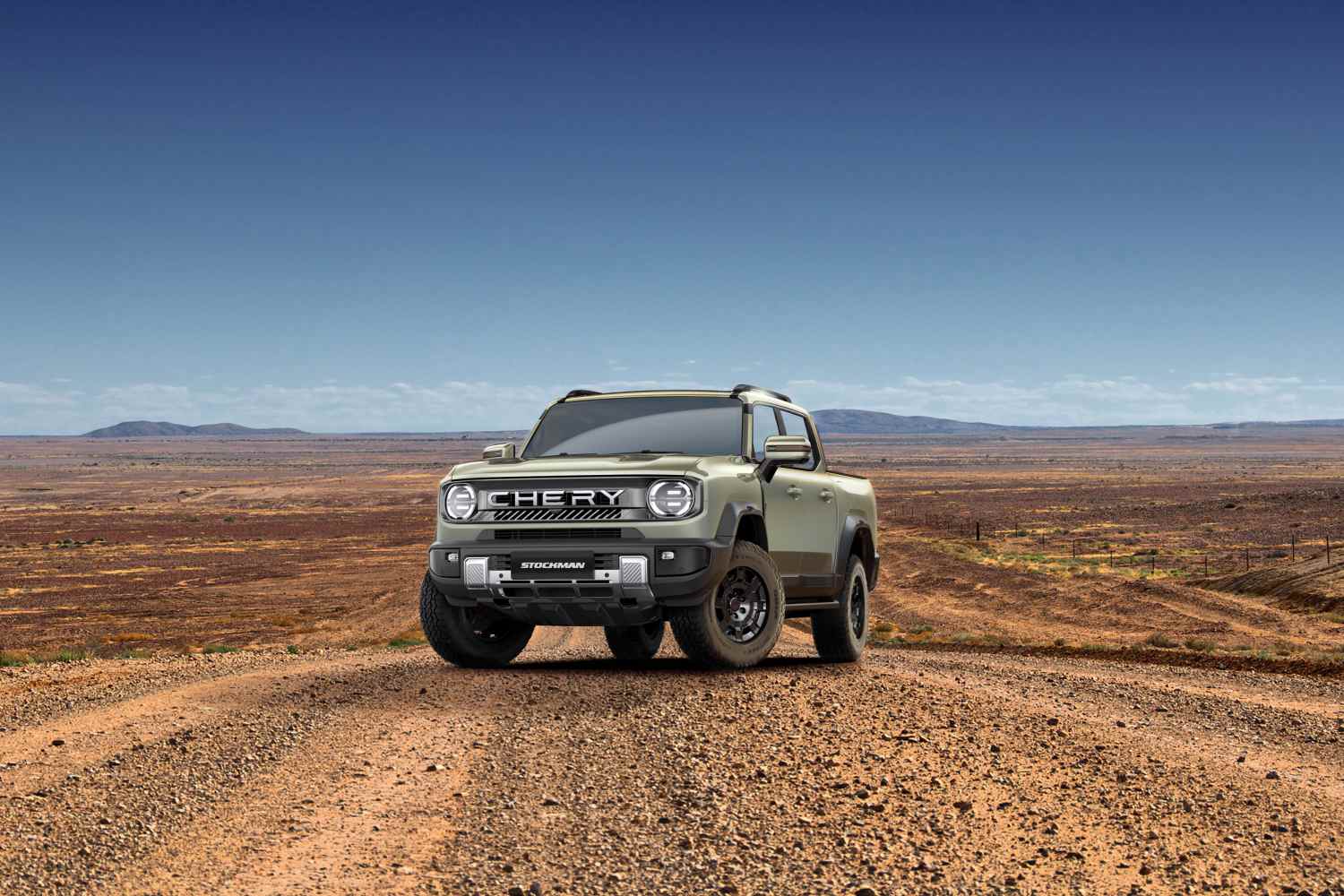
This is the updated 25MY car, with a bigger 22.7kWh battery, 221kW of combined output and a claimed 103km of electric range. The Exceed sits second from the top of a four-model range, and it’s landed in a class that’s become crowded and cheap. The BYD Sealion 6, MG HS Super Hybrid, Chery Tiggo 8 and the GWM Haval H6 PHEV all sit well below it on price, and the Kia Sorento PHEV matches it almost to the dollar while offering seven seats.
2026 Mitsubishi Outlander PHEV Exceed AWD — at a glance |
|
|---|---|
| Price | $71,640 before on-road costs (approximately $76,000 drive-away, depending on your state) |
| Powertrain | 2.4L petrol plug-in hybrid, twin electric motors, Super All-Wheel Control AWD |
| Power / torque | 221kW combined system output (engine 98kW / 195Nm) |
| 0–100 km/h | Not Published |
| Battery / electric range | 22.7kWh, up to 103km (ADR 81/02) |
| Fuel economy (claimed) | 1.2 L/100km combined (ADR 81/02, plug-in test cycle) |
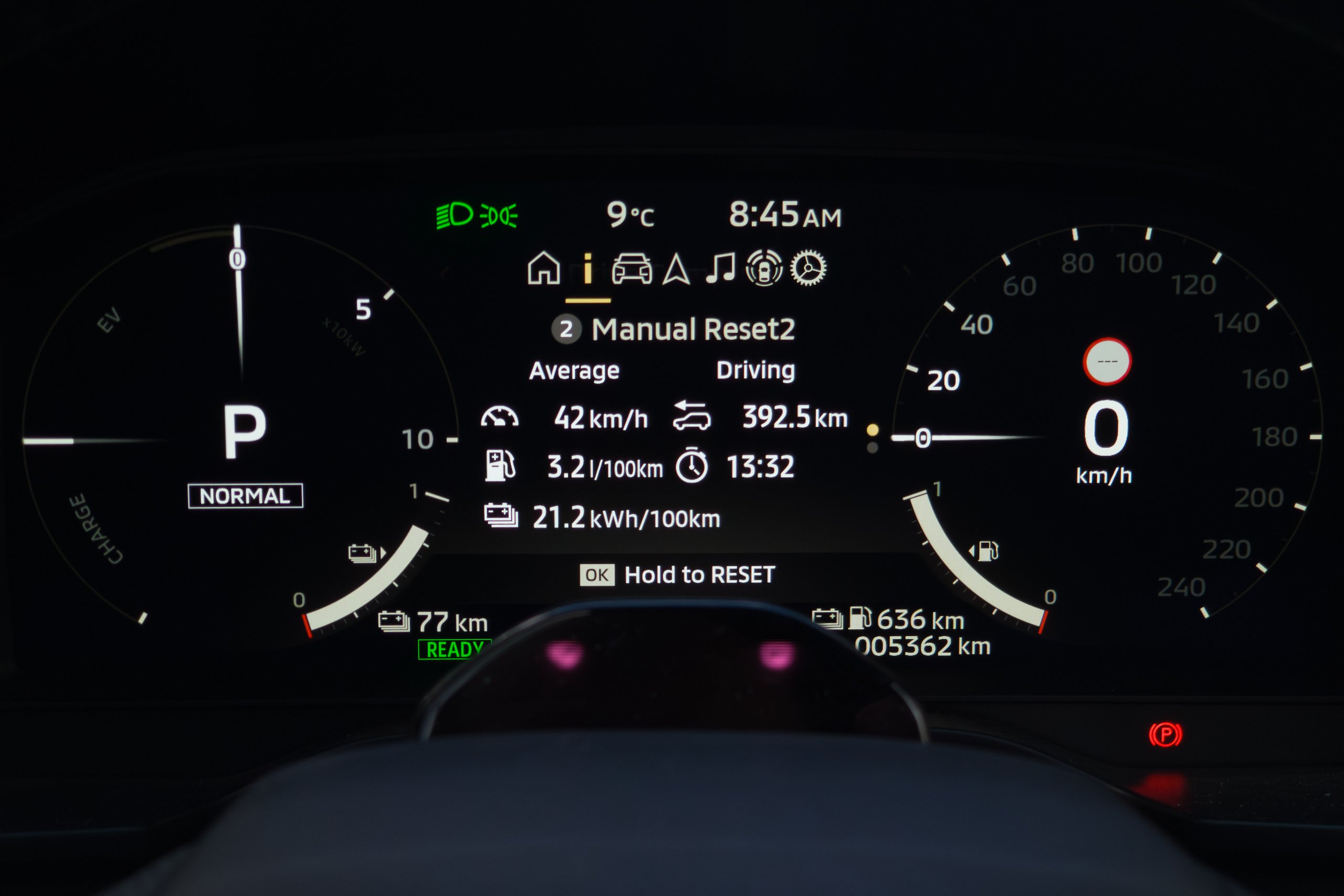
| Fuel economy (observed) | Trip computer: 3.0 L/100km plus 20.8 kWh/100km over 432.9km; fuel gauge barely moved |
| Warranty | Up to 10 years / 200,000km, conditional on dealer servicing |
| ANCAP | 5 stars (2022 rating, re-affirmed 2025 for PHEVs built from July 2025) |
The Good |
The Not-So-Good |
|---|---|
| A very smooth ride for something this large. The Australian suspension tuning is real. | The CHAdeMO charge port locks you out of nearly every public fast charger in the country. |
| Physical buttons, and safety systems that don’t nag. | The cruise control isn’t as intuitive to use as other cars. |
| Genuine road presence, and it pops in Red Diamond. | The price. Several plug-in rivals do a similar job for $15,000 to $25,000 less. |
A week with the Mitsubishi Outlander PHEV
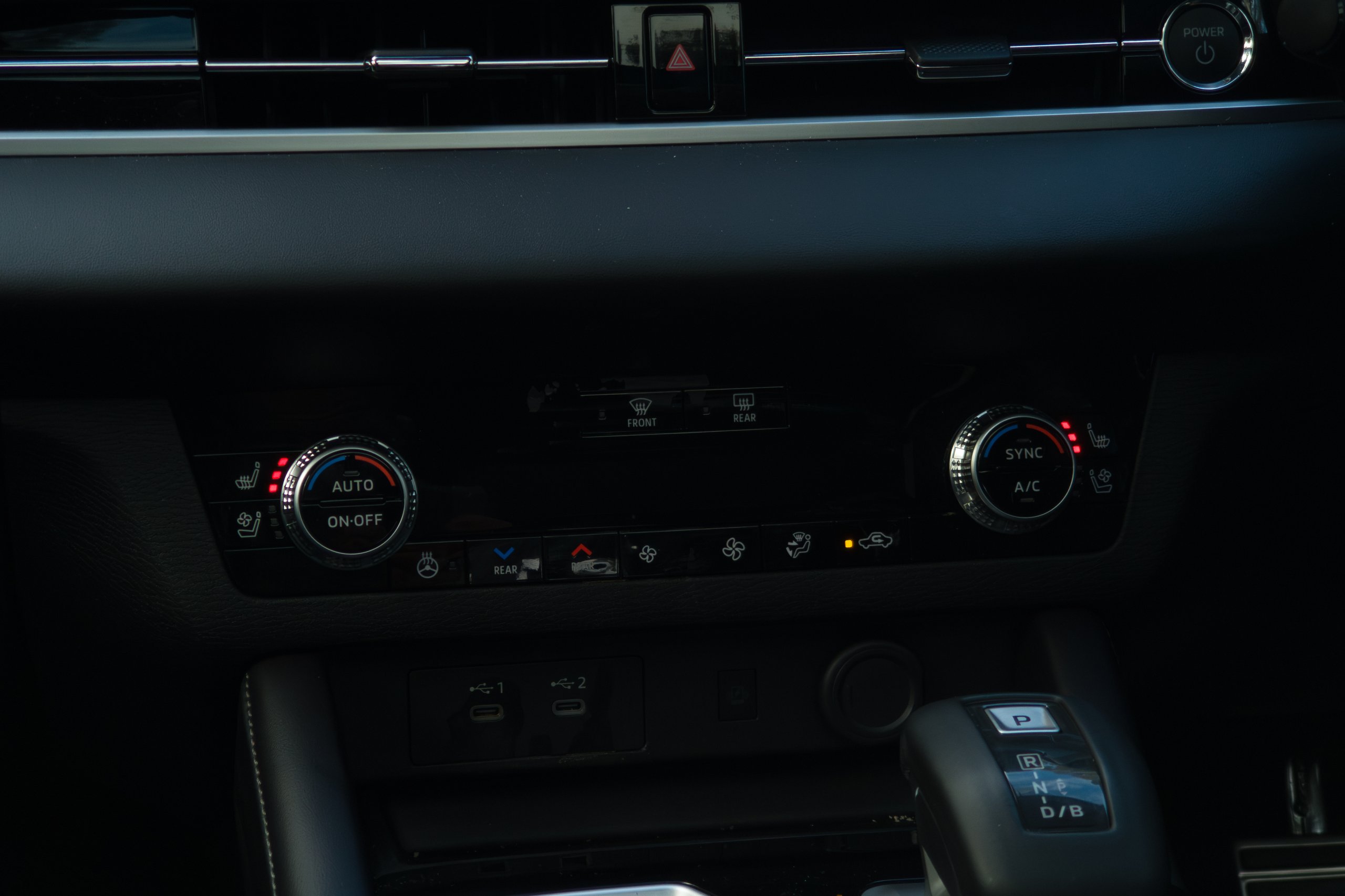
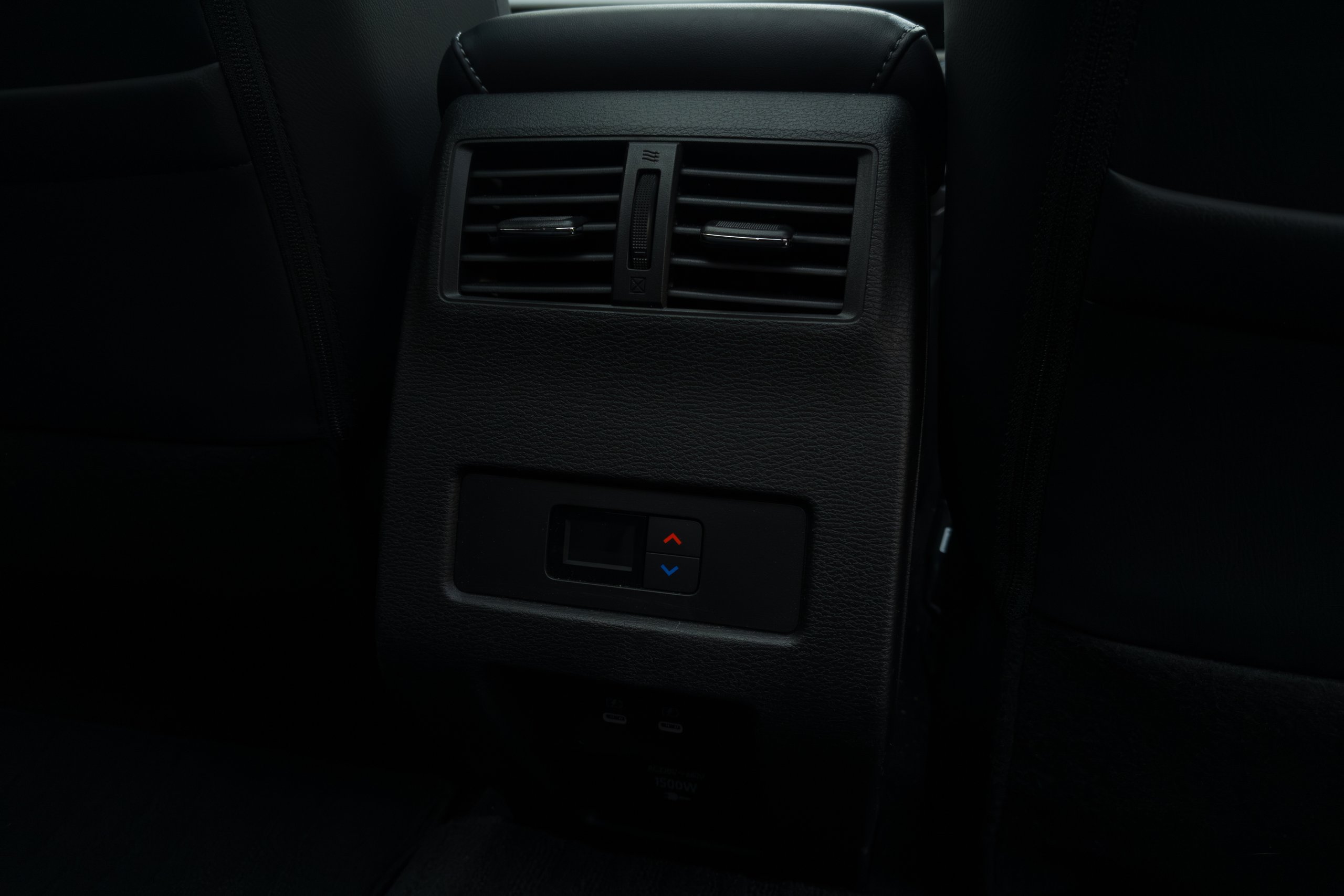
My afternoons are spent working in a freezer warehouse, and I usually run a couple of workmates home after the shift. This week that meant two adults and their bags of freezer gear in the back of the Outlander. There was plenty of room and no one was struggling for space. Up front you get heated seats and a heated steering wheel, which after a freezer shift you appreciate more than most reviewers would. The heated rear seats are Exceed Tourer only, so the back row makes do with its own climate zone and vents.
The week’s numbers: 432.9 kilometres, 14 and a half hours of driving, and a trip computer showing 3.0 litres per 100km alongside 20.8kWh per 100km. The measurement I trust more is the fuel gauge, which honestly didn’t move enough to notice. It was a mix of suburban running and a fair bit of highway, and I mostly just left it in EV mode and let the car sort out the rest.
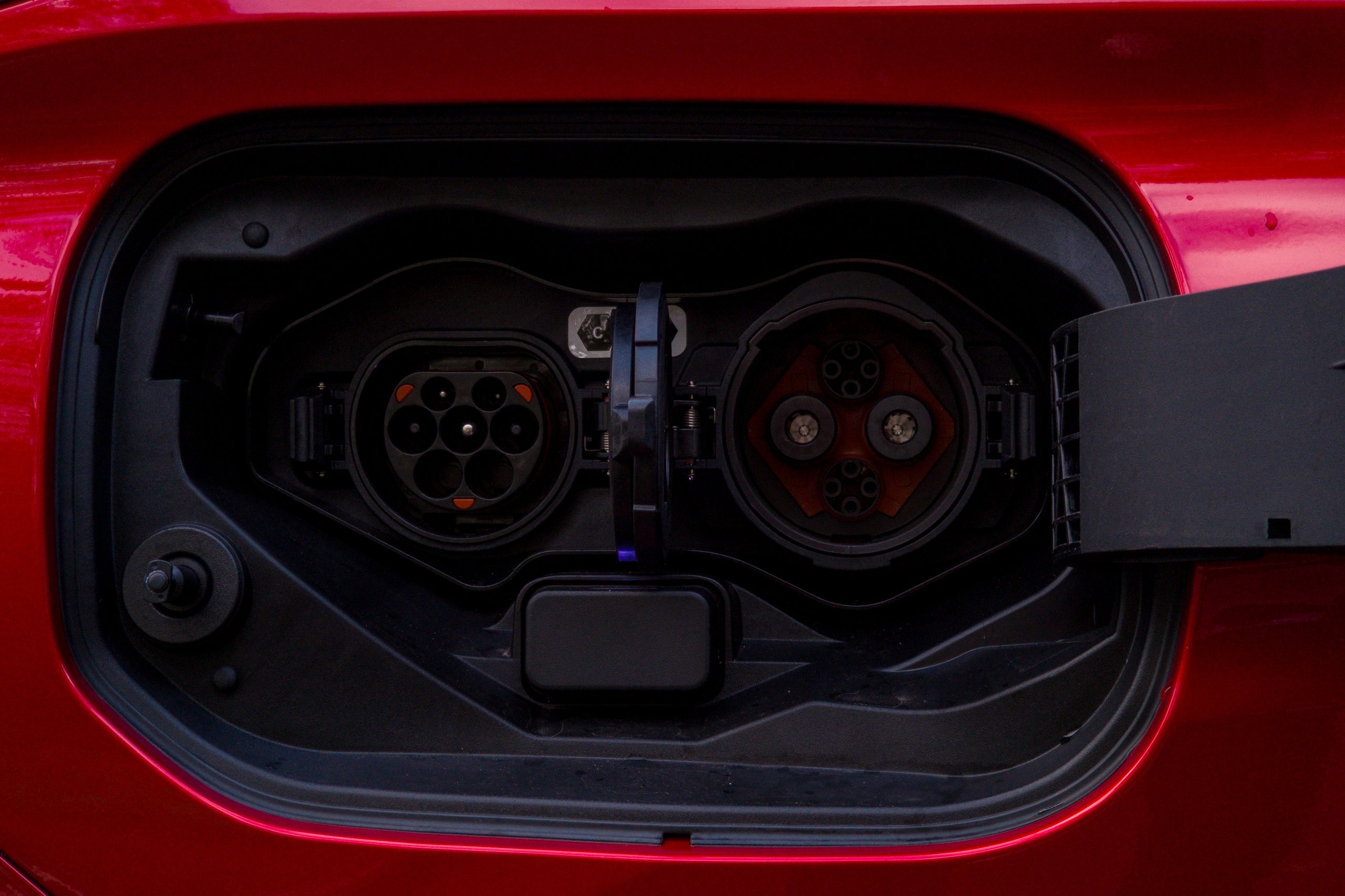
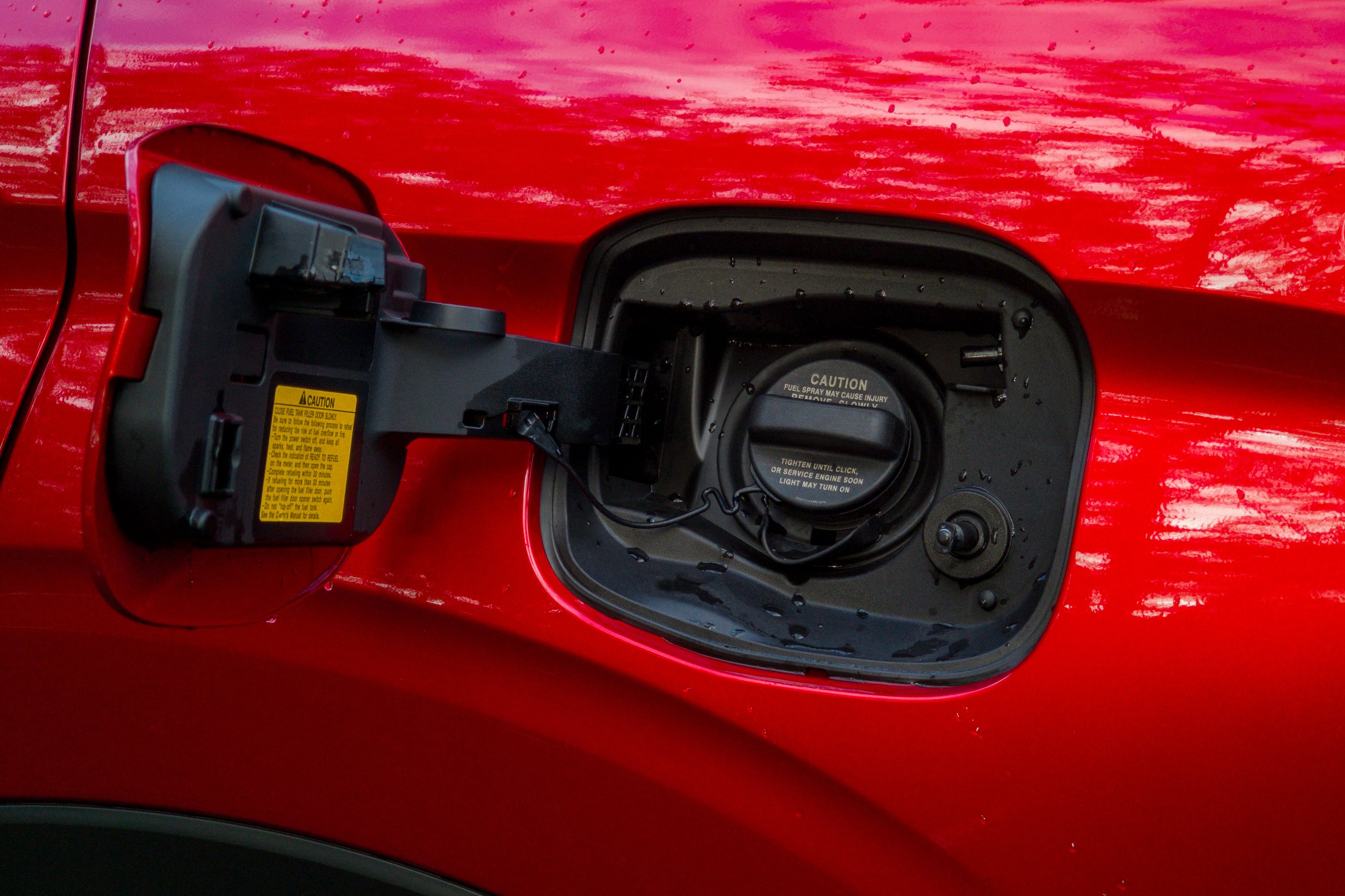
Charging was a trickle charge overnight from a portable charger, once, maybe twice. That’s it. I never plugged in anywhere else, and here’s the thing, I couldn’t have. The DC port is CHAdeMO, and the public network is CCS2 now. Mitsubishi’s 32-minute fast-charge claim might be true, but good luck finding a charger to test it on. For me it didn’t matter, because an overnight charge covered the week. It just makes the choice very simple: this is a charge-at-home car.
What does the Mitsubishi Outlander PHEV look like?
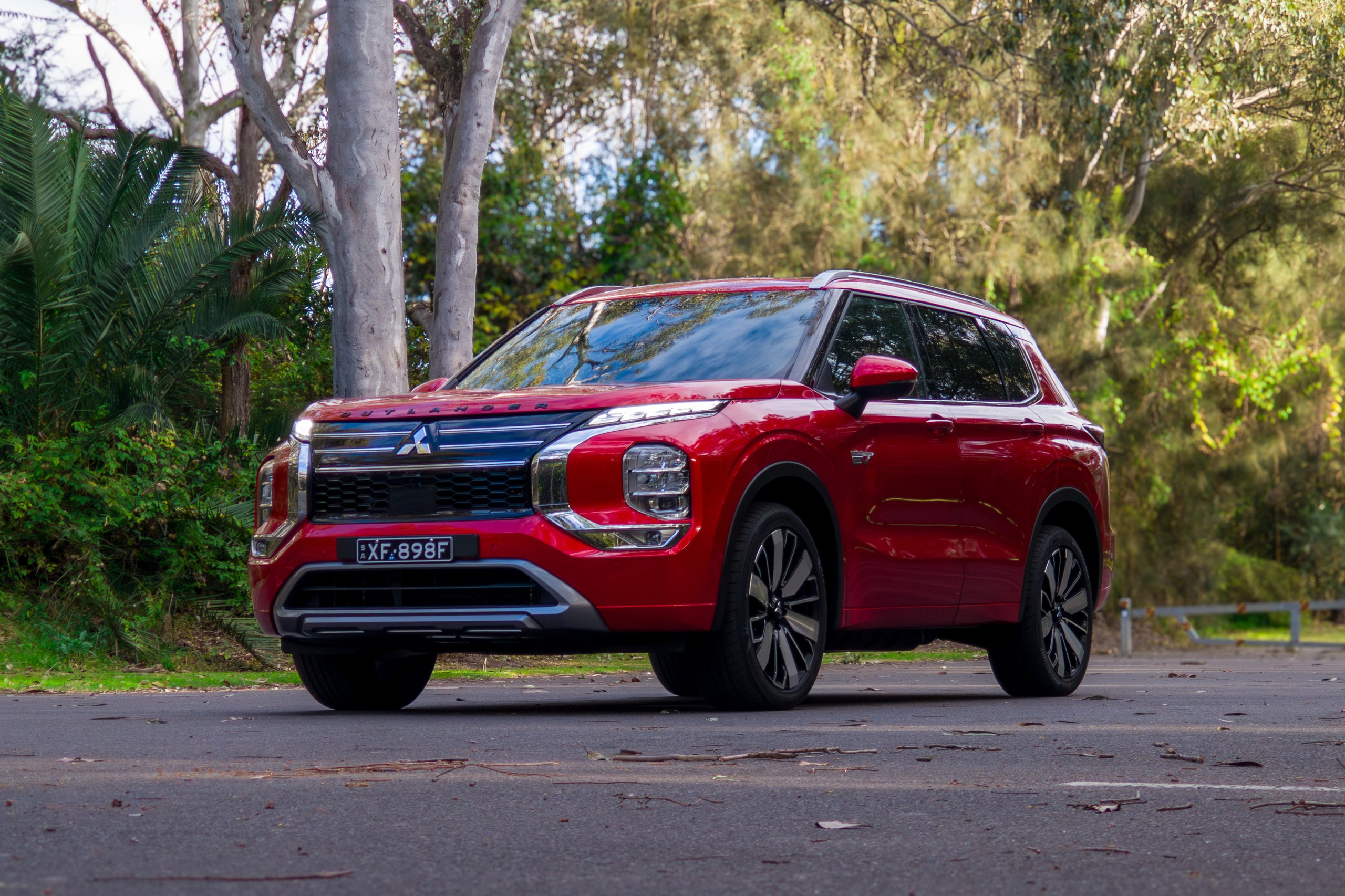
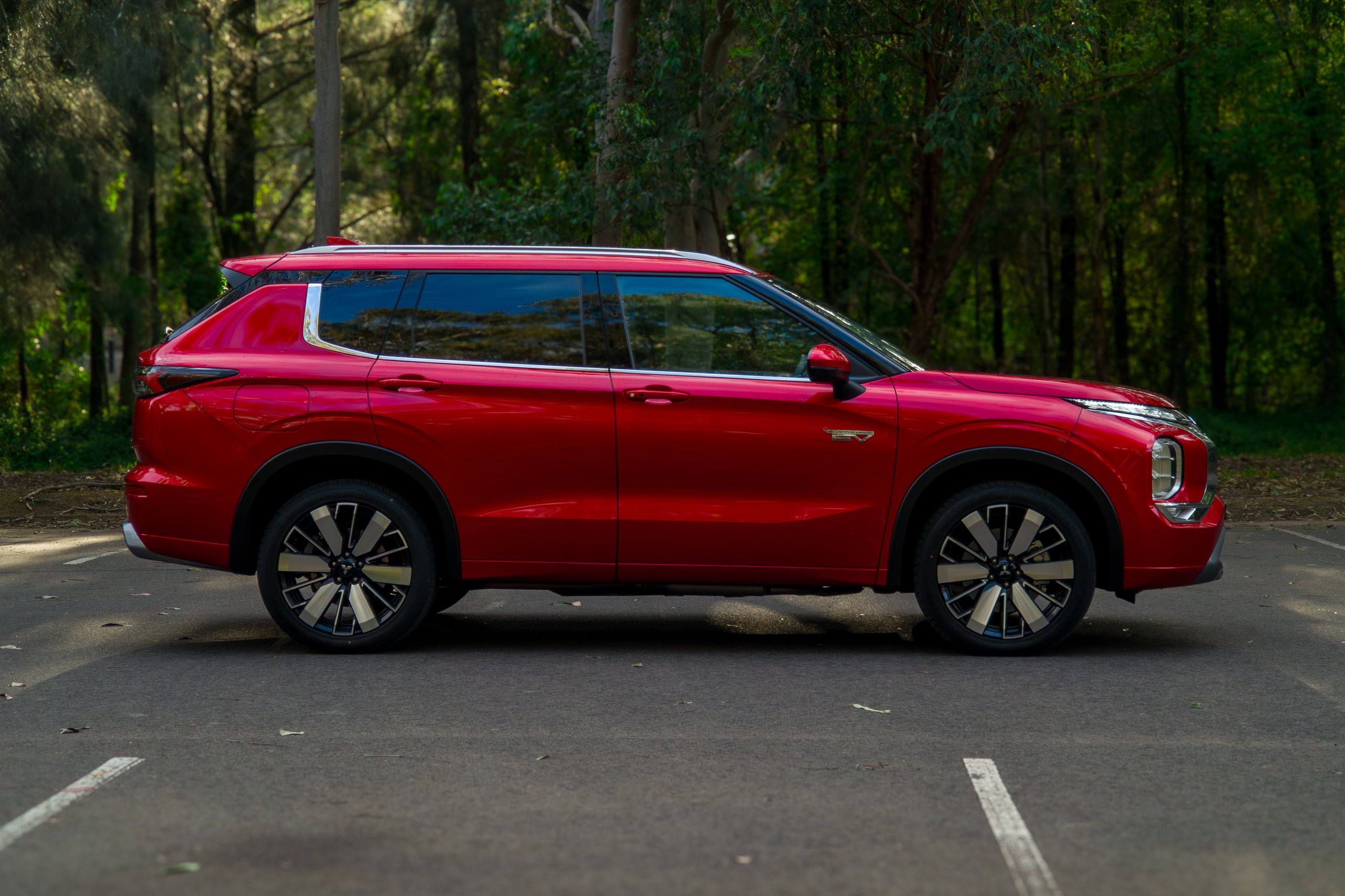
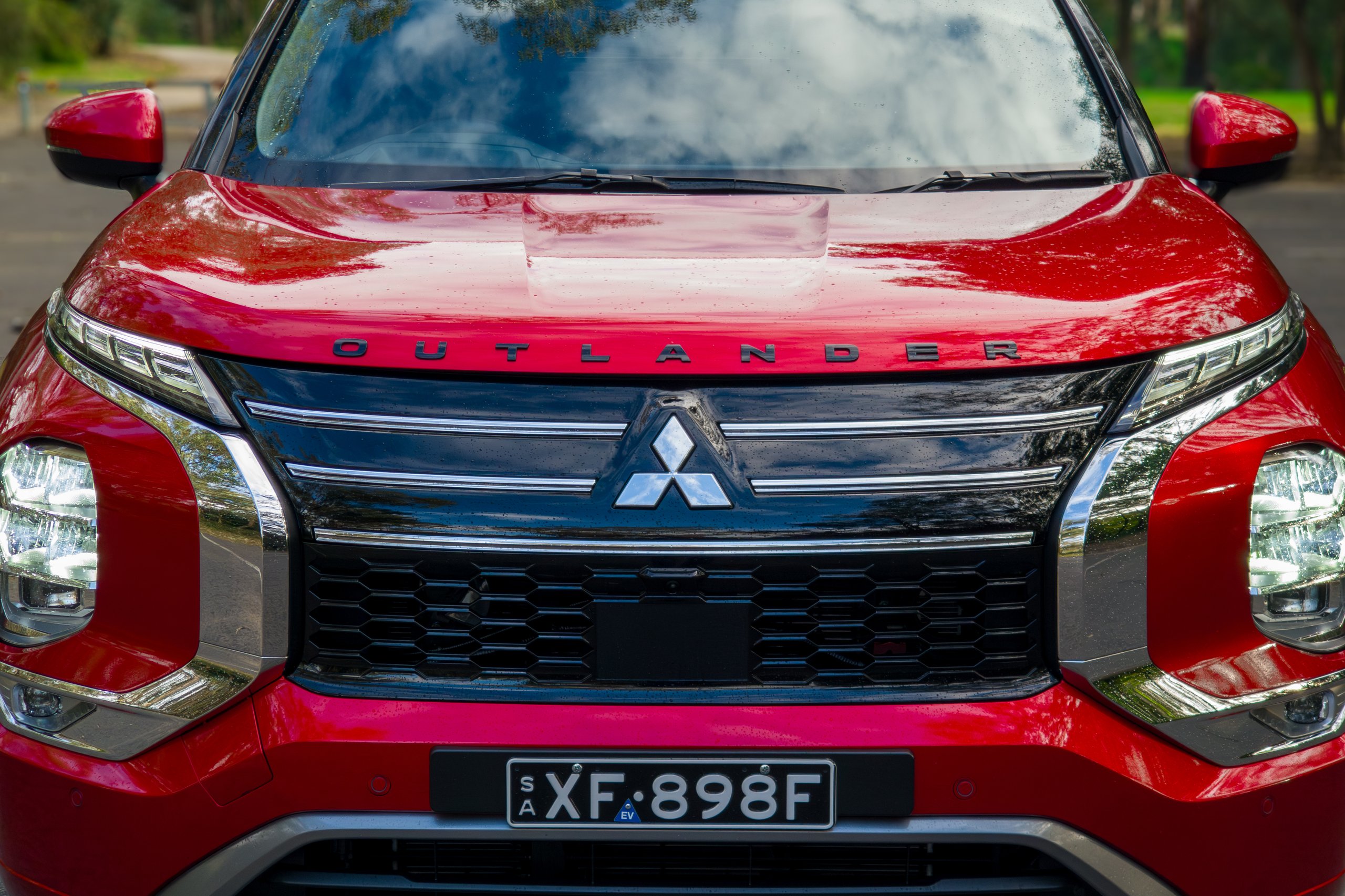
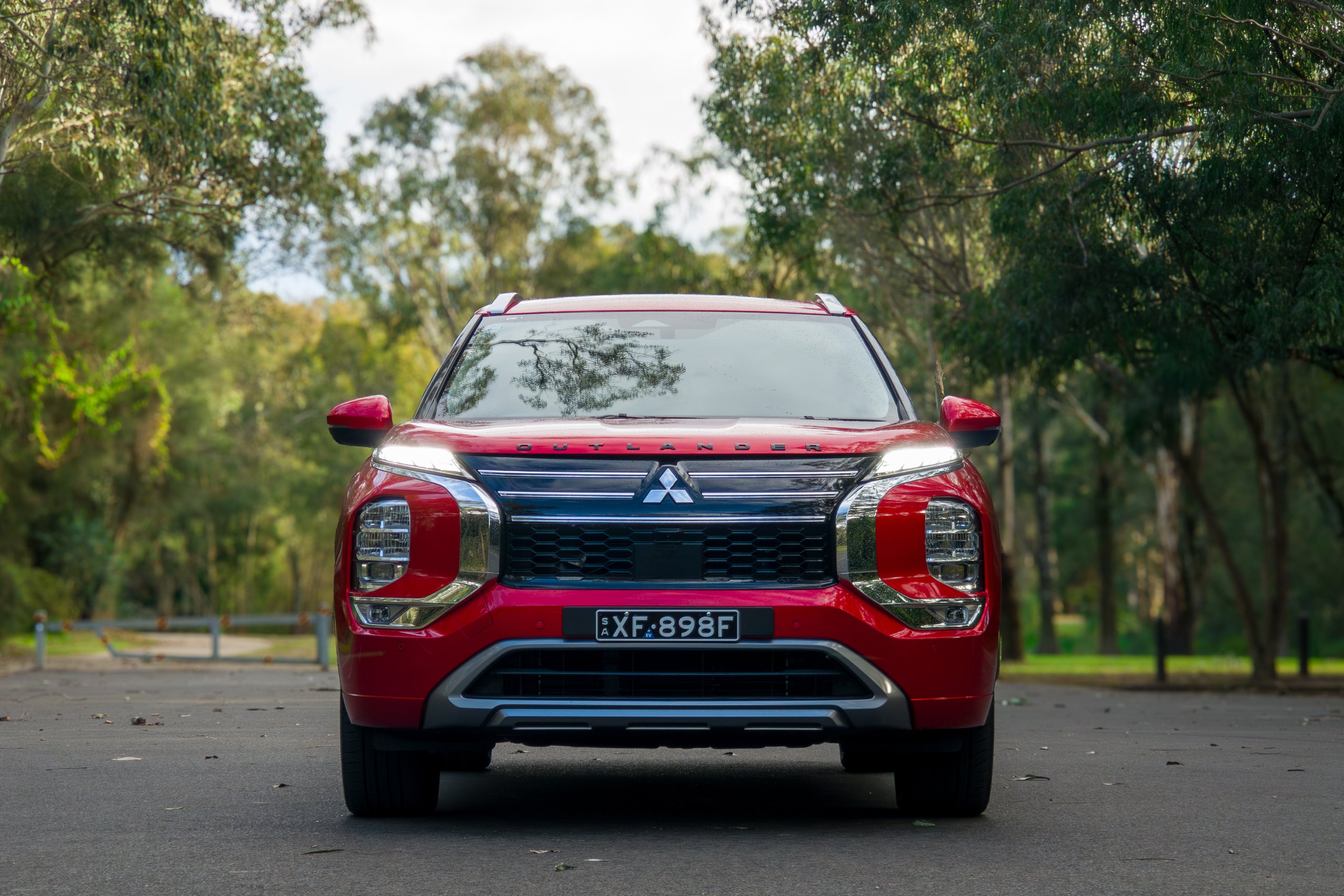
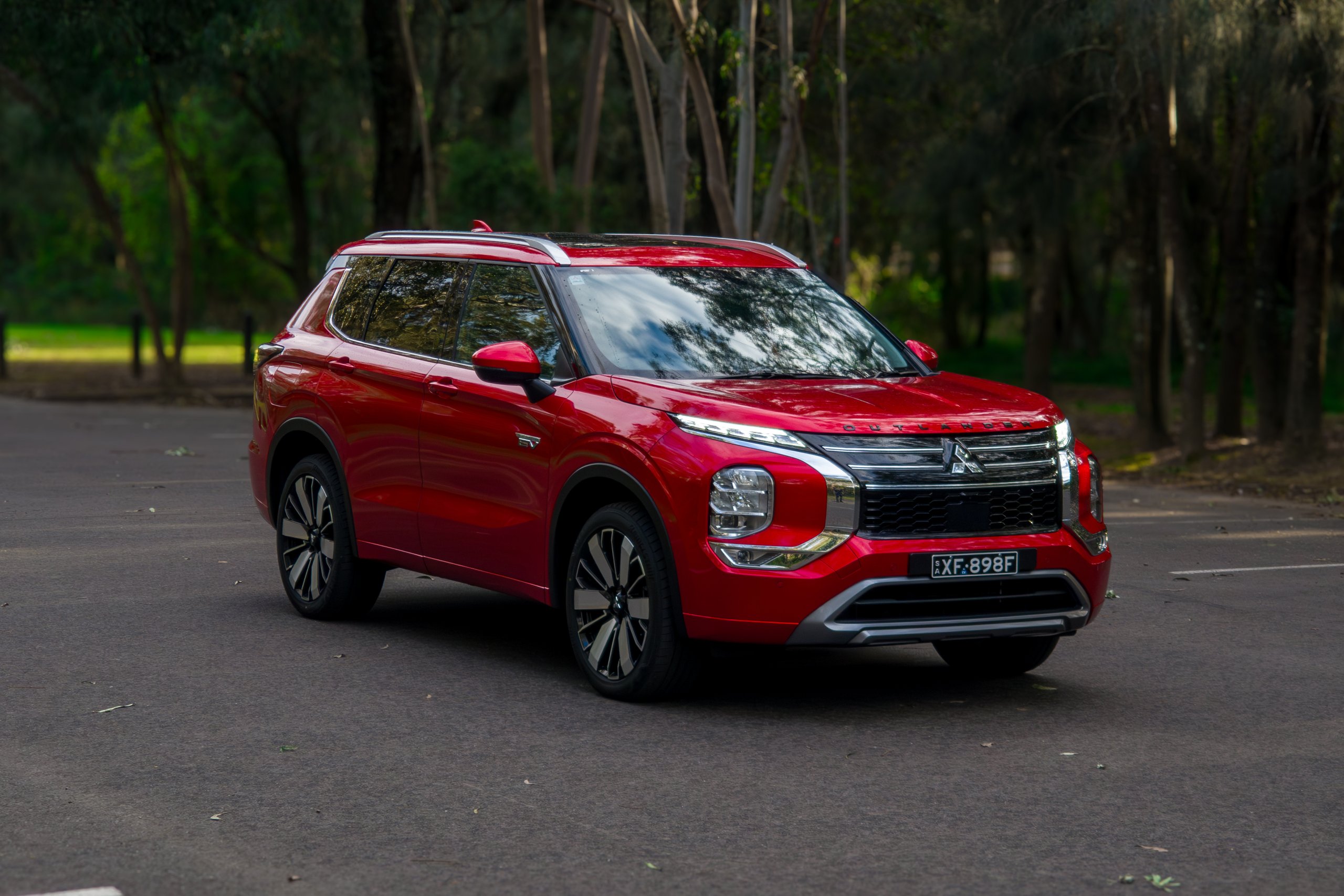
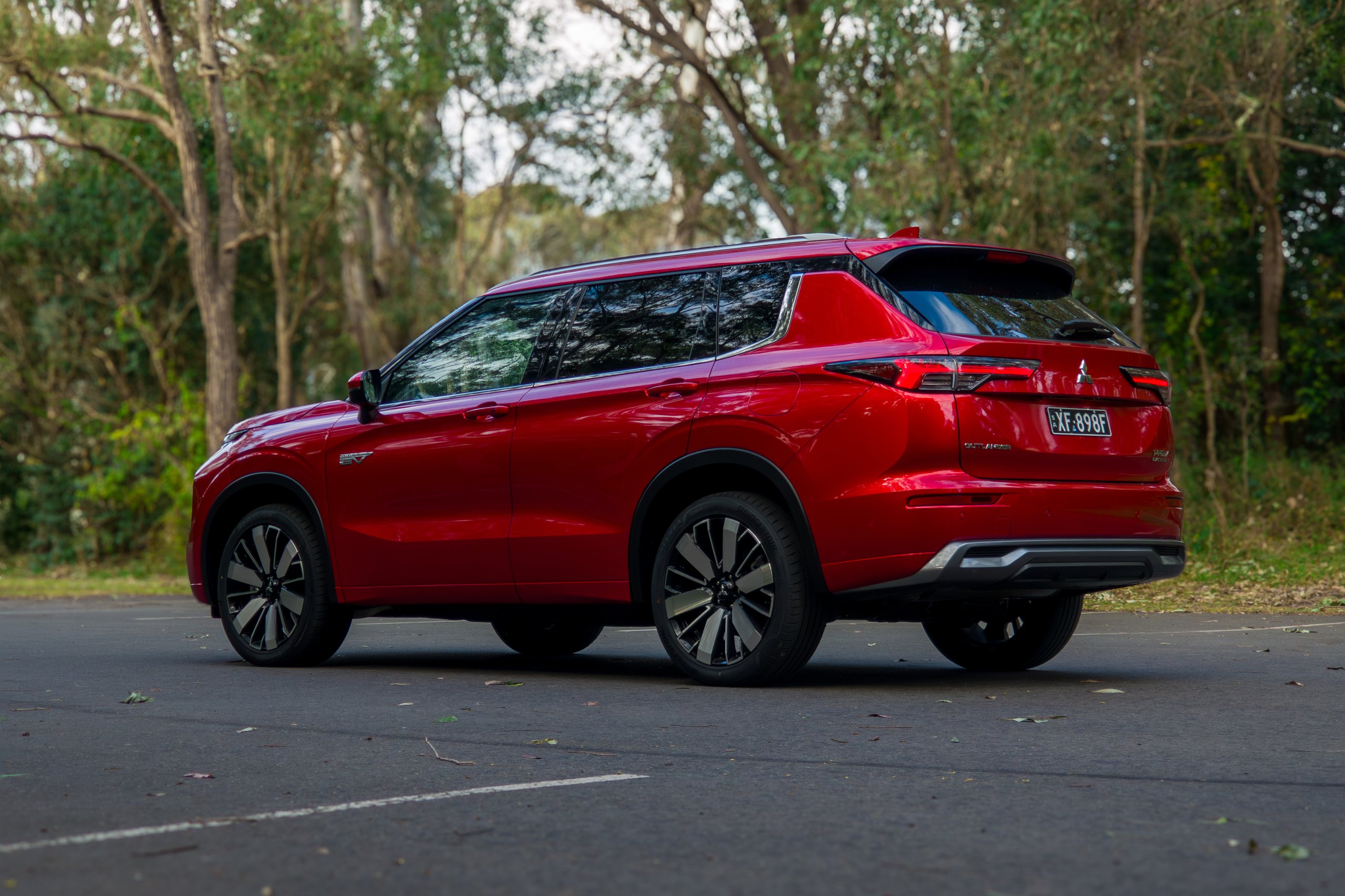
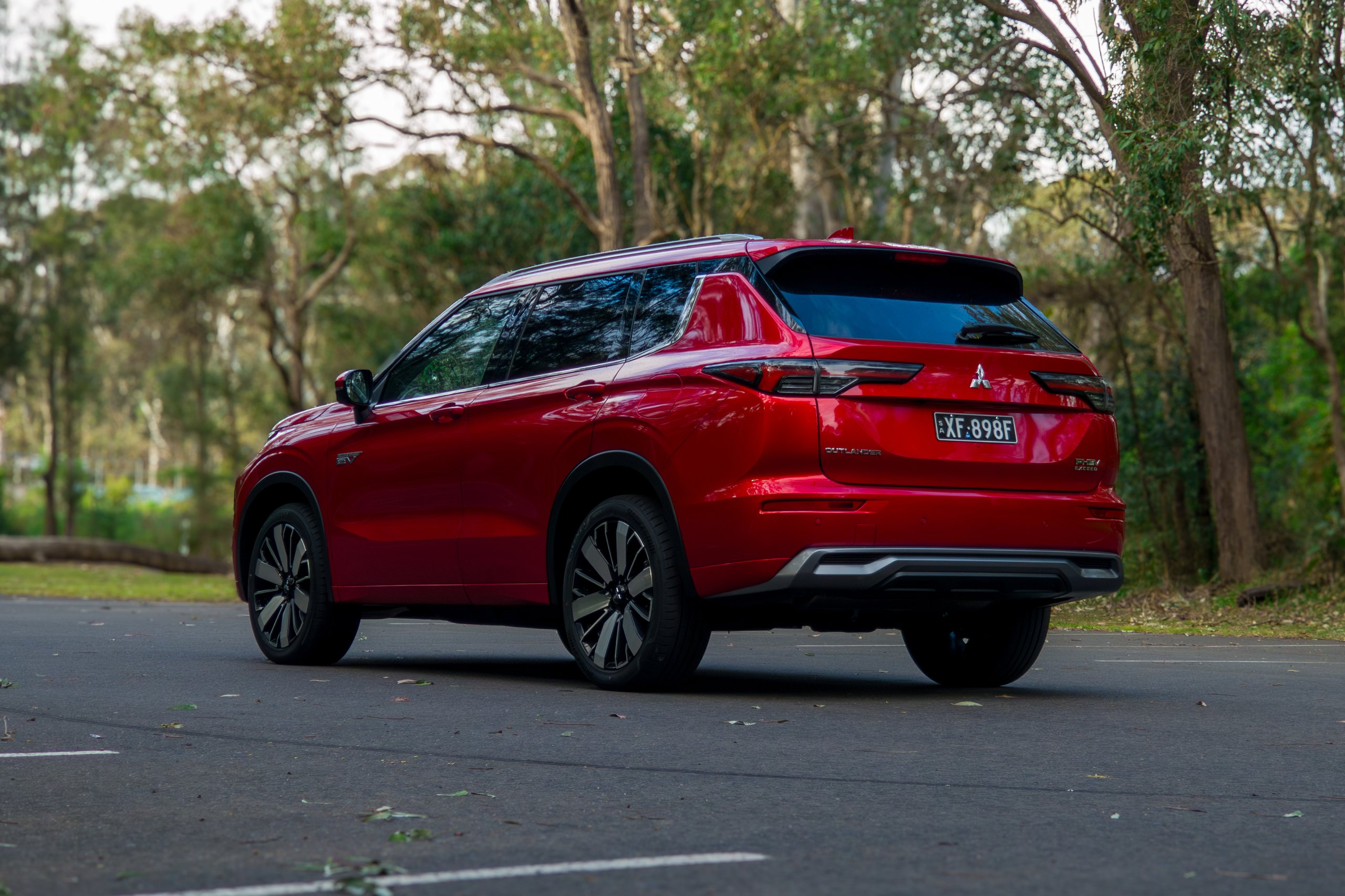
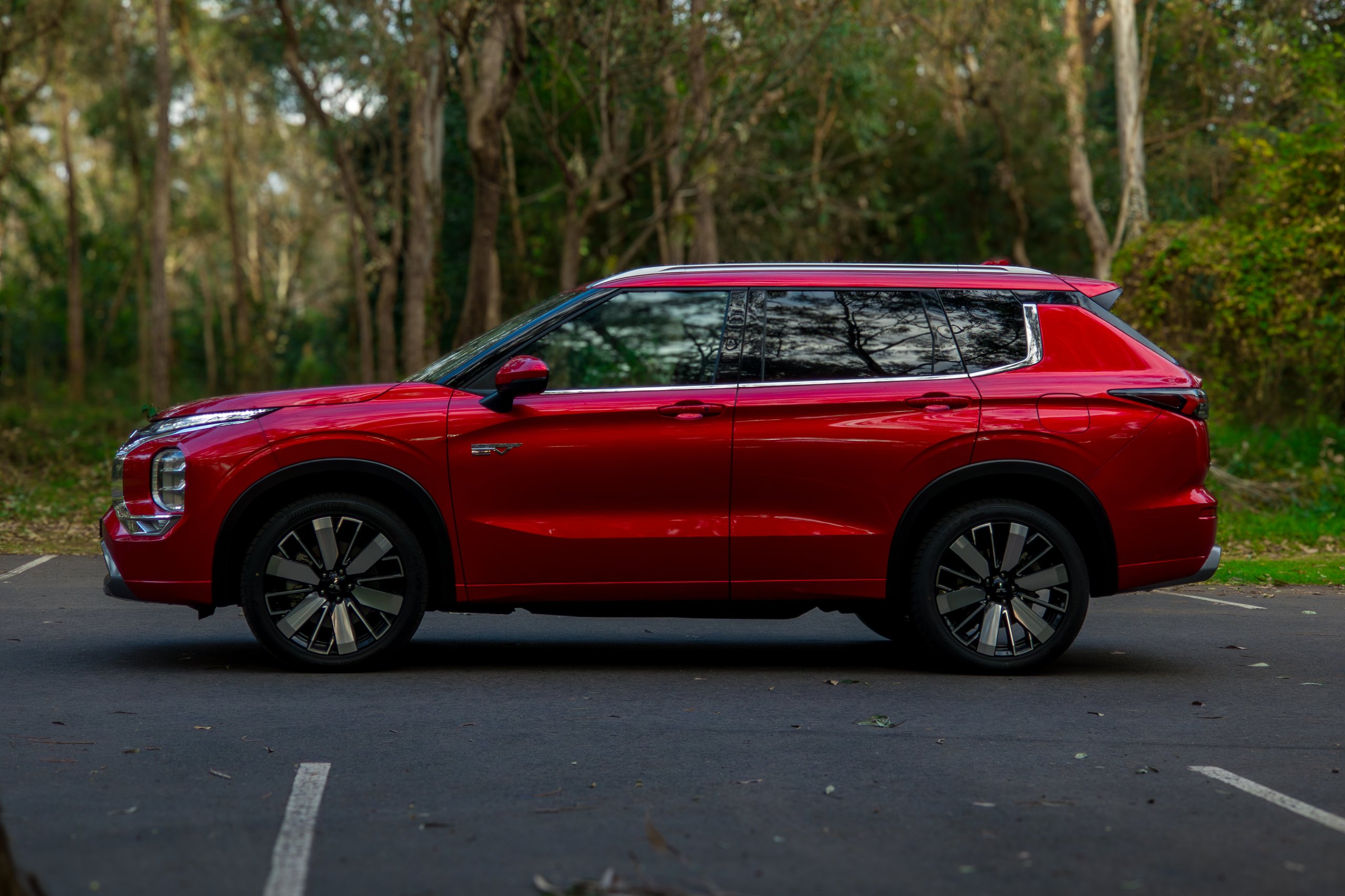
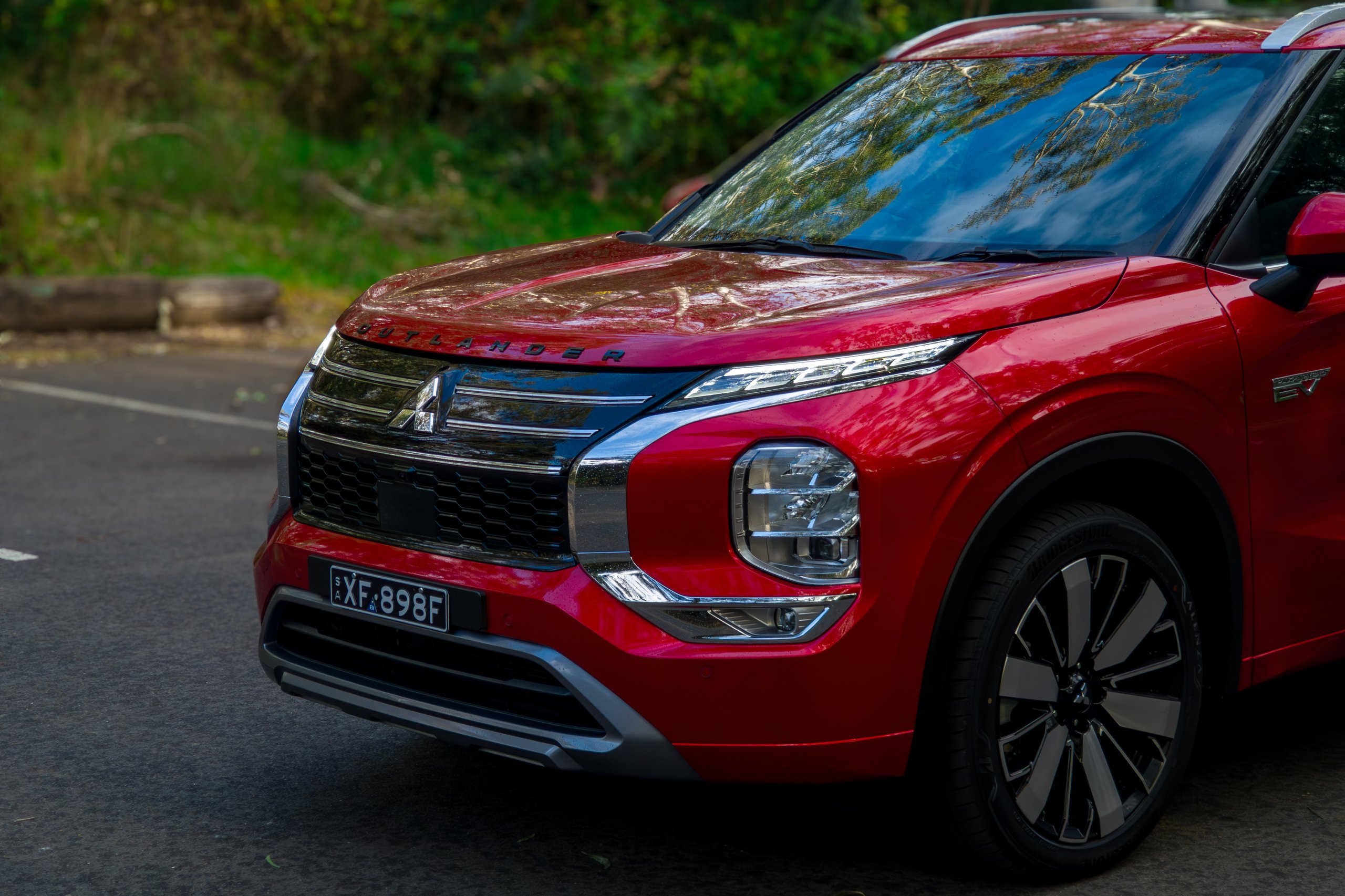
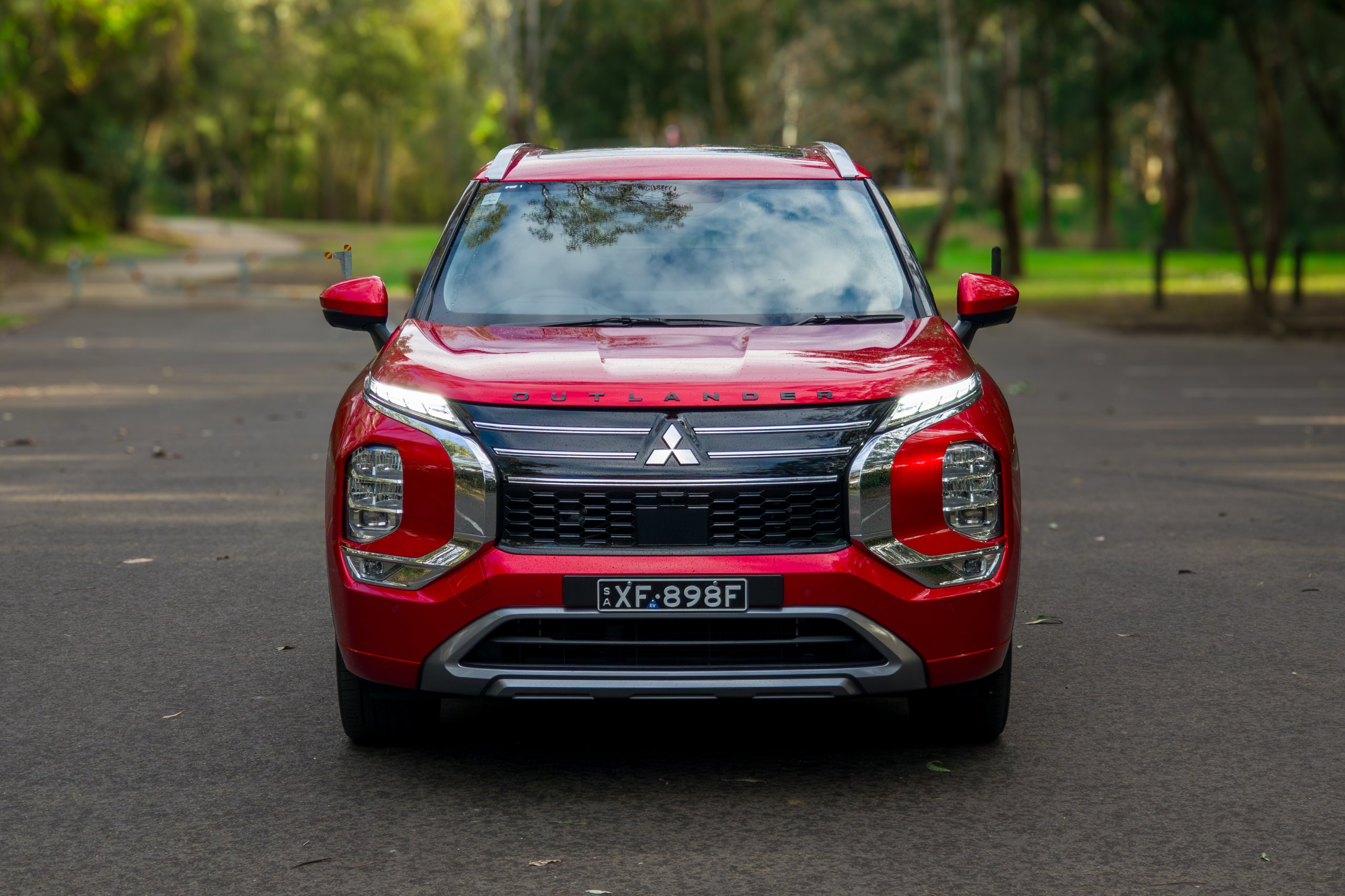
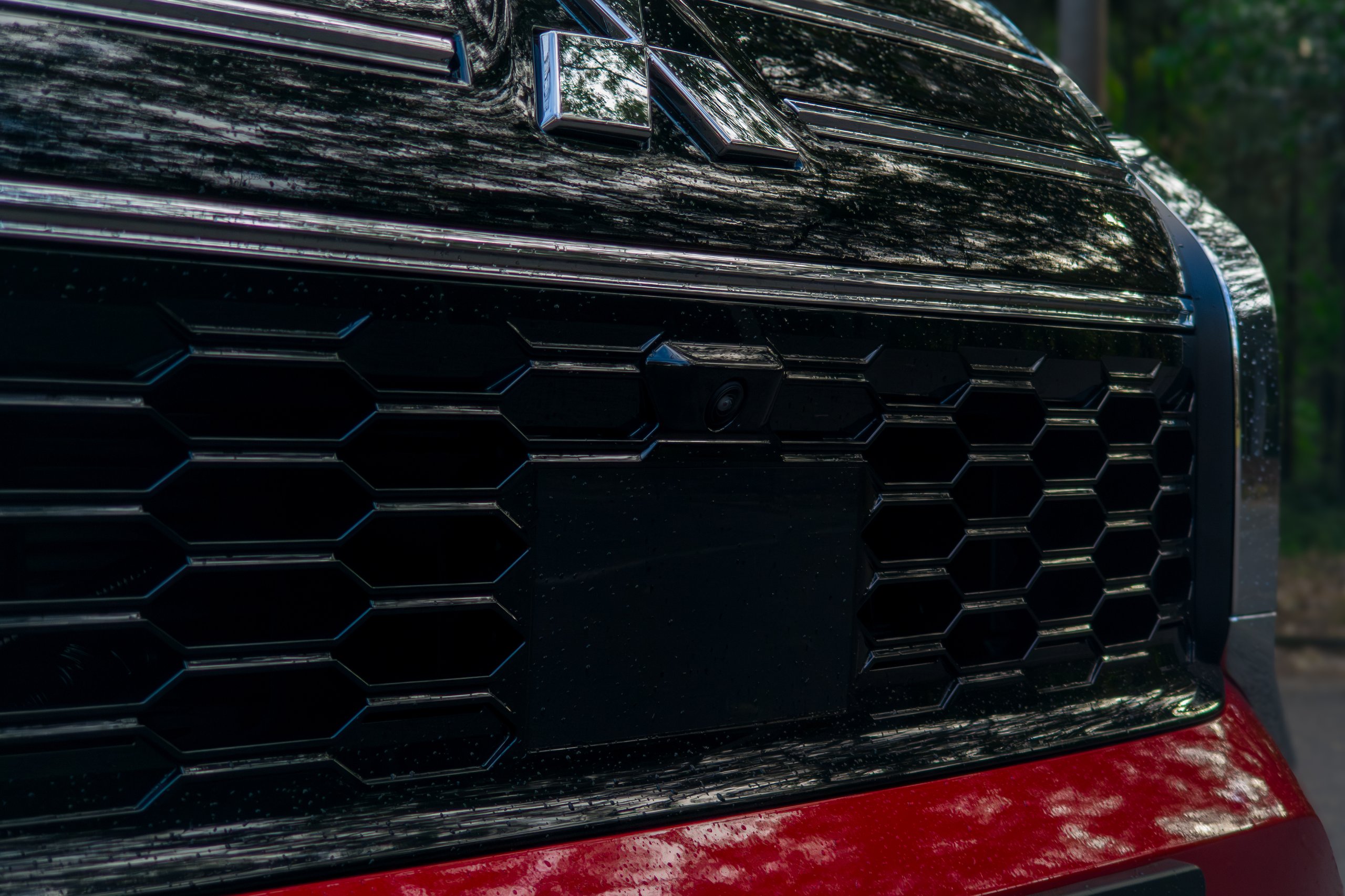
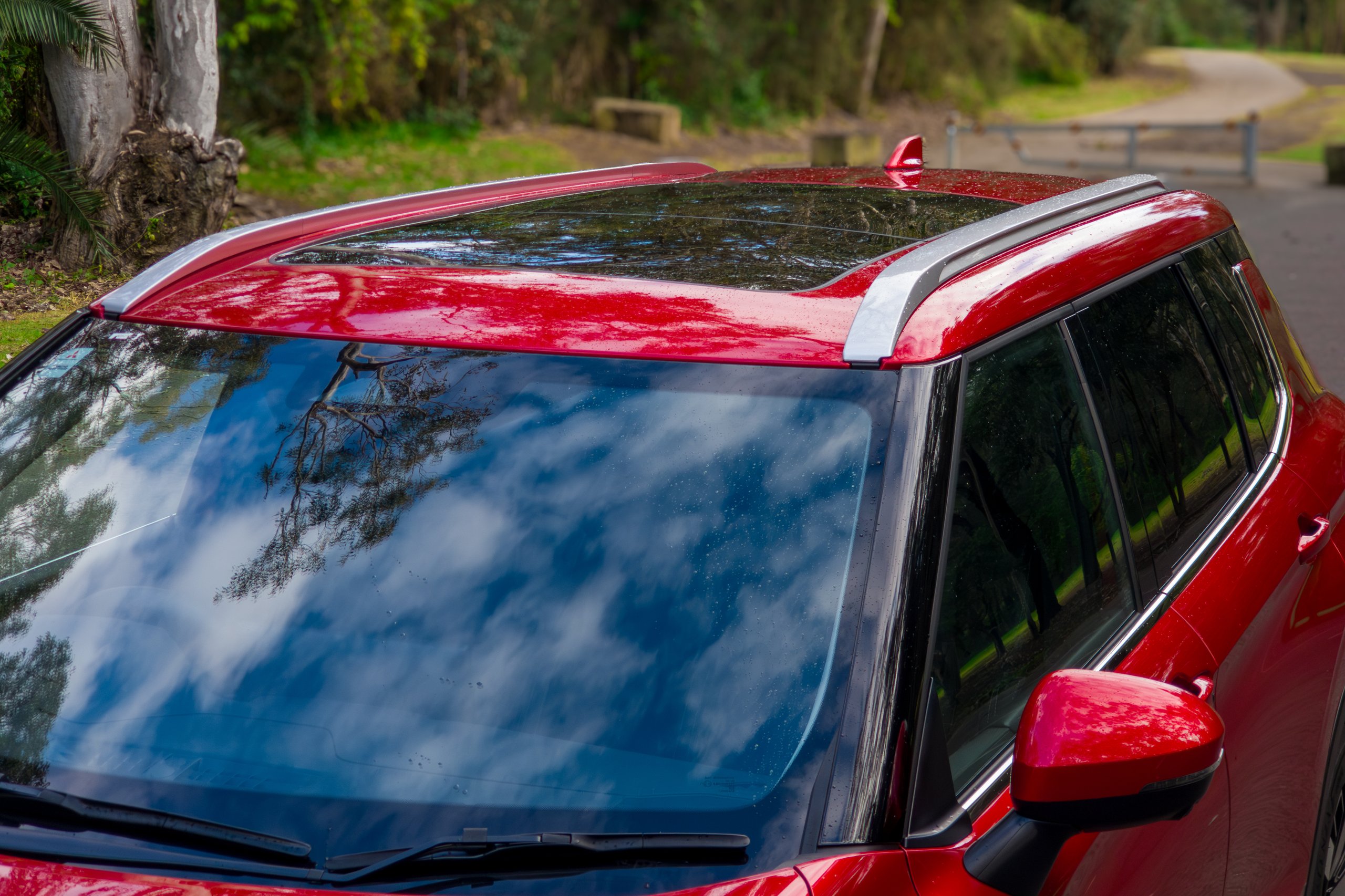
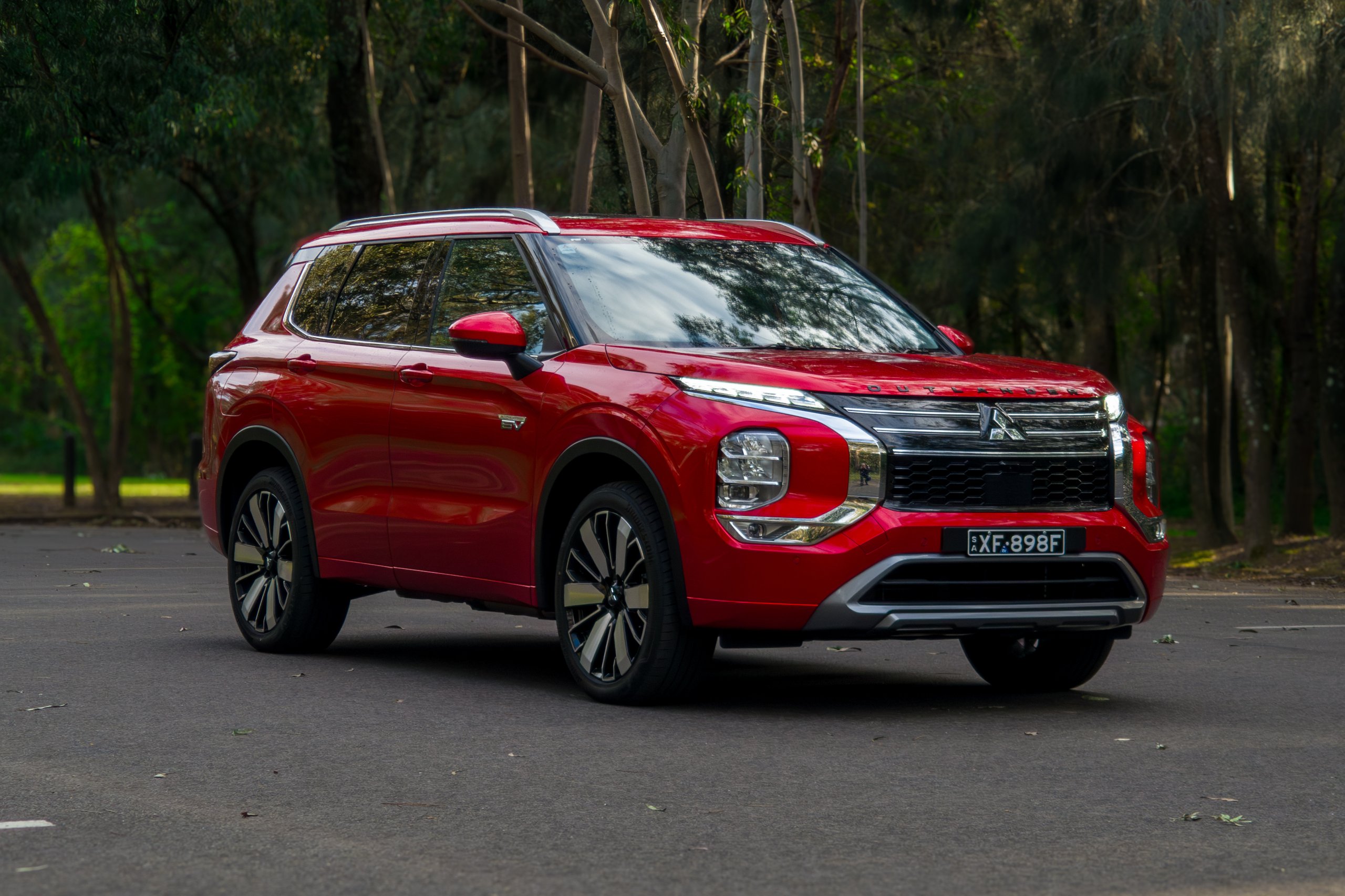
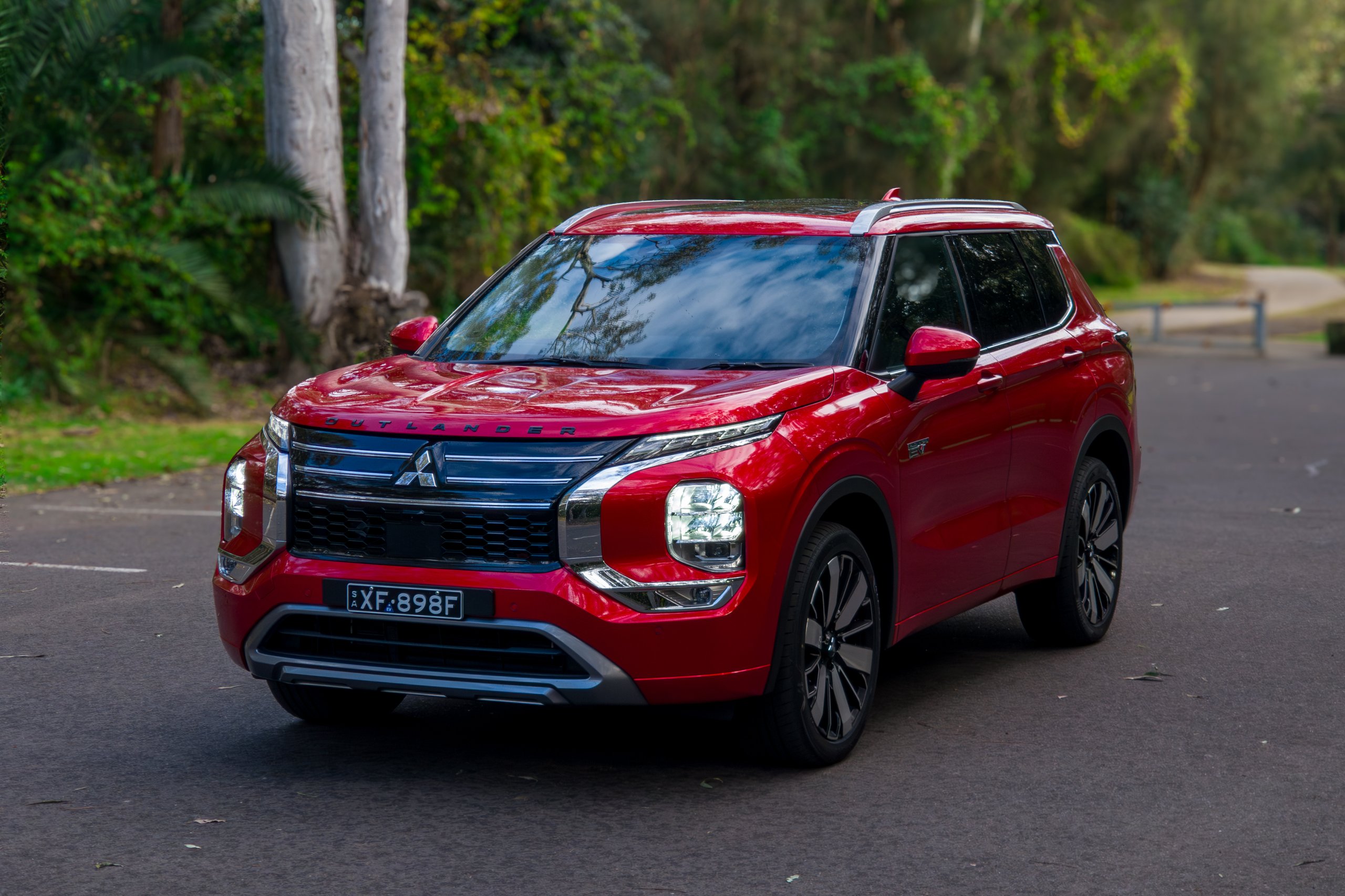
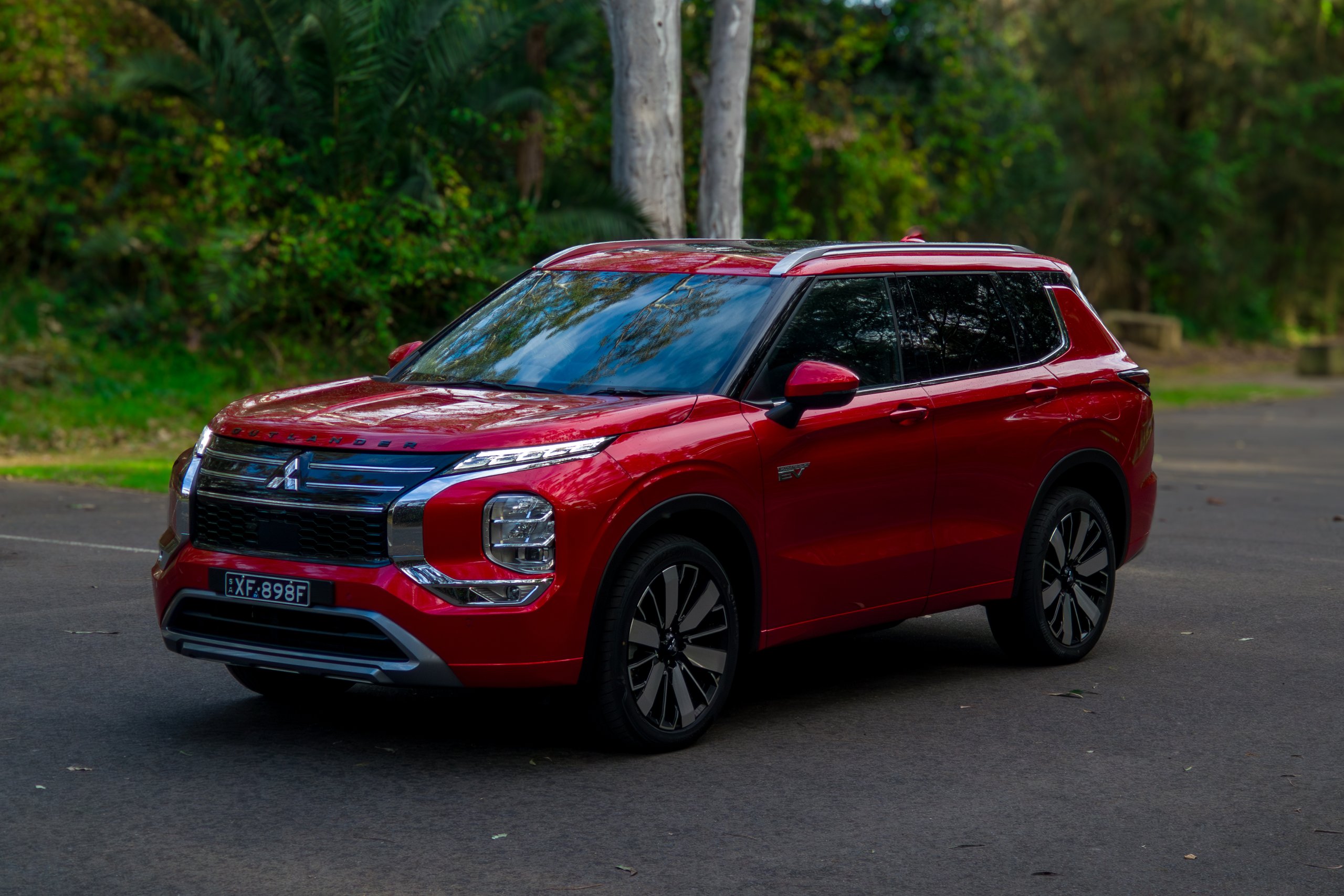
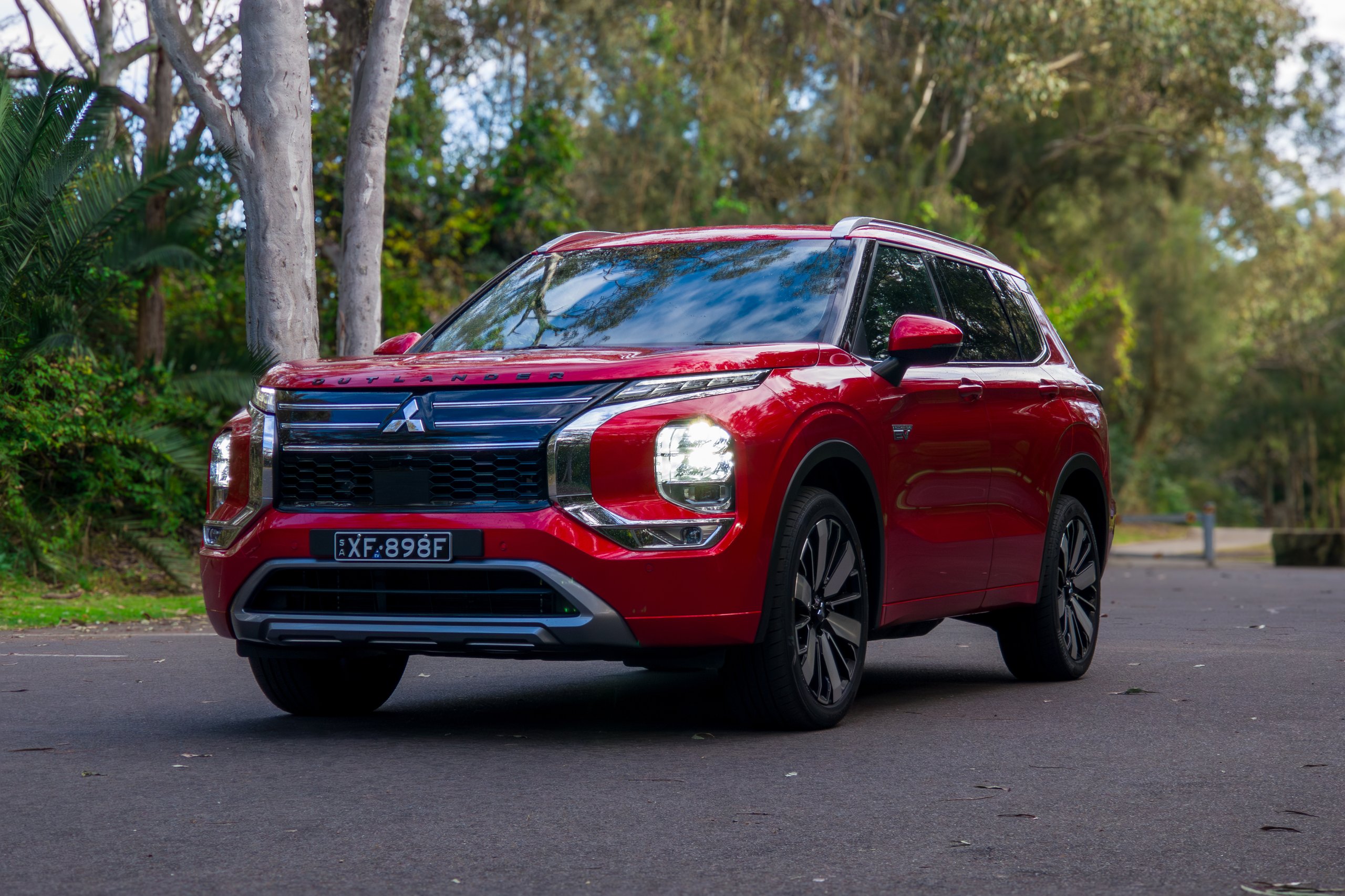
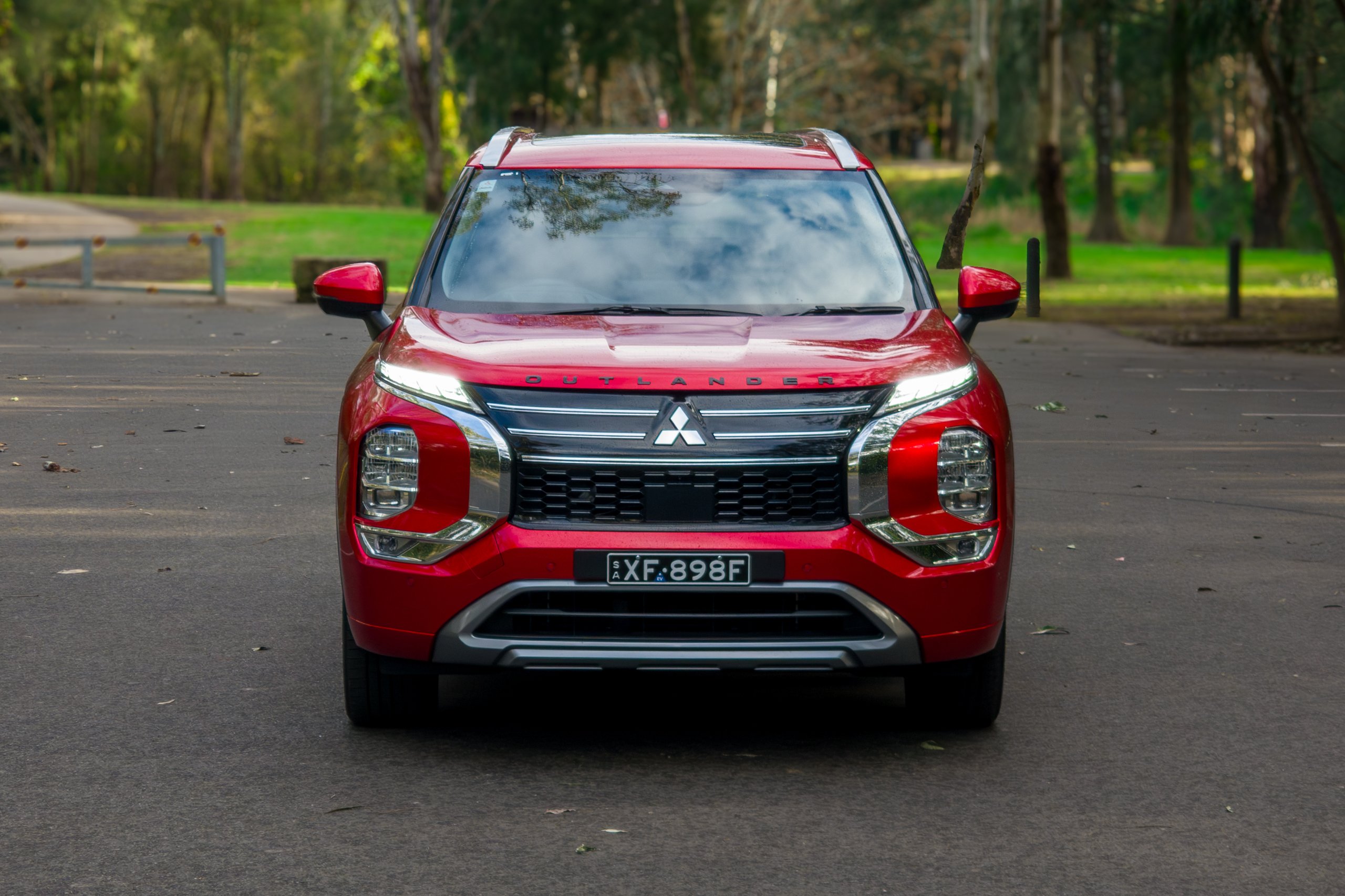
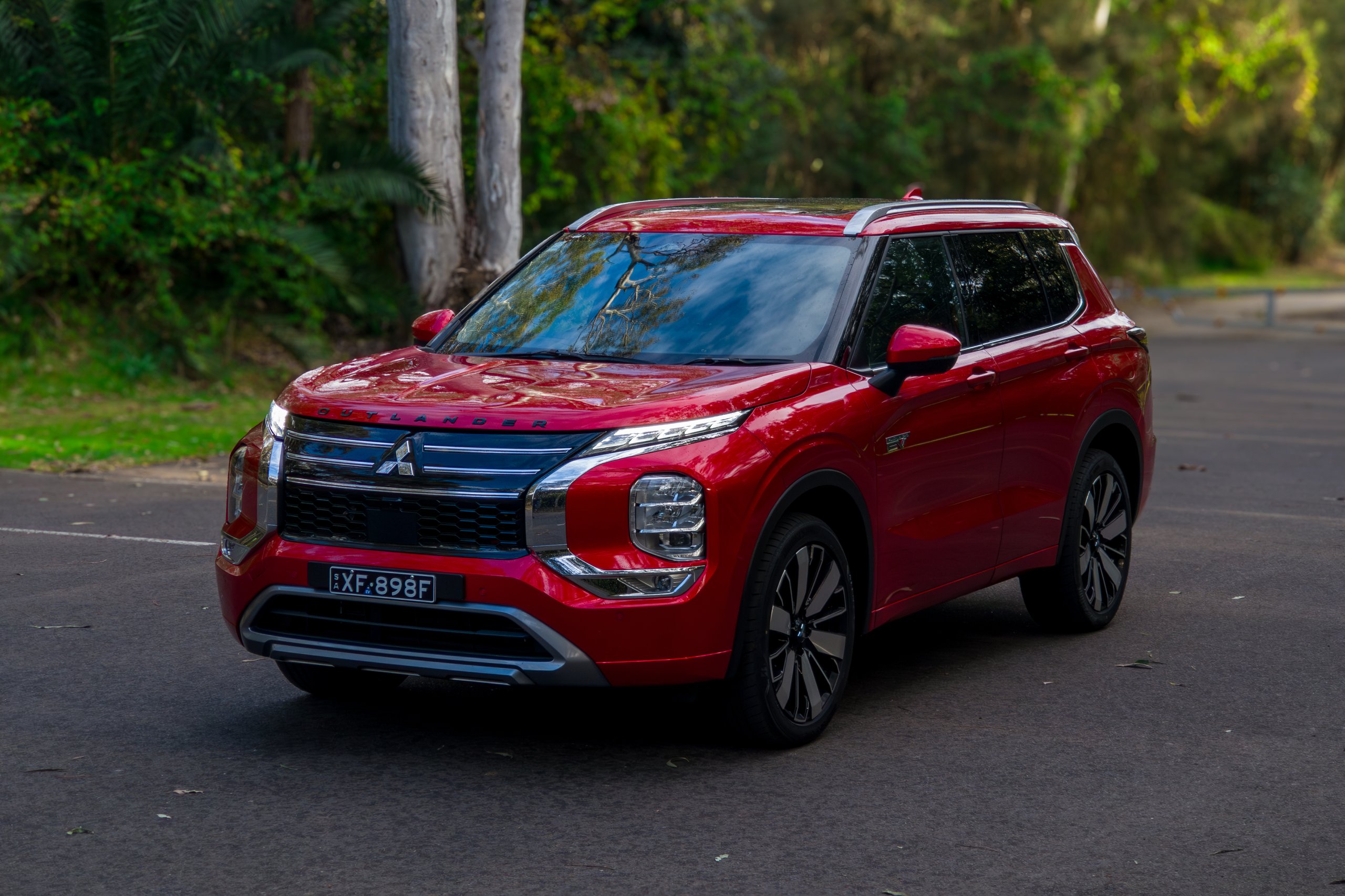
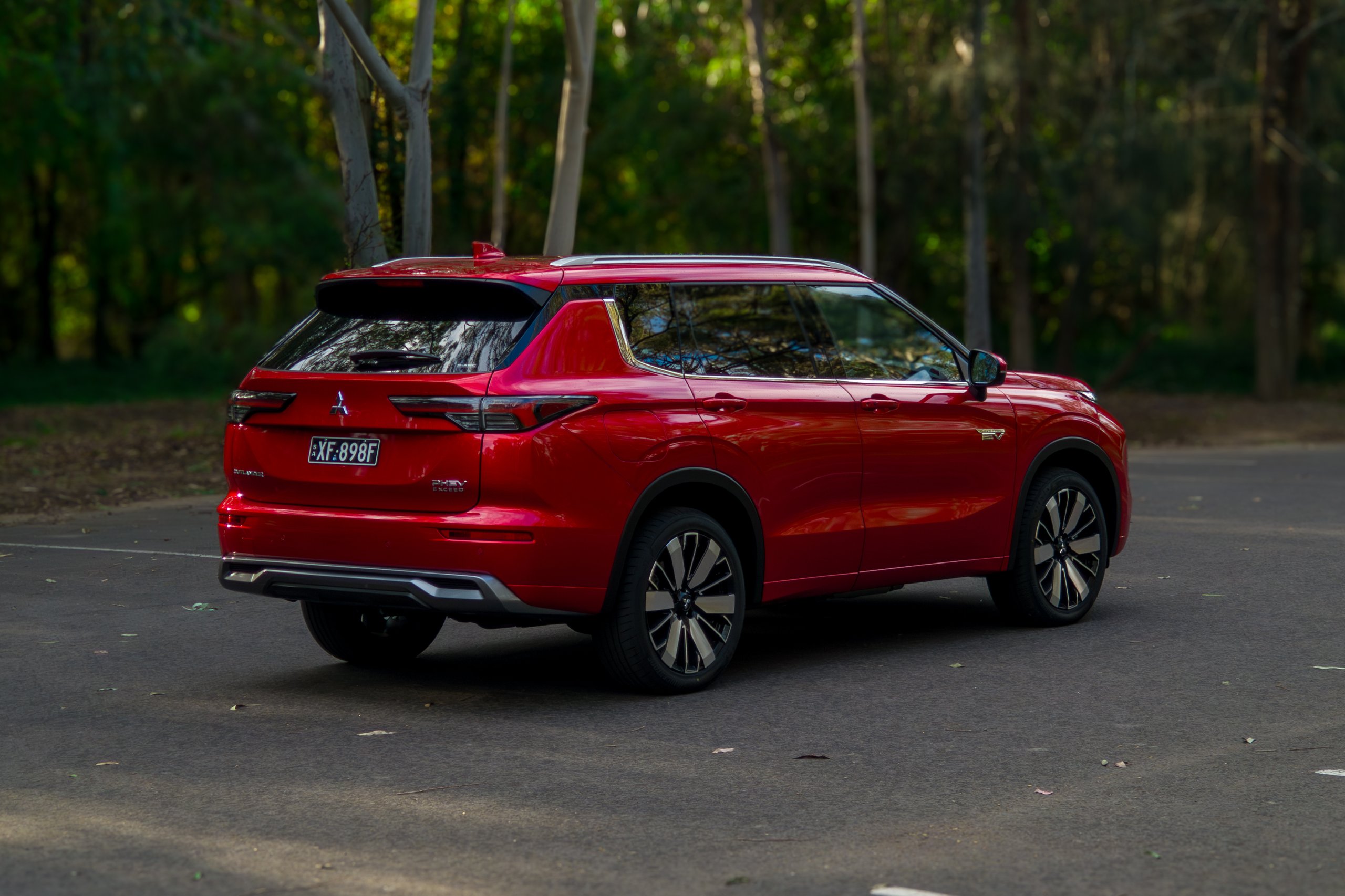
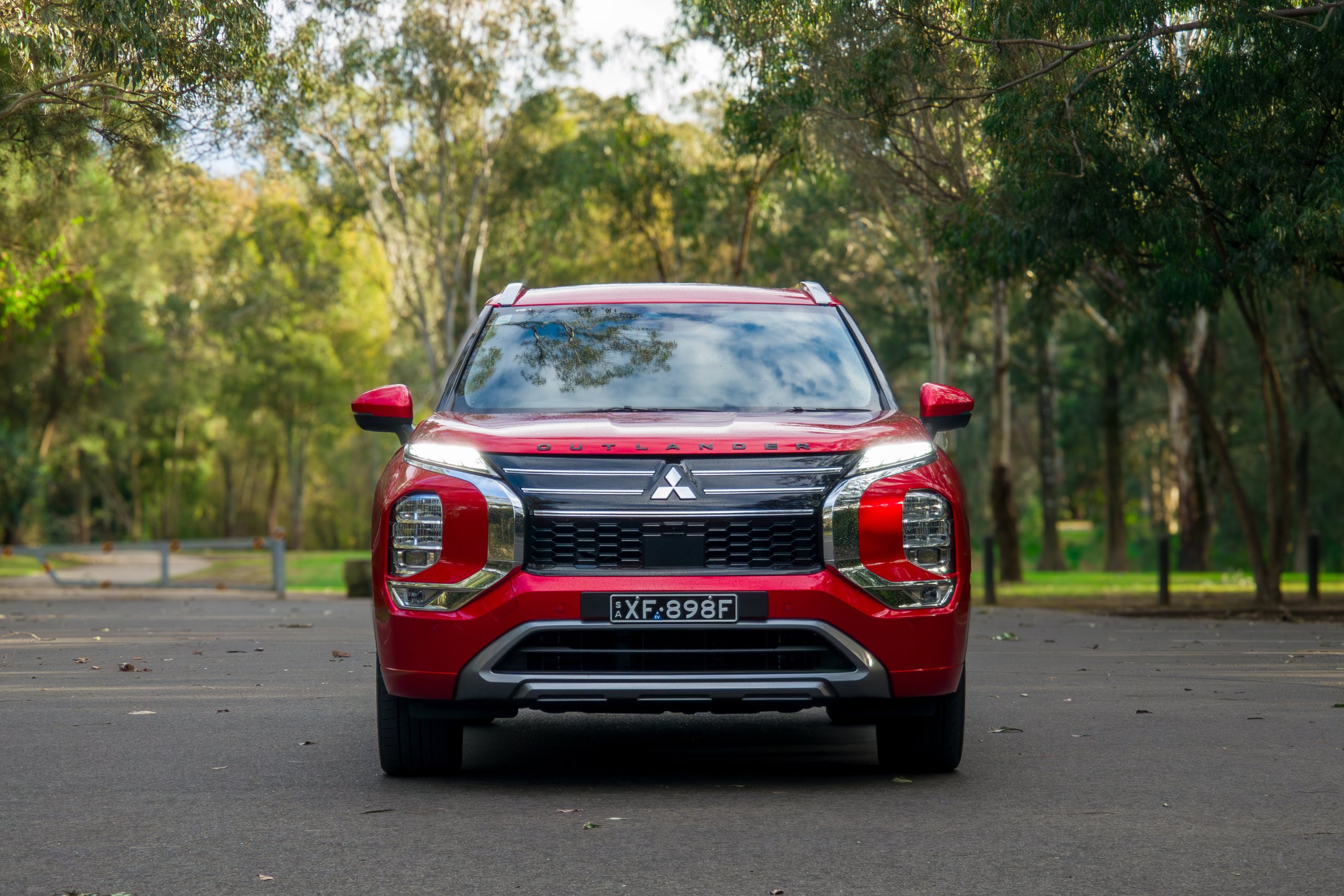
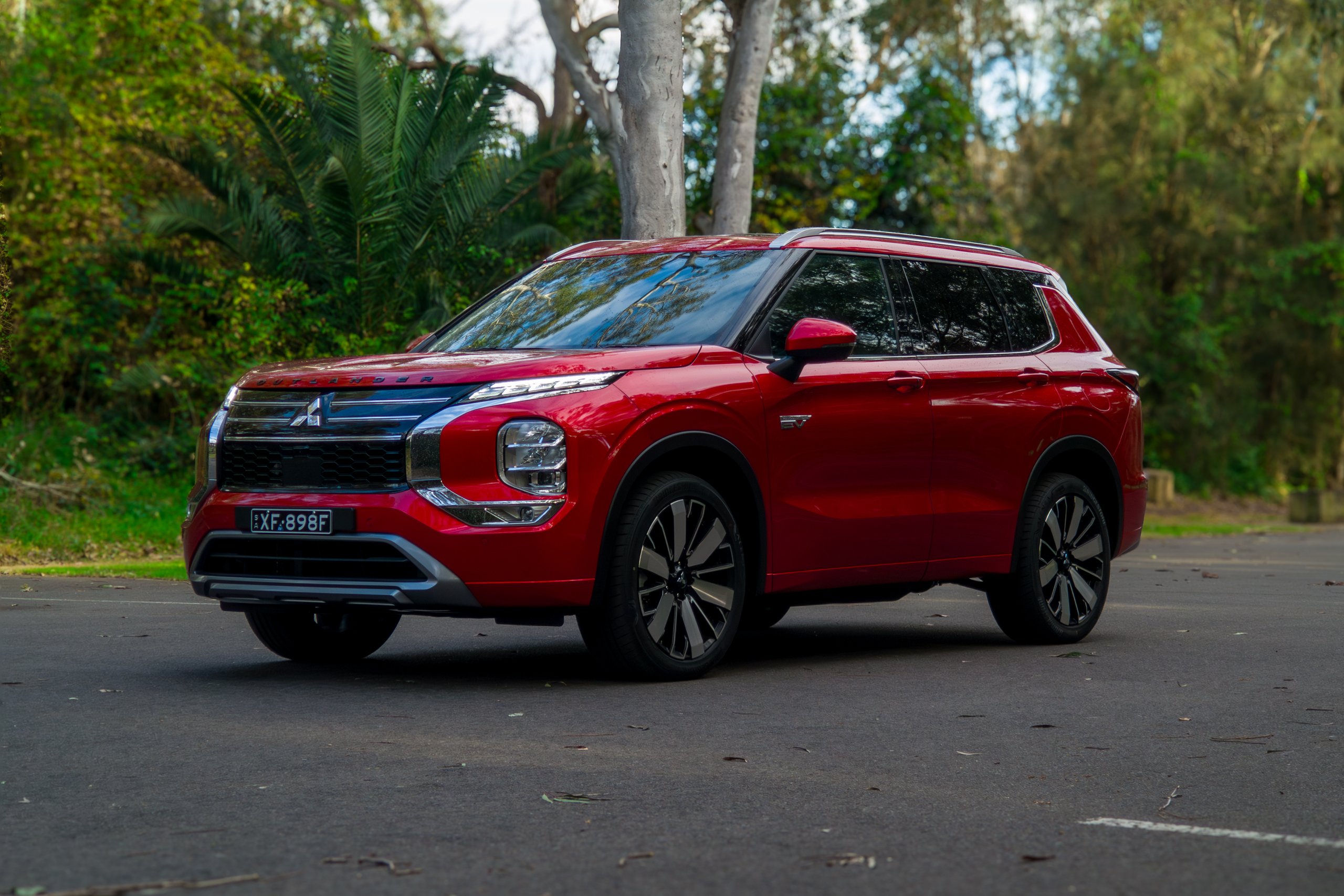
I really like the look of this car, especially in the red. With lots of cars these days going for shades rather than colours, this one pops. The front is my favourite part. The large black grille and the silver trim connecting the headlights give it a meaner look, but it doesn’t tip over into aggressive, and it doesn’t look soft either. It keeps that boxy shape with lines in the right places, so it never reads as a box.
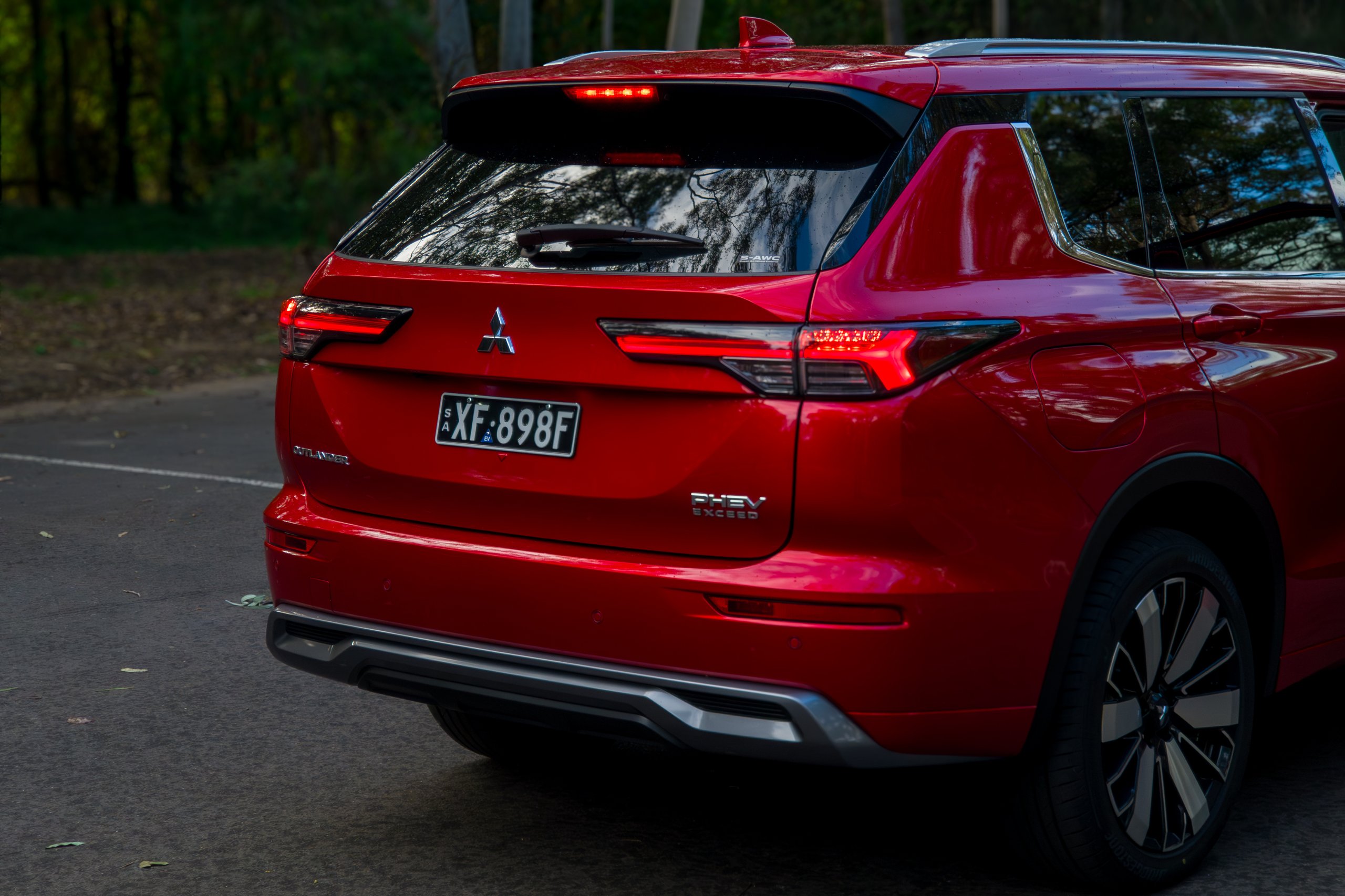
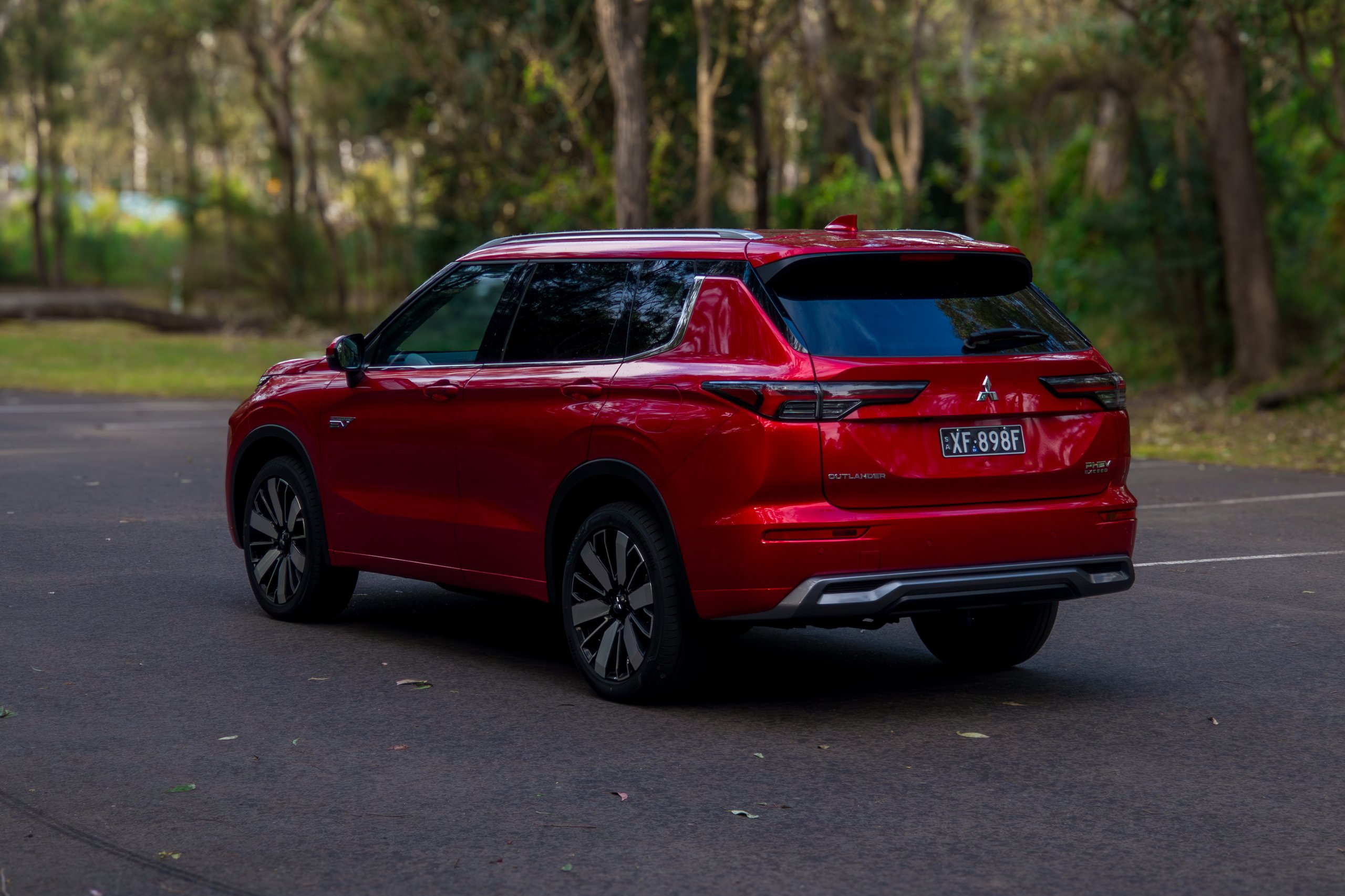
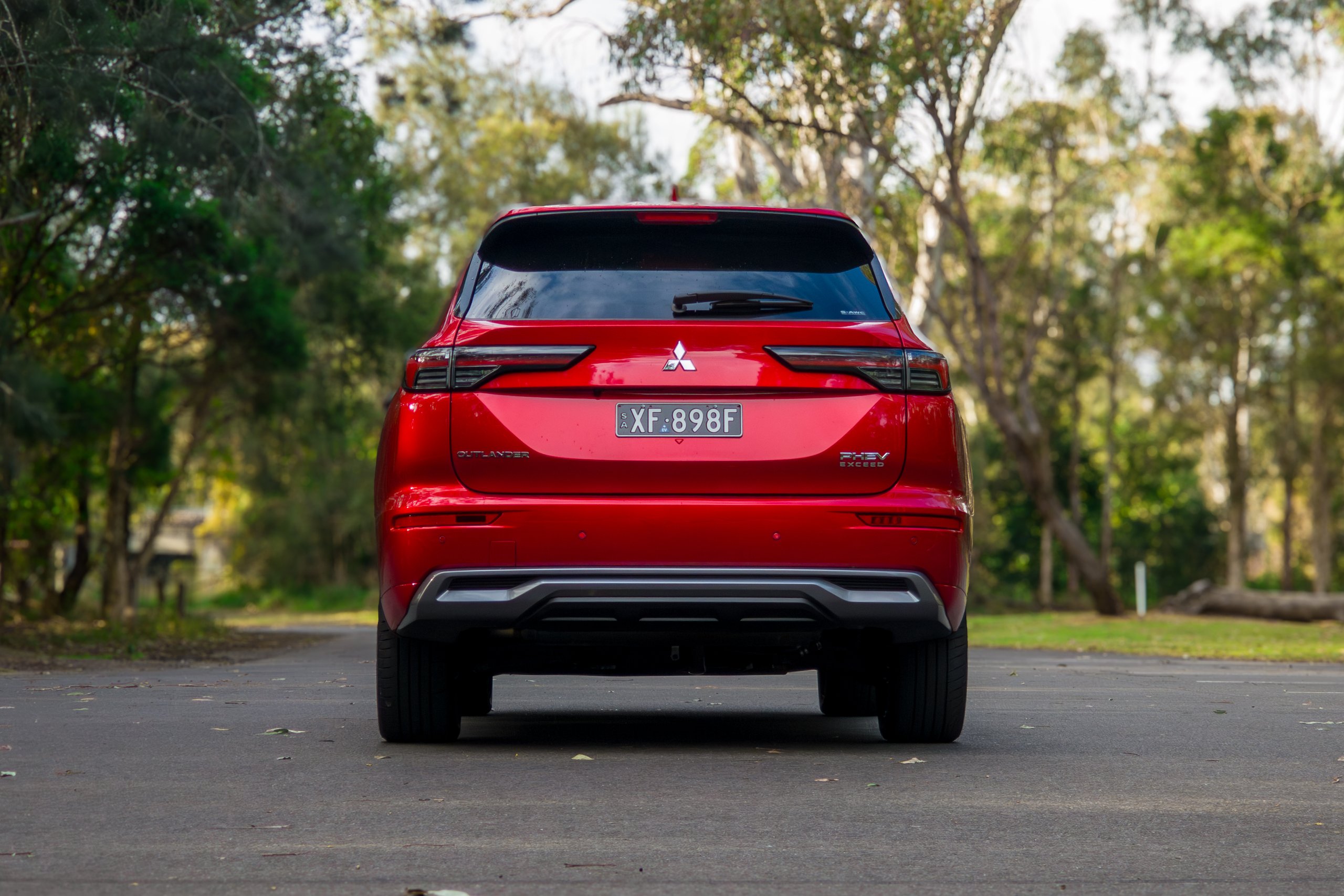
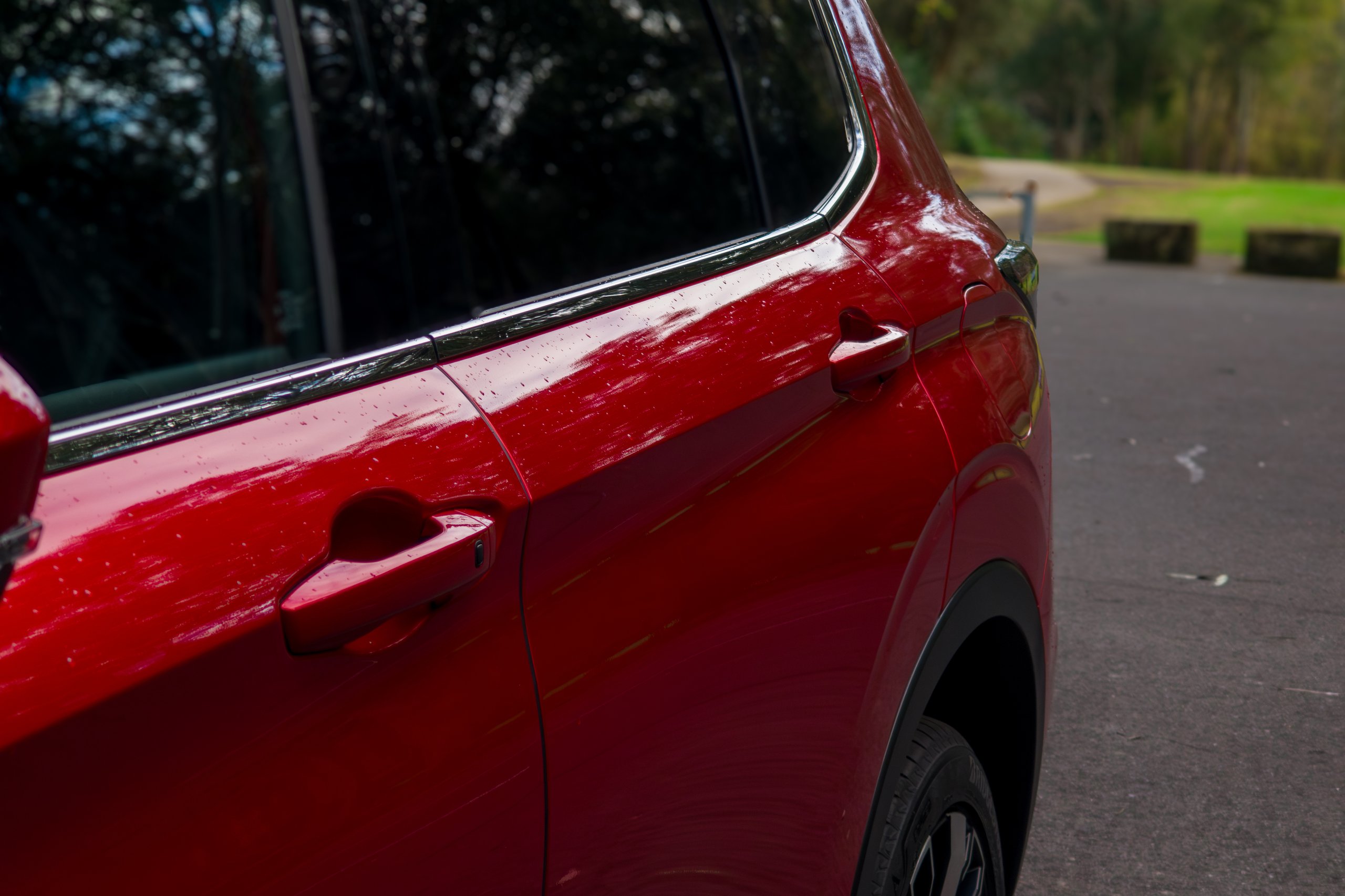
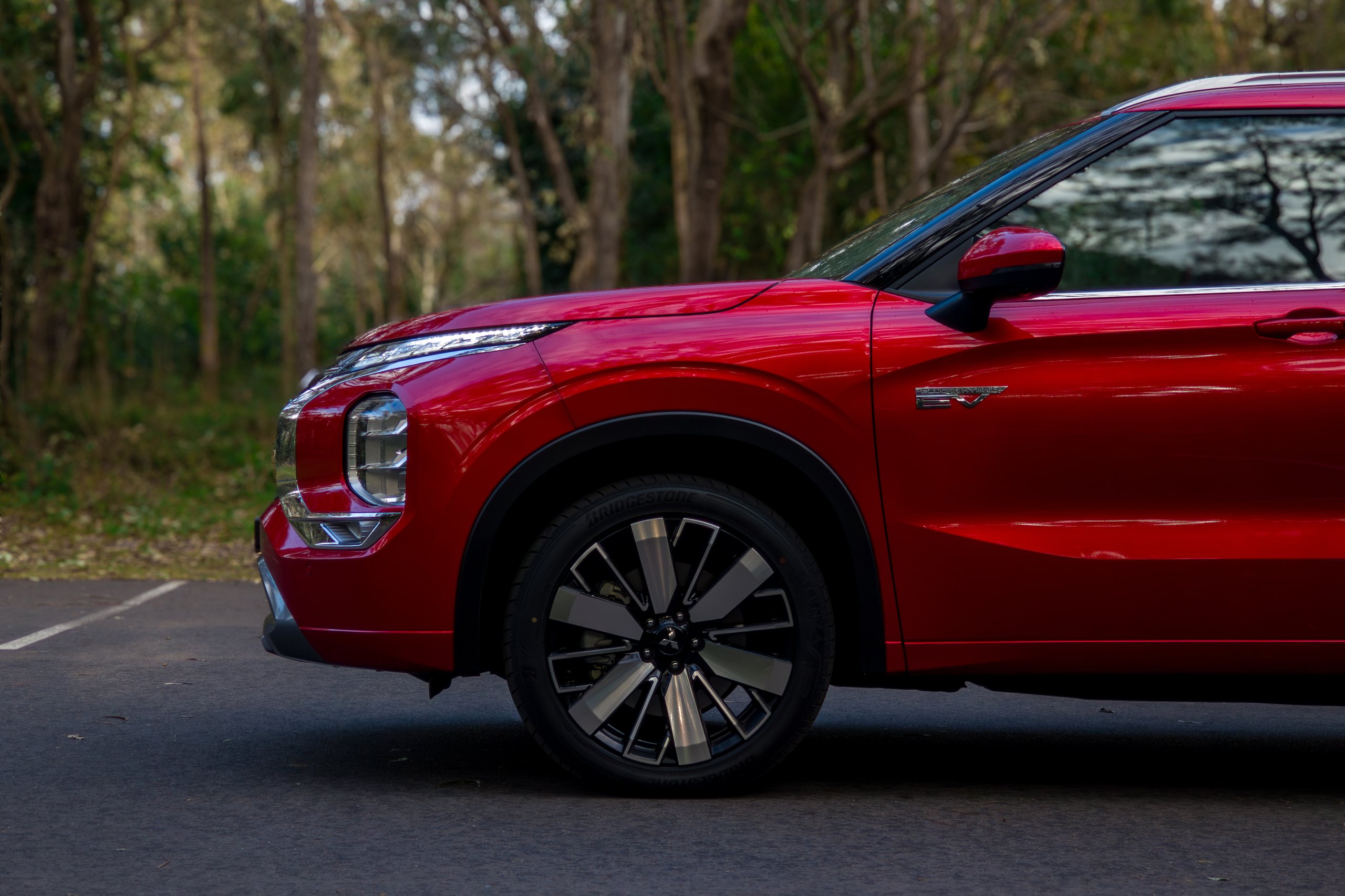
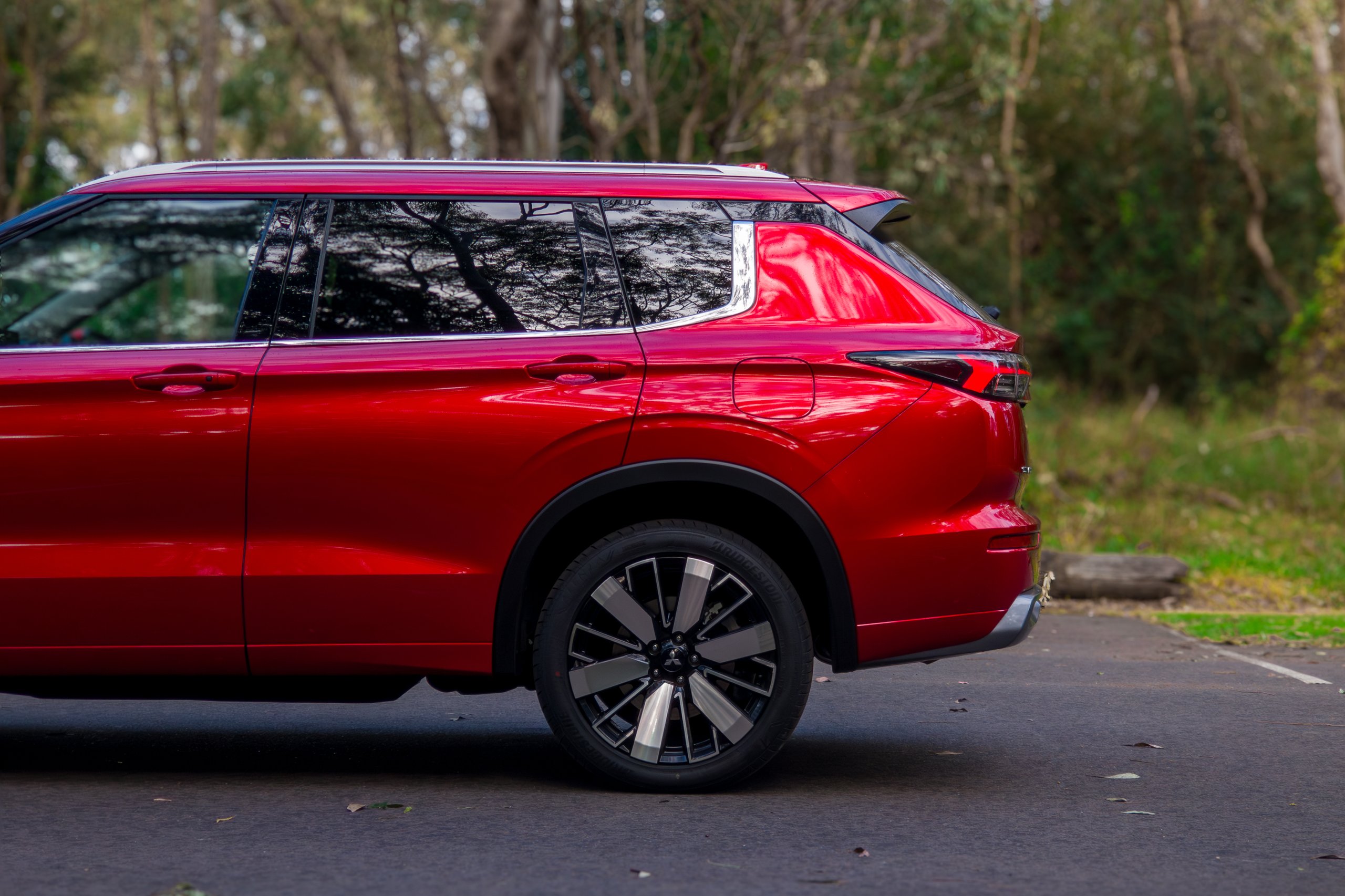
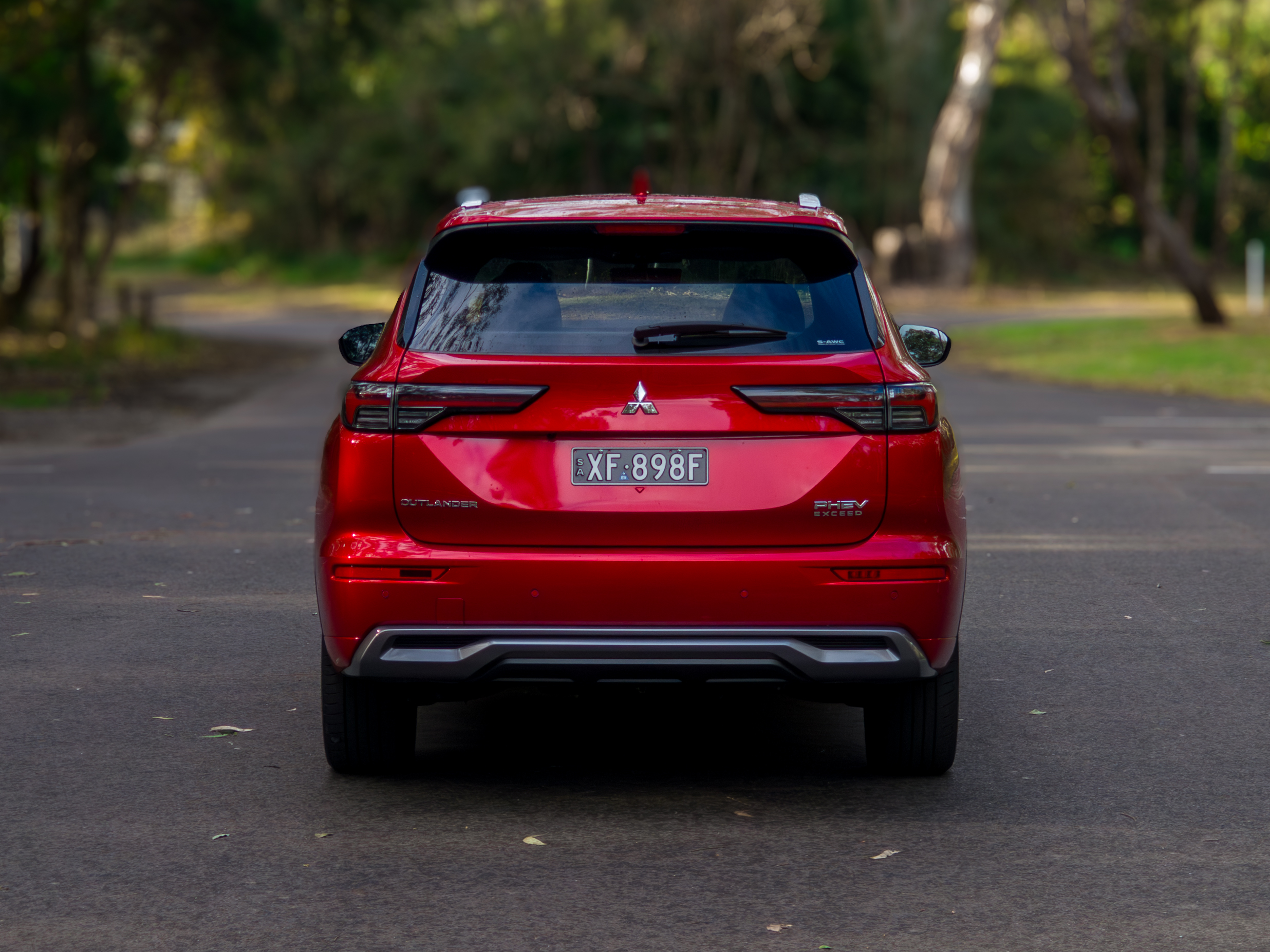
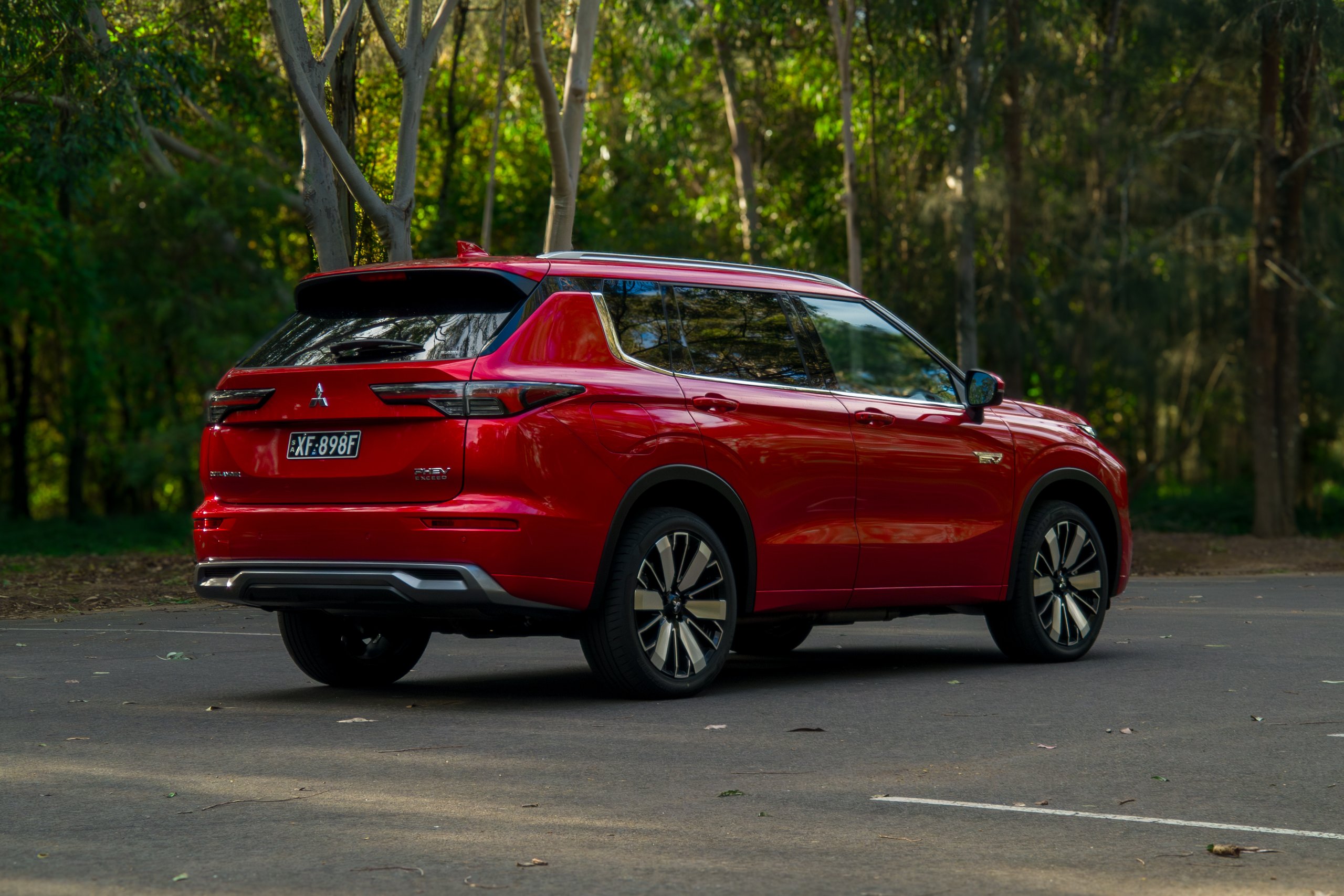
The side shows you how long the car actually is, 4720mm of it, and the length flatters it. The 20-inch two-tone alloys fill the arches, and for a family car it has a lot of road presence. The rear is the letdown. It doesn’t do anything out of the ordinary and doesn’t really fit the front’s stance, bland and generic compared to the nose. The back half looks like it was signed off on a Friday.
What is the Mitsubishi Outlander PHEV like inside?
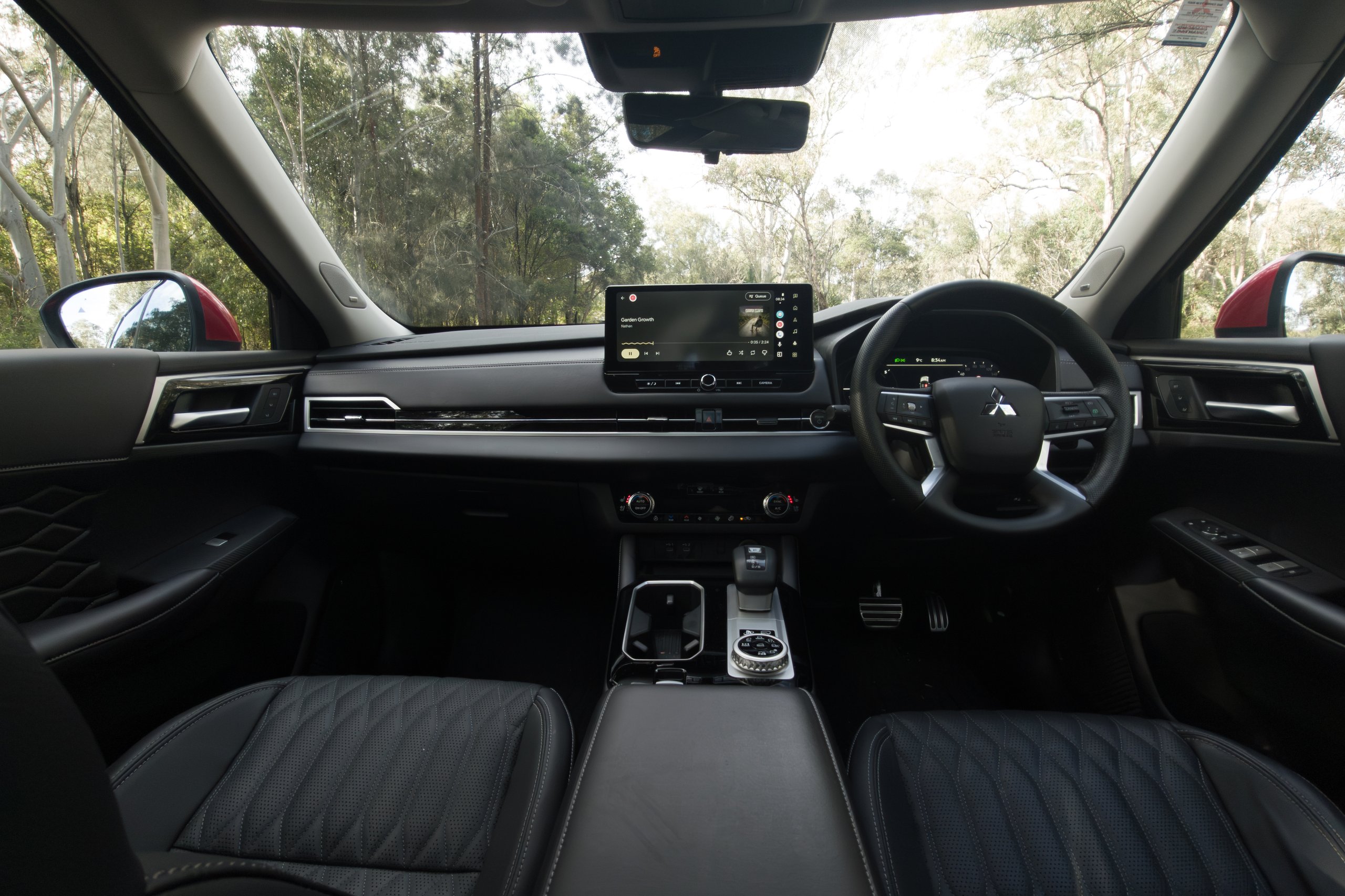
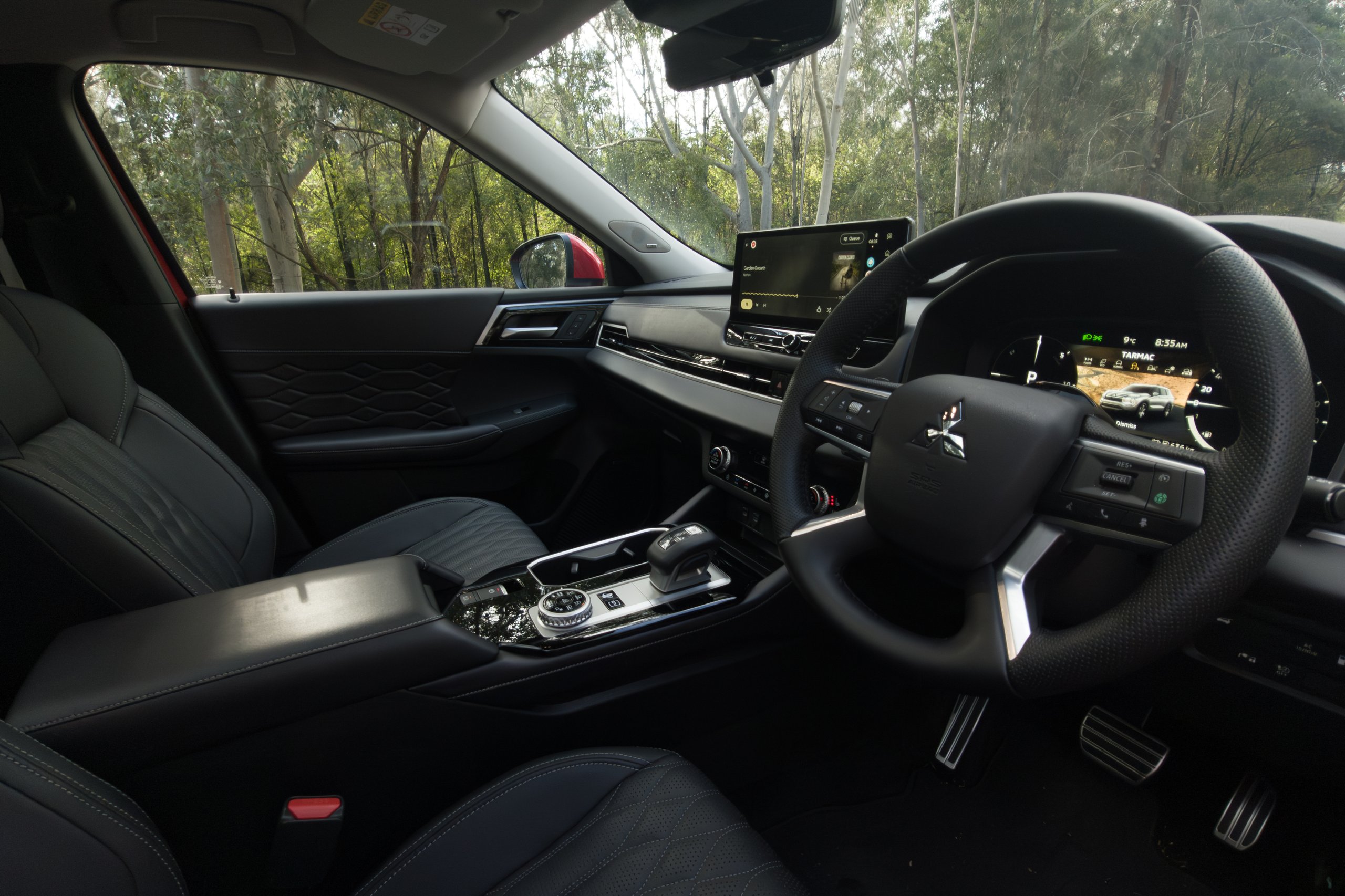
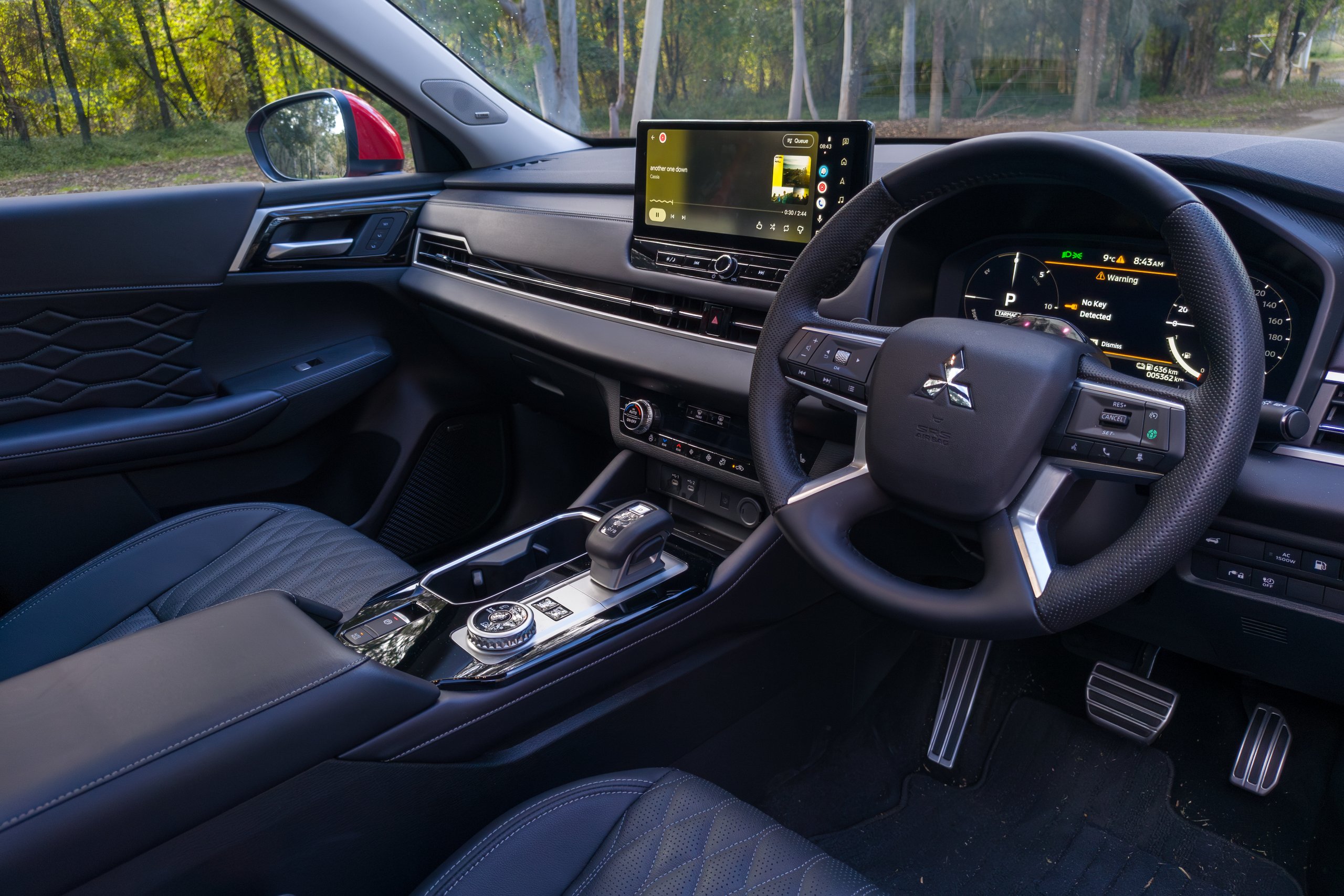
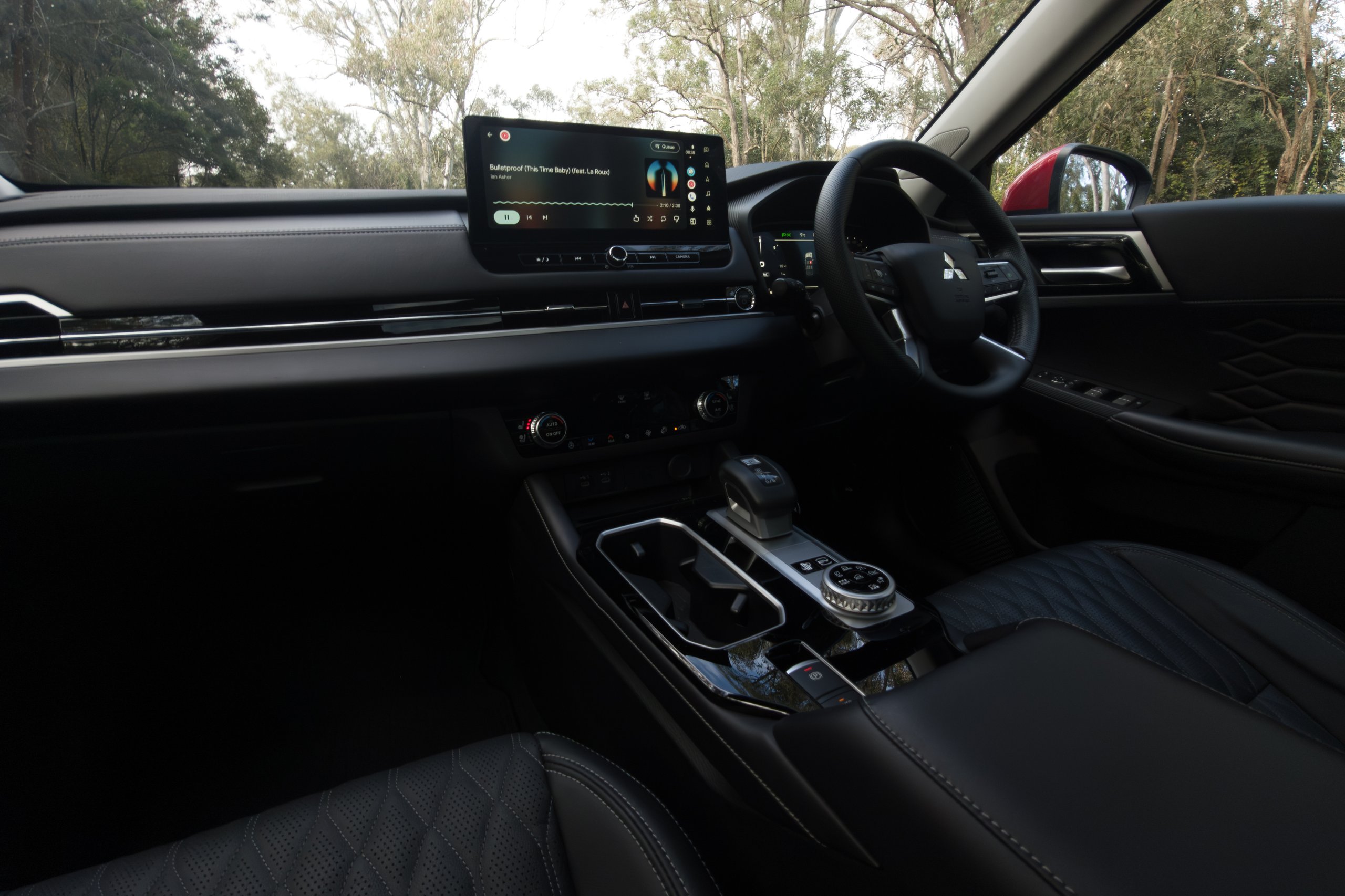
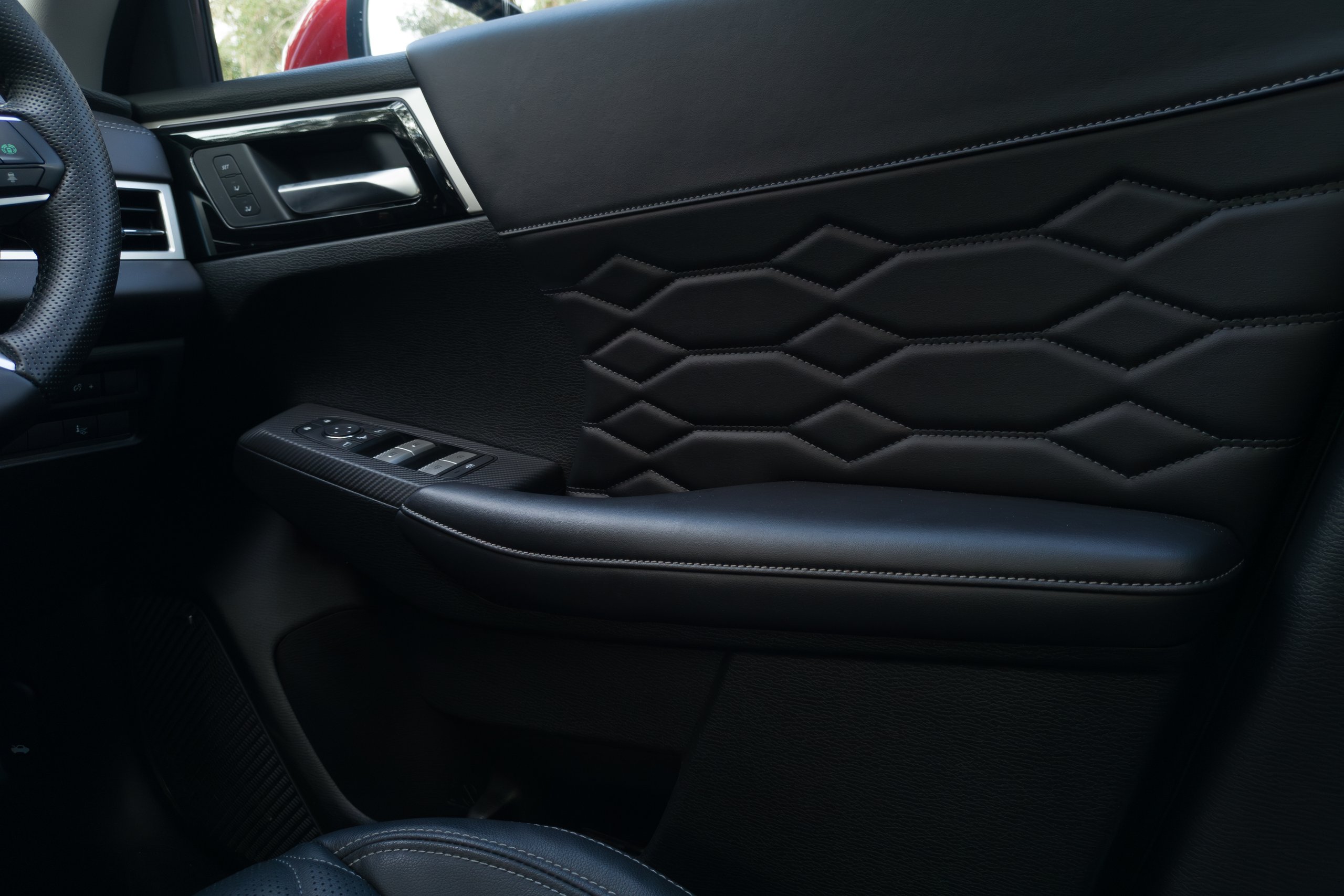
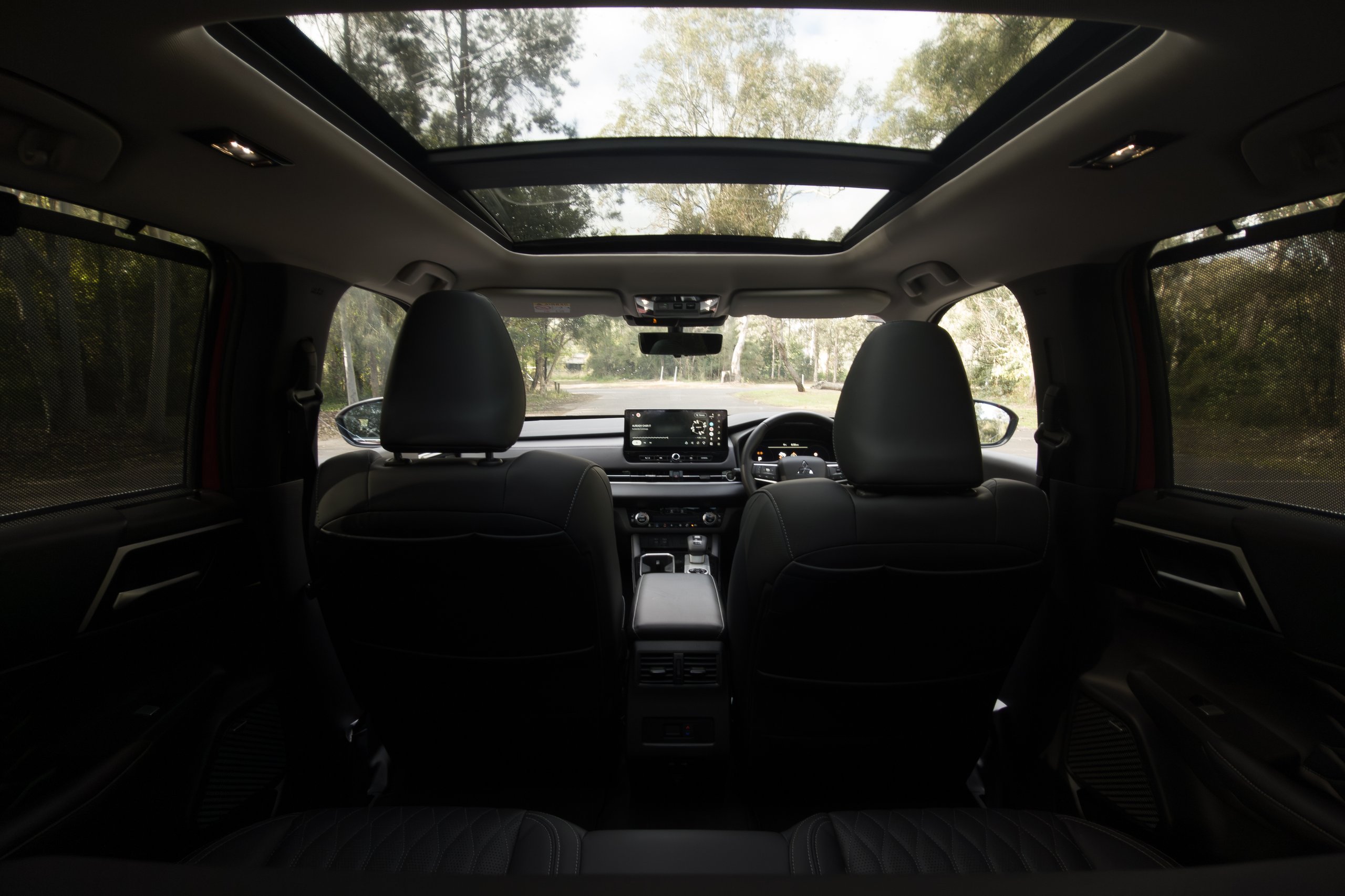
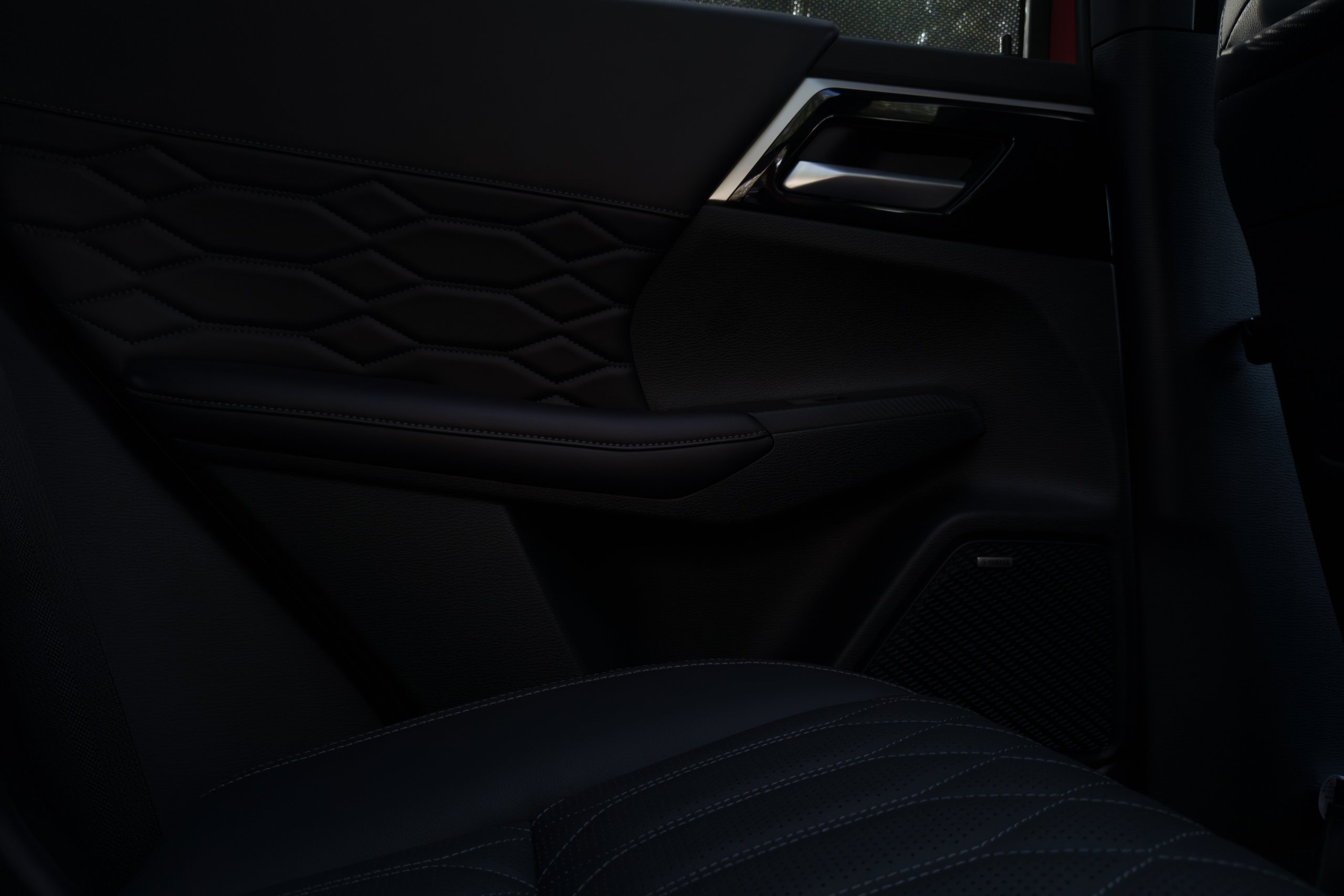
The cabin is nice, and the leather appointed seats give it a premium feel. They’re also easy to clean, which matters more than the brochure stuff when your passengers have been handling frozen stock all afternoon. Mitsubishi’s fine print says “leather appointed” is a mix of genuine and artificial leather, which is fair enough at this price.
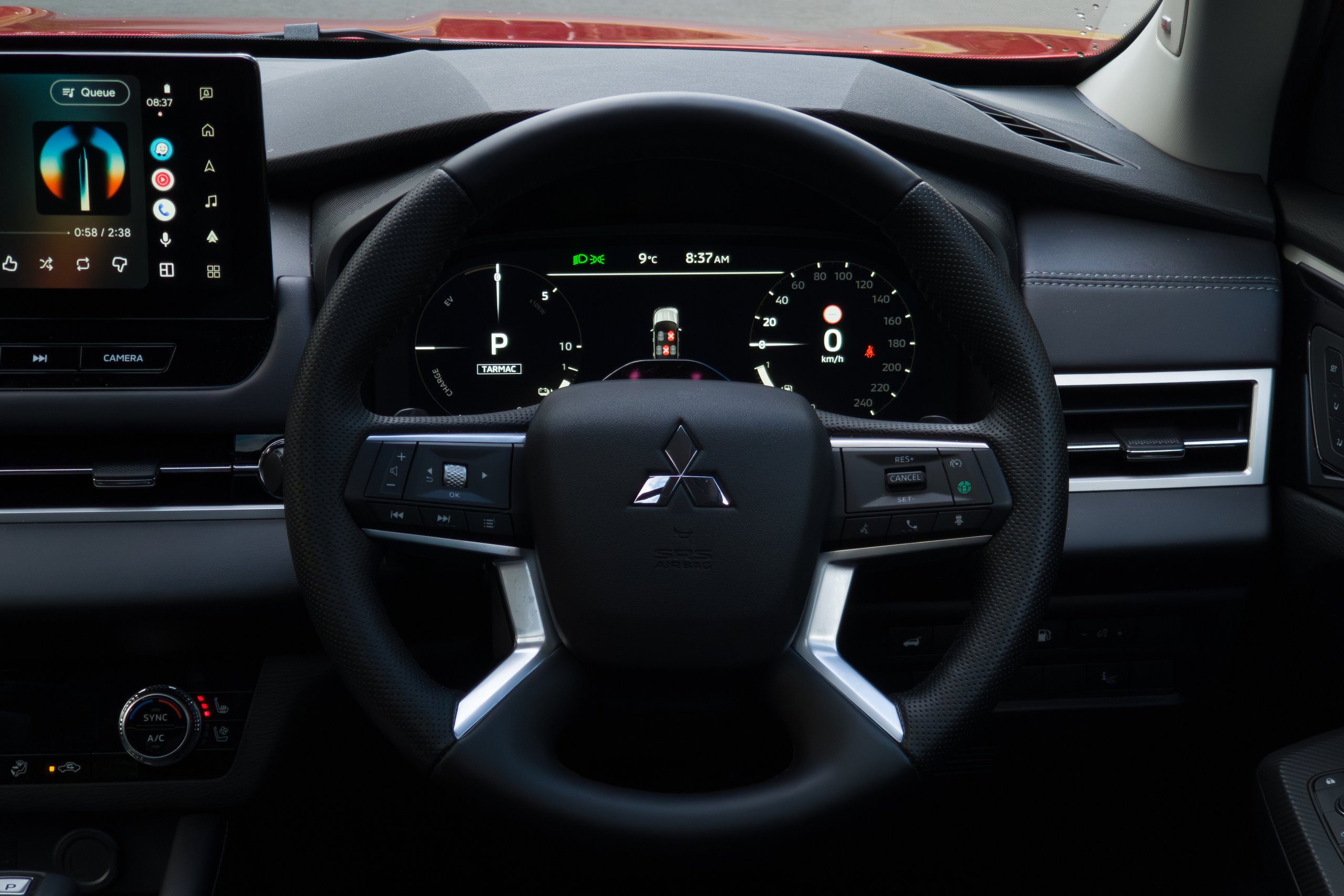
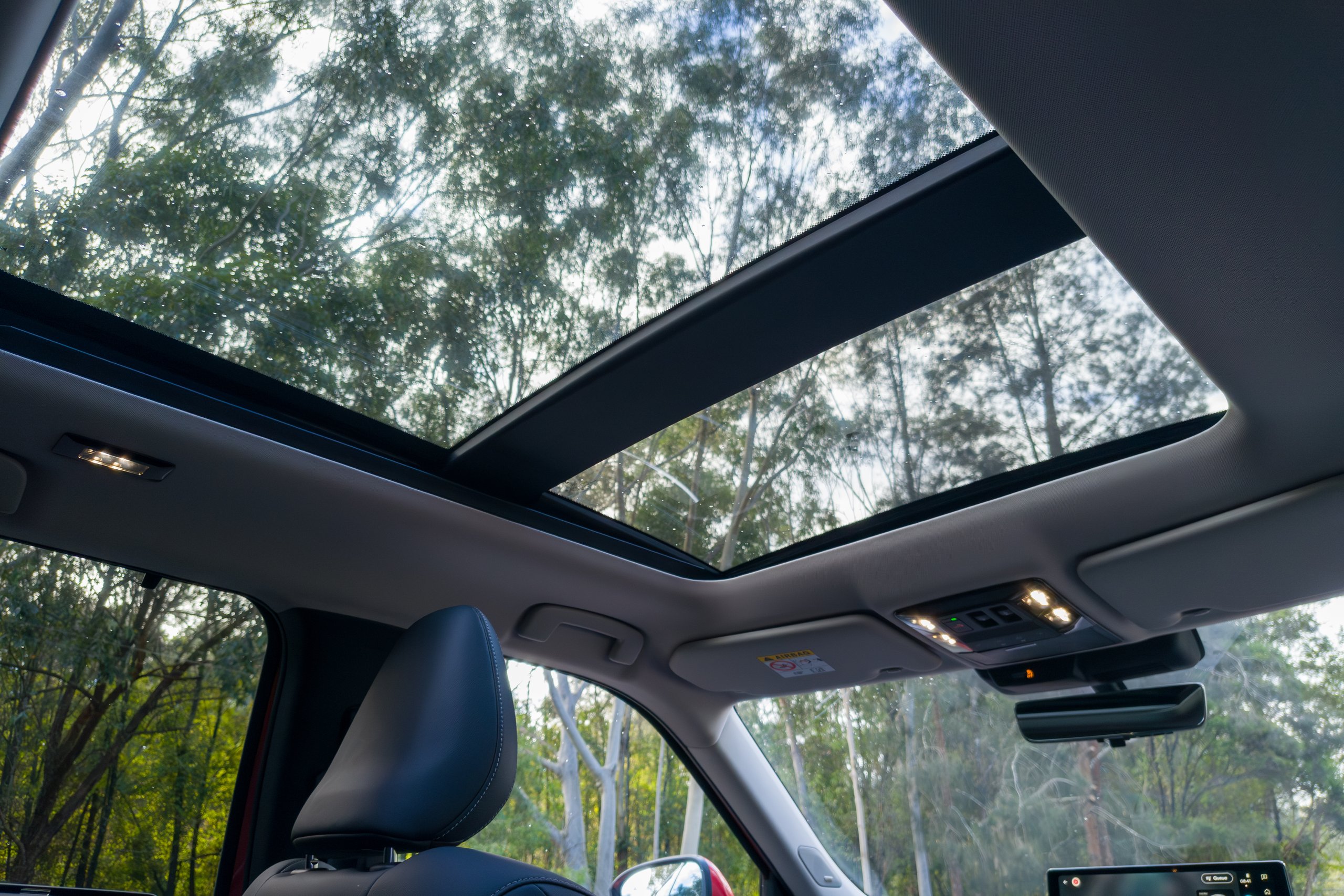
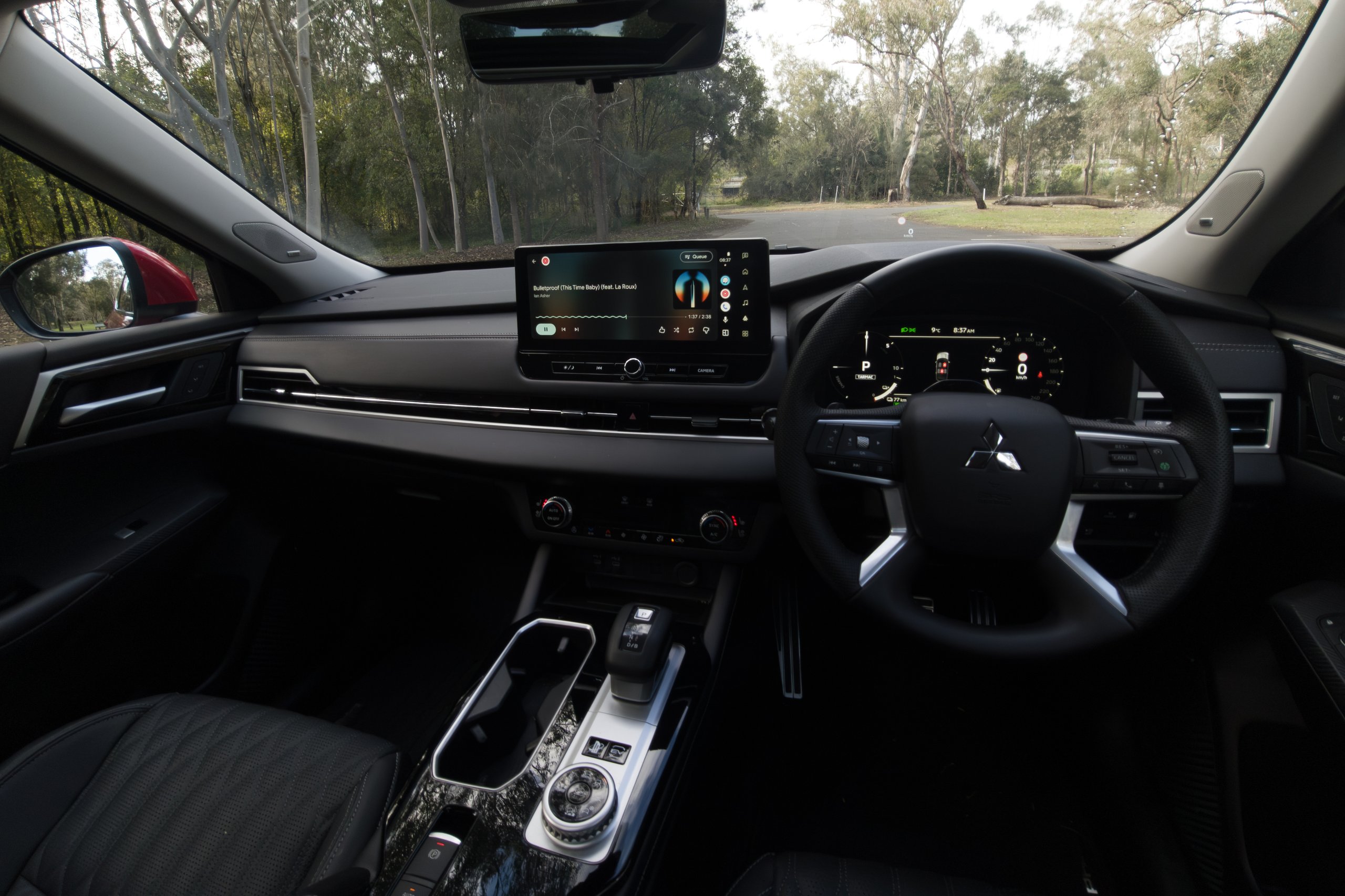
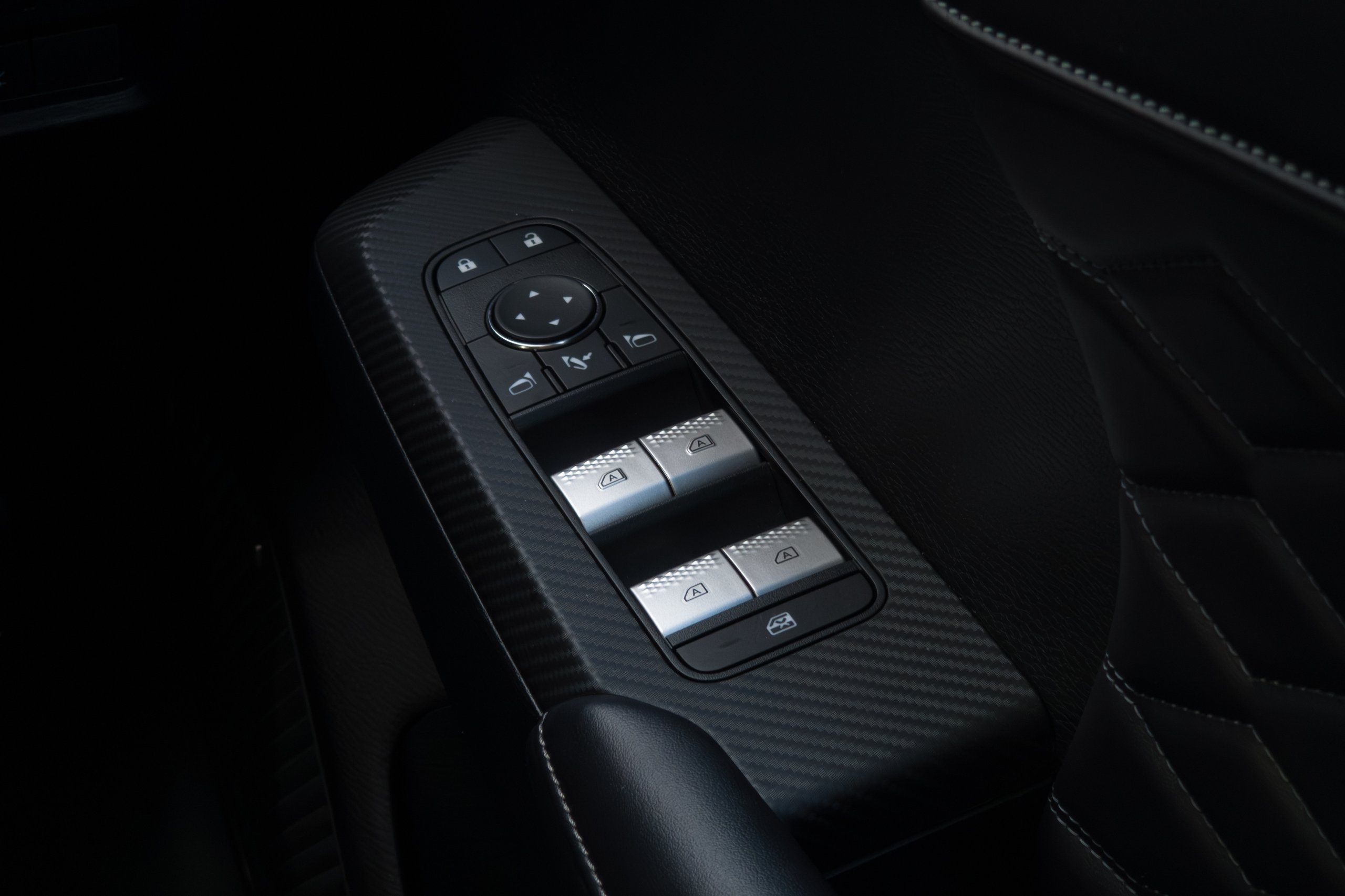
You get a 12.3-inch driver display, a 12.3-inch touchscreen and a colour head-up display projected onto the windscreen, with its position adjustable to suit the driver. Add a panoramic sunroof, ventilated front seats and seat memory on both front chairs. But the detail I rate most is that Mitsubishi kept physical buttons. Climate, volume and drive modes all have real controls, and that’s why the menus never became an issue all week. Physical buttons are always a win.
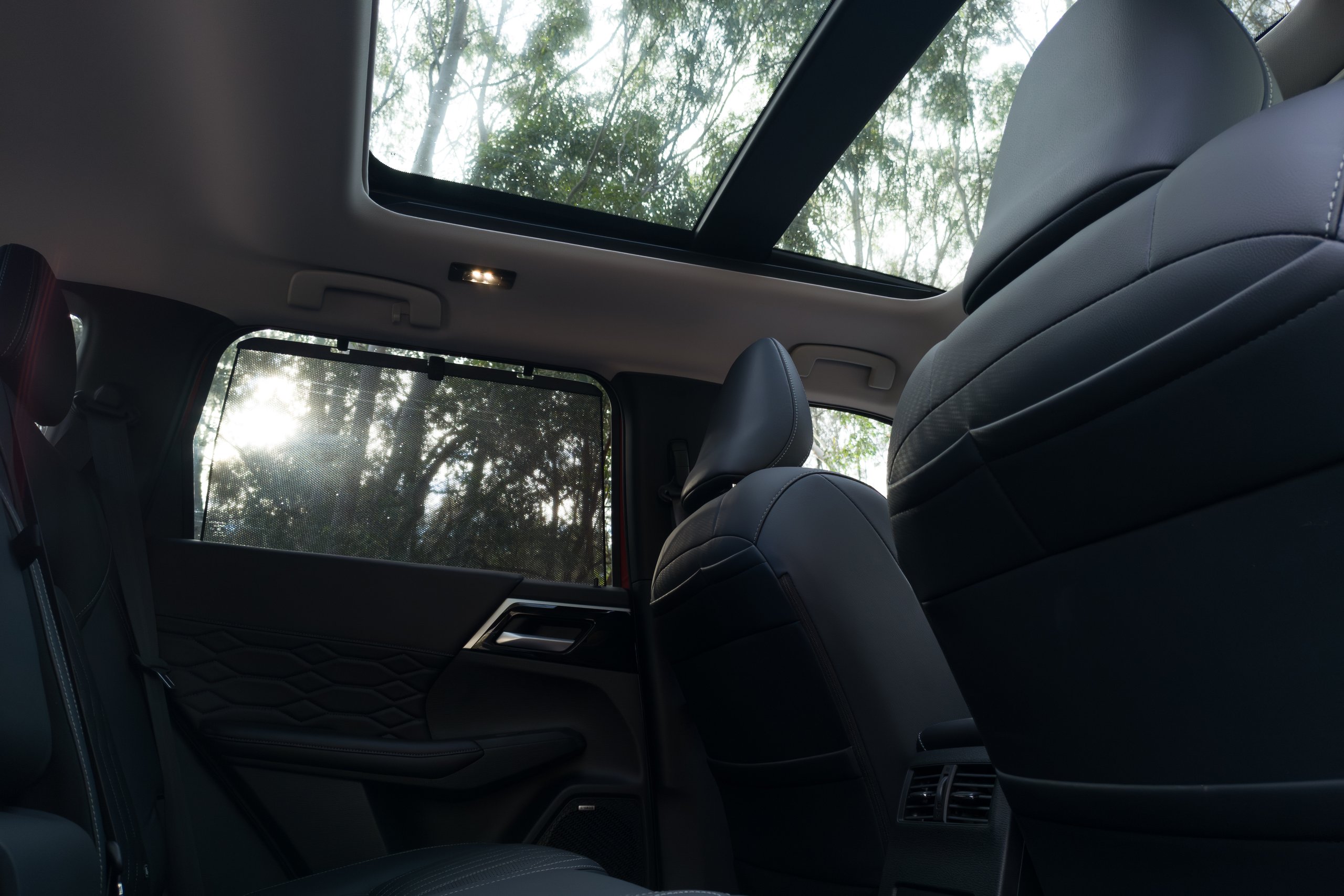
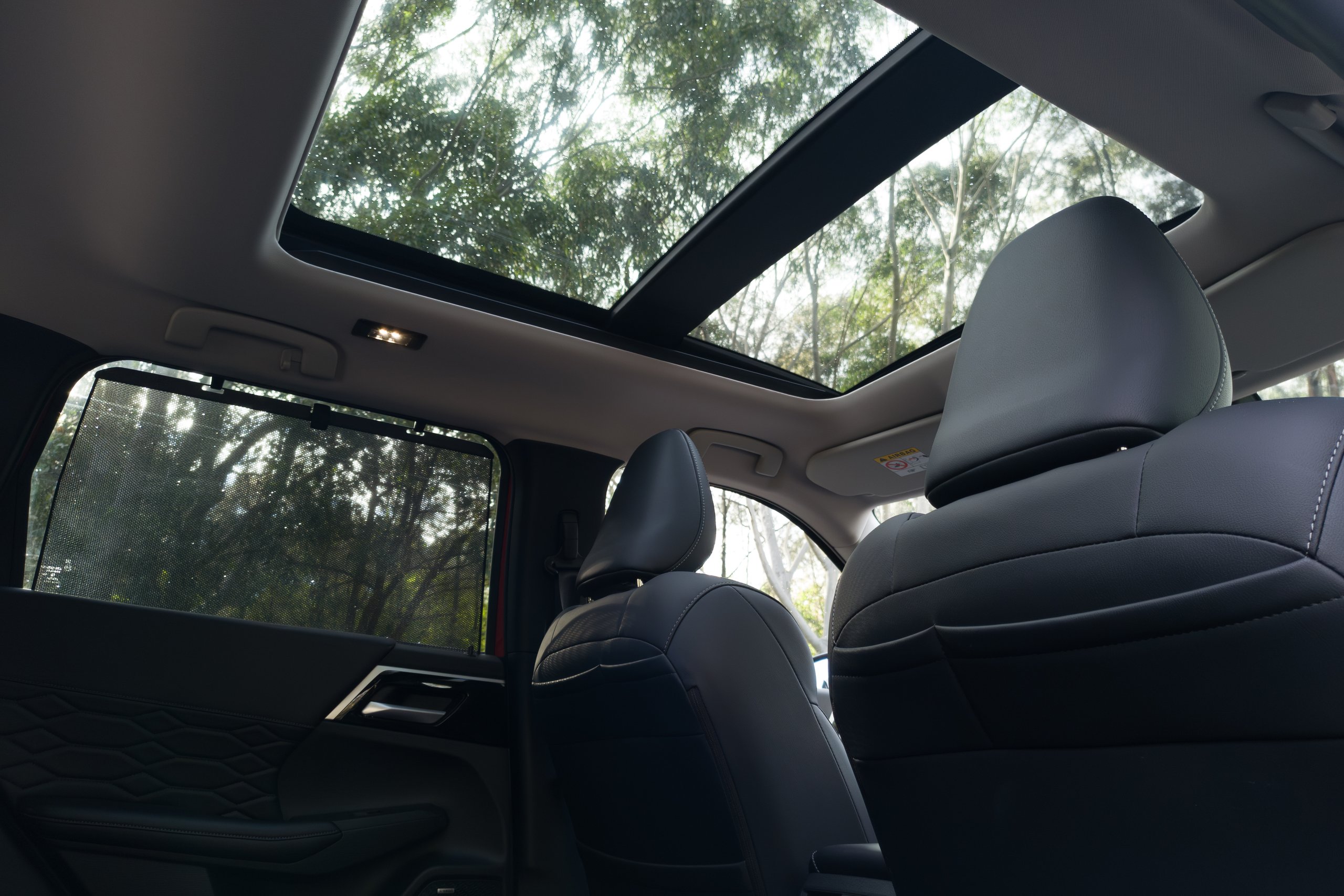
Storage
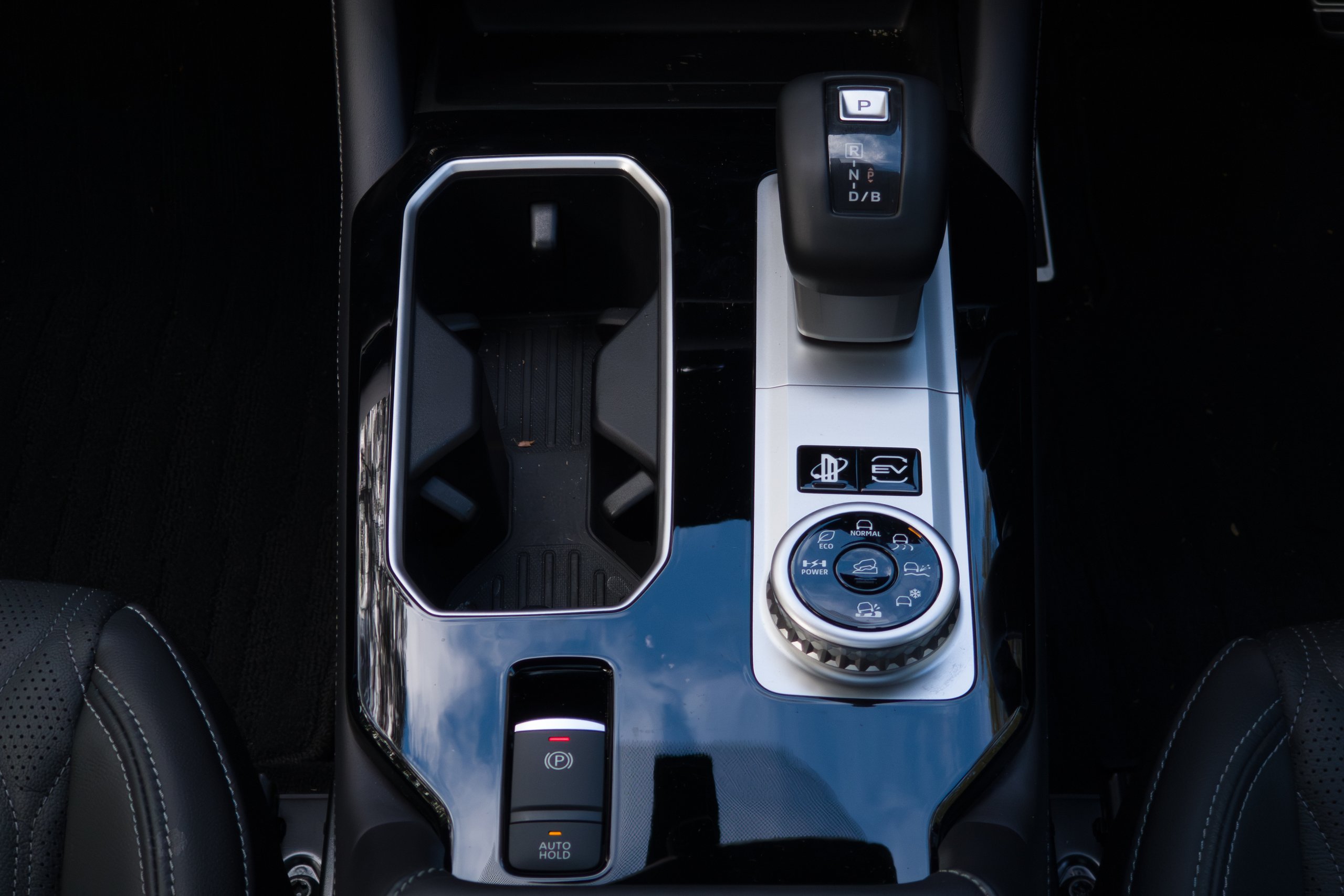
Storage is straightforward: a decent console box under the armrest, door pockets front and rear, seatback pockets, four cup holders, six bottle holders and a wireless charging pad in the front tray. There’s also a hidden storage box under the boot floor.
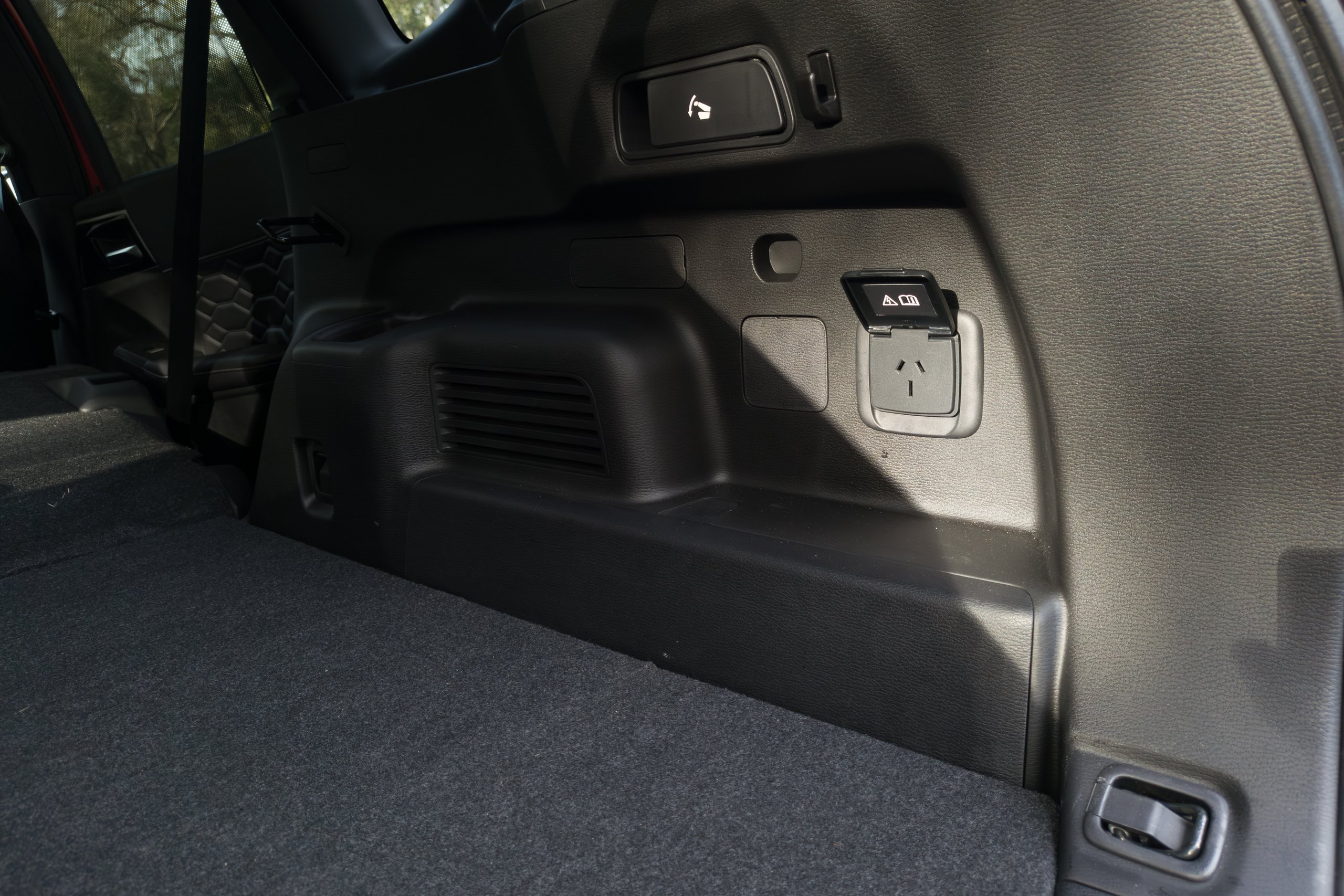
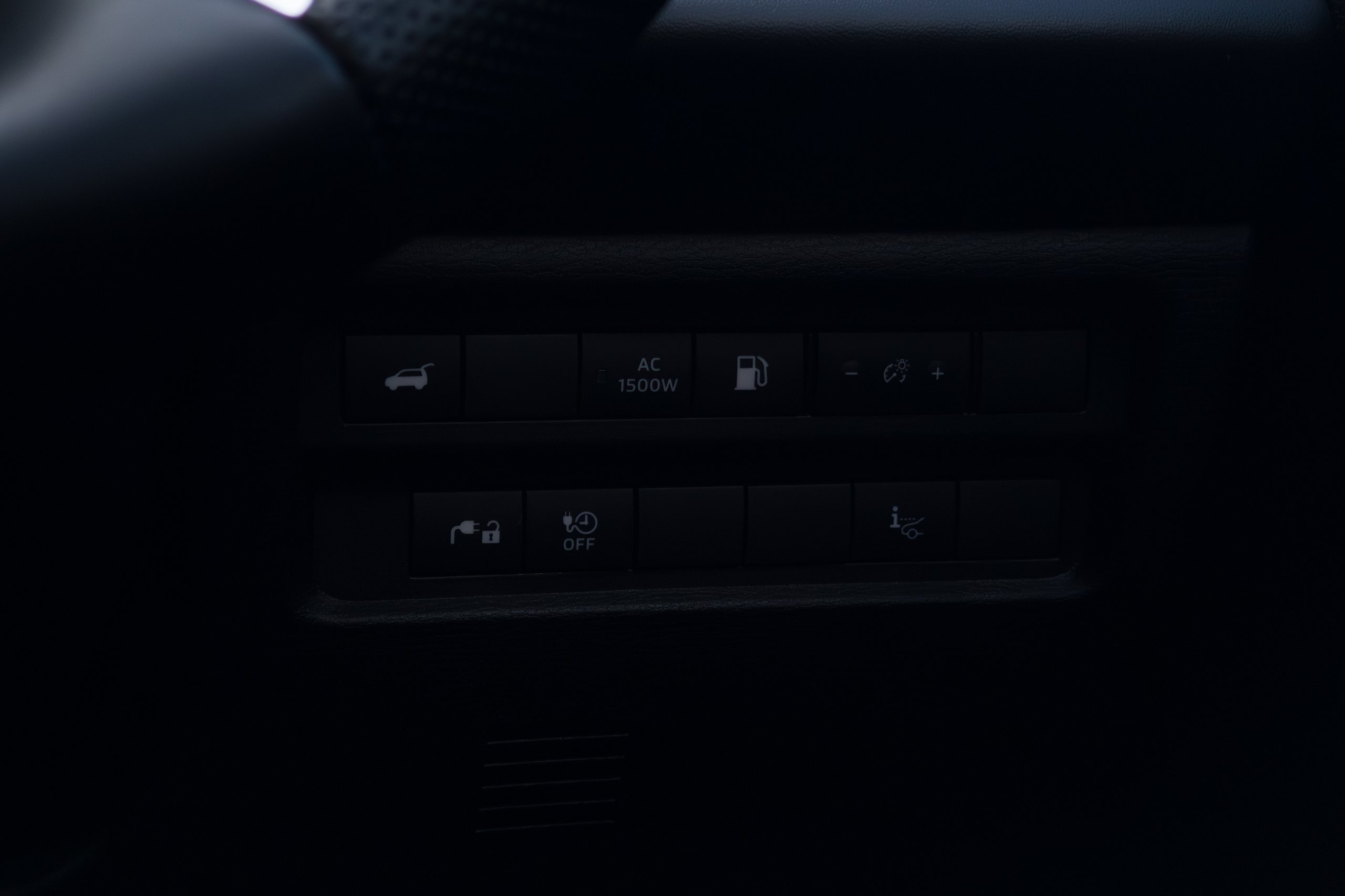
The clever bit is the two 240V household power outlets, one in the console and one in the boot, good for 1500W combined. A laptop, a kettle, camping lights, whatever. Of all the Outlander’s electric party tricks, this is the one that actually works in Australia today.
Rear seat and boot space
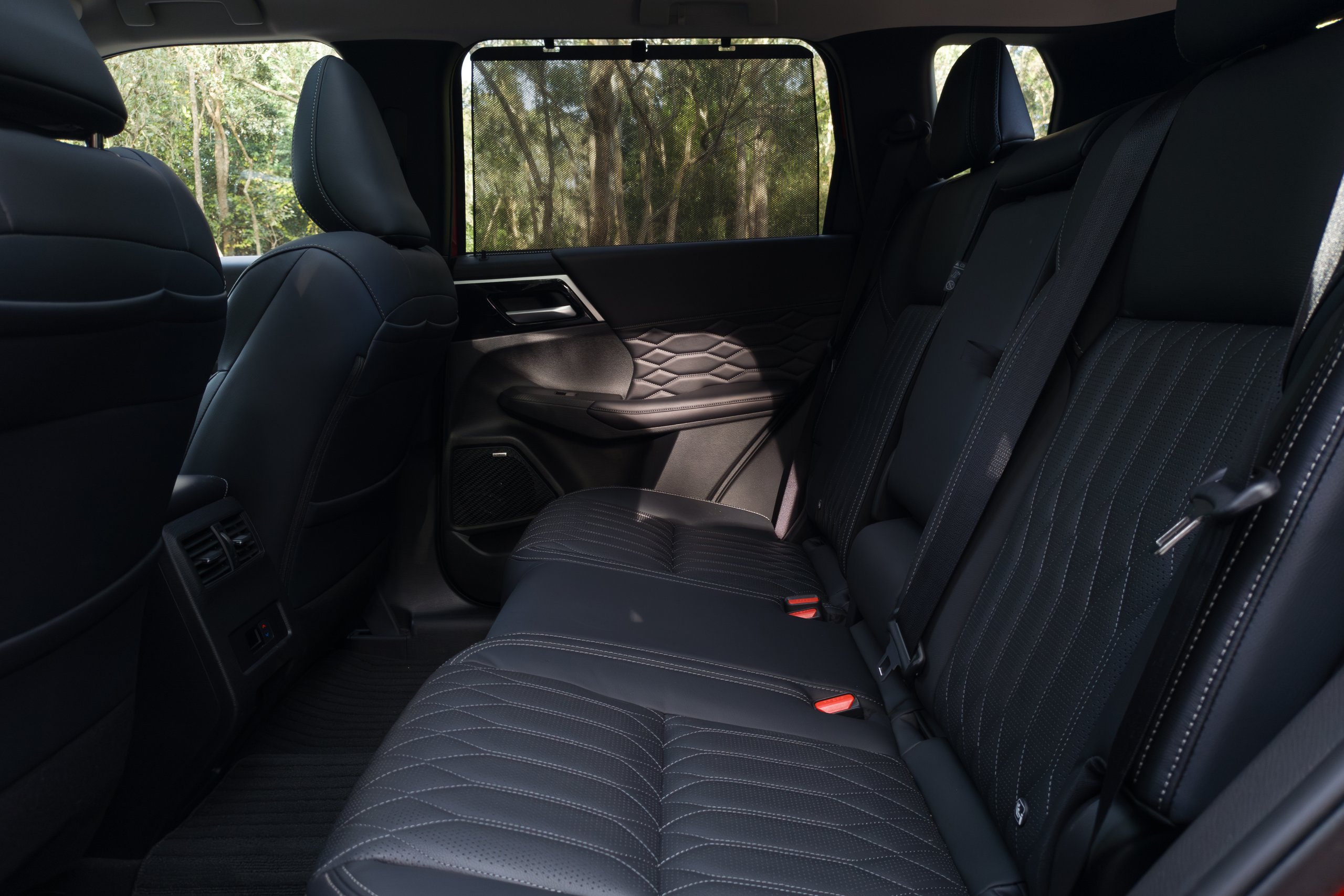
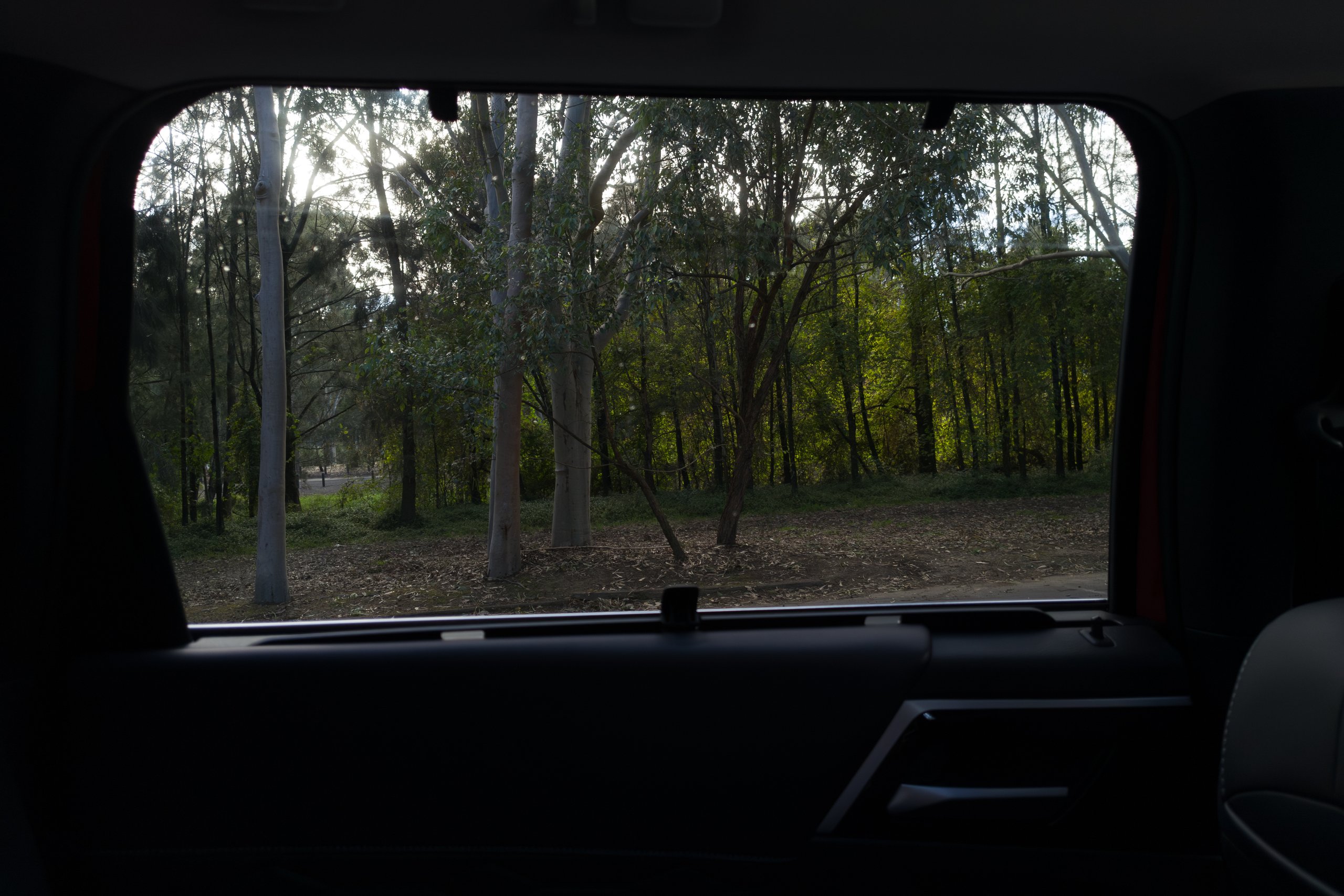
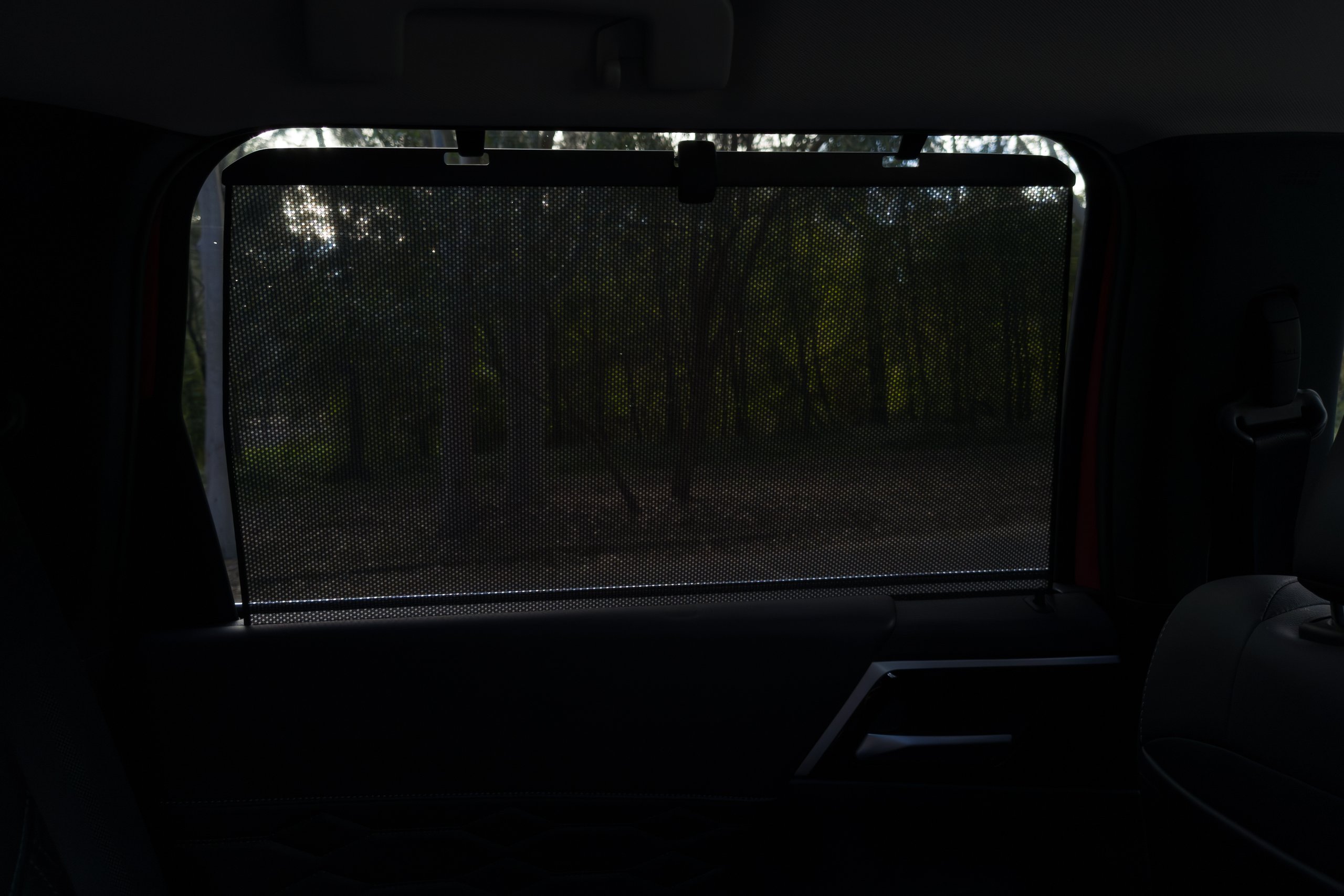
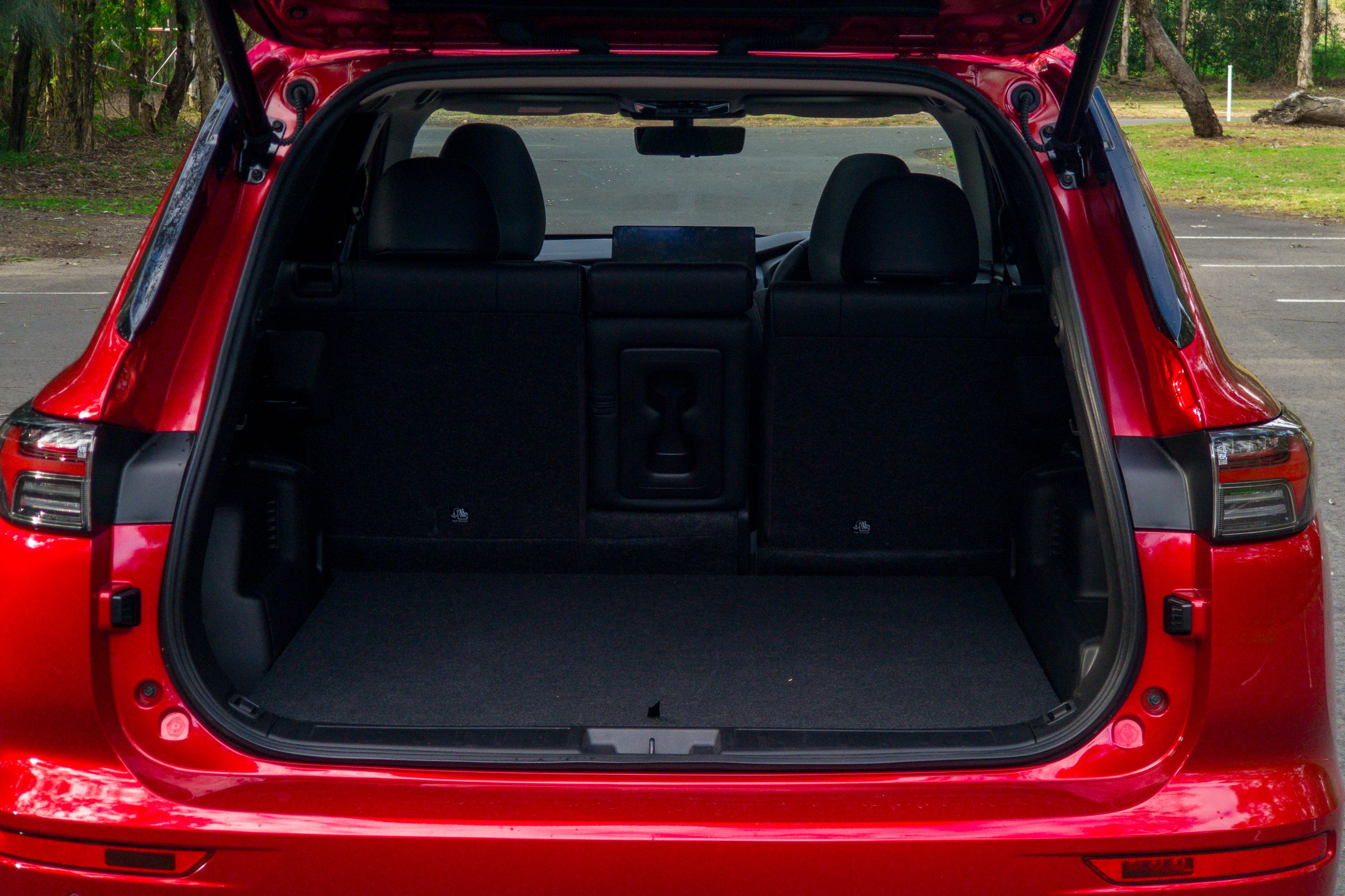
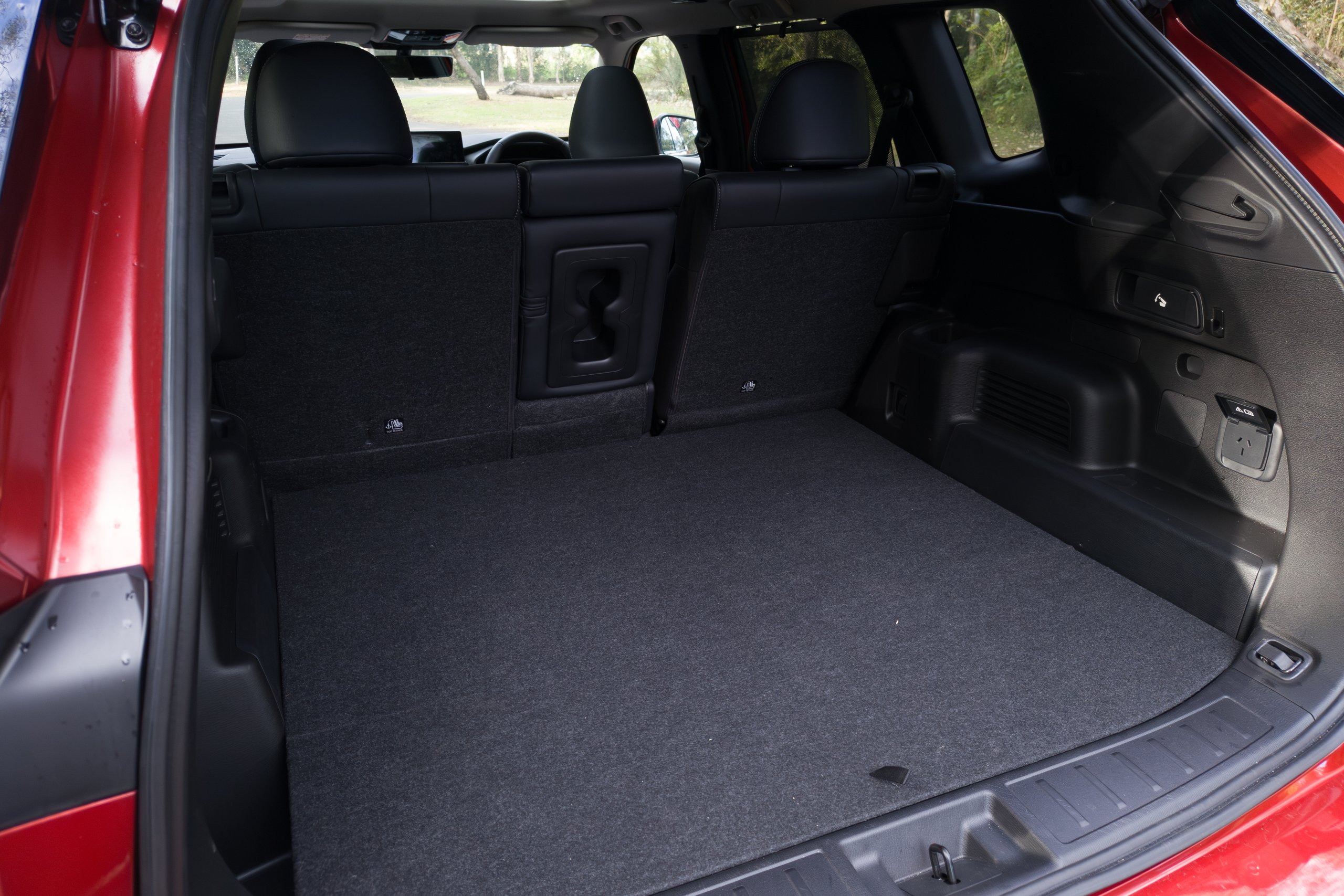
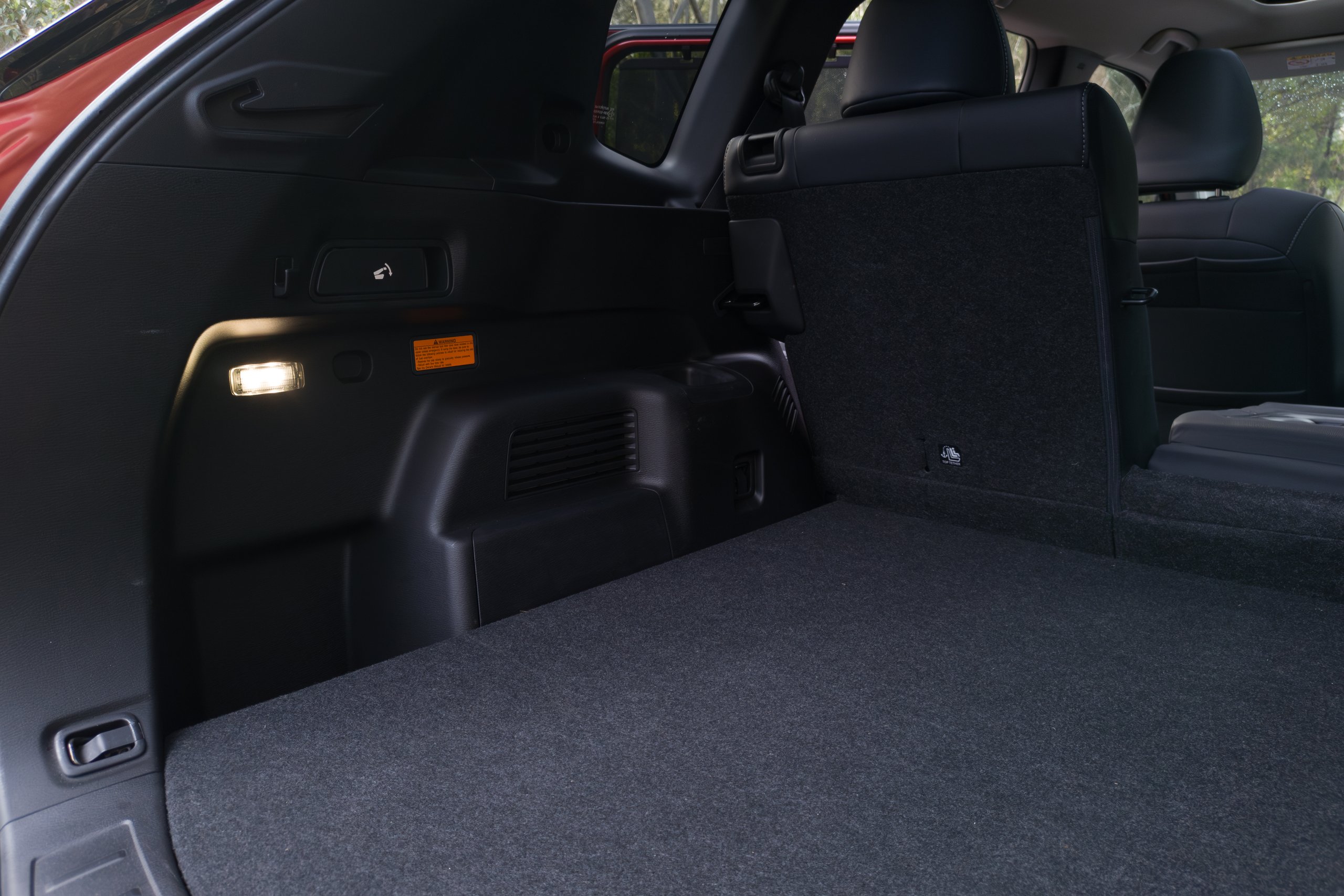
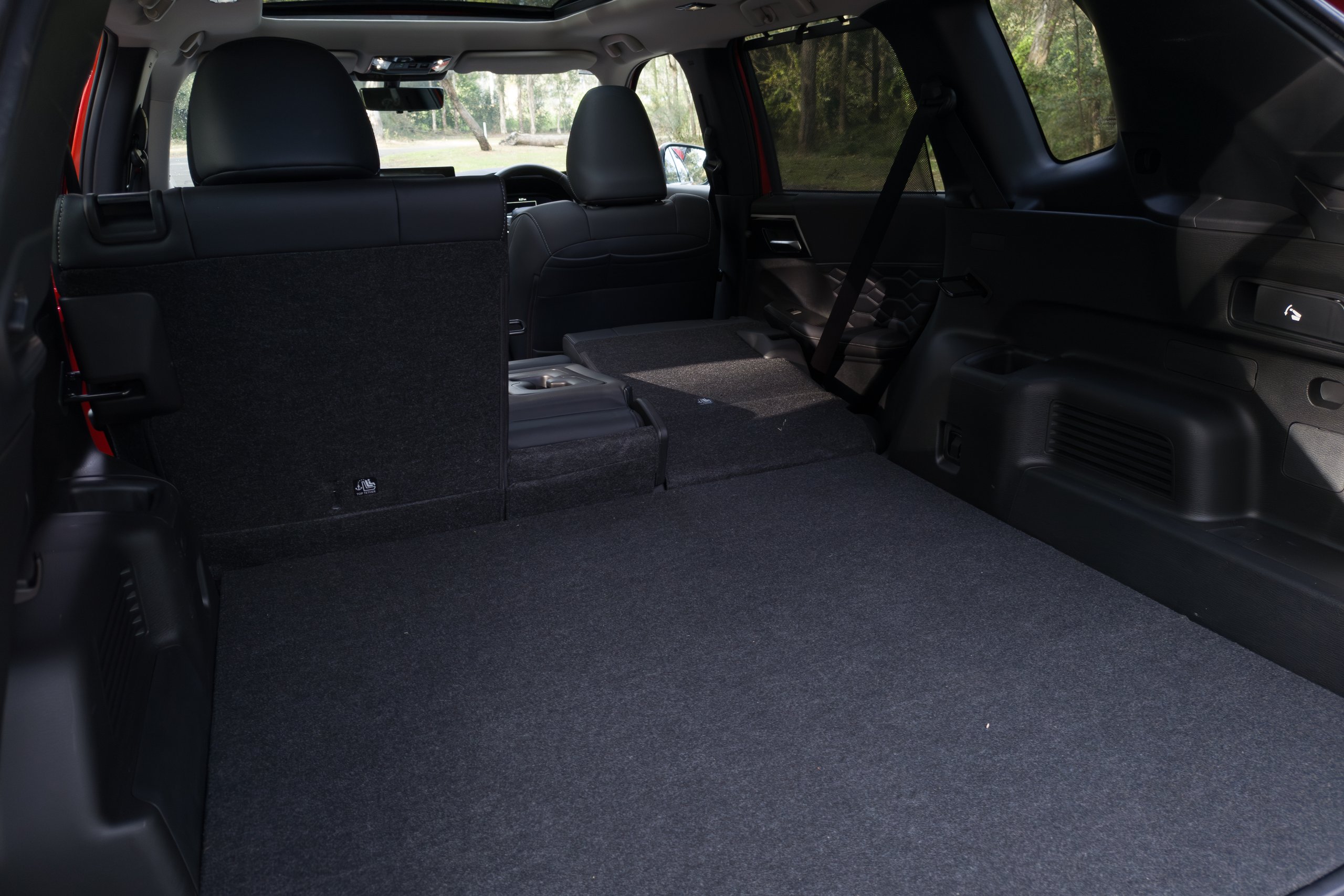
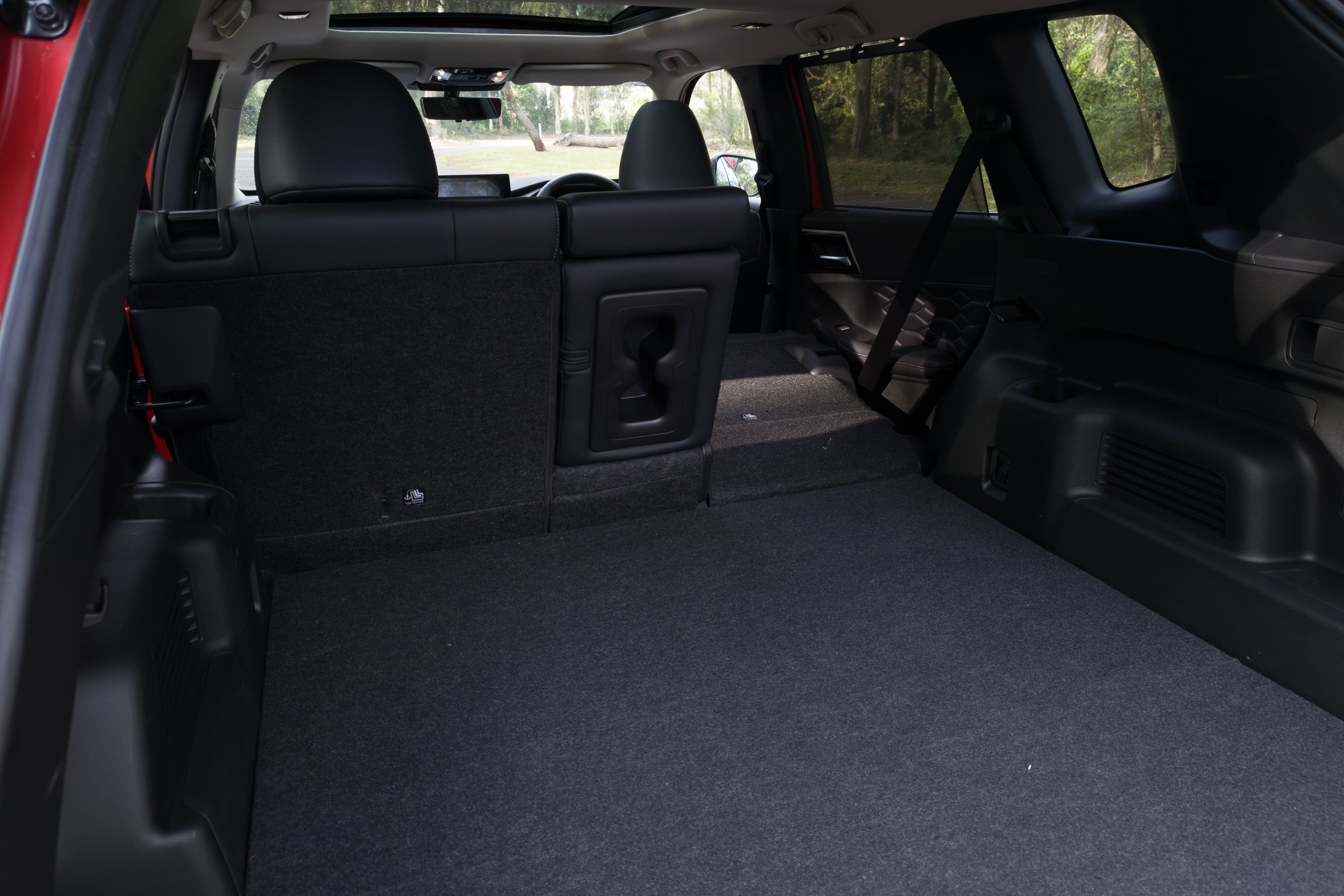
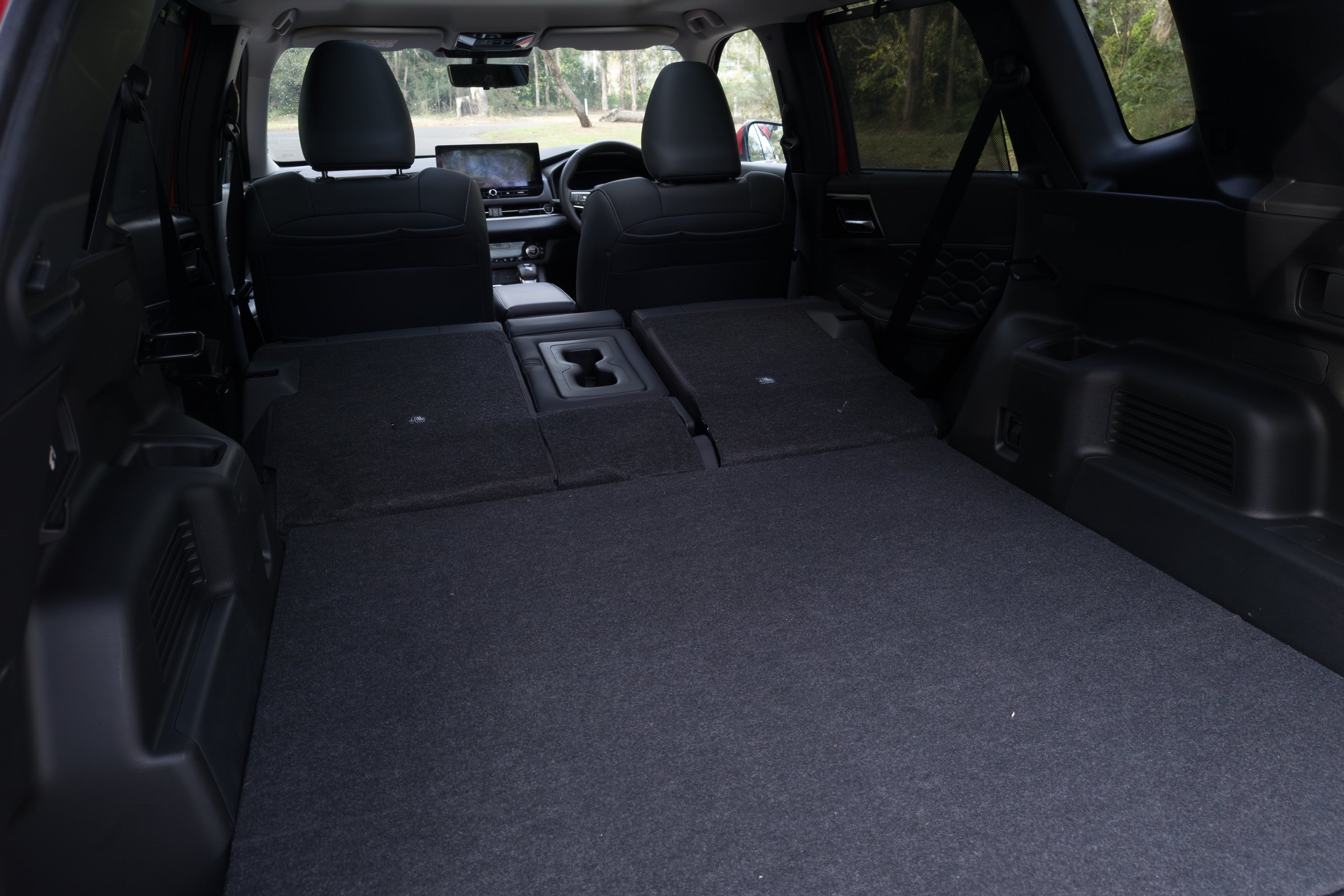
The Exceed is a five-seater, full stop. If you want the third row you have to step down to the cheaper Aspire, which is a strange way around for a range to work, and worth knowing before you sign anything. The second row you get instead is genuinely roomy, with reclining backrests, a 40:20:40 split, rear vents and its own climate zone. My back-seat test was two adults with bags of gear, and nobody complained.
The boot is 472 litres to the top of the back seats and 1392 litres to the roof folded, with a wide, flat floor between the arches. The tailgate is hands-free and you can set its opening height for a low garage, which is a thoughtful touch. Less thoughtful: there’s no spare wheel at all, just a repair kit, which is fine right up until it isn’t.
Technology and connectivity
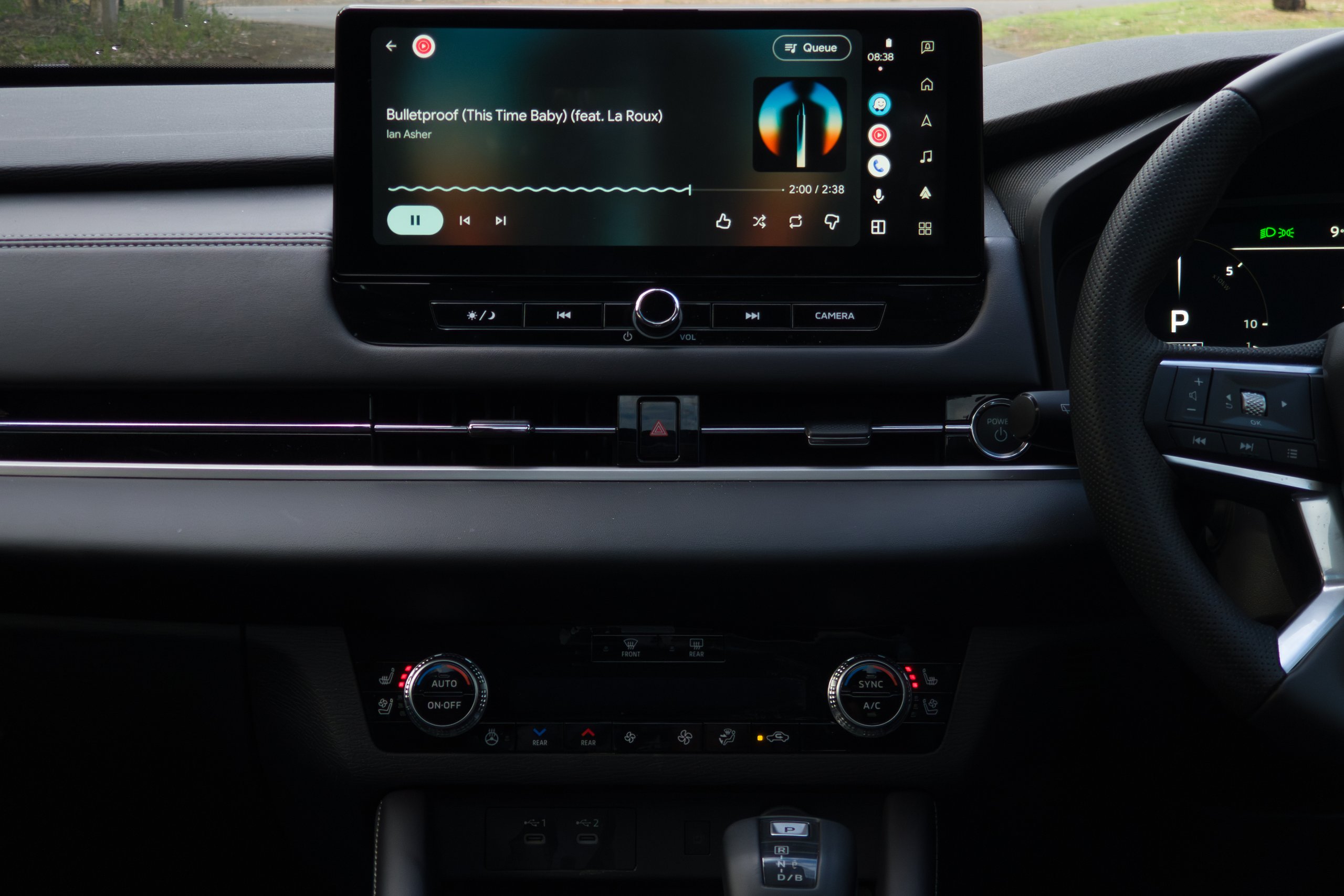
Wireless Apple CarPlay and Android Auto are standard, and most of the time I just used Android Auto. The menus weren’t a problem anyway, because the physical buttons cover the everyday stuff, but it says something that I never felt the need to explore.
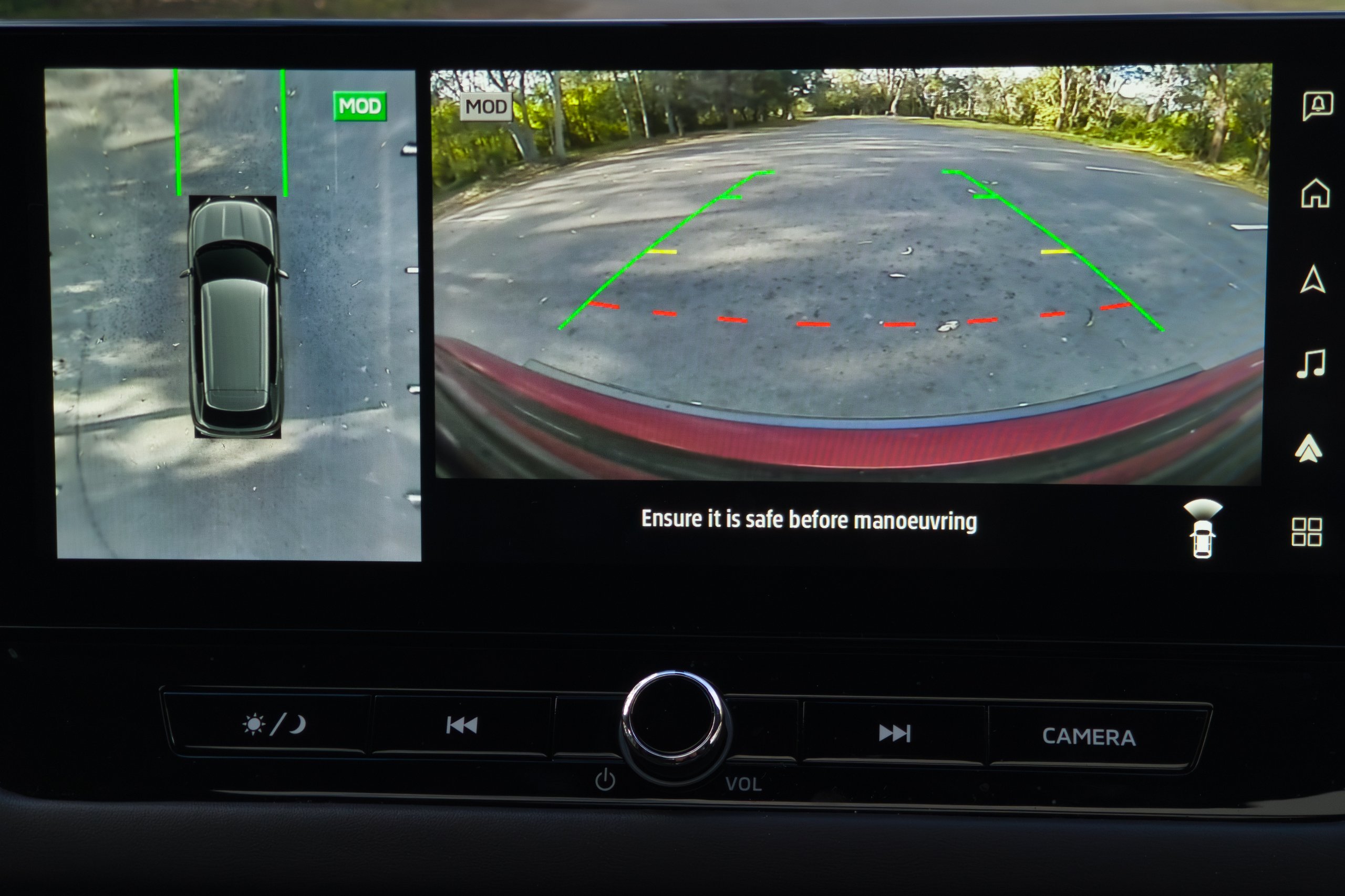
The Yamaha stereo actually surprised me. Good sound, not great, but much better than a lot of the Chinese competition manages. The Exceed gets the eight-speaker Premium system; the twelve-speaker version with a subwoofer is reserved for the Exceed Tourer. One-pedal mode is smooth too, not the nodding-dog calibration some rivals ship, and the 360-degree camera is a small win when you’re parking something this size.
My one real gripe all week was the cruise control, which wants its buttons pressed in an order only it knows. It’s not as intuitive to use as other cars, and on the Exceed that matters, because it’s the full MI-PILOT system with lane keeping and traffic jam assist. A headline feature you have to fight is a headline feature at half strength.
Highlighted Features
- Two 240V household power outlets: console and boot, 1500W combined, for camping, work gear or a blackout.
- Super All-Wheel Control with seven terrain modes: Mitsubishi’s full-time AWD system with Active Yaw Control.
- Innovative Pedal Operation: one-pedal driving with paddle-adjustable regen, and it’s smooth.
- Digital rear-view mirror: a clear view behind even with the boot packed to the roof.
Engine and drivetrain
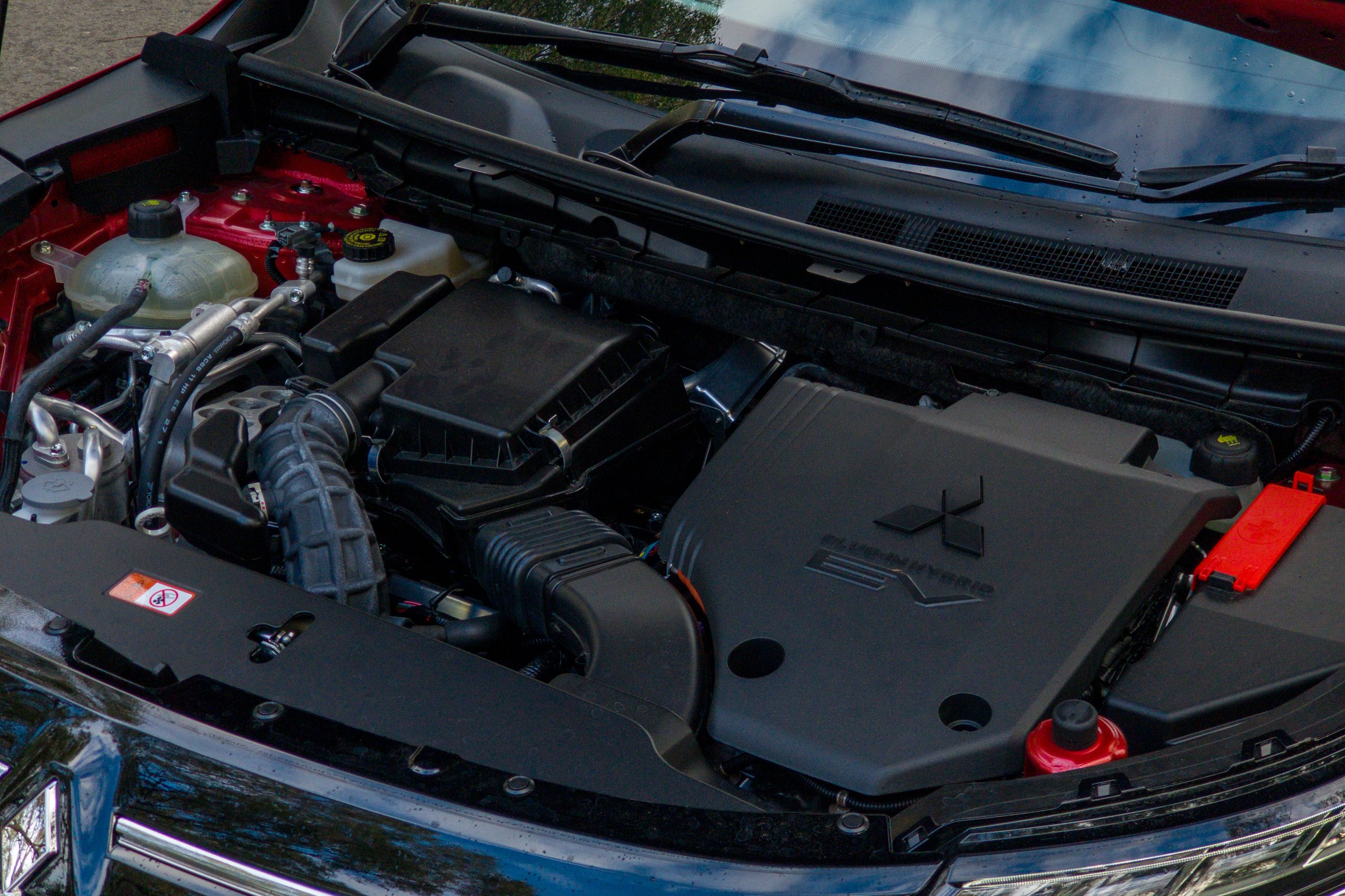
The setup is a 2.4-litre petrol engine and two electric motors, one on each axle. The motors do most of the actual driving. Around town the engine mostly works as a generator, topping up the battery while the motors turn the wheels, and at highway speeds it clutches in and drives the wheels directly. That’s also why my petrol figure wasn’t lower: a fair bit of my week was highway, which is exactly when the engine earns its keep. On outputs, the engine makes 98kW, the front motor 85kW and the rear motor 100kW, and Mitsubishi quotes 221kW combined. The numbers don’t simply add up, they never do with hybrids, because the electronics cap what the system can deliver at any moment.
Charging is the honest-conversation part. A household socket does a full charge in about 10 hours, a 15-amp connection in 6.5, and that 6.5-hour figure tells you the onboard charger tops out around 3.5kW, so there’s no point paying for a 7kW wallbox. DC fast charging exists on paper, 80 per cent in 32 minutes, but the plug is CHAdeMO and Australia’s public network standardised on CCS2 years ago. There’s also a Battery Charge mode that refills the pack from the engine, a handy escape hatch if you can’t plug in for a stretch, even if charging a battery with petrol is a bit like buying ice to cool the fridge.
What’s the Mitsubishi Outlander PHEV like to drive?
It coasts along nicely. That’s my one-line summary and I mean it as a compliment. The power goes down smoothly and linearly, with none of the electric snap that makes some plug-in hybrids feel busy.
Does 221kW feel like 221kW? Not really, once you factor in the 2142kg it’s hauling. Just over 100kW per tonne means it’s not slow, but it’s not the quickest car either, and it’s not the kind of car where you’d pin the gap. Mitsubishi doesn’t publish a 0 to 100 time, and I can see why nobody bothered.
The ride is the standout. I can understand the hullabaloo about the Australian suspension tuning, because this is a very smooth ride for something so large, and on 20-inch wheels that’s no small feat. The really hard speed bumps still make it through, just with the edges sanded off. I didn’t take it on rough roads, so I won’t pretend to know how it handles them, and the seven terrain modes went untested beyond knowing the switch is there.
Is the Mitsubishi Outlander PHEV safe?
The Outlander holds a five-star ANCAP rating, originally awarded in 2022 with scores of 83 per cent for adult occupants, 92 per cent for children, 81 per cent for vulnerable road users and 83 per cent for safety assist. ANCAP re-affirmed the five stars in 2025 under its current, tougher protocol for PHEV variants built from July 2025, with extra crash tests to verify the high-voltage battery’s integrity.
Seven airbags are standard, including a front-centre airbag, plus two ISOFIX points and three top tethers. What I’ll vouch for personally is that the systems were there but not intrusive. No constant bonging, no wheel-wrestling, just quiet background cover, which is exactly where you want it.
- Forward Collision Mitigation with pedestrian, cyclist and junction detection
- MI-PILOT adaptive cruise with Lane Keep Assist, Traffic Jam Assist and Speed Limit Assist
- Blind Spot Warning, Rear Cross Traffic Alert and rear automatic emergency braking
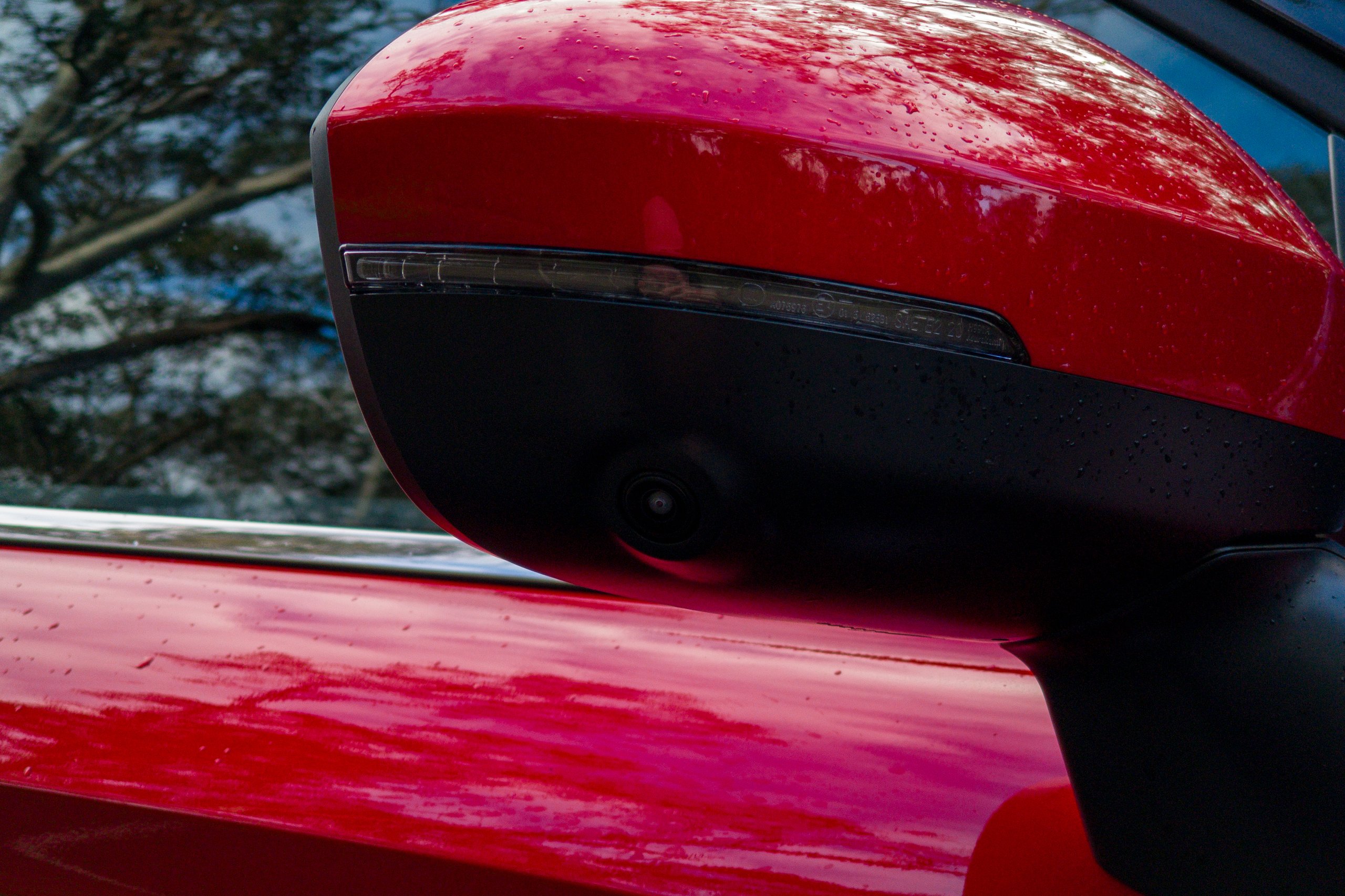
- 360-degree Multi Around Monitor, front and rear parking sensors, driver monitoring
How much does the Mitsubishi Outlander PHEV cost?
The Exceed is $71,640 before on-road costs, which works out to approximately $76,000 drive-away depending on your state. Mitsubishi doesn’t publish a national drive-away figure. The wider range runs from the $58,990 ES through the $66,790 seven-seat Aspire to the $74,490 Exceed Tourer, and this update added $2,350 to the Exceed’s price.
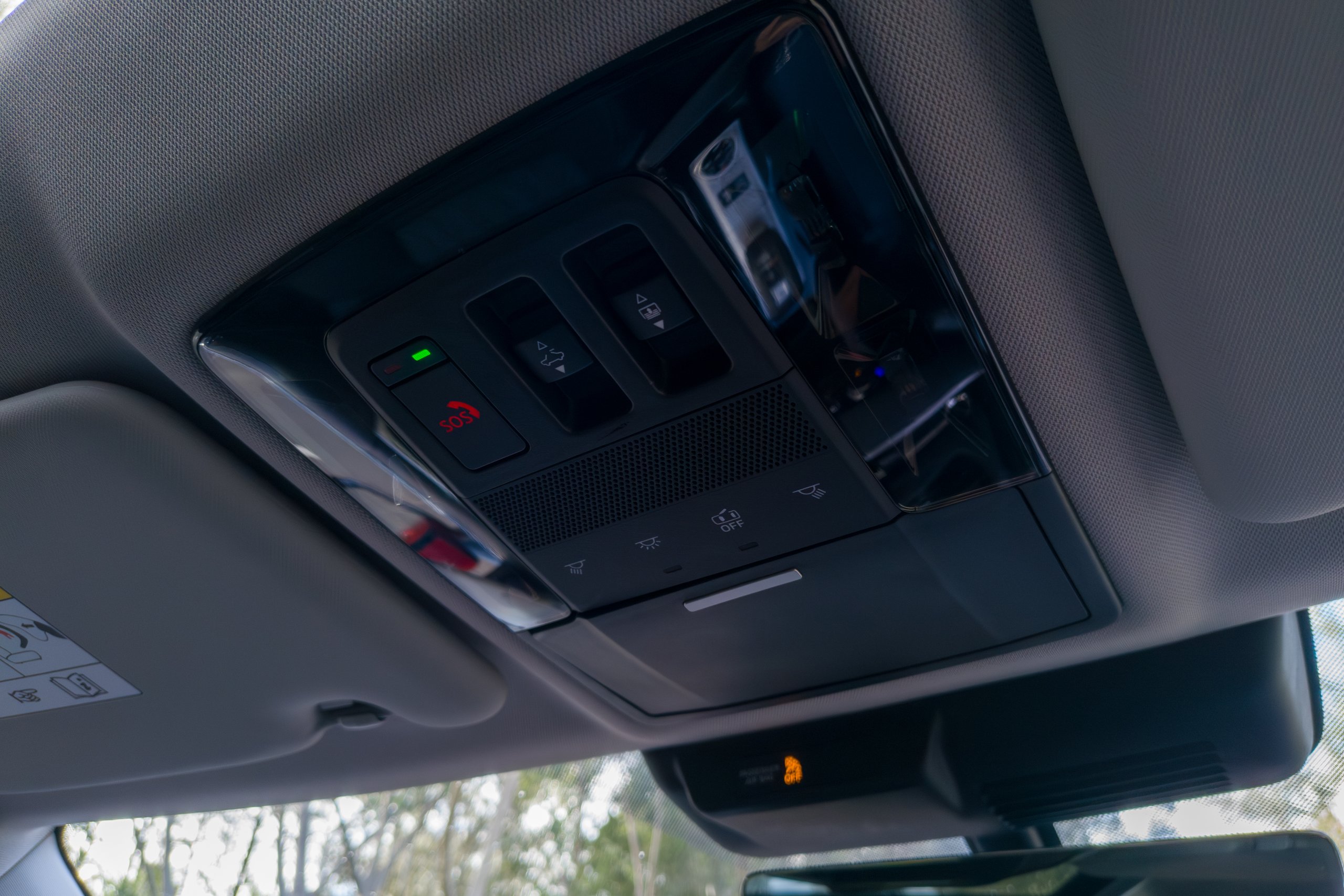
To be fair, it comes with all the bells and whistles. Panoramic sunroof, head-up display, digital rear-view mirror, ventilated and heated front seats, hands-free tailgate, tri-zone climate, the lot, with nothing significant left on an options list. The catch is the company it keeps at this money: the Kia Sorento PHEV is a bigger seven-seater for $71,130, and a top-spec BYD Sealion 6 is around $56,990.
How much does the Mitsubishi Outlander PHEV cost to run?
The headline is Mitsubishi’s 10-year warranty, and the fine print is that it’s conditional. Service anywhere other than a Mitsubishi dealer and it reverts to 5 years and 100,000km. Servicing itself is capped for 10 years but isn’t cheap at $2,123 over the first five, and Mitsubishi recommends PHEVs go to a PHEV Specialist Service Centre, worth checking if you’re not near a capital city. The drive battery gets its own 8-year, 160,000km warranty with a 66 per cent capacity guarantee.
Energy is where it wins the money back. My week’s 20.8kWh/100km costs about $6.90 per 100km at a typical 33c home rate, or under $2 on a cheap overnight EV plan. Take the trip computer’s 3.0L/100km at face value and petrol adds about $5.20 per 100km, though the barely-moved fuel gauge suggests the real burn was less than that. So call it $12 per 100km at the very worst, or under $7 if you charge overnight on the cheap rate, against roughly $13.80 for a petrol SUV this size. A full charge of the 22.7kWh battery is about $7.50 at home.
Running costs |
Details |
|---|---|
| Warranty | Up to 10 years / 200,000km (conditional on dealer servicing; otherwise 5 years / 100,000km) |
| Battery warranty | 8 years / 160,000km, with a 66% capacity retention guarantee |
| Servicing interval | 12 months / 15,000km |
| Capped-price servicing | $2,123 over 5 years; $5,718 over 10 years (10 years / 150,000km) |
| Roadside assist | Up to 10 years, renewed 12 months at a time with each eligible service |
| Claimed economy | 1.2 L/100km combined (ADR 81/02) |
| Observed economy / range | Trip computer: 3.0 L/100km and 20.8 kWh/100km over 432.9km of mixed suburban and highway driving; the fuel gauge barely moved all week |
| Energy / fuel cost | Approximately $12 per 100km combined at $0.33/kWh and $1.73/L, or under $7 per 100km on an $0.08/kWh overnight EV plan |
Final thoughts
This is definitely a family car, and a bit of an all-rounder at that, which makes the who-shouldn’t-buy-it question the harder one to answer. It’s quite a large car, so anyone tight on garage or parking space should measure first. Anyone who needs seven seats has to step down to the Aspire, oddly. And anyone who can’t charge at home should think twice: Battery Charge mode means you’re never stranded, but with the public network effectively off-limits you’d be better served by a self-charging hybrid like the GWM Haval H7 or the Nissan Qashqai e-POWER, which skip the plug entirely.
For everyone else there’s honestly not a lot stopping you, except the price. Of the rivals I’ve driven, the Haval H6 PHEV is definitely the cheaper one, and the BYD Sealion 6 outsells the lot. What the Mitsubishi has over them is the 10-year warranty, twenty-odd years of plug-in hybrid experience, proper all-wheel drive and a ride none of them match yet. Whether that’s worth the extra spend is the only question left, and after a week that barely moved the fuel gauge, I can see plenty of buyers deciding it is.
2026 Mitsubishi Outlander PHEV Exceed — Frequently Asked Questions
How far does the Mitsubishi Outlander PHEV go on electricity?
Mitsubishi claims up to 103km of electric-only driving from the 22.7kWh battery on the Australian ADR 81/02 test. My week returned 20.8kWh/100km, which points to roughly 100km of real electric range from a full charge. When the battery runs out, the 2.4-litre petrol engine takes over.
How much does the Mitsubishi Outlander PHEV Exceed cost in Australia?
The Outlander PHEV Exceed AWD is $71,640 before on-road costs, roughly $76,000 drive-away depending on your state. Mitsubishi doesn’t publish a national drive-away price. The range runs from $58,990 for the ES to $74,490 for the Exceed Tourer, all before on-road costs.
Can you fast-charge the Mitsubishi Outlander PHEV in Australia?
Not really. The DC port is CHAdeMO, and nearly every public fast charger built in Australia now is CCS2, so the 32-minute rapid-charge claim is close to theoretical unless you buy a third-party adapter. Treat it as a car you charge at home overnight, which a normal week only needs once or twice.
Is the Mitsubishi Outlander PHEV Exceed worth buying?
If you can charge at home, yes. A household power point covers a normal week, and mine barely moved the fuel gauge across 432.9km. If you can’t plug in, or price is the deciding factor, rivals like the BYD Sealion 6 and GWM Haval H6 PHEV cost $15,000 or more less. We scored it 7.4 out of 10.
Specification |
Details |
|---|---|
| Model | 2026 Mitsubishi Outlander Plug-in Hybrid EV Exceed AWD (5 seat) |
| Model Price | $71,640 before on-road costs |
| Engine | 4B12 2.4L DOHC four-cylinder petrol, 2360cc, plus 85kW front and 100kW rear electric motors |
| Drivetrain | AWD, Super All-Wheel Control, single-speed transaxle |
| Power | 221kW combined system output (engine 98kW at 5000rpm) |
| Torque | 195Nm at 4300rpm (engine); combined system torque Not Published |
| Battery Capacity / type | 22.7kWh lithium-ion |
| Voltage | 355V |
| Electric range | Up to 103km (ADR 81/02) |
| Fuel economy | 1.2 L/100km combined (ADR 81/02); 3.0 L/100km observed |
| Fuel type / tank | 91 RON unleaded minimum / 53 litres |
| Charging | DC CHAdeMO, 80% in 32 minutes; AC 15A in 6.5 hours; 240V 10A household socket in 10 hours |
| 0-100kmh / Top Speed | Not Published |
| CO2 Emissions | 27 g/km (ADR 81/02) |
| Safety | 5-star ANCAP (2022 rating, re-affirmed 2025 for PHEVs built from July 2025) |
| Servicing | 12 months / 15,000km; $2,123 over 5 years, $5,718 over 10 years |
| Warranty | Up to 10 years / 200,000km conditional; battery 8 years / 160,000km |
| Roadside Assist | Up to 10 years |
Specification |
Details |
|---|---|
| Overall Length | 4720mm |
| Width | 1862mm |
| Height | 1751mm |
| Wheelbase | 2704mm |
| Wheels | 20 x 8J two-tone alloy |
| Tyres | 255/45R20 (tyre repair kit, no spare wheel) |
| Kerb Weight | 2142kg |
| Boot Min | 472 litres (to top of second-row seatback, VDA) |
| Boot Max | 1392 litres (to roof, seats folded, VDA) |
| Towing Capacity | 1600kg braked / 750kg unbraked |
| Tow Ball rating | 160kg |
| Turning Circle | 11.2m kerb to kerb |
| Max ground clearance | 199mm (minimum, unladen) |
| Approach / Rampover / Departure | 18.3 degrees / 18 degrees / 22.5 degrees |
| Payload | 523kg |
| GVM | 2665kg |
| GCM | 4265kg |
For the latest pricing, the servicing schedule for your build date, or to book a test drive, visit Mitsubishi Motors Australia.
The score, itemised
8.1 overall- 8.0 Behind the Wheel
- 9.0 Comfort
- 7.0 Equipment weakest
- 7.0 Performance
- 9.0 Ride and Handling
- 8.0 Practicality
- 8.5 Fit for Purpose
- 8.5 Style / Appeal
- 8.0 Technology / Connectivity
- 8.0 Value for Money