This review focuses on the Volkswagen ID.4 GTX Edition 4MOTION, the dual-motor, all-wheel-drive flagship of Volkswagen’s electric SUV range.
A stint at a car yard once had me driving everything from bangers to Porsche 911 GT3s, so a “performance” badge always raises an eyebrow before it earns a nod. The GTX, it turns out, is quick, quiet and immensely capable, yet the thing that stuck with me after a week is how sensibly it wears that sporting promise.
In Australia the ID.4 comes in just two flavours: the rear-drive Pro from $59,990 before on-road costs, and this GTX, which lands at $69,990 before on-roads, or from approximately $73,990 drive-away on Volkswagen’s own figures, depending on your state. That puts it squarely among the Subaru Trailseeker, Kia EV5 and Hyundai IONIQ 5, a segment that is no longer short of talent.
EcoCarGuide viedeo review of the ID4 GTX
| Volkswagen ID.4 GTX — at a glance | |
|---|---|
| Price (drive-away) | From approximately $73,990 (varies by state) |
| Powertrain | Dual-motor all-wheel-drive EV (4MOTION) |
| Power / torque | 250kW / 679Nm |
| 0–100 km/h | 5.4 seconds (claimed) |
| Range / battery | Up to 511km WLTP · 79kWh useable |
| Warranty | 5 years / unlimited km (8yr / 160,000km battery) |
| ANCAP | 5 stars (2021 datestamp) |
In this review
| The Good | The Not-So-Good |
|---|---|
| Planted, beautifully composed and whisper-quiet on the move, with meaty, firm steering | Hugely competent, but it never quite feels fun or engaging |
| Properly comfortable, sturdy cabin: extendable seat bases, a vast panoramic roof and genuine build quality | A fussy lower front bumper, plus gloss-black trim and a screen that smudge in seconds |
| Strong real-world range, so you are not forever hunting for a charger, plus a 5-year warranty and 8-year battery cover | You pay a premium over the cheaper, longer-range ID.4 Pro and punchier rivals like the Subaru Trailseeker |
What does the Volkswagen ID.4 GTX look like?
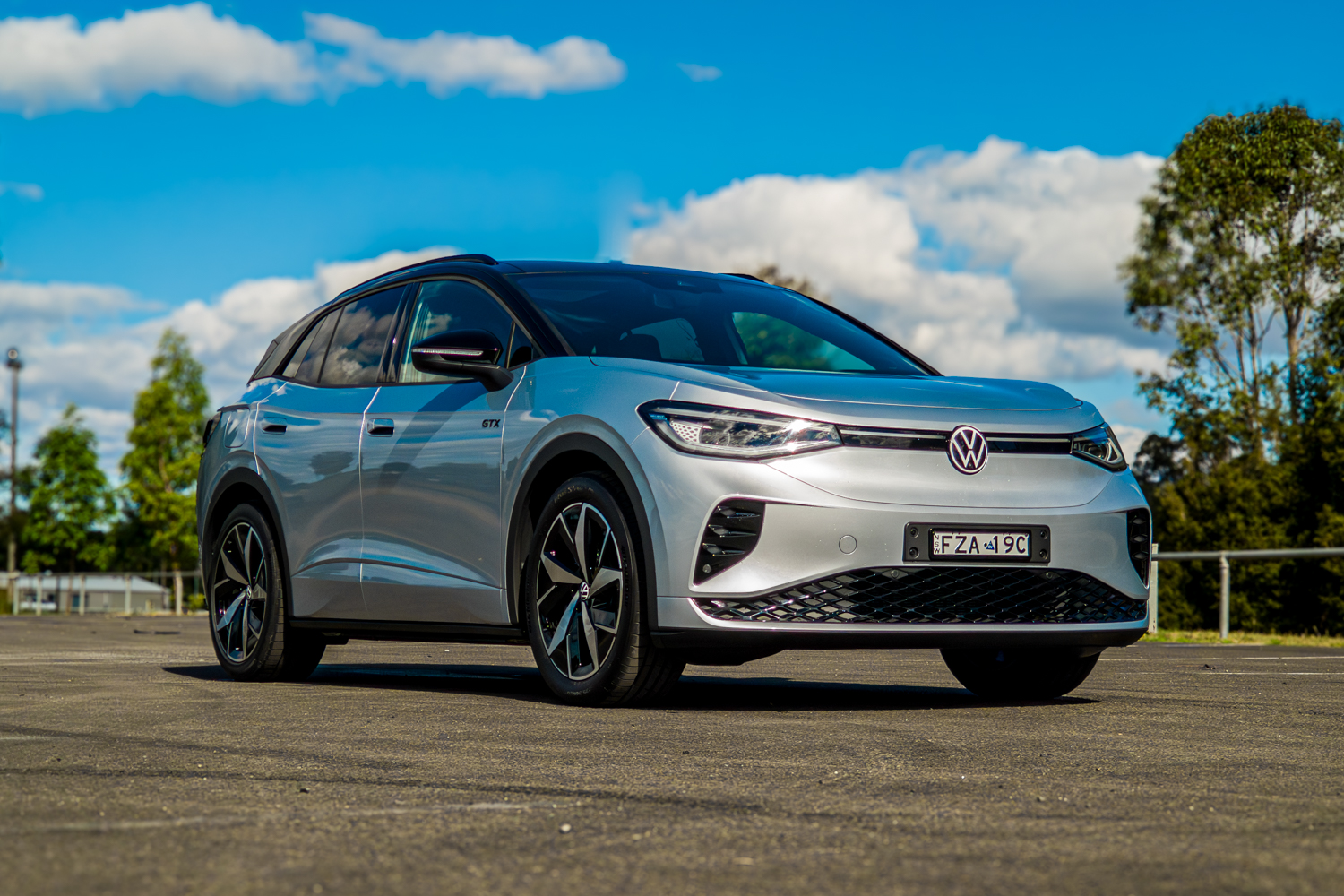
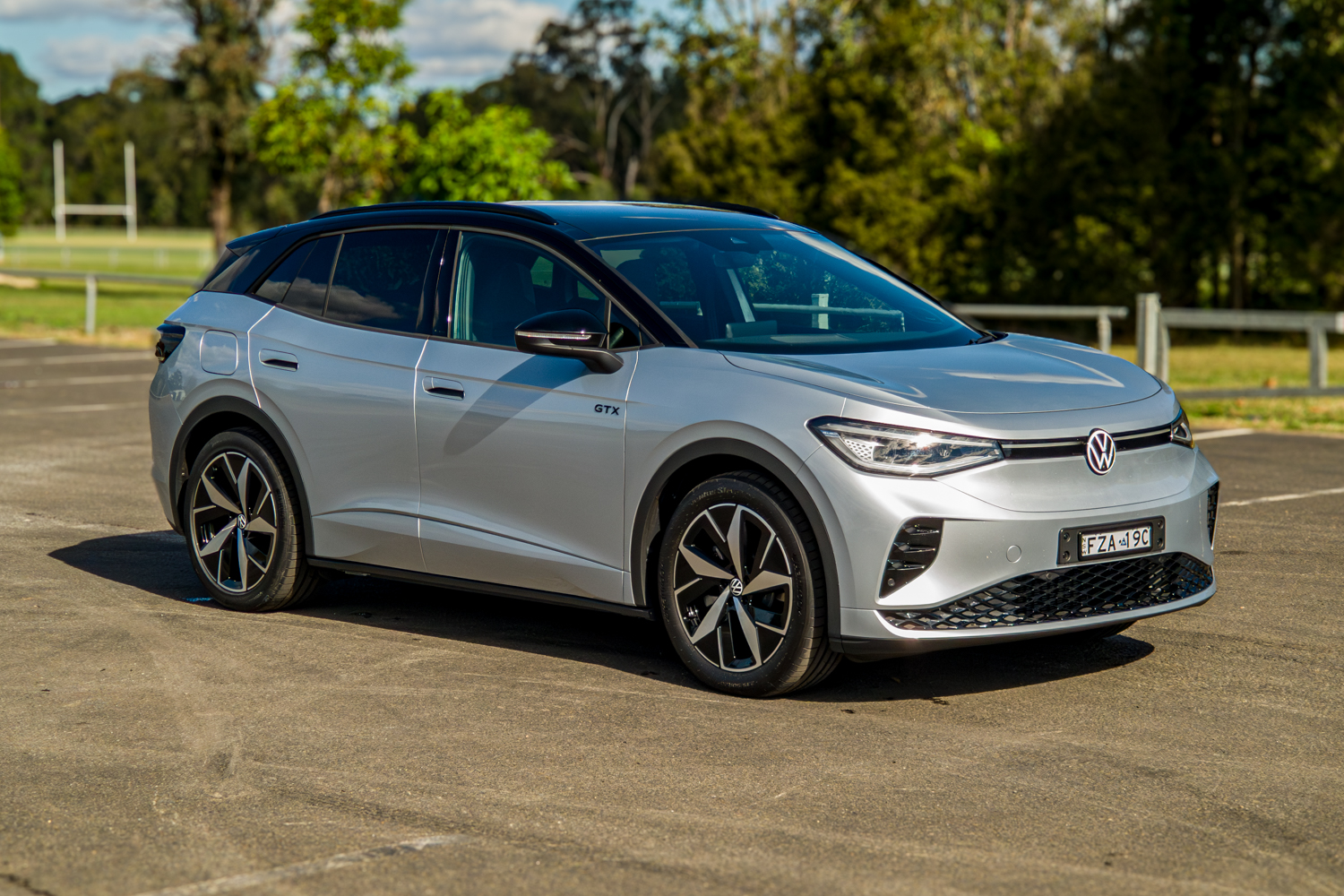
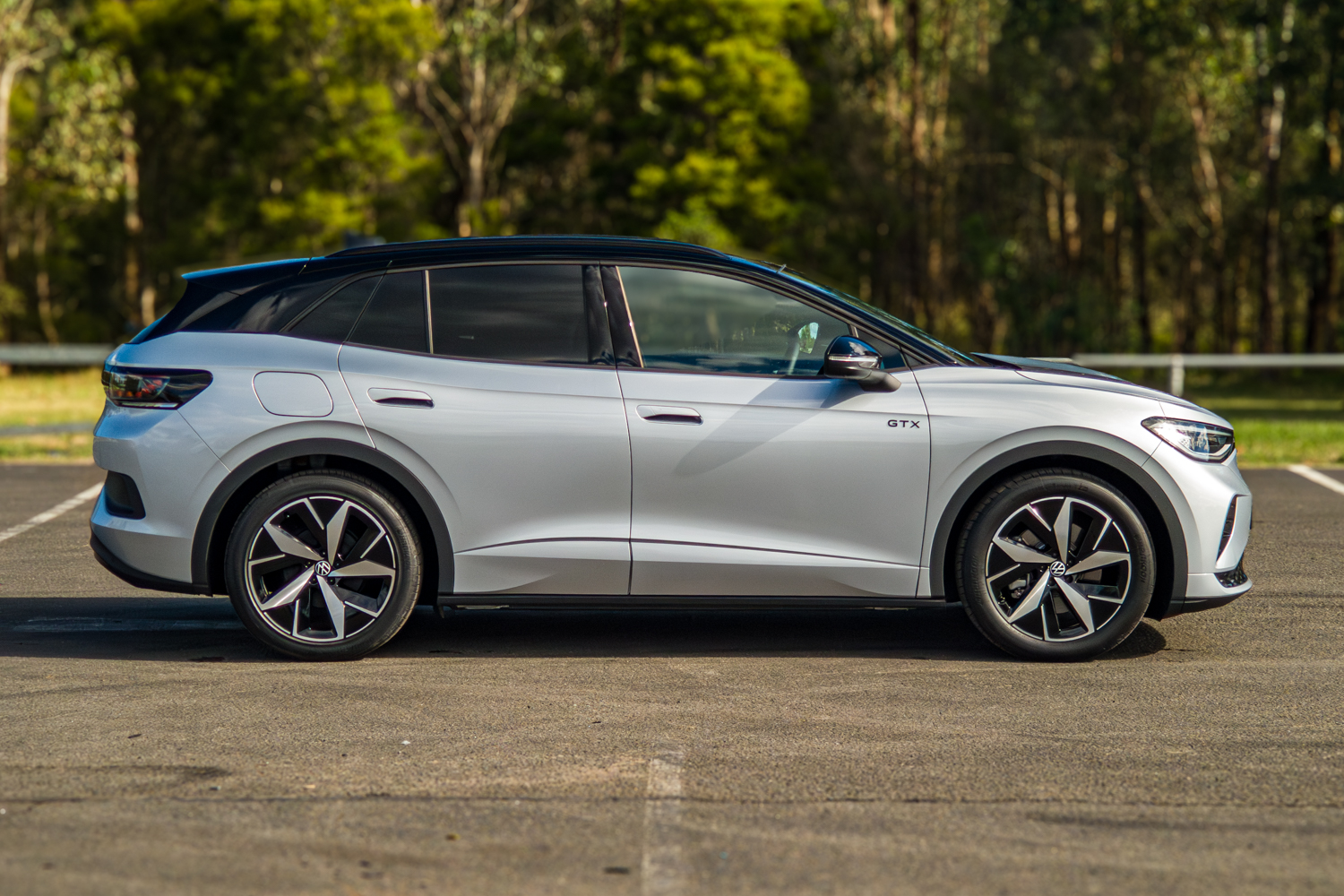
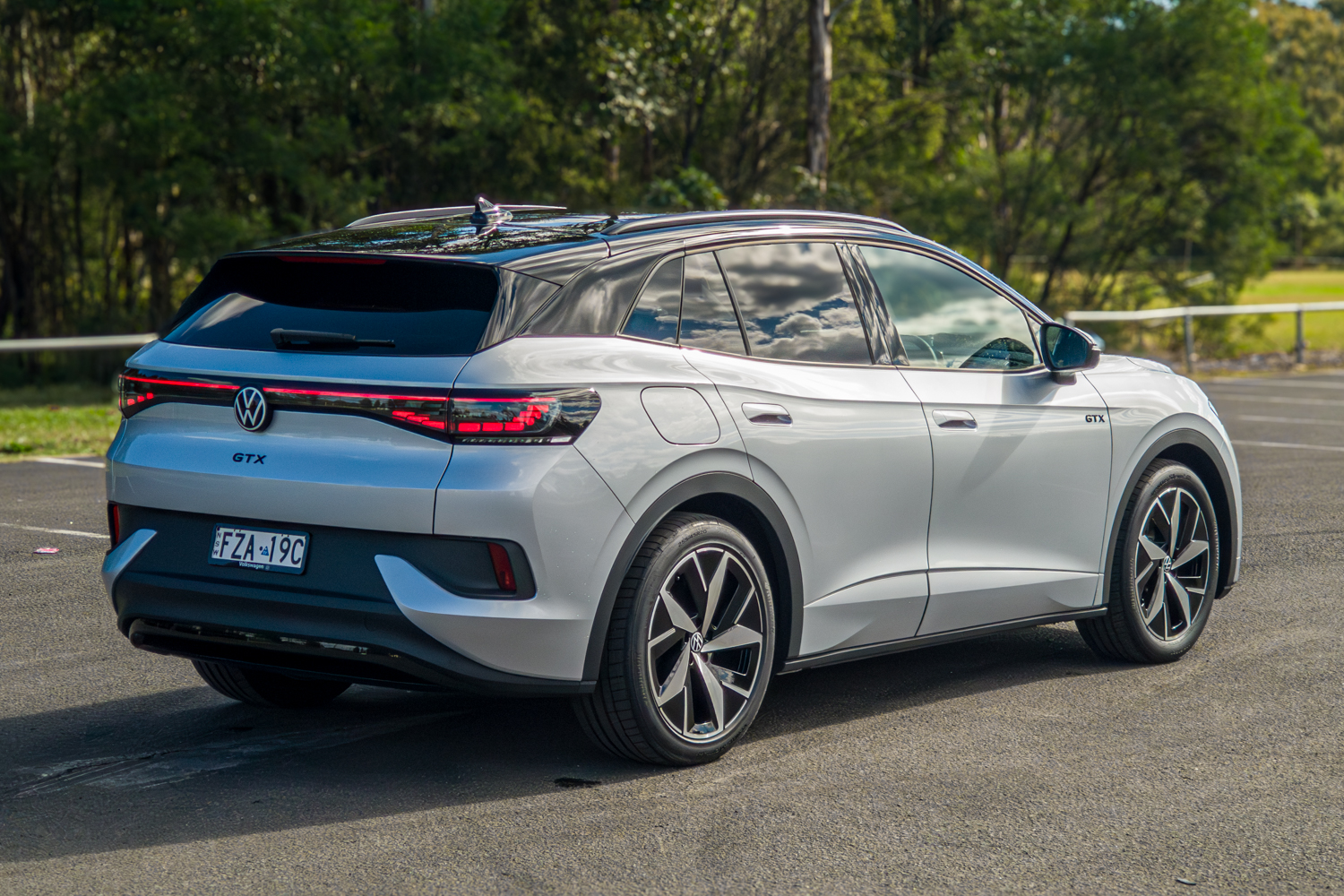
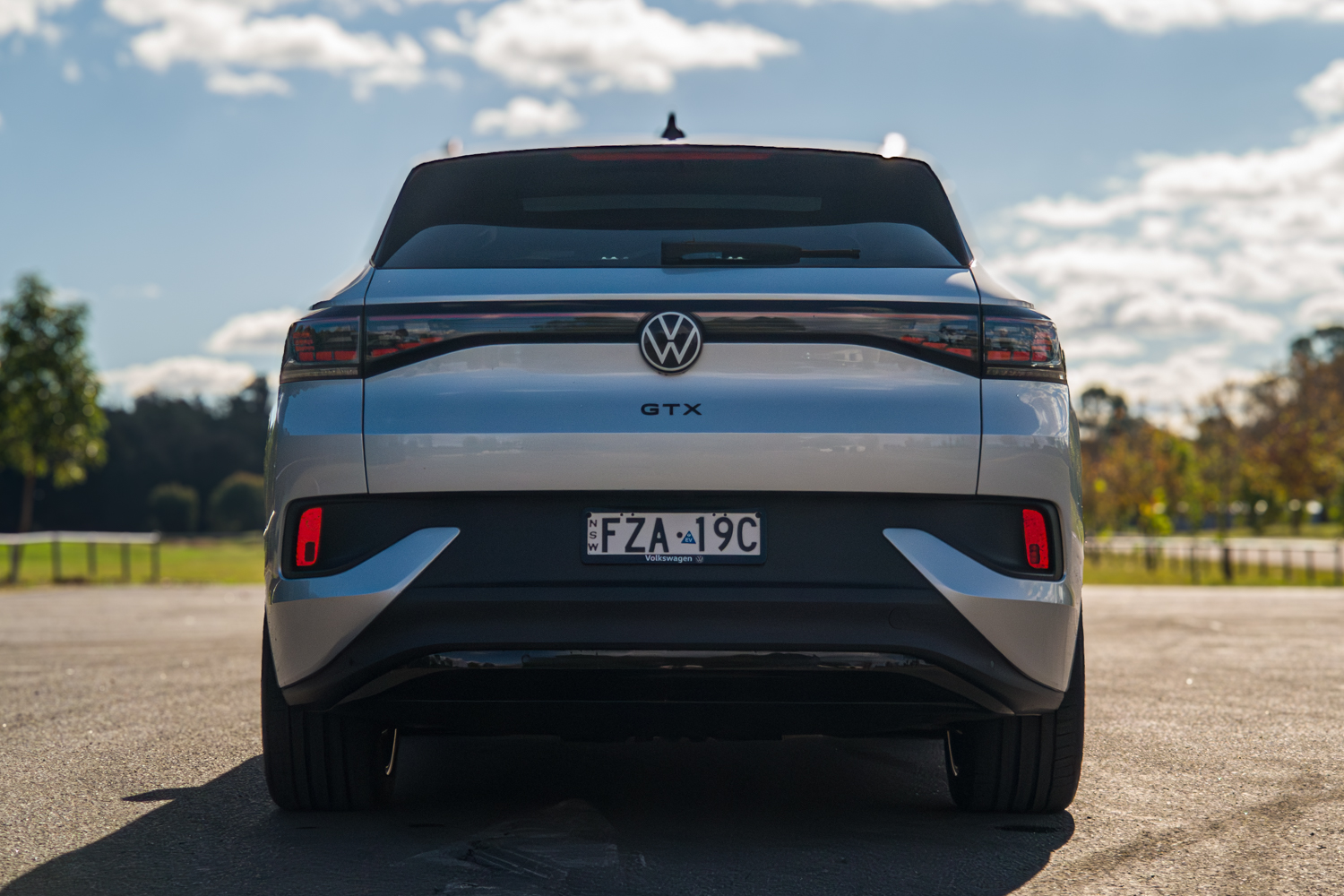
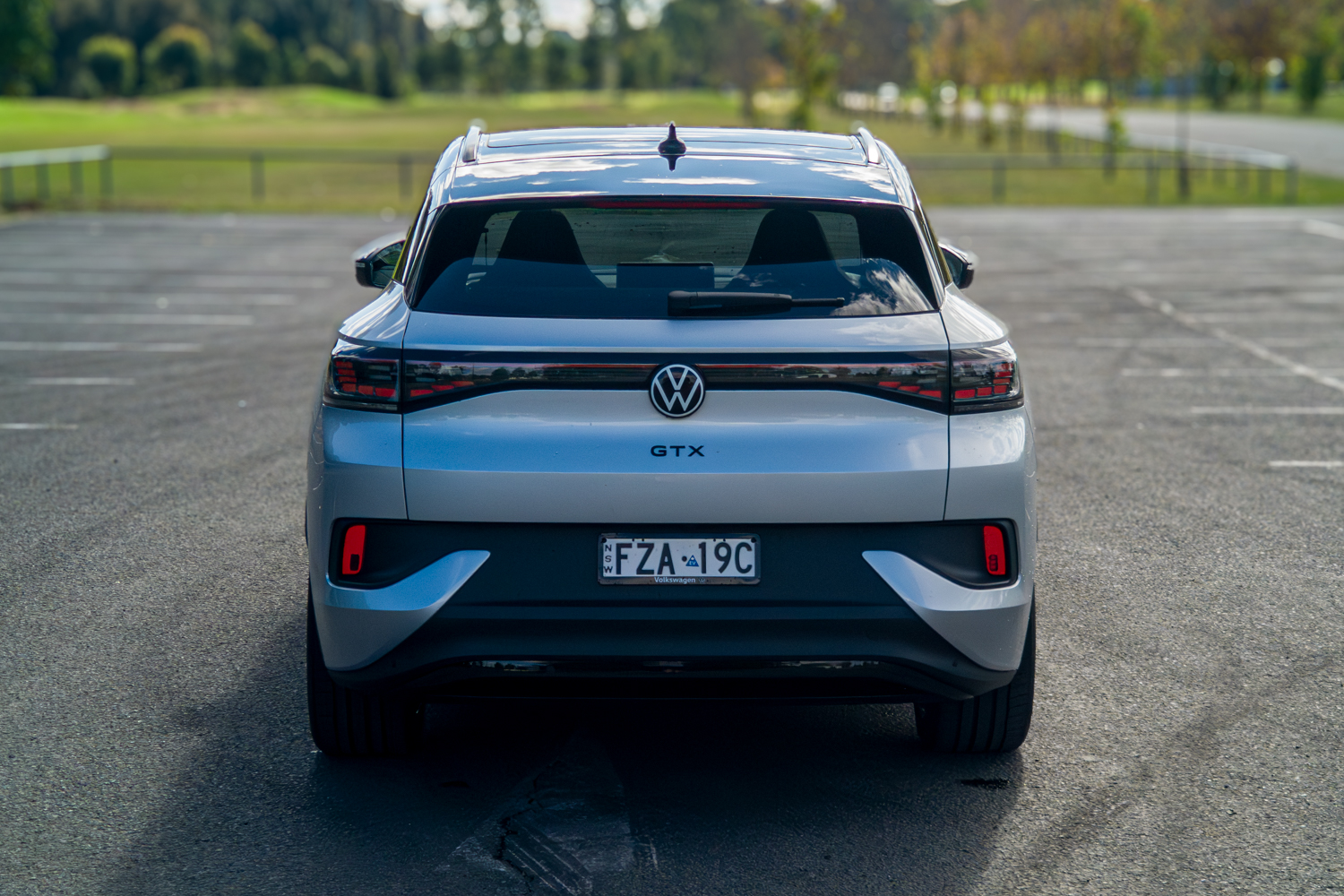
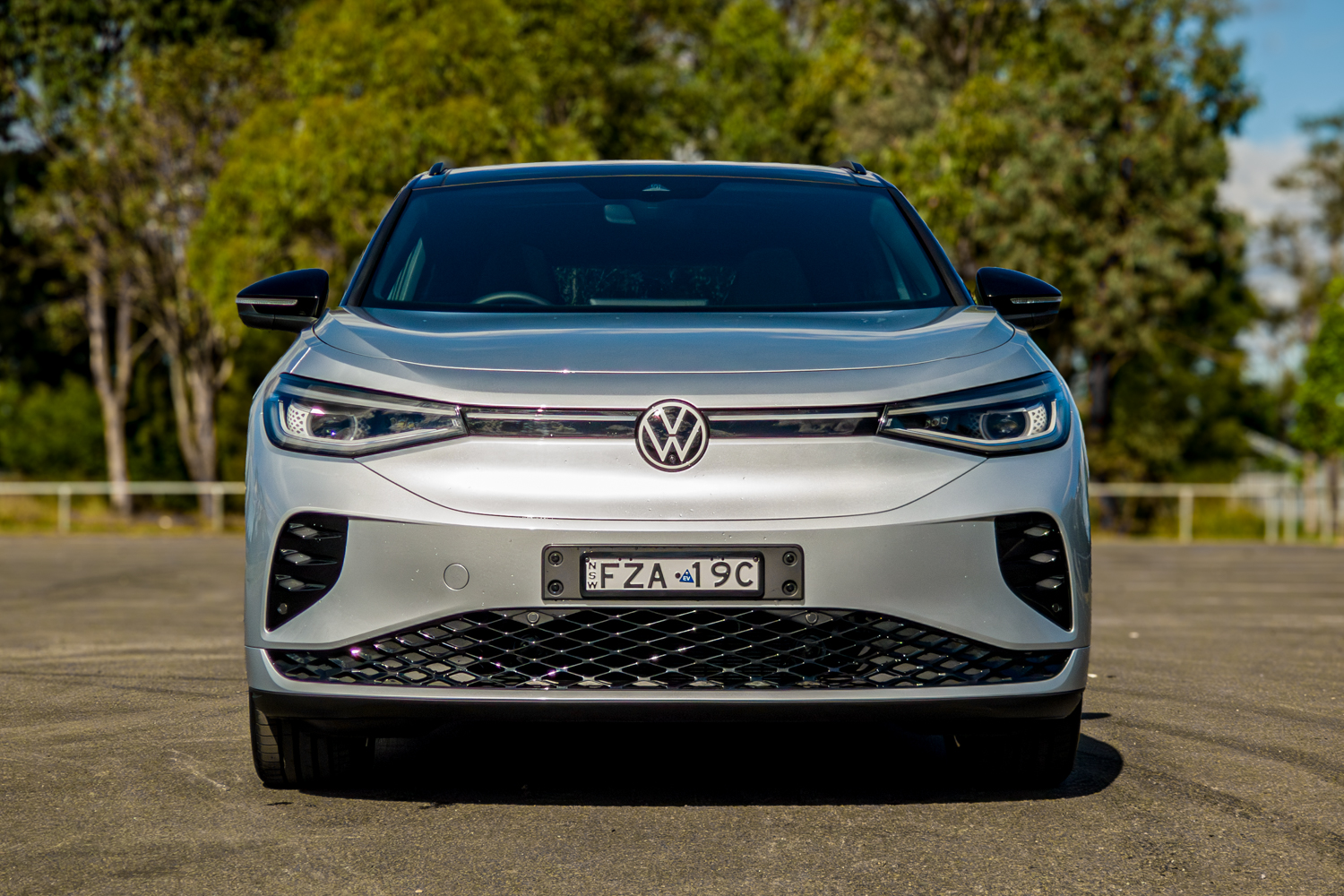
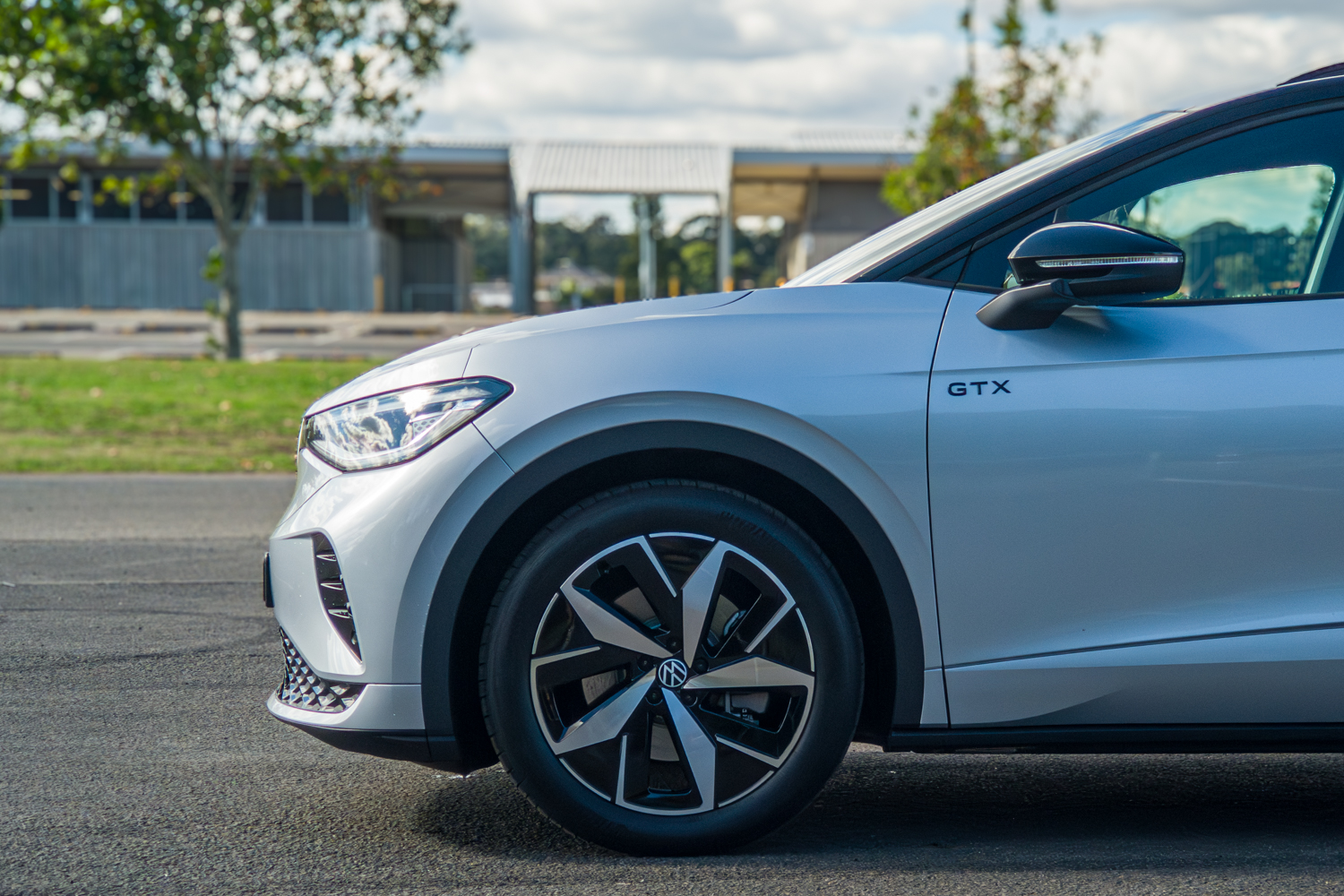
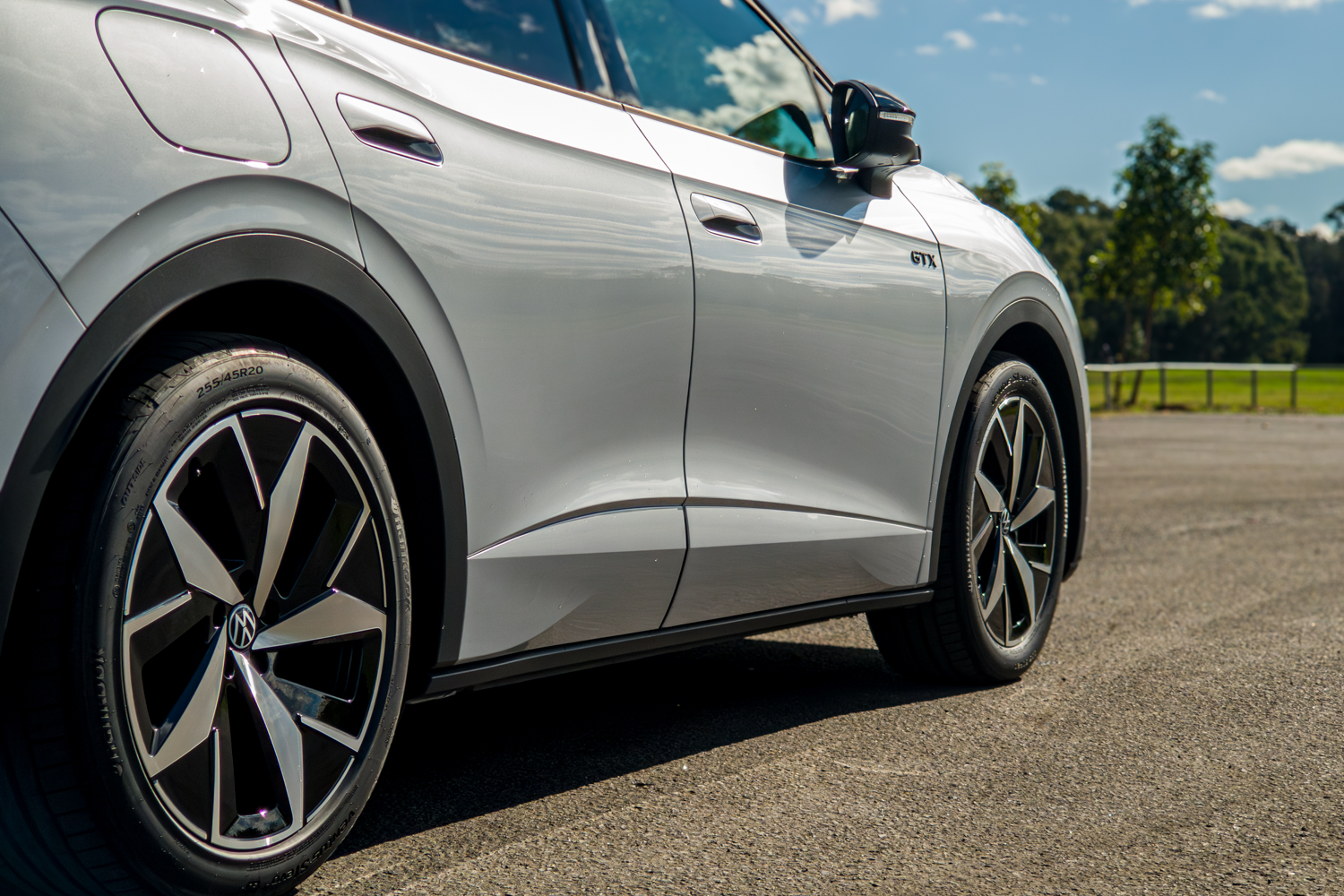
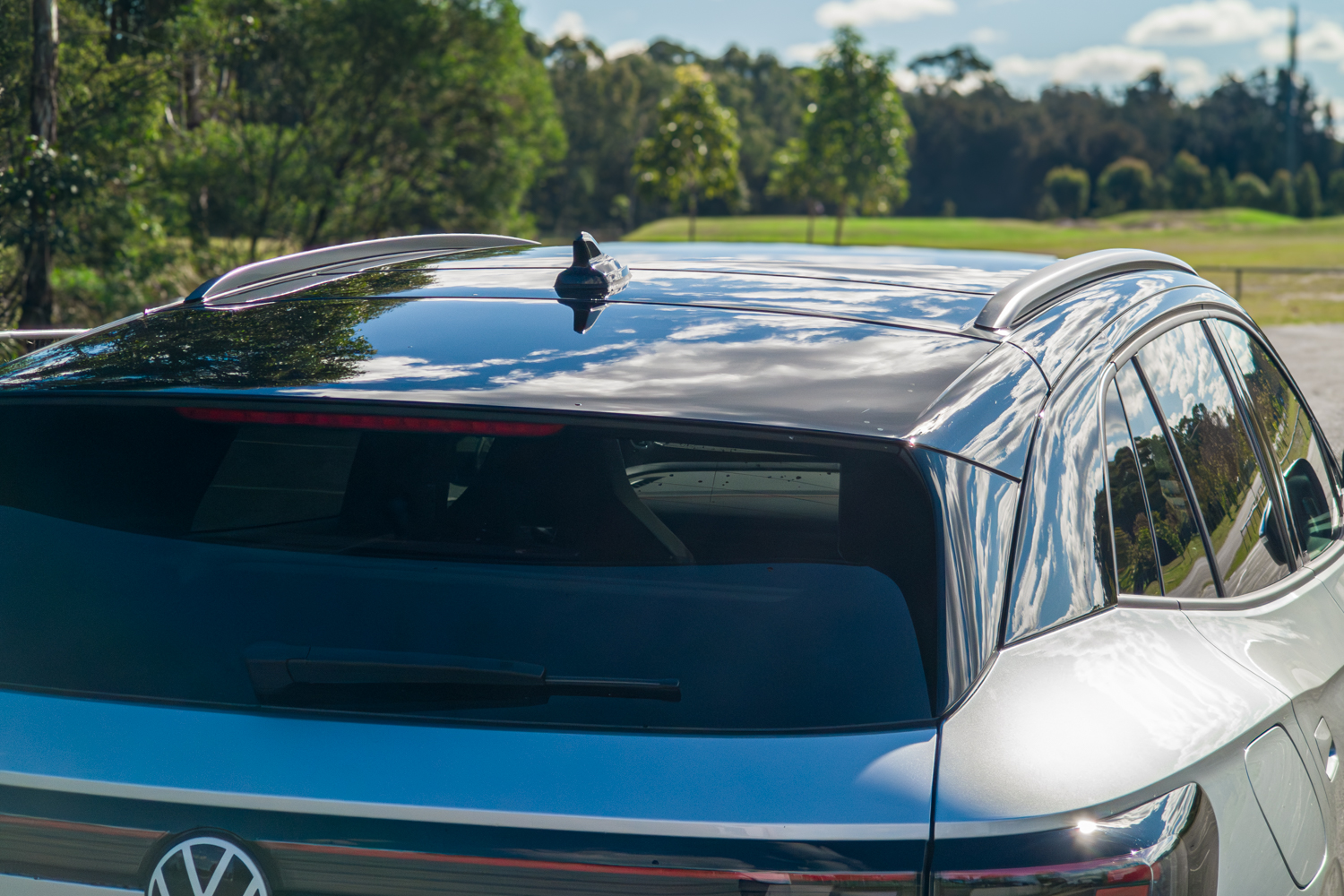
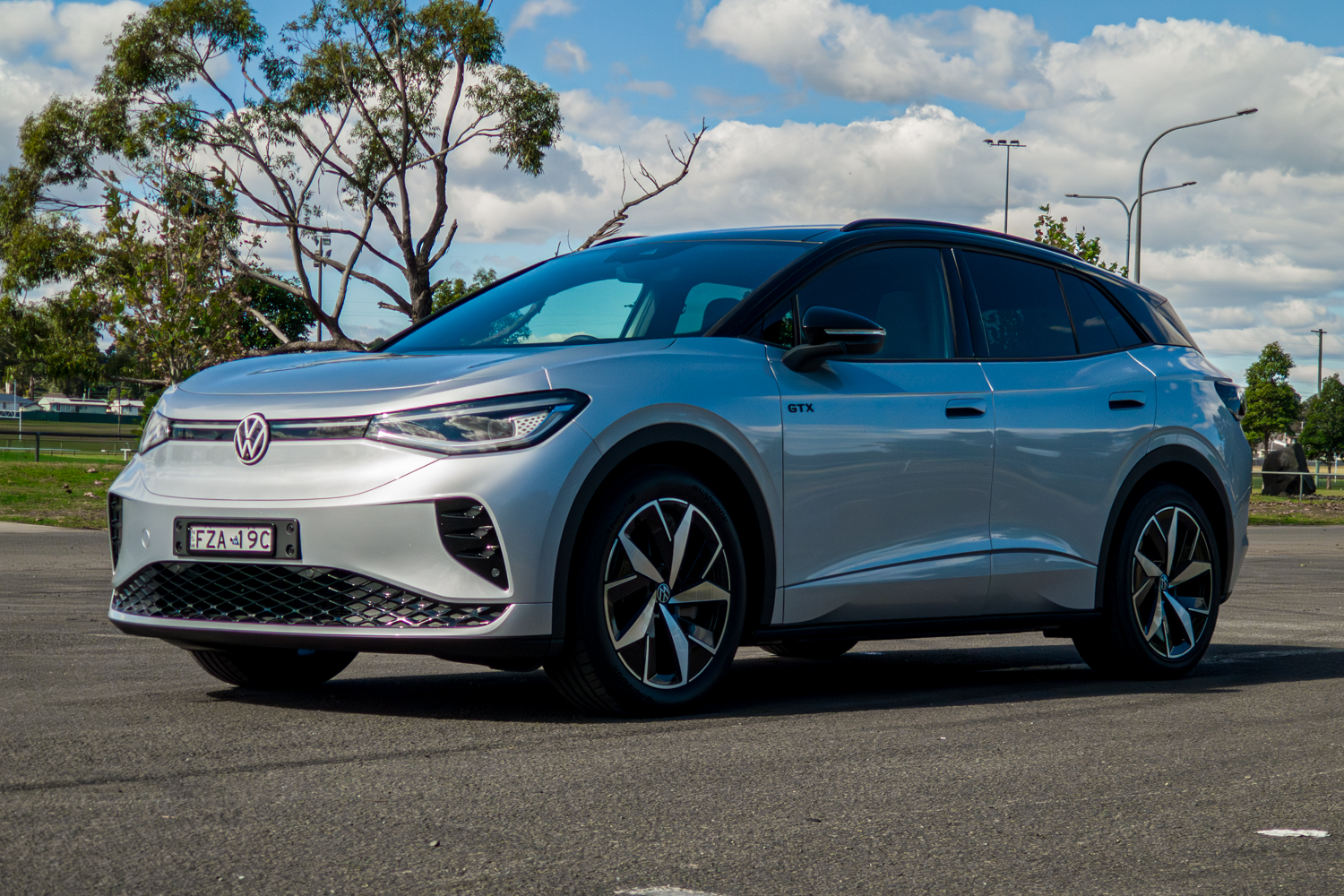
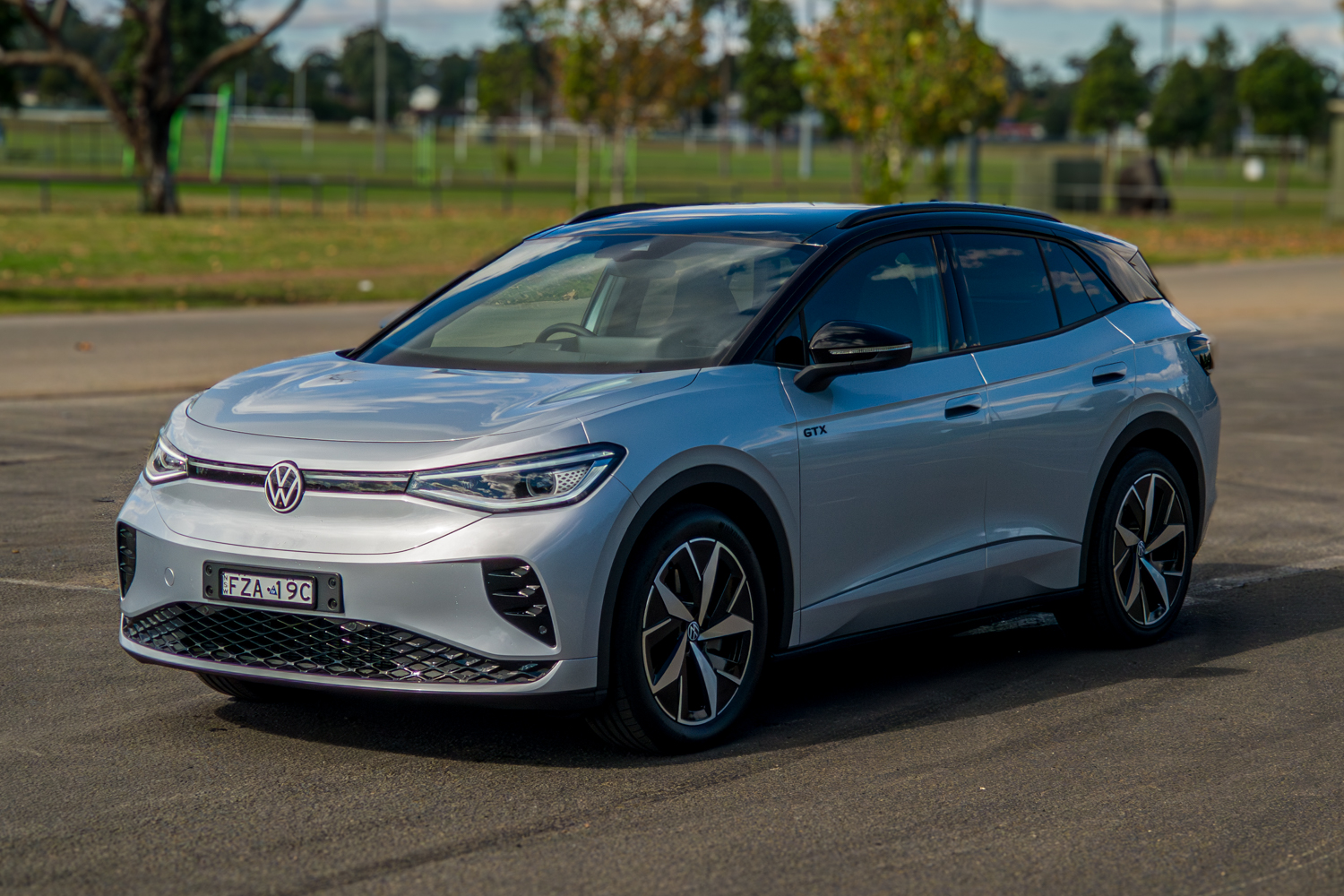
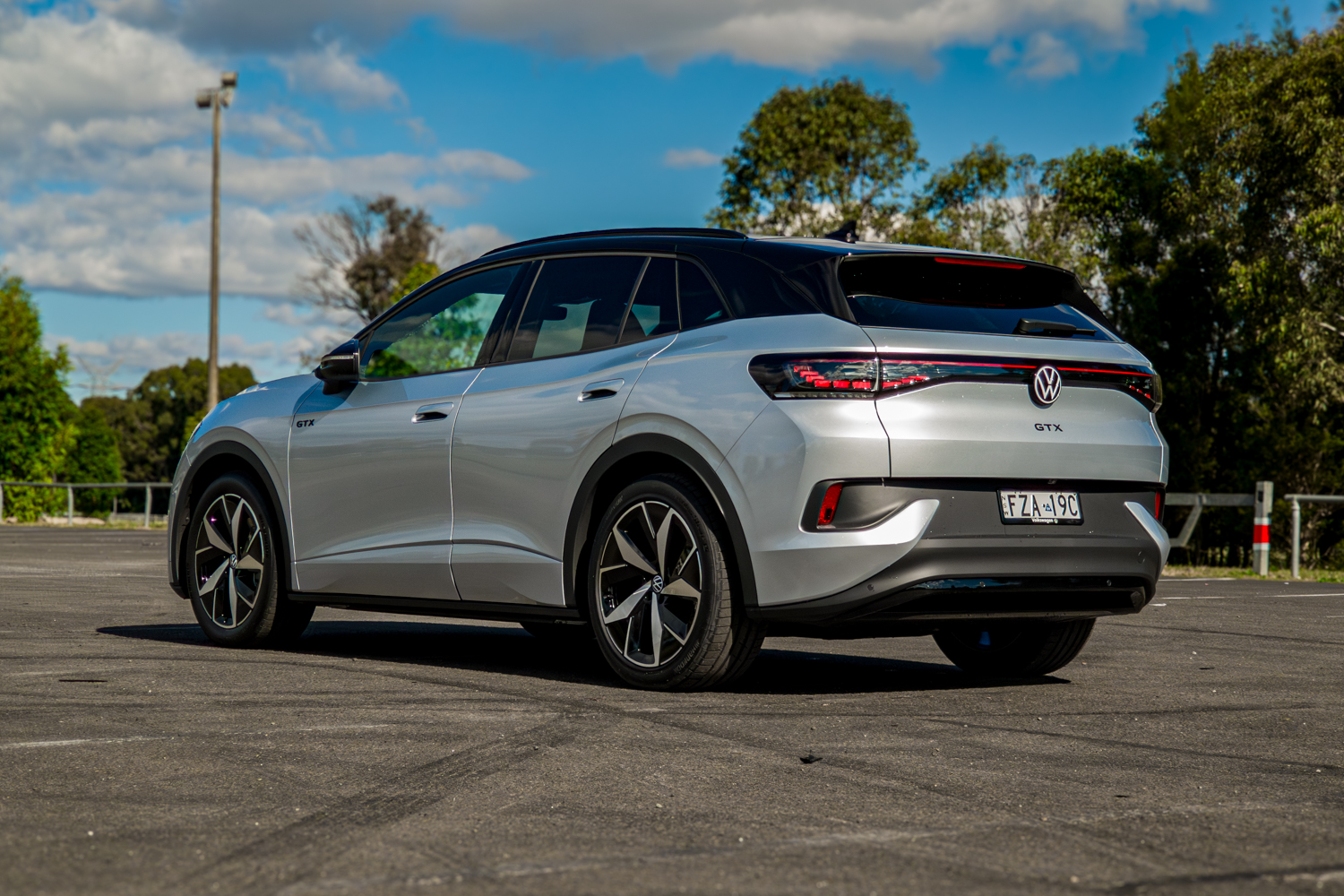
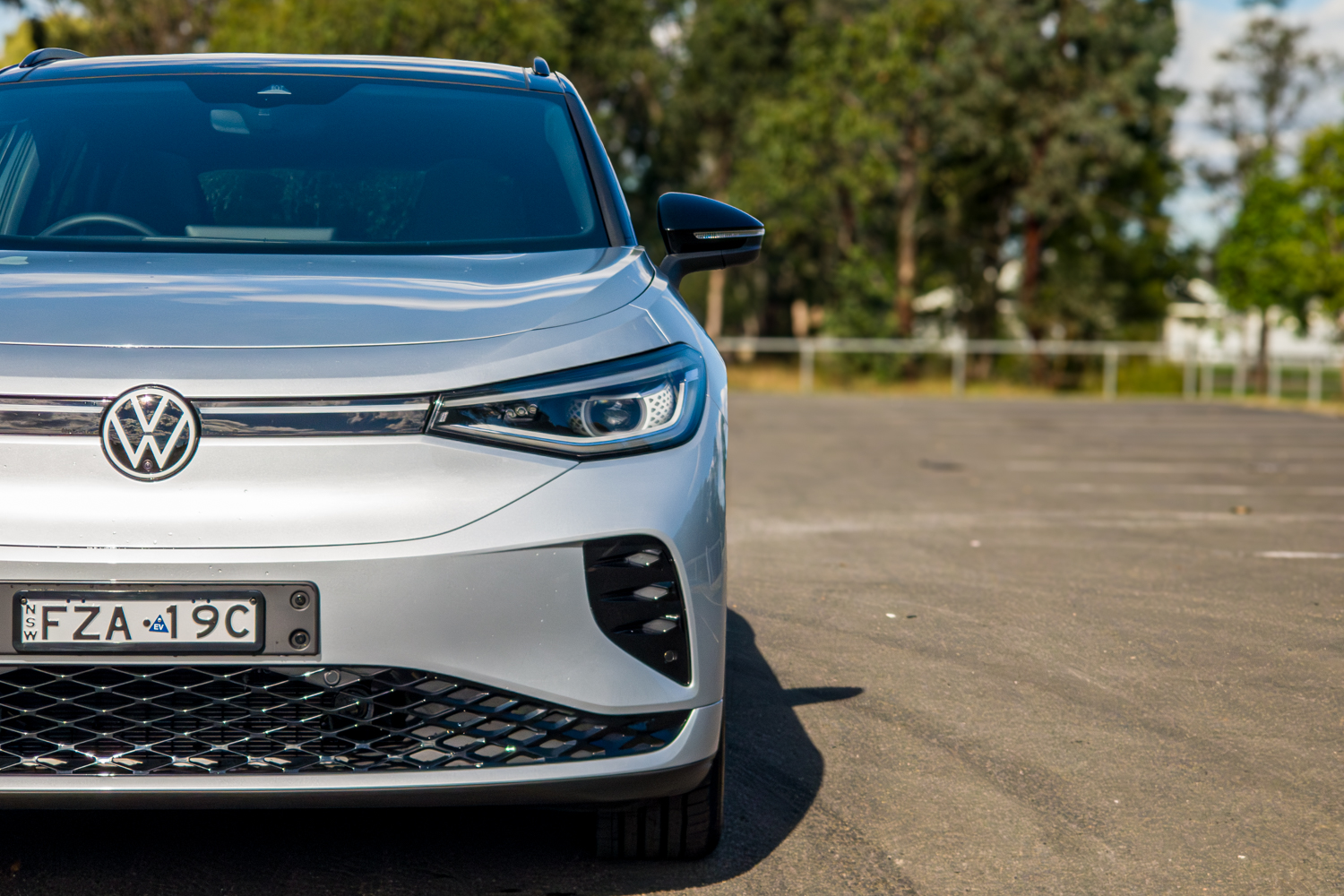
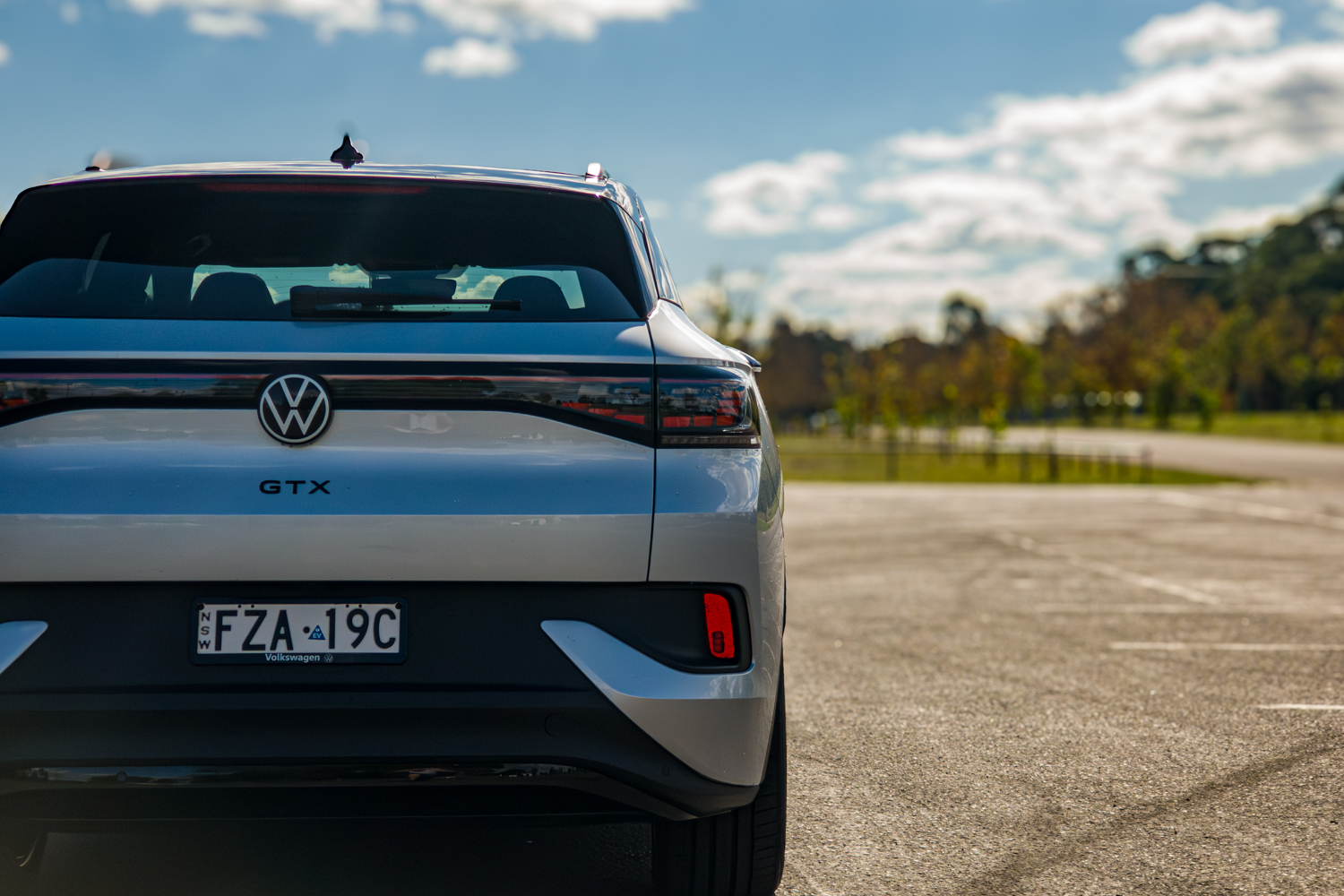
This is not what I expected a performance Volkswagen to look like. The GTX is remarkably subtle for a flagship, and most of it works: the body has a clean, sporty surfacing, the black contrast roof tapers into a coupe-like line, and those 20-inch alloys fill the arches well. The standout is the rear three-quarter with the full-width light bar lit, comfortably the car’s best angle.
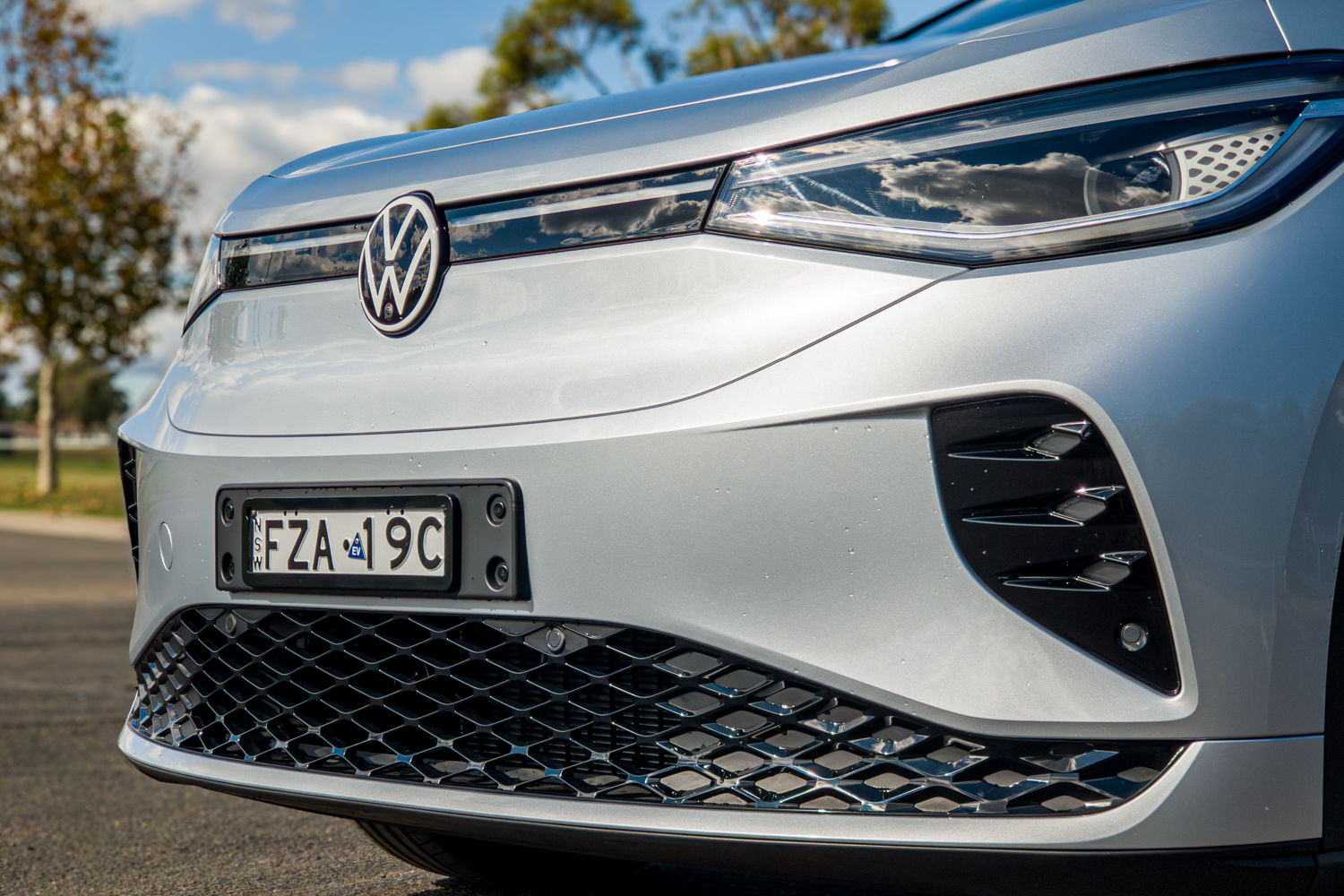
The nose is the sticking point. The familiar Volkswagen face, with its illuminated badge and the light strip running between the headlights, carries the family look nicely, but the lower bumper protrudes outward beneath it in a way that slightly spoils the front. It is a small thing, yet on a car this otherwise resolved it stands out. Our test car wore silver, which suits the restrained styling, although the GTX’s sharper detailing arguably deserves a bolder colour.
What is the Volkswagen ID.4 GTX like inside?
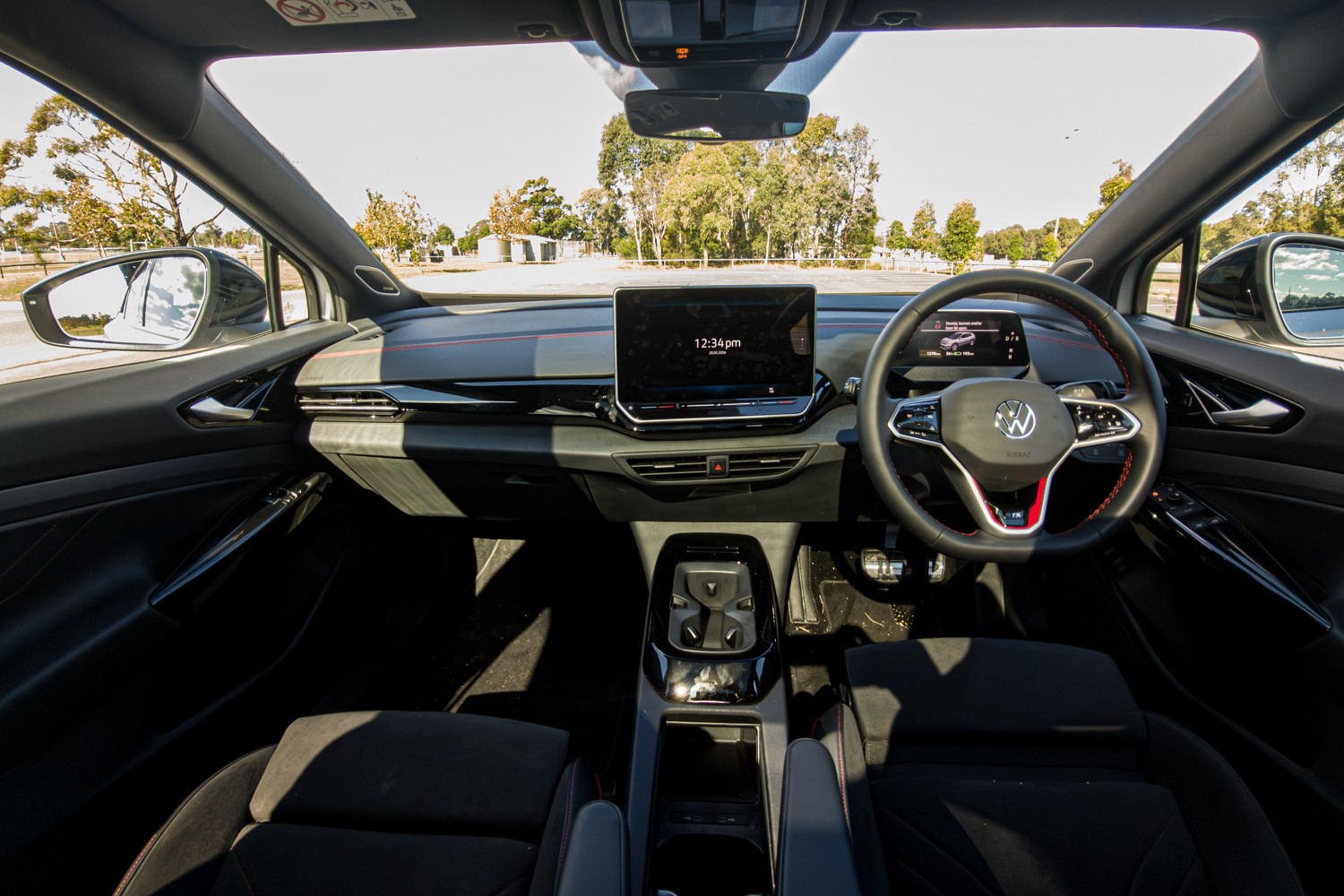
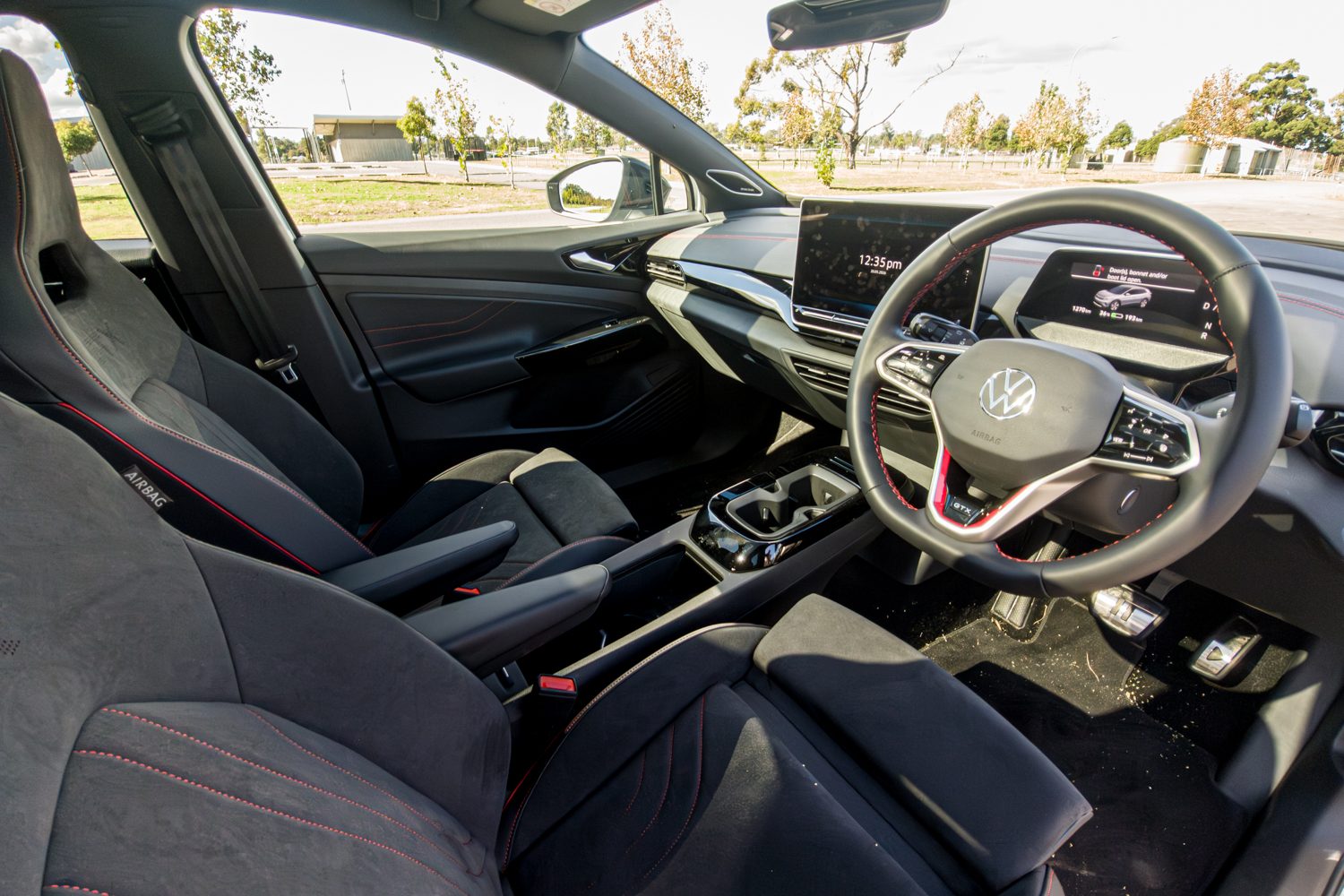
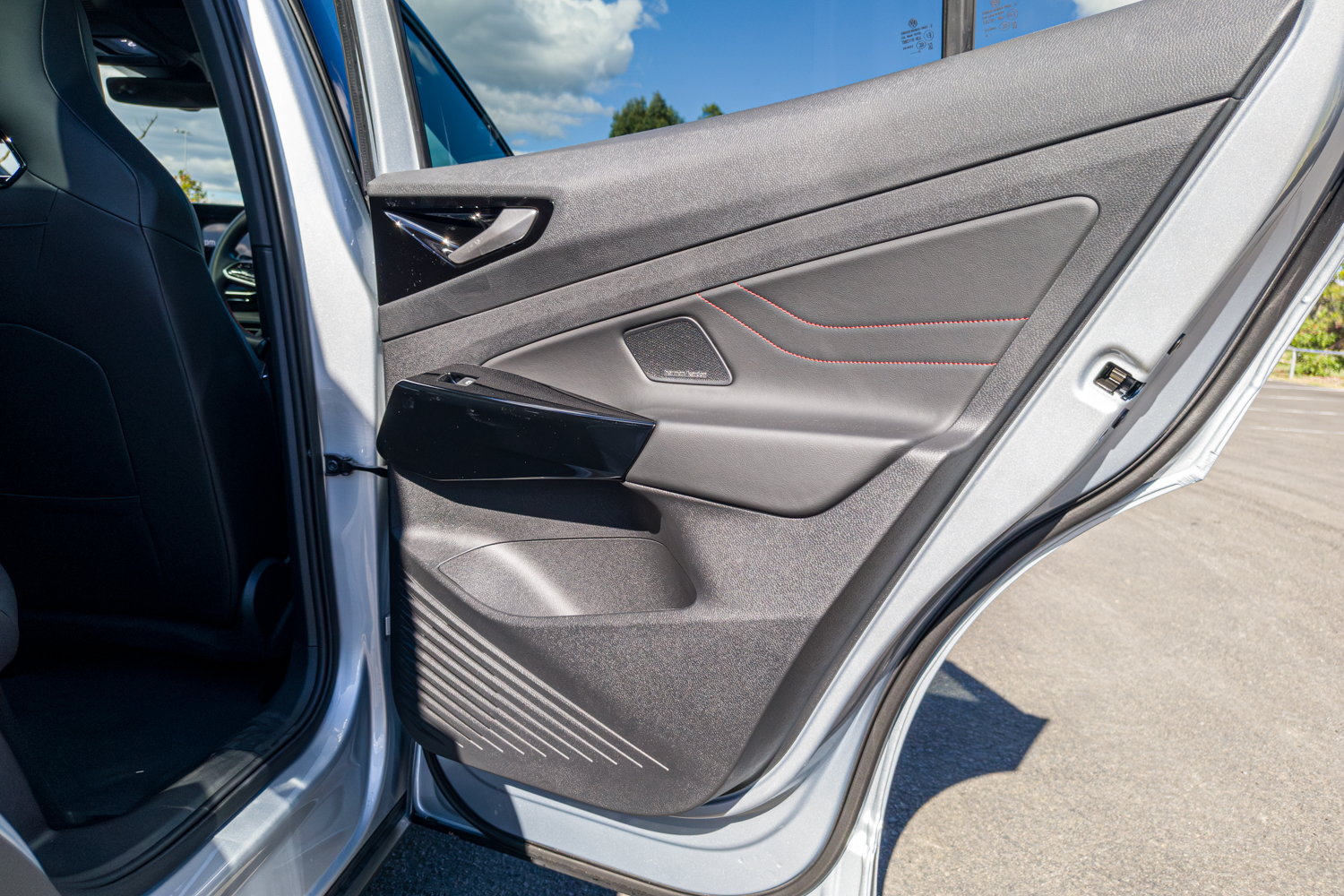
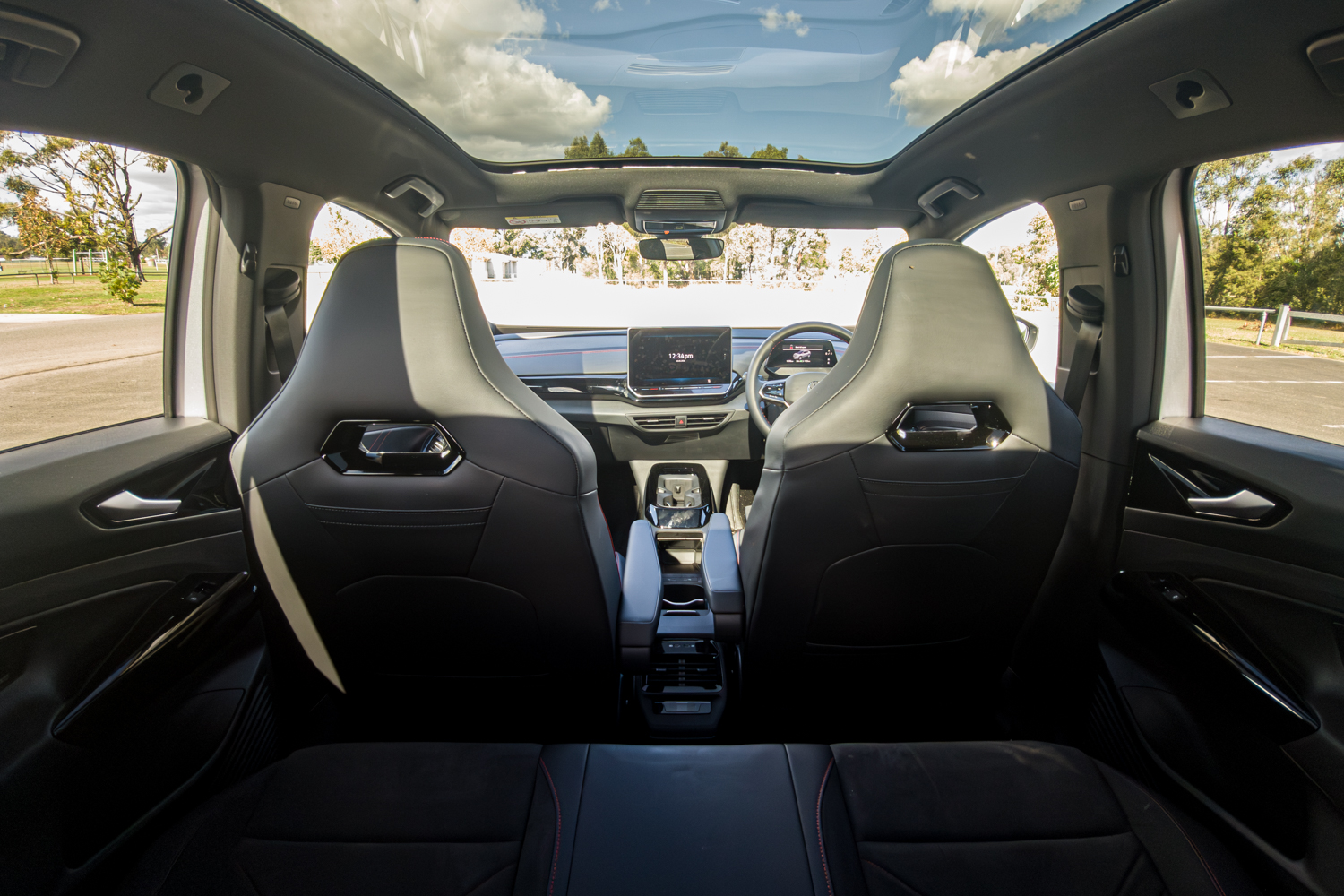
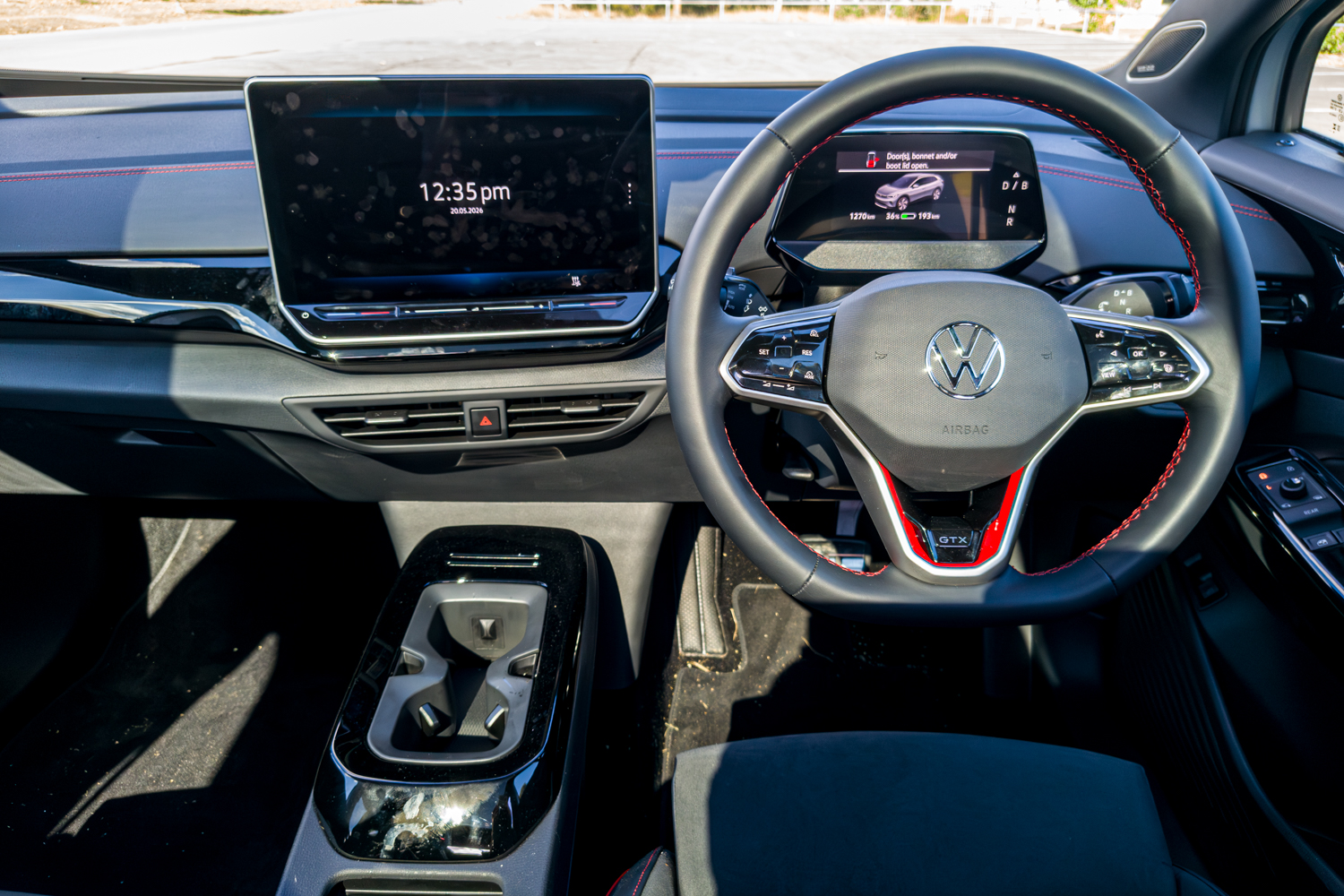
The cabin is the GTX at its best. The sport seats look fantastic, the red contrast stitching carries onto the steering wheel and door cards, and the whole thing feels sturdy and properly screwed together in the way you hope a Volkswagen will. The dashboard is clean and minimalist, built around a floating central touchscreen, with a compact driver display ahead of the wheel.
Two niggles take a little shine off. The gloss-black trim and the touchscreen are smudge magnets, picking up fingerprints almost on contact, and the GTX’s otherwise lovely materials end up looking grubby faster than you would like. It is the kind of finish that photographs beautifully and then needs a microfibre cloth in the door pocket to keep it that way.
Storage
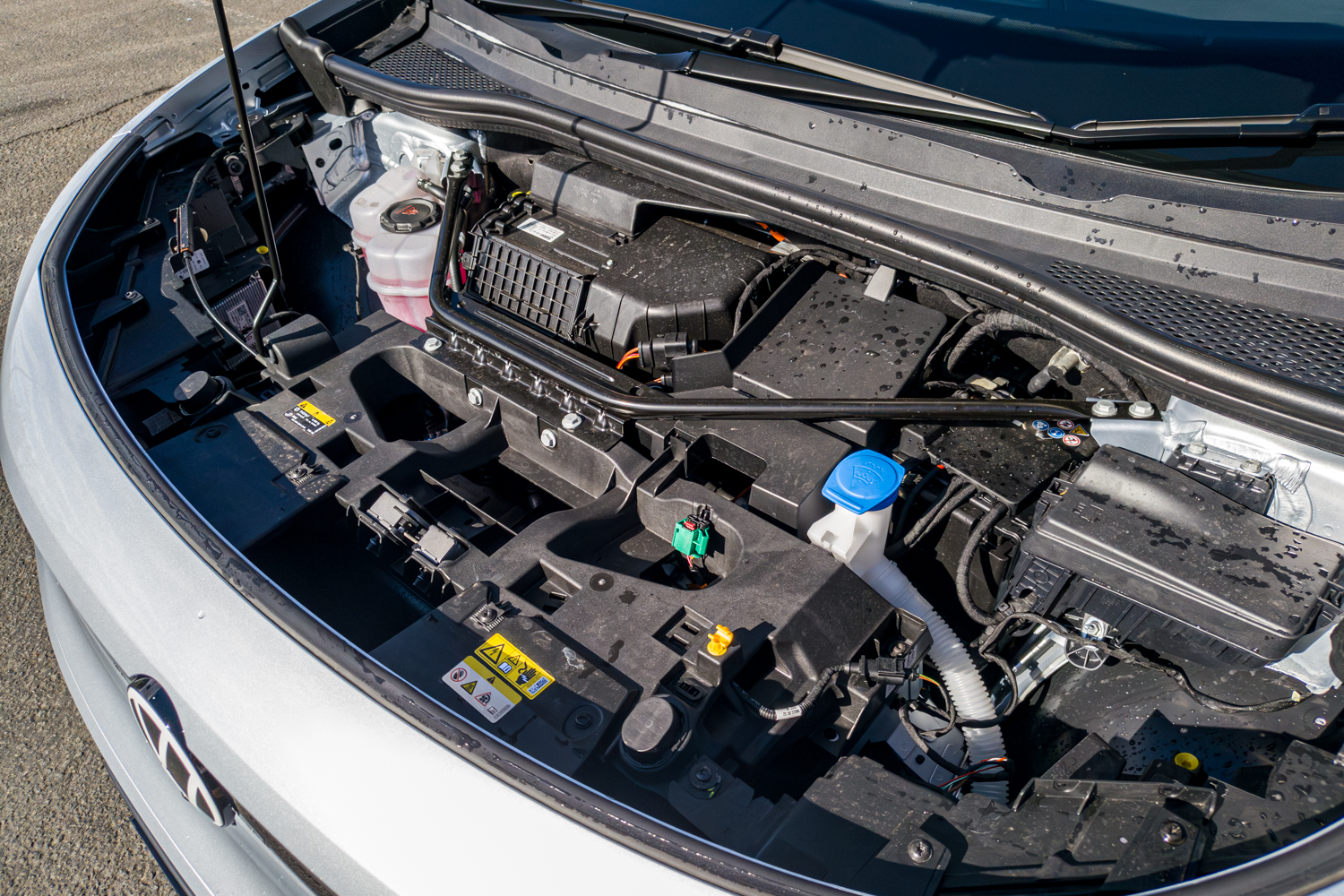
Up front the ID.4 follows the usual MEB-platform layout, with a centre console housing two cup holders, an illuminated storage compartment under a sliding cover and a wireless charging pad. Worth knowing for EV shoppers expecting a “frunk”: there is no usable front boot. Lift the bonnet and you find the 12-volt battery and fluid reservoirs rather than storage, so all your luggage lives in the rear.
Rear seat and boot space
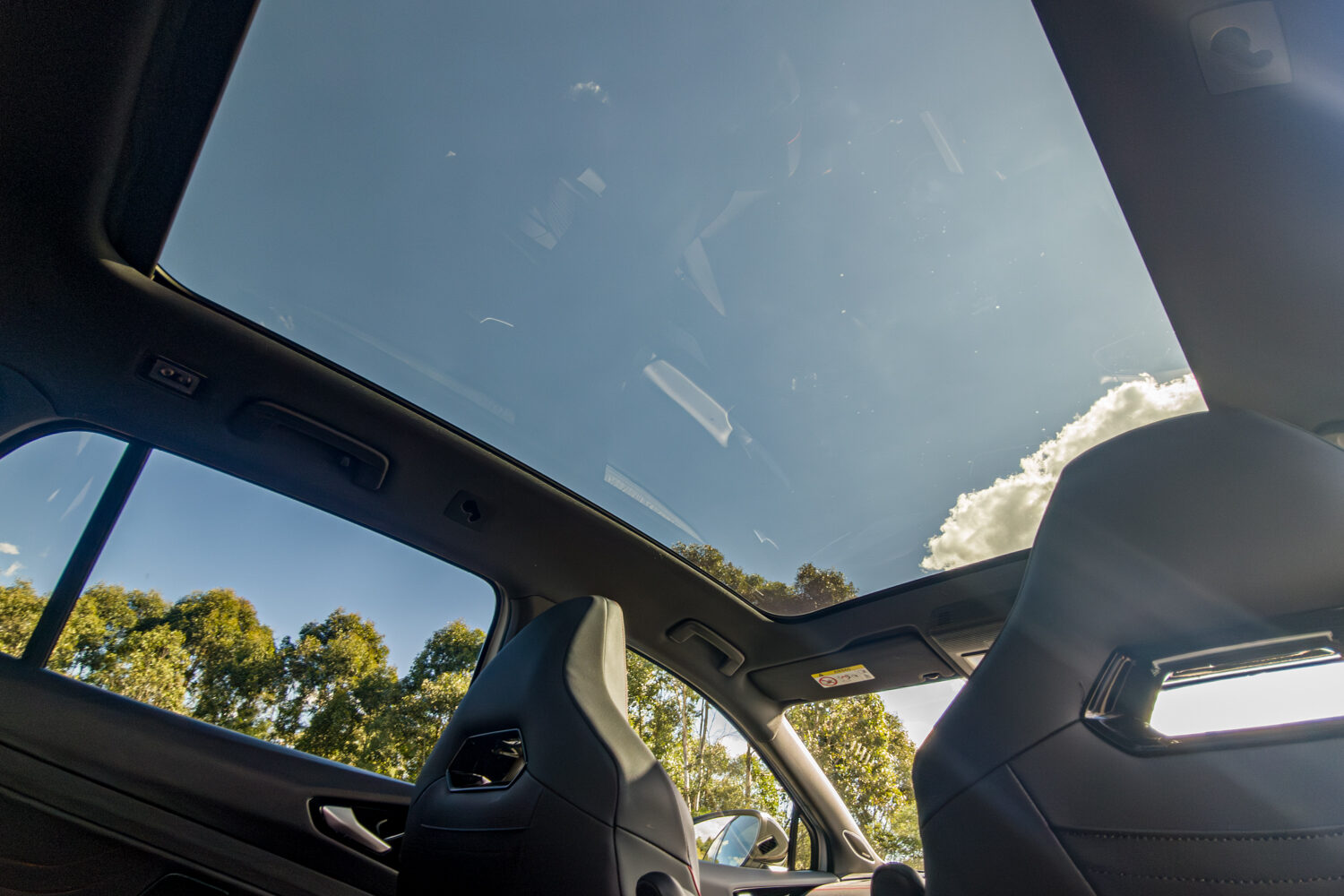
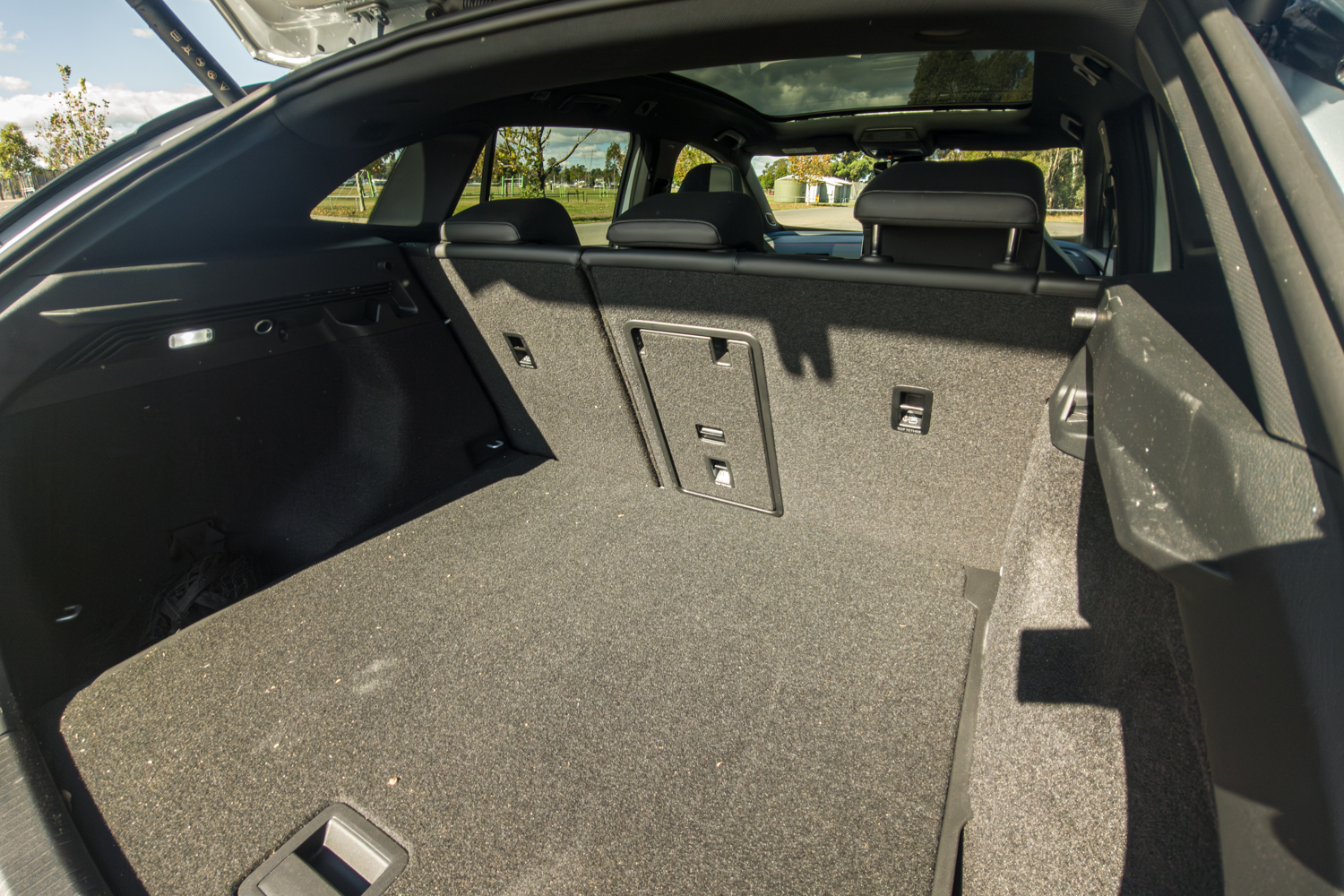
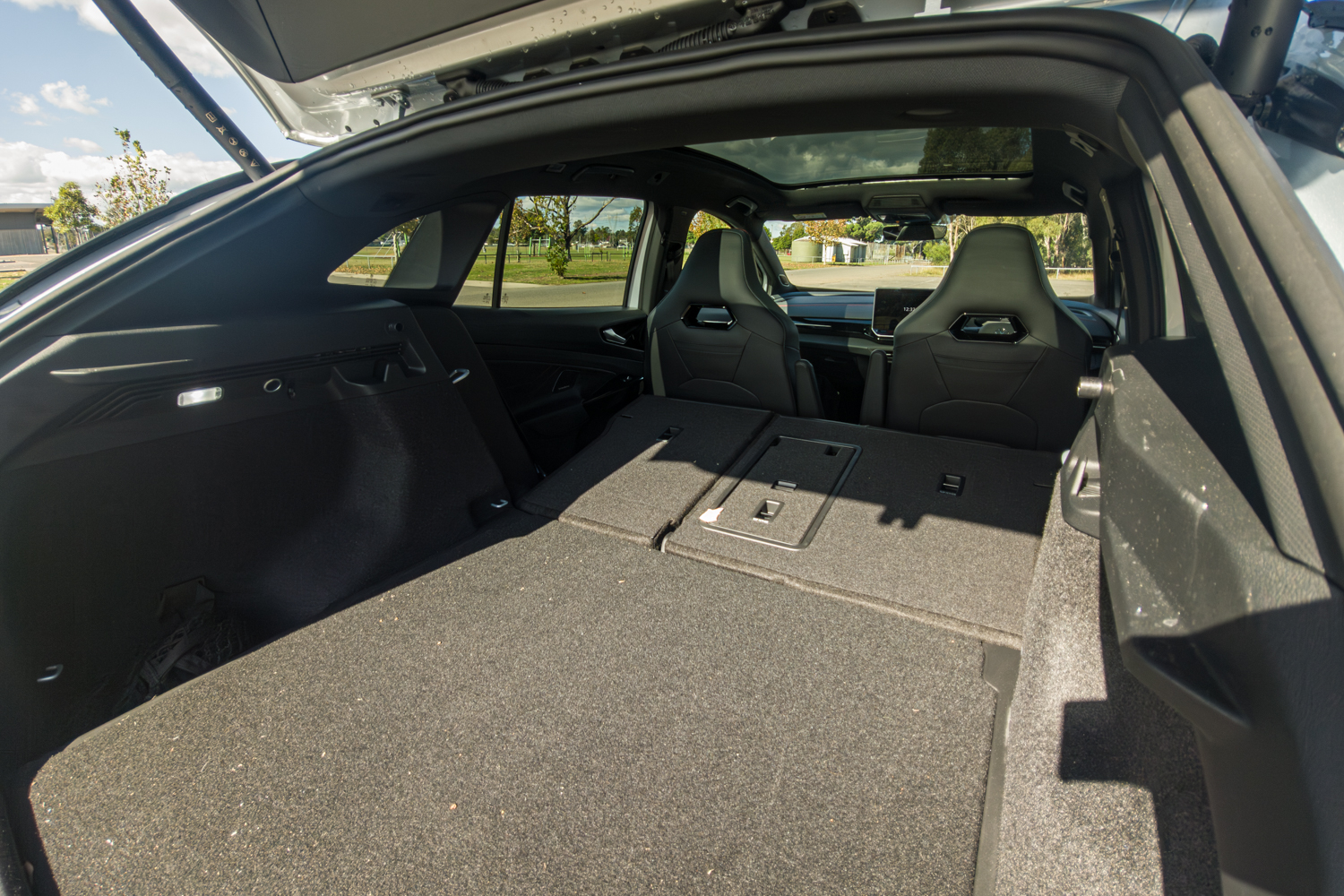
The long 2,773mm wheelbase pays off in the back, where passengers are genuinely comfortable, helped by the flat EV floor and the airy feel of that enormous panoramic roof overhead.
The boot is a healthy 533 litres with the rear seats up, expanding to 1,565 litres folded, with a near-flat load floor for bulkier loads. There are roof rails rated to 75kg, and the GTX is braked-towing rated to 1,800kg, which is strong for an electric SUV.
Technology and connectivity
The ID.4 centres on a 12.9-inch touchscreen paired with a small 5.3-inch driver display and, on the GTX, a standard augmented-reality head-up display that projects navigation arrows onto the road ahead. It runs wireless App-Connect for smartphone mirroring, voice control via the “Hello IDA” assistant, and over-the-air updates.
The touch-sensitive controls take some learning. They are genuinely sensitive, registering the lightest brush and swipe, so the first day involves a few accidental inputs, but once you calibrate how little pressure they want they become pleasant to use. The physical buttons on the steering wheel, by contrast, are just fine straight away.
One-Touch Features
- “Play and Pause” pedals: the accelerator wears a play symbol and the brake a pause symbol, a playful EV touch that genuinely raises a smile.
- Augmented-reality head-up display: standard on the GTX, it floats navigation and speed information into your forward view.
- Panoramic glass roof: a vast fixed pane that covers most of the roof and floods the cabin with light.
Engine and drivetrain
The GTX is the only all-wheel-drive ID.4, with a second motor on the front axle joining the rear unit for a combined 250kW and 679Nm. That is enough for a claimed 0 to 100km/h in 5.4 seconds and a 180km/h top speed.
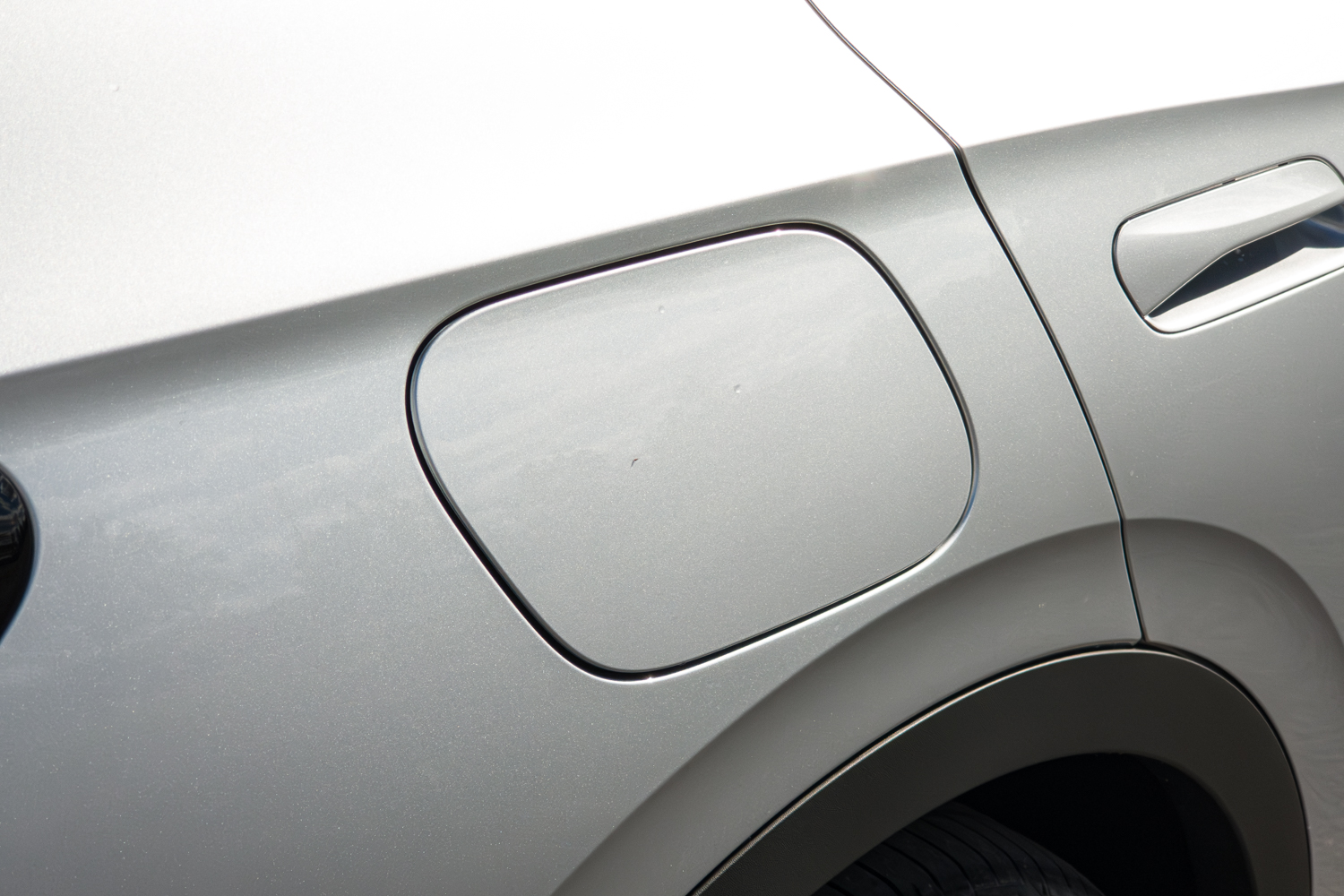
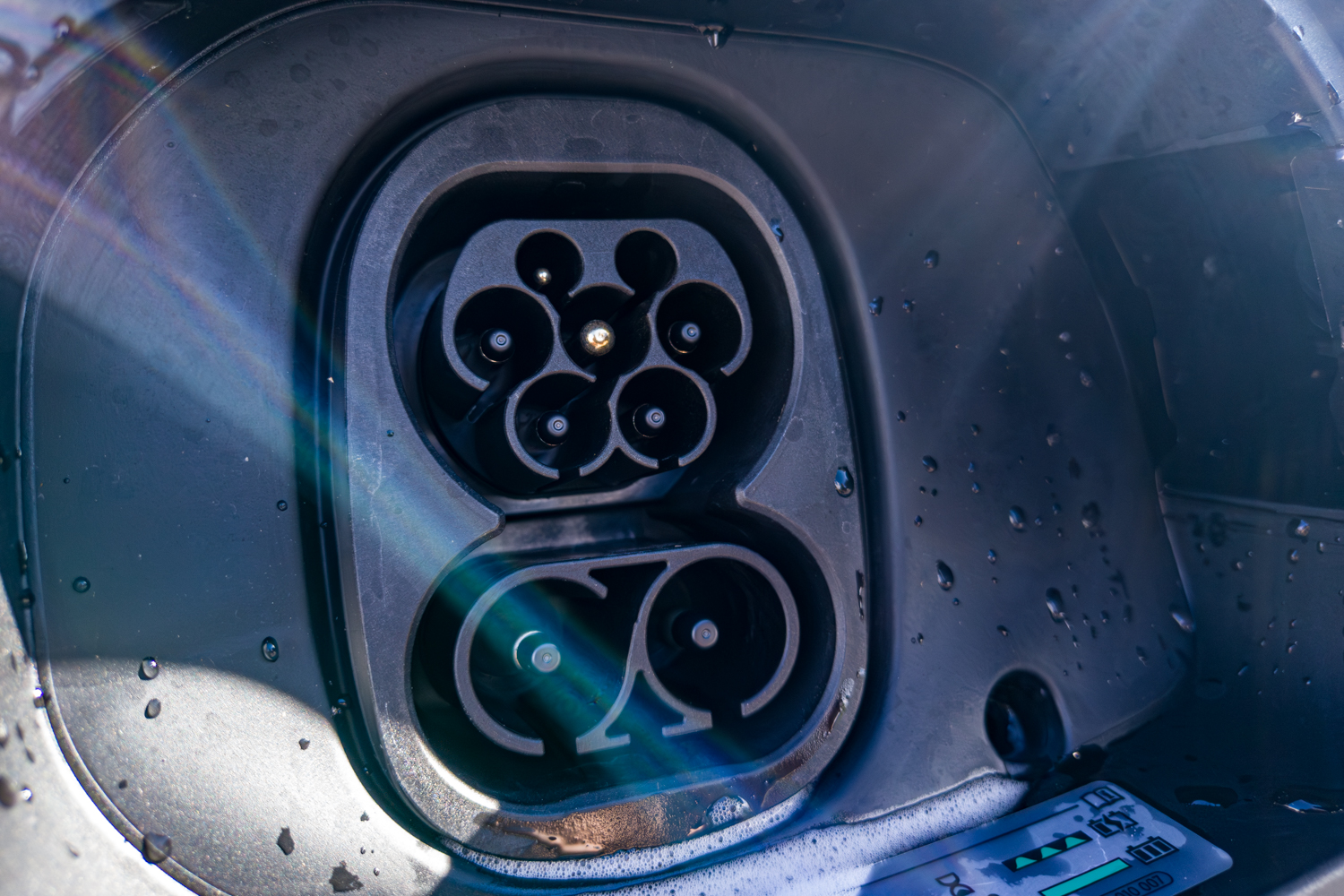
The 79kWh (useable) battery is good for up to 511km WLTP, and it will DC fast-charge at up to around 175kW (Volkswagen’s overseas literature cites up to 185kW for this variant, so confirm with your dealer), which is enough for a 10 to 80 per cent top-up in roughly 26 minutes.
In practice many public fast chargers in Australia still cap at 150kW, so that is the rate you will most often see, and the GTX has the headroom to use everything they offer. Home AC charging runs at up to 11kW.
What’s the Volkswagen ID.4 GTX like to drive?
Planted. If I had to sum up the GTX in a single word, that is the one. The steering is noticeably stiffer and meatier than I expected, which I thoroughly enjoyed, and the car feels a touch heavier than its rivals in a way that actually works for it, lending a stable, glued-down composure.
There is plenty of get-up-and-go when you ask for it, and it stays impressively quiet while it gathers pace. Having driven the closely related Subaru Trailseeker just a couple of days later, the contrast stuck with me: the Volkswagen’s steering is firmer and the body more buttoned-down, where the Subaru is the more playful of the two.
The flip side is that it is firm and rigid all the time, even just cruising around town. The body never loosens up, and while that suits the sporting brief, it points to the GTX’s real character.
This is a hyper-competent, German-efficient machine that gets you from A to B beautifully, but it is not what I would call a fun car. It is precise and polished rather than playful, and for all that I admired it, it never quite put a smile on my face. For some buyers that calm, unflappable competence will be exactly the point.
Is the Volkswagen ID.4 GTX safe?
The ID.4 carries a five-star ANCAP rating, though it is worth noting the rating dates back to 2021 and applies across the range. It scored strongly for adult occupant protection (93 per cent), with a long list of standard assistance systems. Refreshingly, none of them nagged or intervened over-eagerly during the week.
- Travel Assist with adaptive cruise control and lane guidance (standard on GTX)
- Front Assist autonomous emergency braking with pedestrian and cyclist detection
- Side Assist blind-spot monitoring, rear traffic alert and exit warning
- A centre airbag between the front seats, plus Emergency Assist and a driver-attention monitor
How much does the Volkswagen ID.4 GTX cost?
The GTX is the dearer of the two Australian ID.4 variants at $69,990 before on-road costs. Volkswagen Australia advertises it from approximately $73,990 drive-away, so budget a little more depending on your state and on-road costs.
The rear-drive ID.4 Pro undercuts it at $59,990 before on-roads, which is worth keeping in mind, because the Pro covers more WLTP range and most of the same equipment for meaningfully less money.
For your money the GTX is generously kitted. Standard gear includes 20-inch “Ystad” alloy wheels, a panoramic glass roof, sport seats with red contrast stitching, an augmented-reality head-up display, Travel Assist, adaptive cruise control, a 12.9-inch central touchscreen, matrix LED headlights and adaptive chassis control.
In other words, you are not paying GTX money for a stripped-out base car, you are paying it for the dual-motor drivetrain and the sporting trimmings.
How much does the Volkswagen ID.4 GTX cost to run?
Volkswagen Australia covers the ID.4 with a 5-year, unlimited-kilometre warranty and an 8-year, 160,000km battery warranty guaranteeing at least 70 per cent capacity.
Servicing is a relaxed 24 months or 30,000km between visits, and a prepaid EV Care Plan starts at $1,875 for six years. Roadside assistance is included and renews for up to 24 months each time you service with Volkswagen. For an EV at this price, that is a competitive, low-fuss ownership package.
On energy, Volkswagen does not publish a consumption figure for the GTX specifically, and I did not log a precise kWh/100km, but real-world range felt genuinely strong. I simply did not find myself reaching for a charger as often as I do in some rivals, and the trip computer’s range readout tracked the 511km claim closely (193km remaining at 36 per cent charge points to about 535km indicated on a full battery).
Working on a realistic real-world figure of roughly 18kWh/100km for a car of this size, charging at home at about $0.33/kWh costs around $6 per 100km, dropping under $1.50 per 100km on a cheap overnight EV plan. Lean on premium public DC charging at around $0.75/kWh and that climbs past $13 per 100km, so a full charge ranges from roughly $6 at home overnight to nearly $60 on the road. The case for a home charger writes itself.
Running Costs
| Running costs | Details |
|---|---|
| Warranty | 5 years / unlimited km |
| Battery warranty | 8 years / 160,000km (min 70% capacity) |
| Servicing interval | 24 months / 30,000km |
| Prepaid servicing | EV Care Plan from $1,875 (6 years) |
| Roadside assist | Included; up to 24 months, renewed at each service |
| Claimed economy | Not Published (GTX); ID.4 Pro rated 16.7kWh/100km |
| Observed range | 193km remaining at 36% charge (≈535km indicated full) |
| Energy cost (est.) | ~$6/100km home flat · under $1.50 off-peak · ~$13.50 public DC |
Final thoughts
The ID.4 GTX is a genuinely good car that left me oddly unsure who it is for. It is quick, quiet, planted, comfortable and beautifully built, and it does almost everything you ask of a $74,000 electric SUV without fuss. What it does not do is stir you. It feels less like Volkswagen chasing new buyers and more like the brand looking after its own faithful, the buyer who is doing well, wants a sporty-looking SUV EV with a badge they trust, and values polish over playfulness.
If that is you, the GTX will be a quietly excellent companion. If you want your performance EV to actually entertain, the smile-per-dollar is better found elsewhere.
How does the Volkswagen ID.4 GTX compare?
I drove the GTX a couple of days before the Subaru Trailseeker, its most direct rival, and the Kia EV5 is the other obvious cross-shop. The Volkswagen counters with the most planted, polished drive of the group and strong build quality, but the Subaru is the more powerful and more playful car for less money, while the Kia undercuts both on price. The GTX’s case rests on its badge, its cabin quality and that composed, unflappable feel.
| Spec | VW ID.4 GTX | Subaru Trailseeker AWD | Kia EV5 |
|---|---|---|---|
| Price (before on-roads) | $69,990 | $63,990 | From $56,770 |
| Power | 250kW AWD | 280kW AWD | 160kW FWD (Standard) |
| Range (WLTP) | Up to 511km | Up to 533km | Up to 400km (Standard) |
| Boot (min) | 533L | 609L | 513L |
| Warranty | 5yr / unlimited km | 5yr / unlimited km | 7yr / unlimited km |
Volkswagen ID.4 GTX — Frequently Asked Questions
How far does the Volkswagen ID.4 GTX go on a charge?
Volkswagen Australia quotes up to 511km of WLTP range from the GTX’s 79kWh (useable) battery. On test the trip computer showed 193km remaining at 36 per cent charge, which extrapolates to roughly 535km indicated on a full battery, so the 511km claim looks realistic in mixed driving.
How much does the Volkswagen ID.4 GTX cost in Australia?
The ID.4 GTX is priced at $69,990 before on-road costs, or from approximately $73,990 drive-away according to Volkswagen Australia, depending on your state and on-road costs.
Is the Volkswagen ID.4 GTX fast?
Yes. The GTX is the dual-motor, all-wheel-drive flagship of the ID.4 range, with 250kW and a claimed 0 to 100km/h time of 5.4 seconds. It feels brisk and quiet rather than dramatic, with a planted, firmly sprung character.
What rivals should I cross-shop against the ID.4 GTX?
The obvious cross-shops are the Subaru Trailseeker, the Kia EV5 and the Hyundai IONIQ 5. The Volkswagen counters with German build quality and a planted, polished drive, but the Subaru is more powerful and more playful for less money.
Volkswagen ID.4 GTX Details
| Specification | Details |
|---|---|
| Model | 2026 Volkswagen ID.4 GTX Edition 4MOTION |
| Model Price | $69,990 before on-road costs (from ~$73,990 drive-away) |
| Engine | Dual electric motors (front asynchronous + rear synchronous) |
| Drivetrain | All-wheel drive (4MOTION) |
| Power | 250kW |
| Torque | 679Nm (system) |
| Battery Capacity / type | 79kWh useable (84kWh gross), lithium-ion |
| Range (WLTP) | Up to 511km |
| Economy / efficiency | Not Published (GTX) |
| Fast Charge / Home | Up to ~175kW DC (10–80% ~26 min) / 11kW AC |
| 0-100kmh / Top Speed | 5.4s / 180km/h |
| CO2 Emissions | 0g/km (tailpipe) |
| Safety | 5-star ANCAP (2021 datestamp) |
| Servicing | 24 months / 30,000km; EV Care Plan from $1,875 (6yr) |
| Warranty | 5 years / unlimited km (8yr / 160,000km battery) |
| Roadside Assist | Included; up to 24 months, renewed each service |
| Specification | Details |
|---|---|
| Overall Length | 4,582mm |
| Width (excl. mirrors) | 1,852mm |
| Height | 1,619mm |
| Wheelbase | 2,773mm |
| Wheels | 20-inch “Ystad” alloys |
| Tyres | 235/45 R20 front, 255/45 R20 rear (staggered) |
| Kerb Weight | 2,158kg |
| Boot Min | 533L |
| Boot Max | 1,565L |
| Towing Capacity | 1,800kg braked |
| Turning Circle | 12.0m |
| Roof Load | 75kg |
| Seats | 5 |
For the latest pricing and to book a test drive, visit the official Volkswagen Australia site.
Volkswagen ID.4 GTX — Buyers could also look at:
The score, itemised
7.6 overall- 7.5 Behind the Wheel
- 7.5 Comfort
- 8.5 Equipment
- 8.0 Performance
- 7.5 Ride and Handling
- 8.0 Practicality
- 8.0 Fit for Purpose
- 7.0 Style / Appeal
- 7.5 Technology / Connectivity
- 6.5 Value for Money weakest