The Kia EV3 GT-Line is the top of the range, but it drives exactly like the cheaper Earth I also spent a week in. Same motor, same roughly 500km of real-world range, same car underneath.
The extra $5,000 all goes on the gear inside: the sunroof, the better stereo, the nicer seats. That’s not a lot to pay for comforts you’ll actually use every day for years, so for most buyers I’d say it’s worth it.
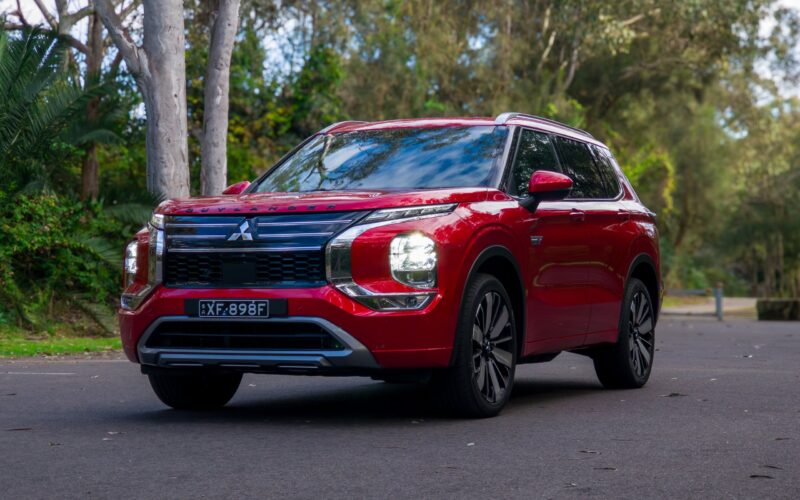
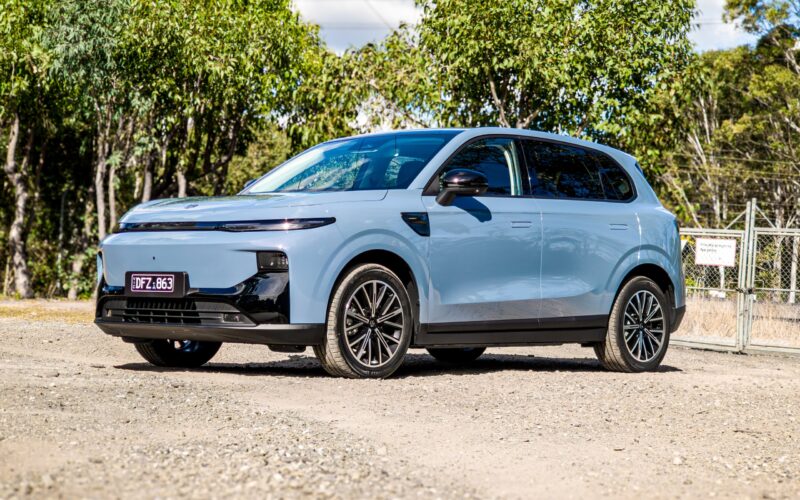
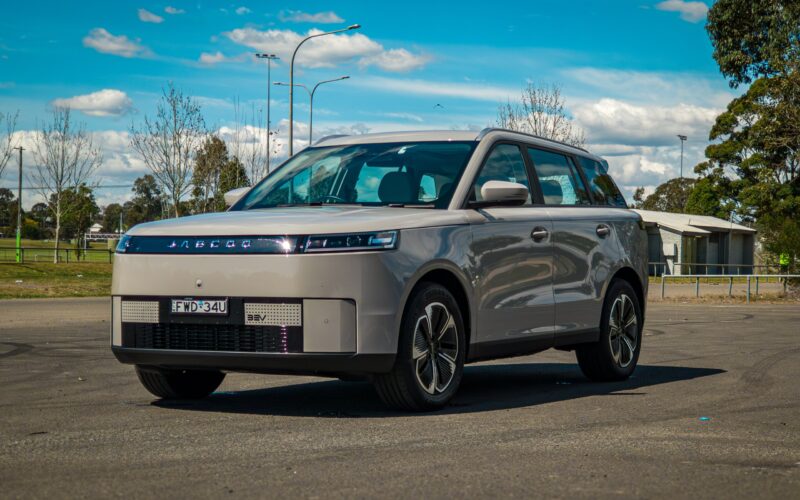
It lands in a segment that’s filling up fast with similar electric SUVs, the BYD Atto 3, MG S5 EV, Geely EX5 and Volvo EX30 all chasing the same buyer. The EV3’s pitch is that it’s the sensible, safe one that looks more expensive than it is, and the GT-Line leans into that hardest. It starts at $63,950 before on-road costs, or roughly $68,000 drive-away depending on your state, putting it just under the larger Kia EV5.
2026 Kia EV3 GT-Line — at a glance |
|
|---|---|
| Price (drive-away) | Approx. $68,000 (from $63,950 before on-roads) |
| Powertrain | Single front motor, front-wheel drive EV |
| Power / torque | 150kW / 283Nm |
| 0–100 km/h | 7.9 seconds (claimed) |
| Range / economy | 563km WLTP · 16.2kWh/100km (matched in our test) |
| Warranty | 7 years / unlimited km |
| ANCAP | 5 stars (tested 2025) |
In this review
The Good |
The Not-So-Good |
|---|---|
| Flat-floor cabin that already feels a class above its price, lifted further by the GT-Line’s sunroof, Harman Kardon audio and relaxation seats | Performance is merely adequate; the single 150kW motor feels a touch sluggish next to rival EVs |
| Excellent real-world efficiency: 16.2kWh/100km in our test, dead on the claim, for roughly 500km of usable range | Safety “nannies” need switching off almost every drive |
| The GT-Line kit is genuinely worth the step up, and it keeps the 5-star ANCAP safety net | At around $64k it still skips a surround-view camera, and EVs miss Kia’s capped-price servicing |
What does the 2026 Kia EV3 GT-Line look like?
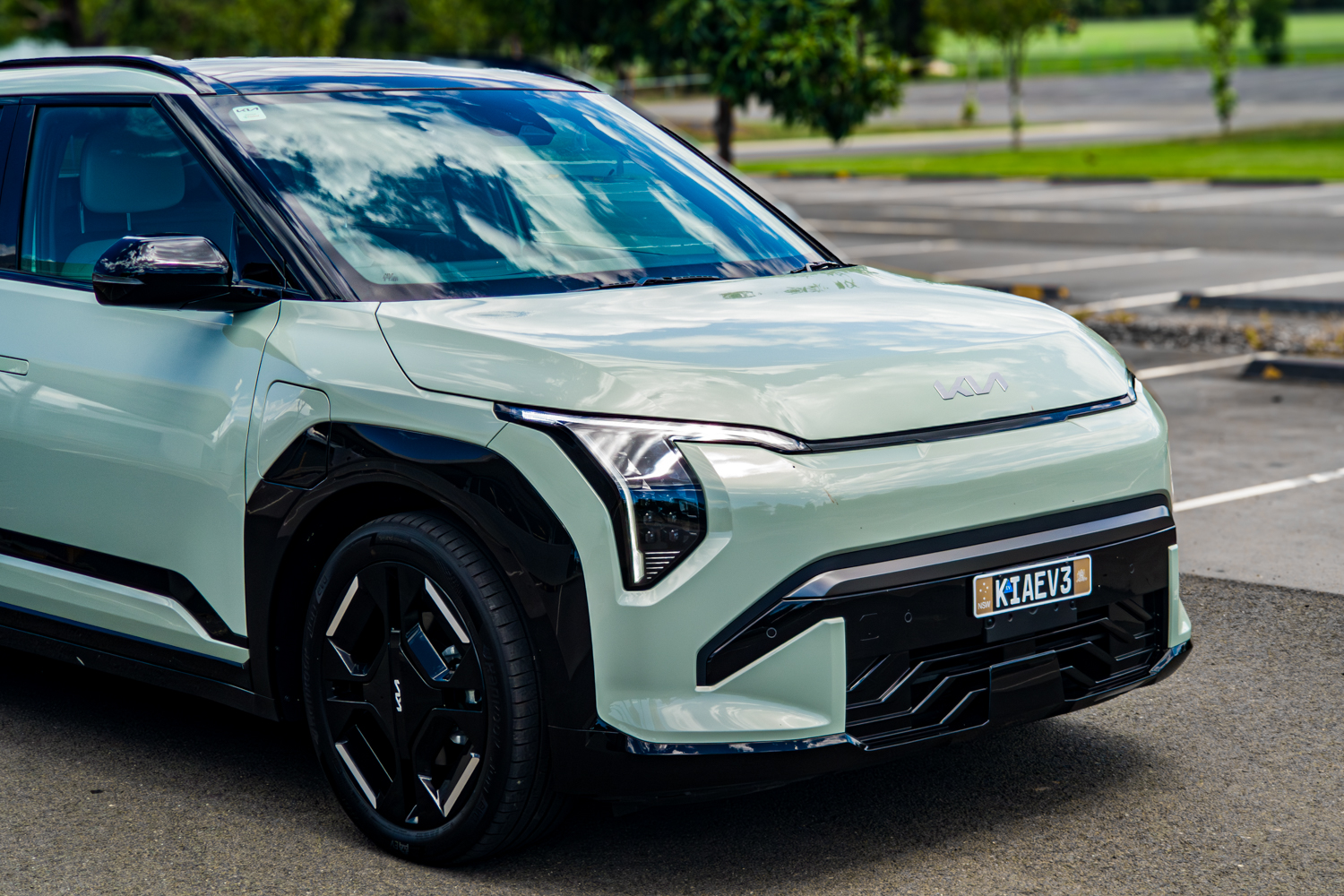
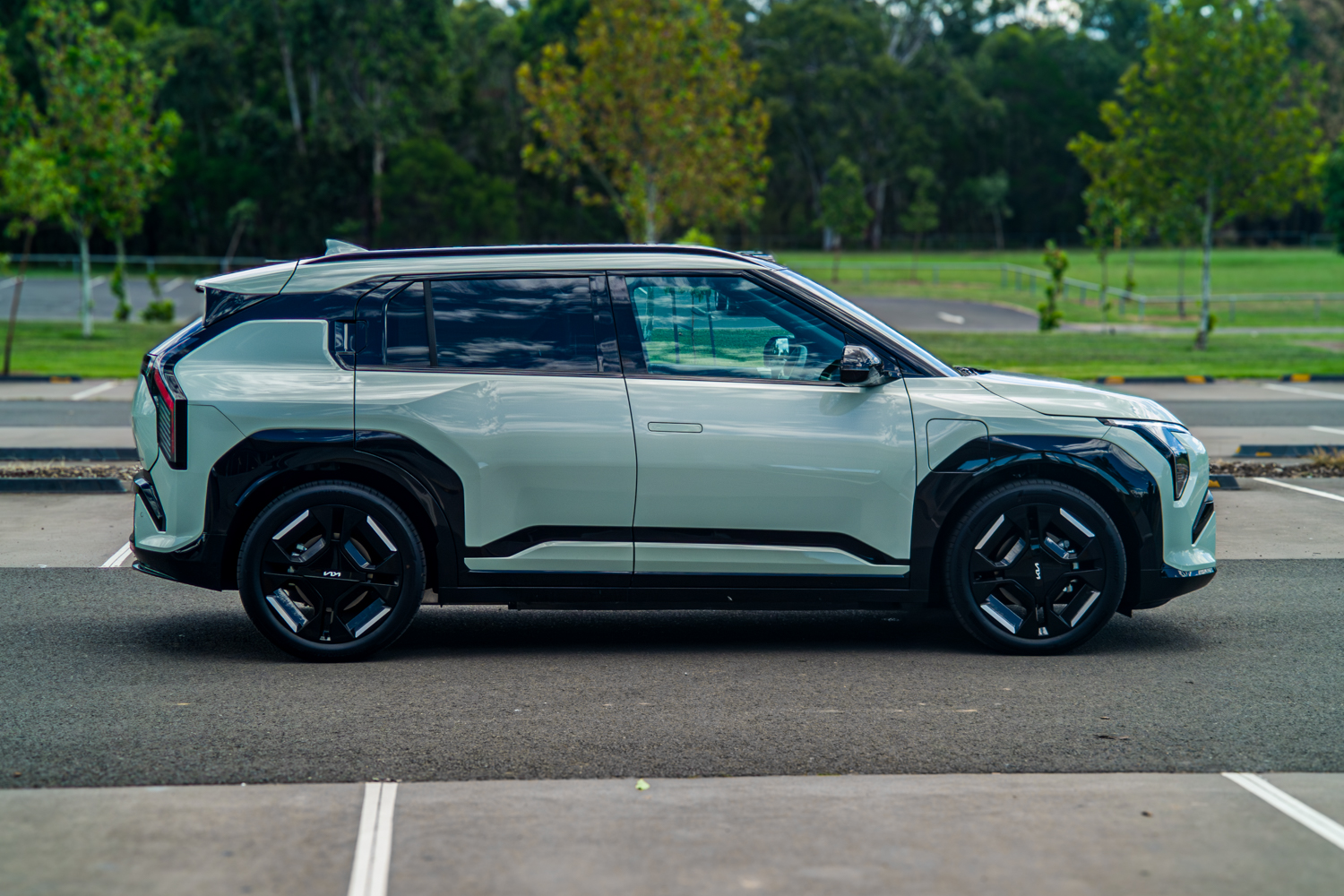
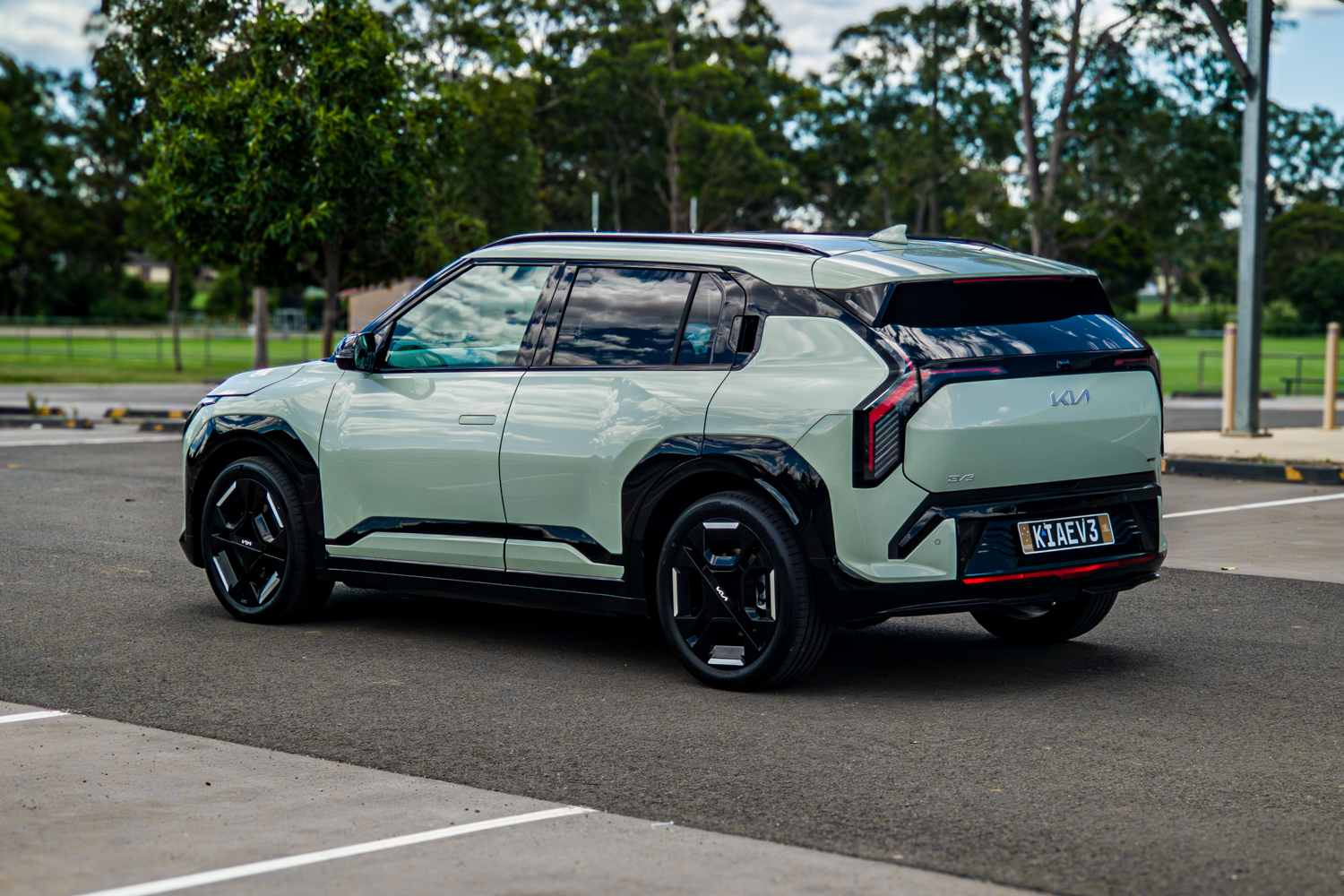
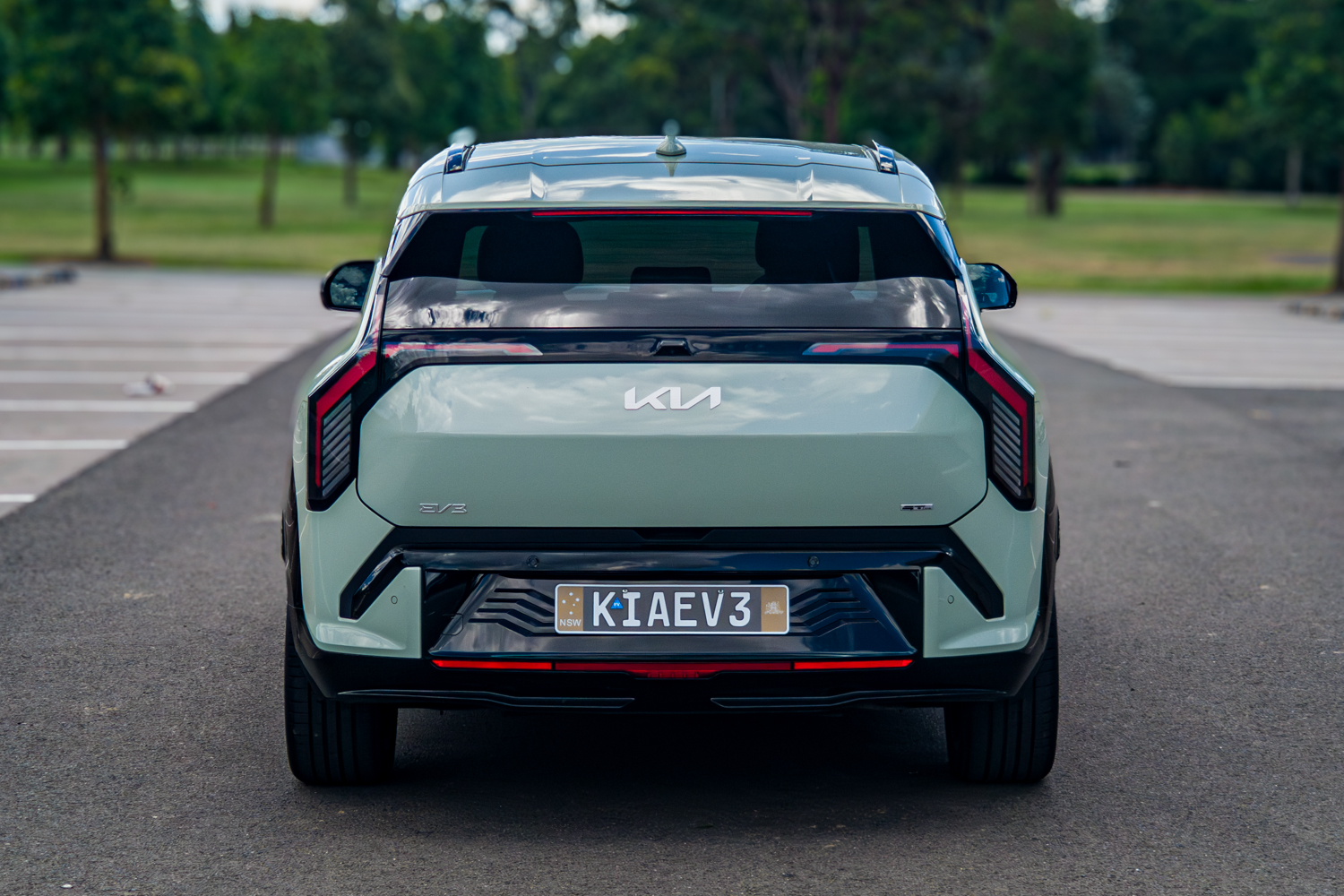
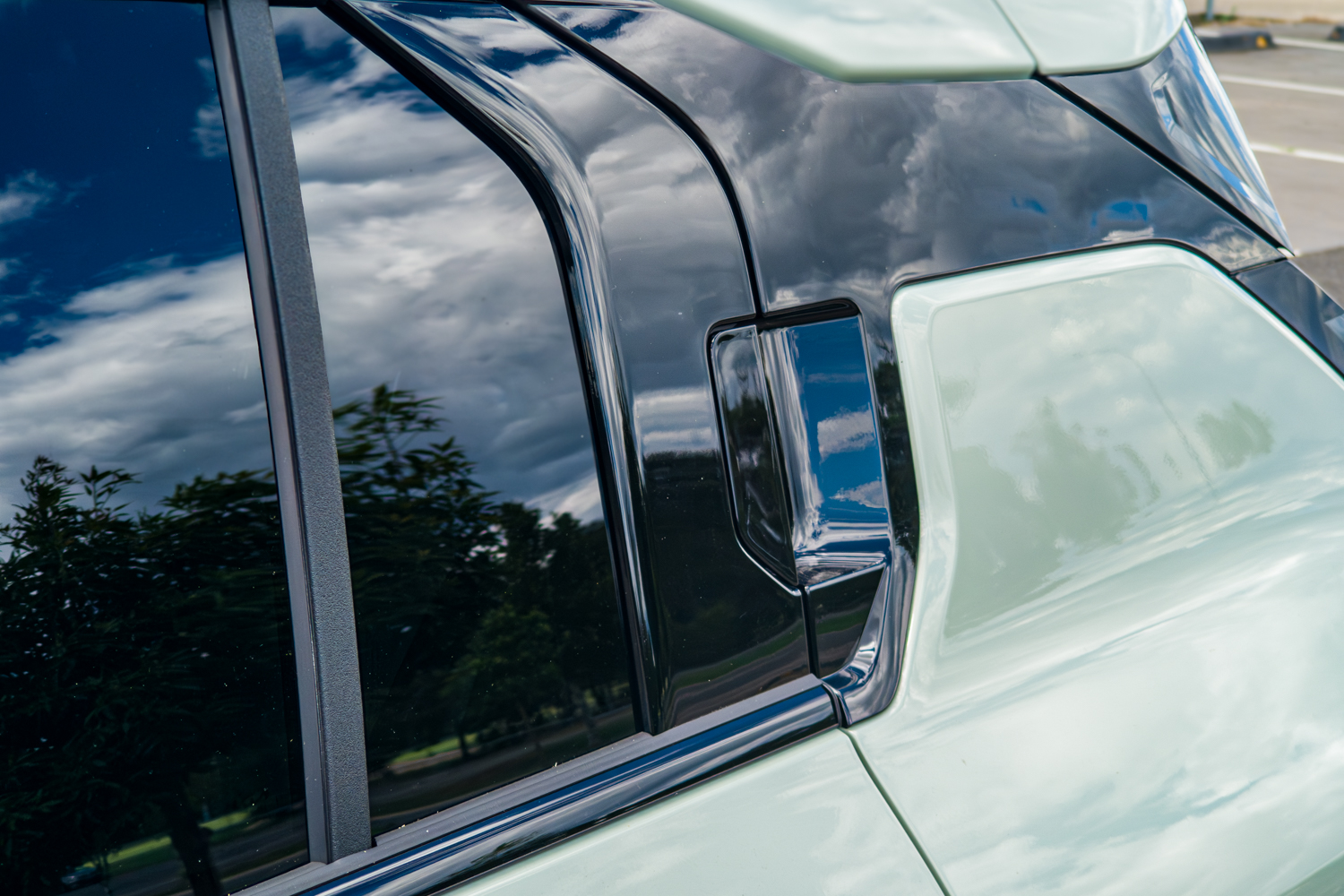
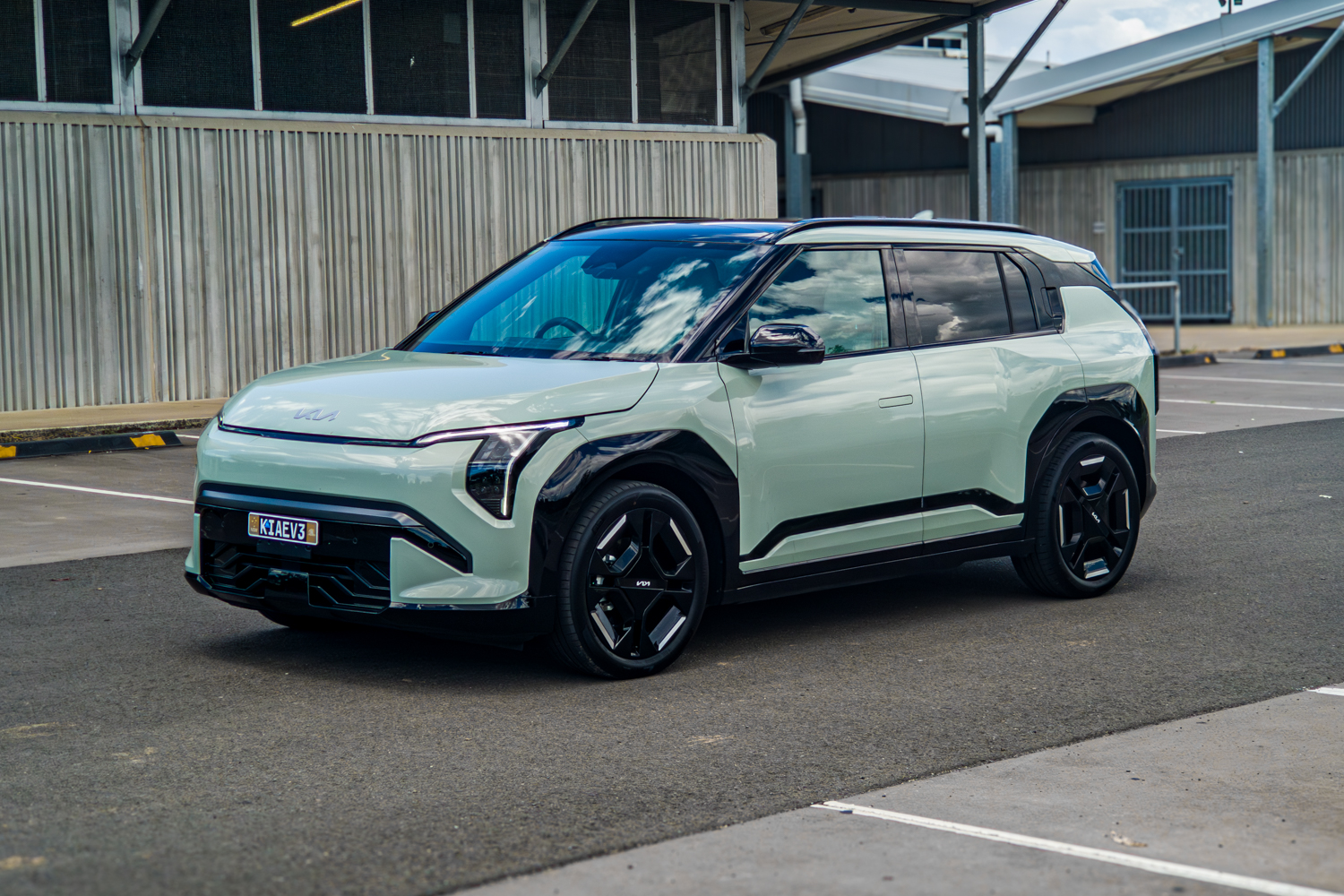
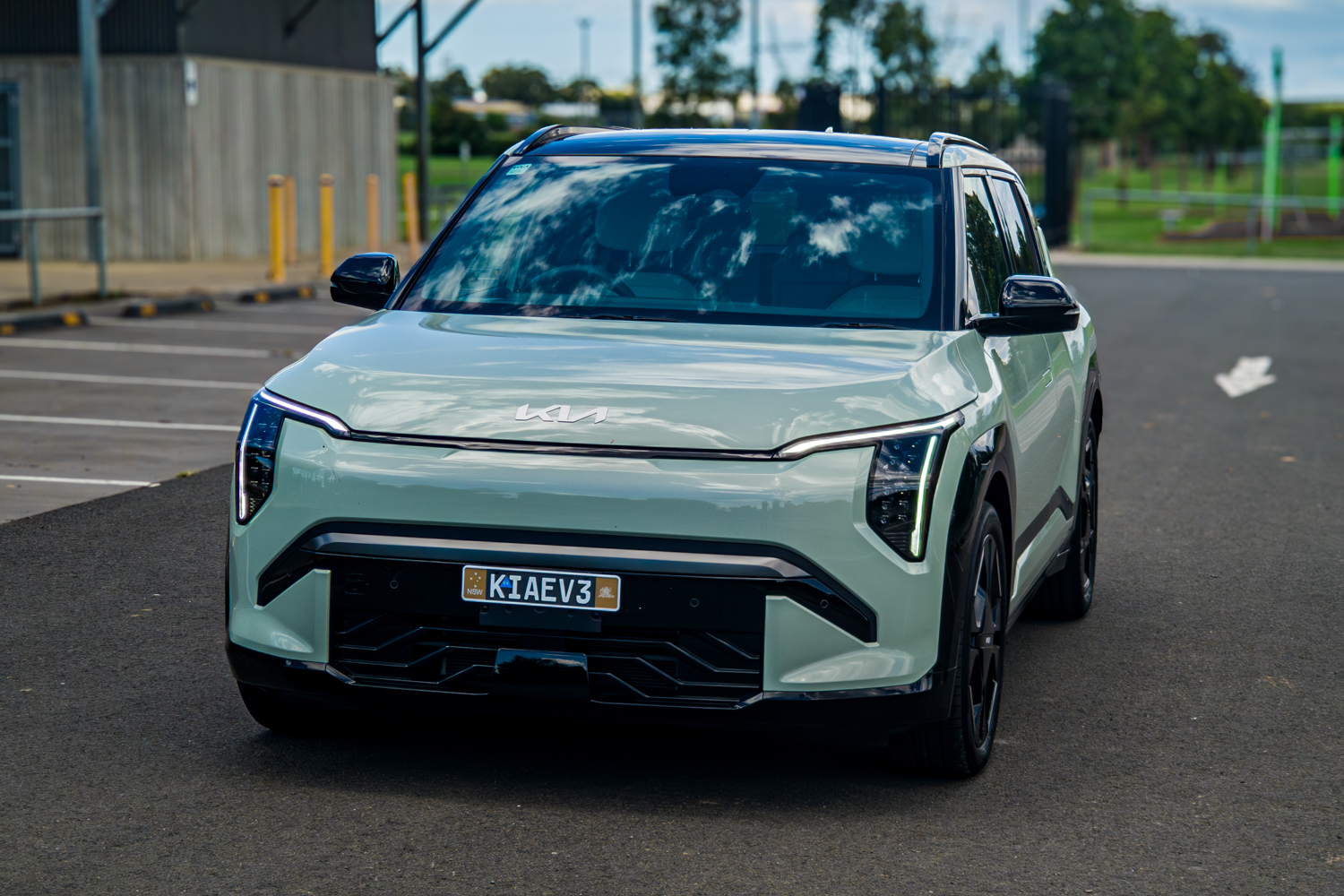
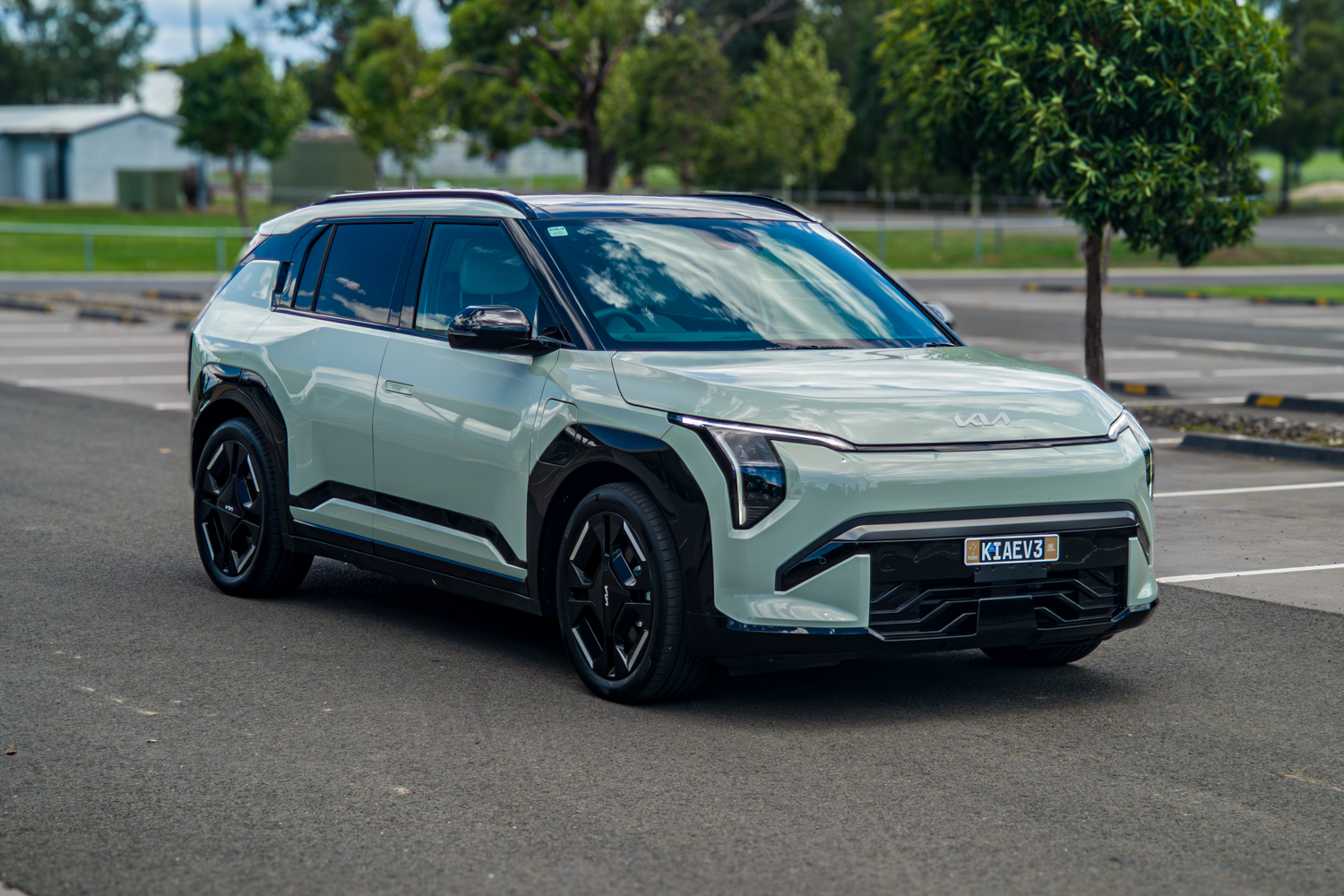
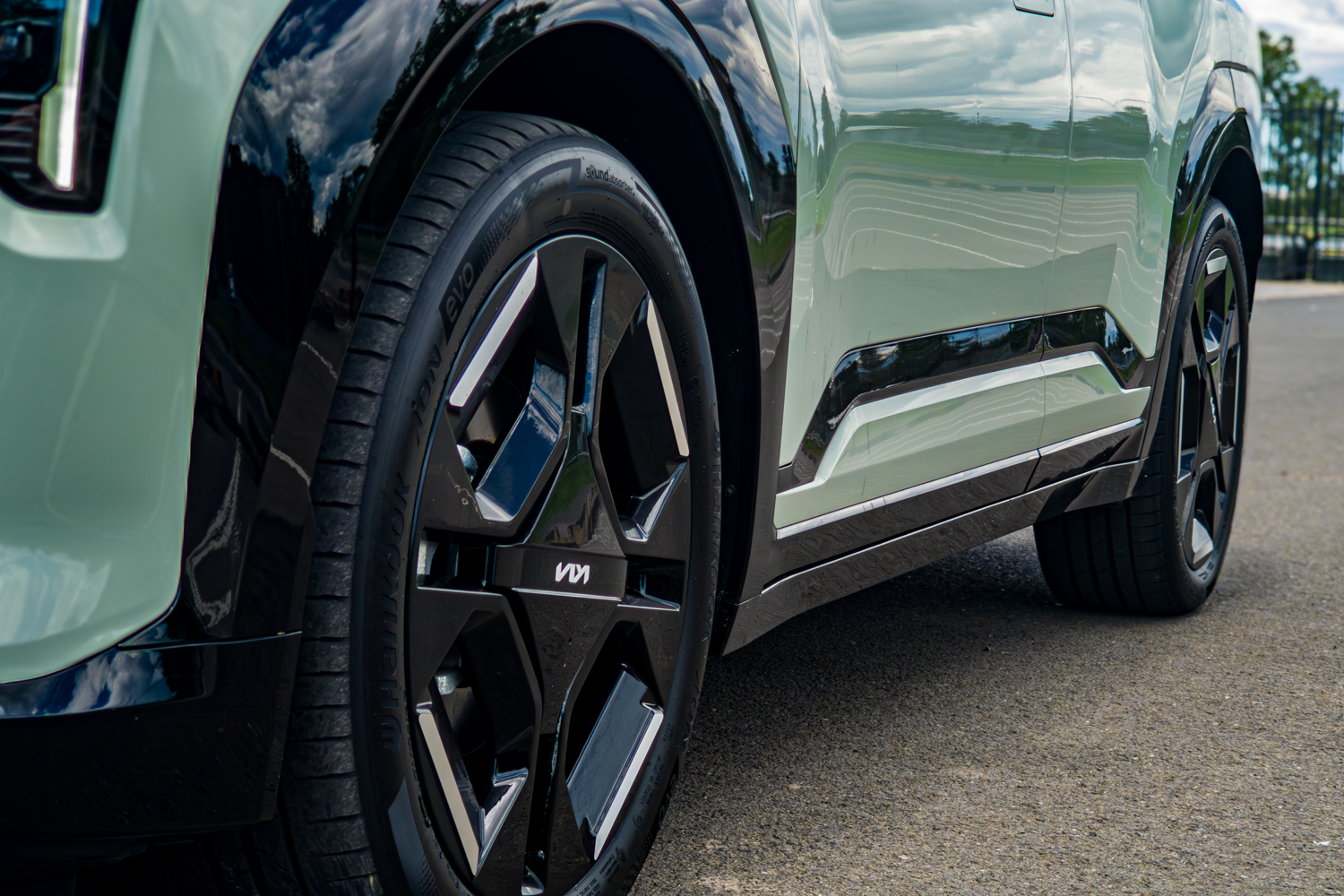
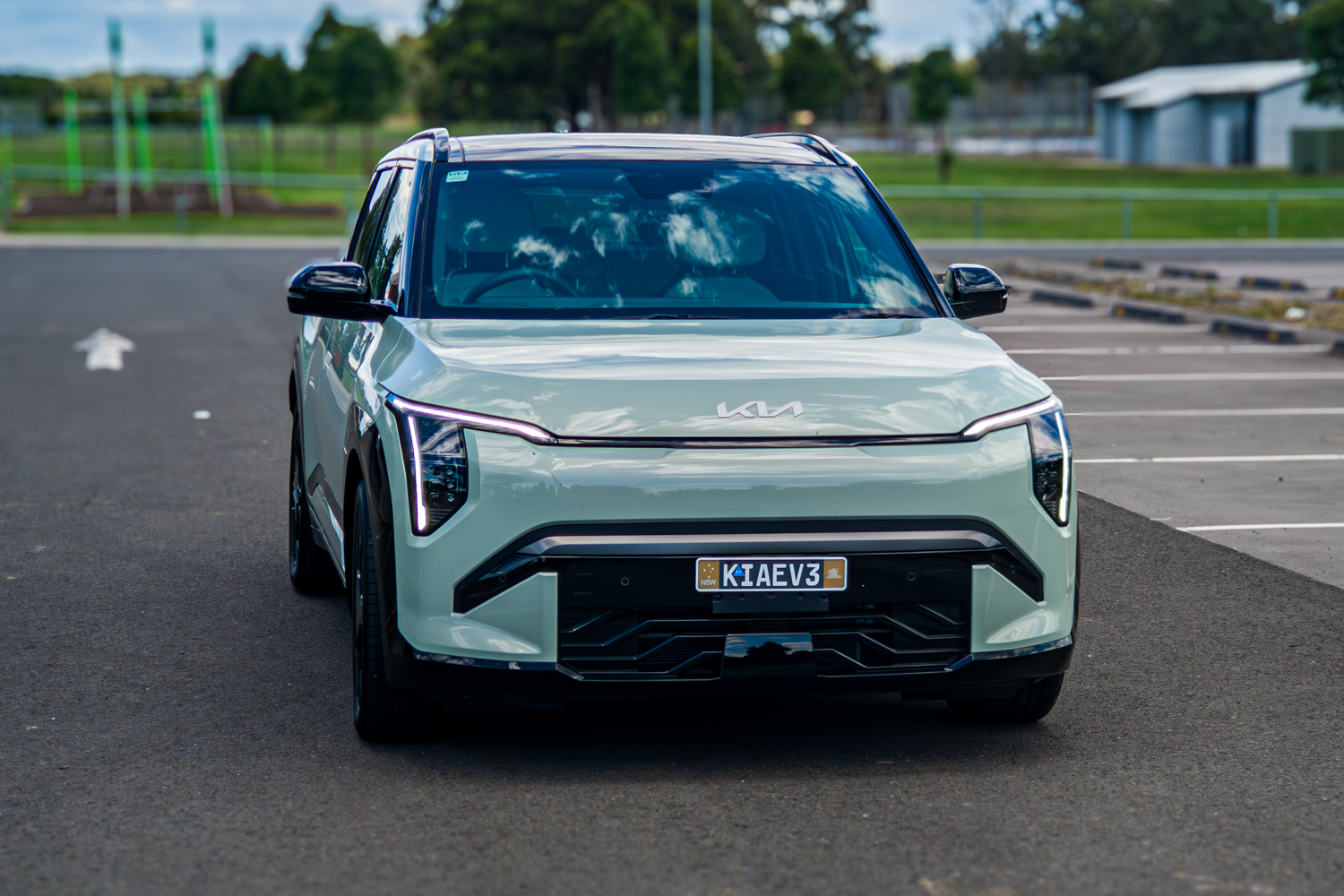
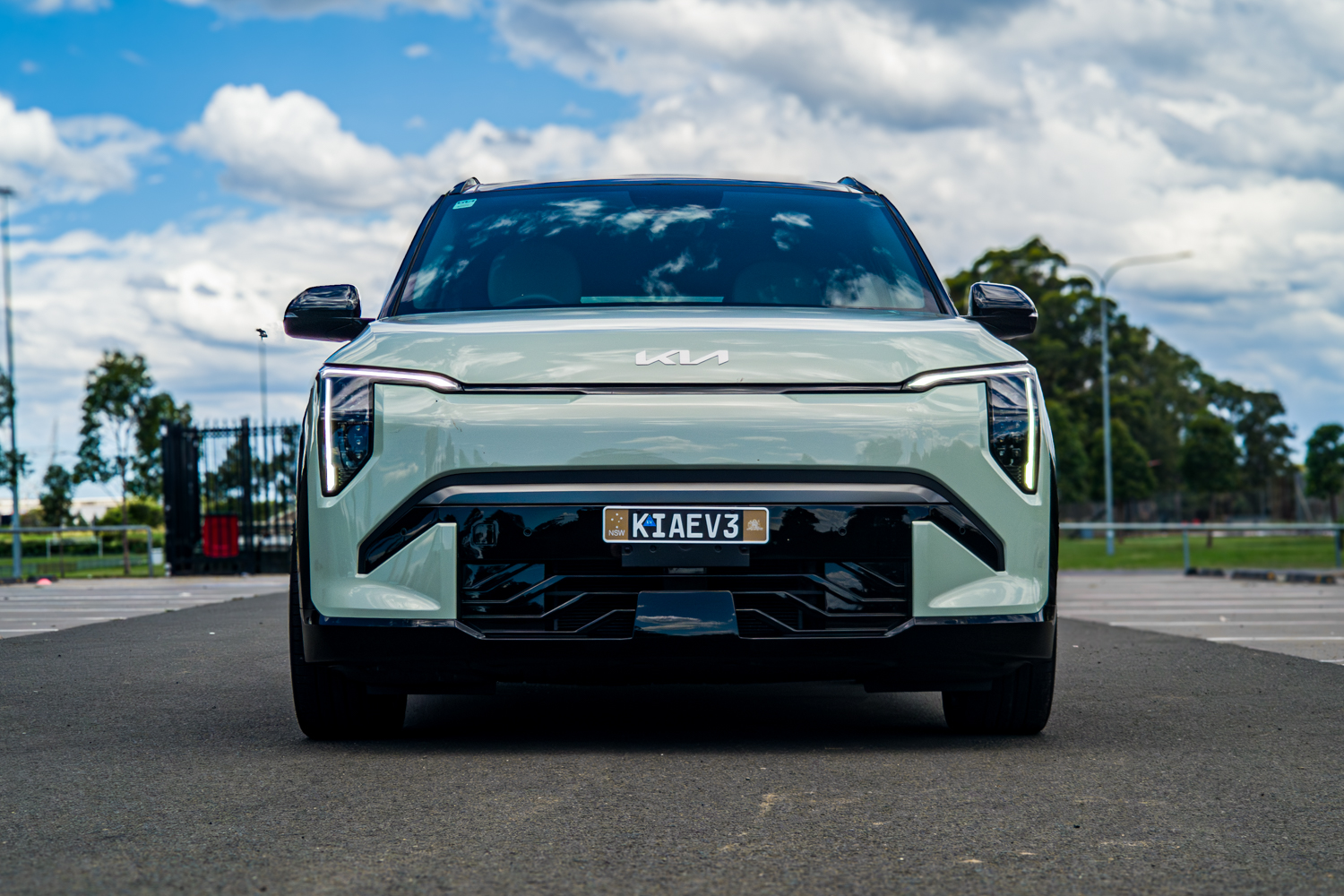
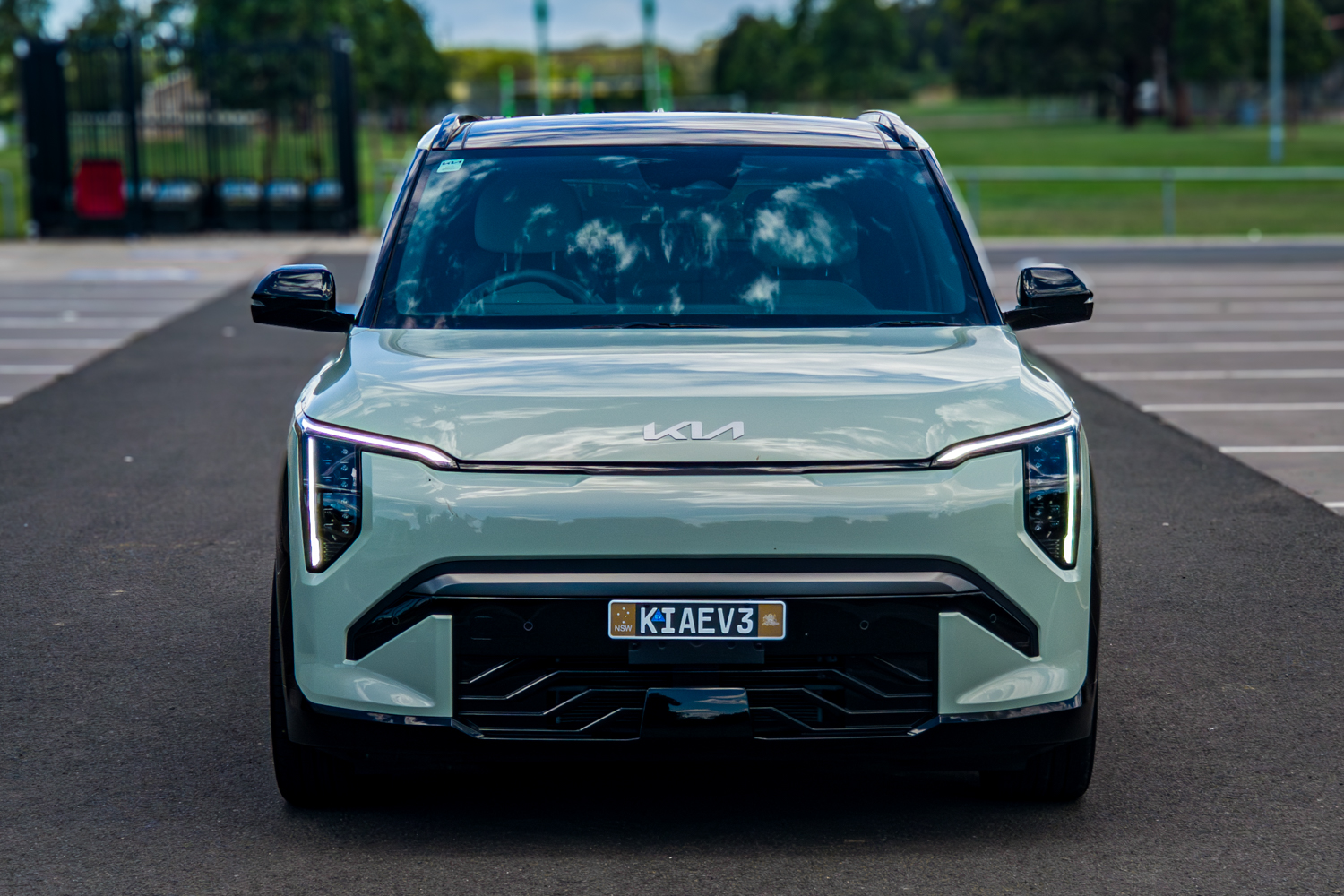
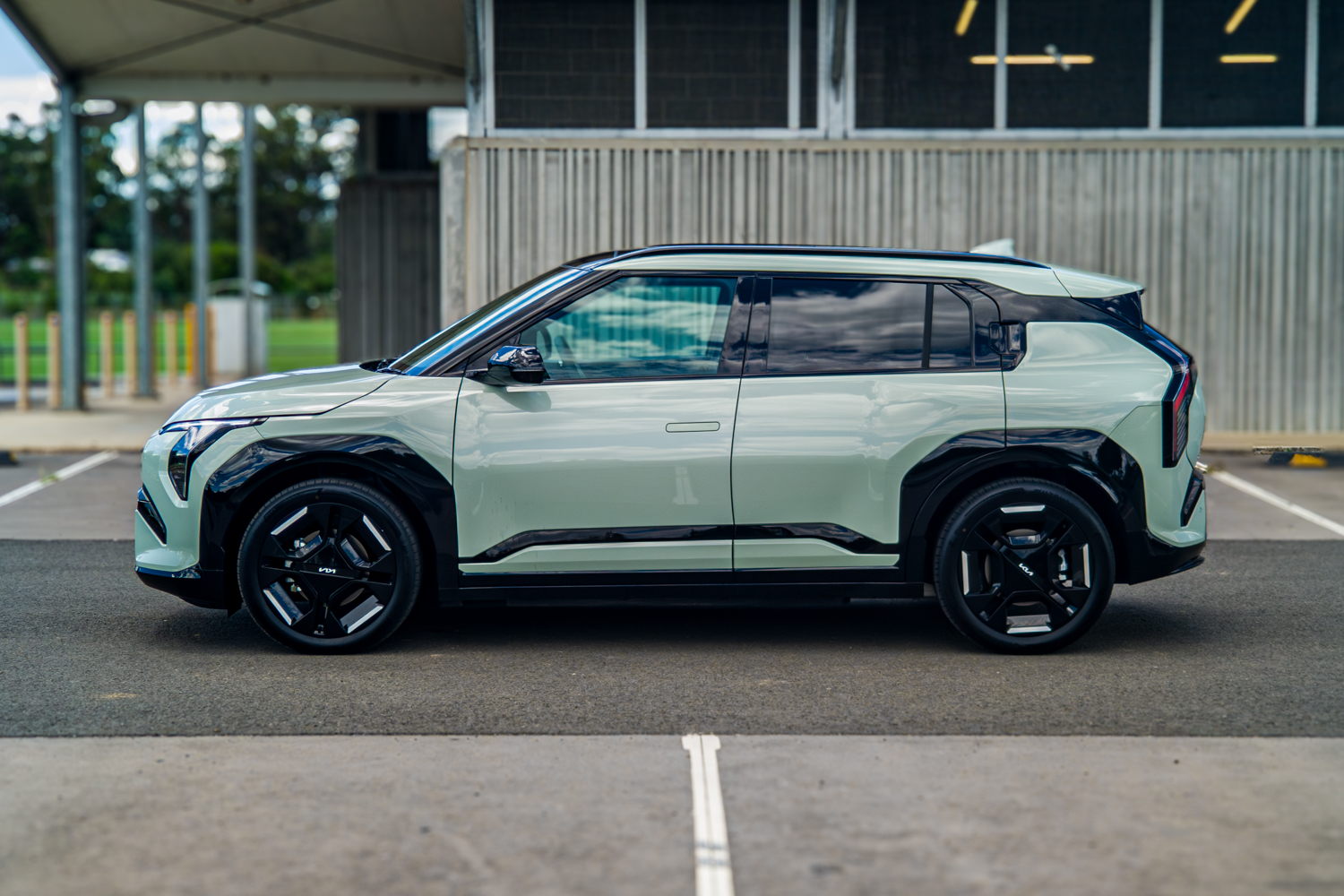
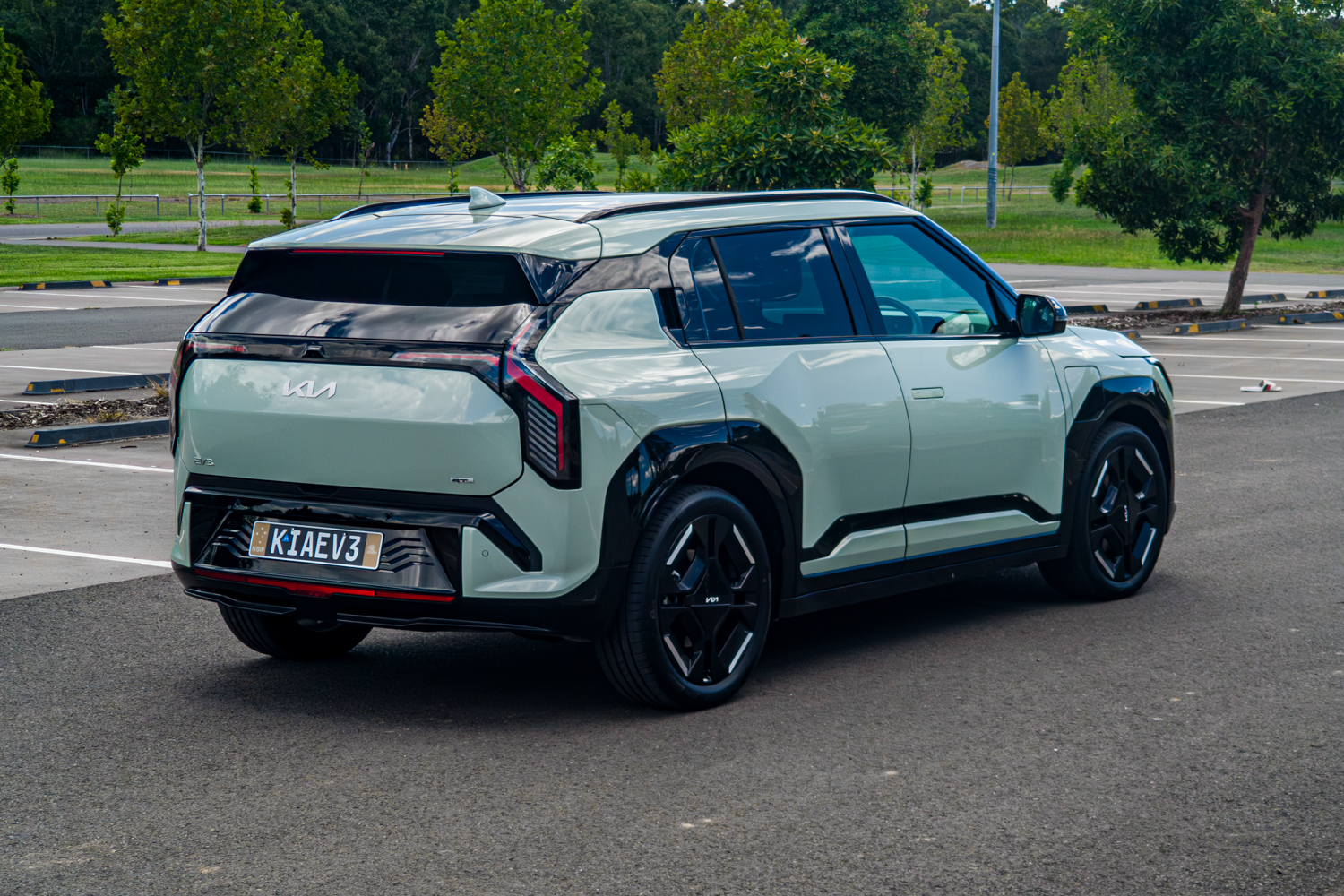
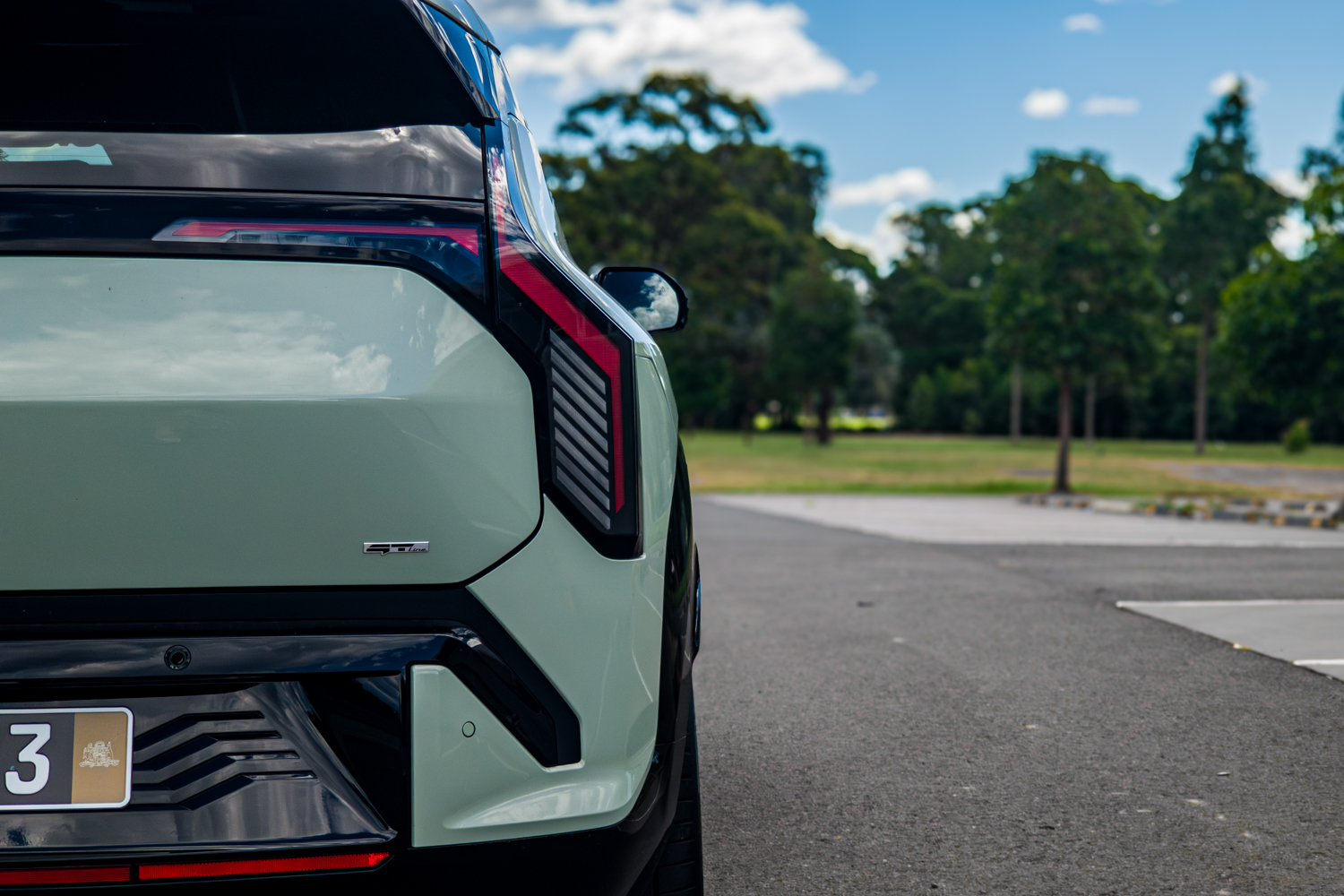
Kia has essentially shrunk its excellent EV9 into a city-friendly footprint, and on the GT-Line the “baby EV9” tag fits best of all. At 4,310mm long it is properly compact, yet the upright nose, near-vertical “Star Map” lighting and chunky black wheel-arch cladding give it the road presence of something dearer. The GT-Line then piles on the flagship touches: LED “cube” projection headlights, full-LED tail lights, a gloss-black roof, gloss mirror caps, privacy glass and 19-inch GT-Line alloys that fill the squared-off arches. Our car wore Matcha Green, and it is a genuine highlight. It beats the bland, monochrome greys and whites so many makers default to, and it suits the EV3’s friendly shape.
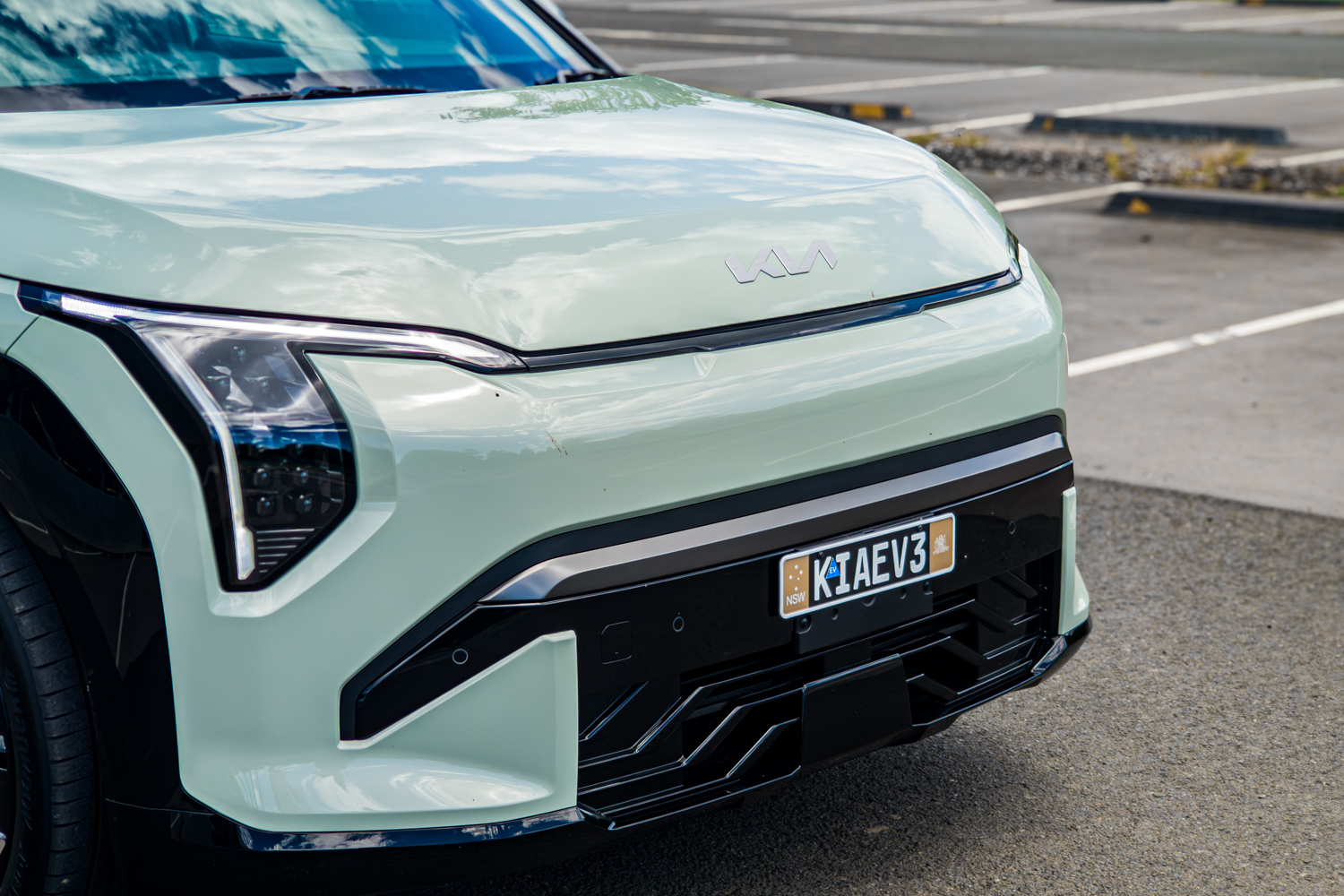
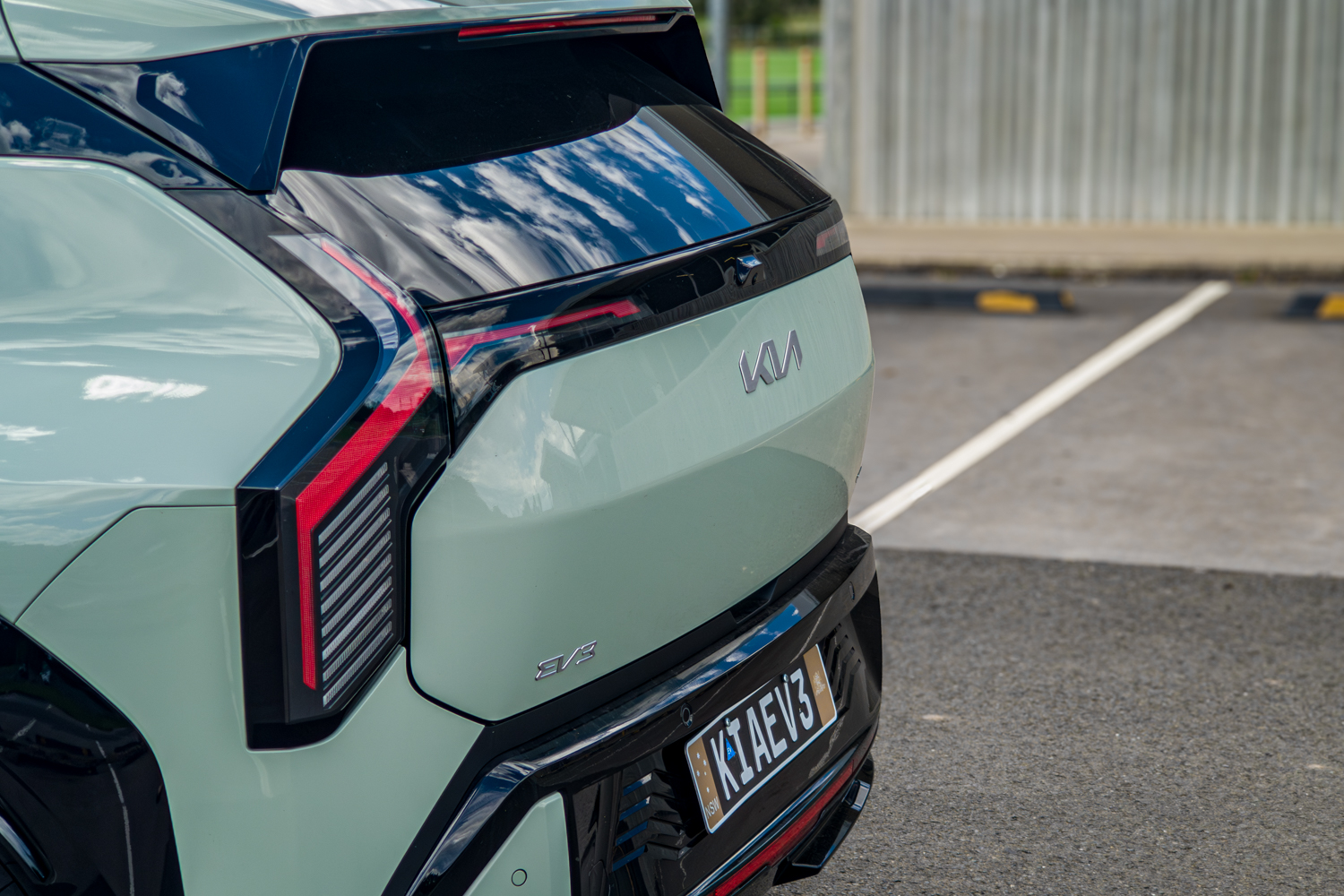
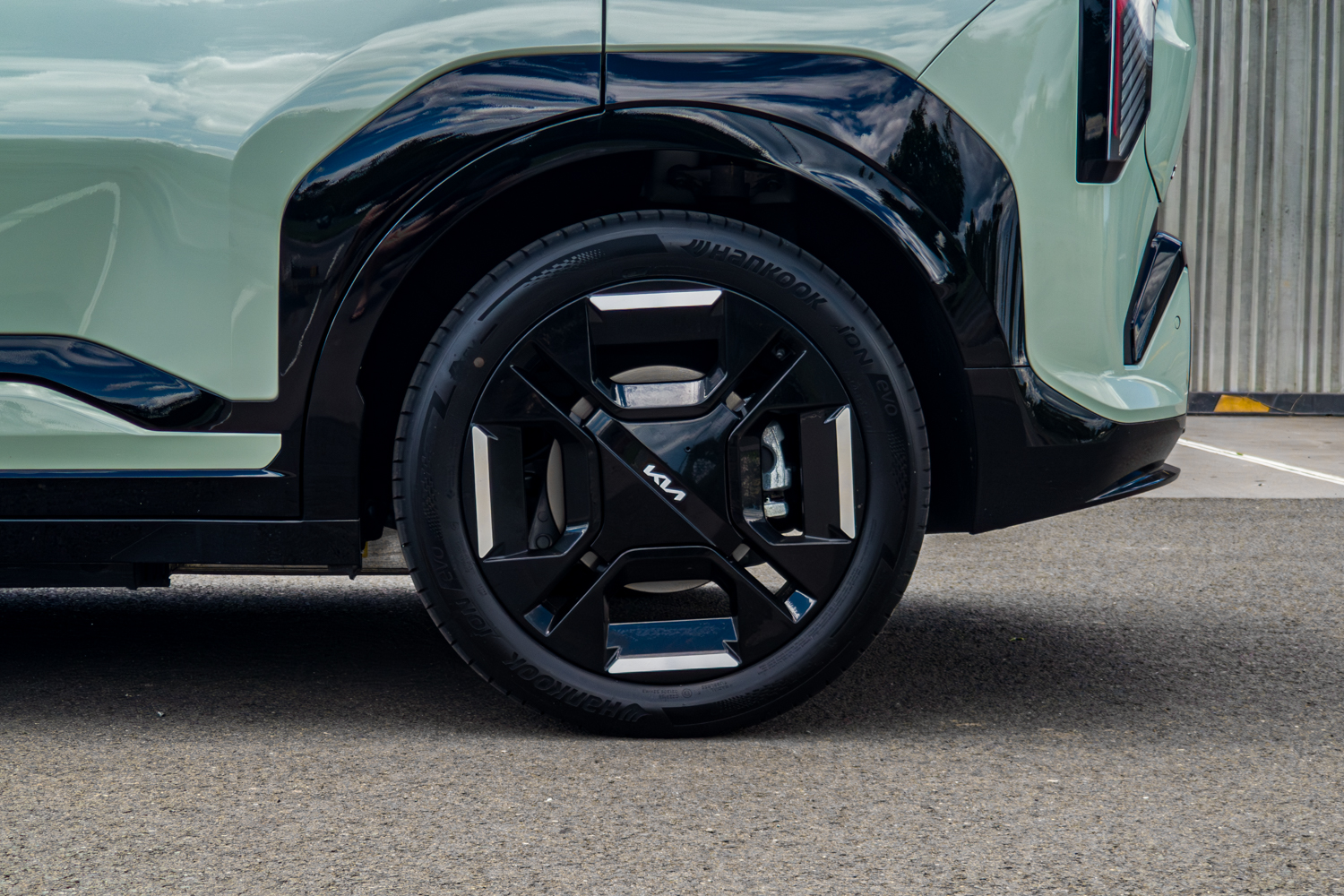
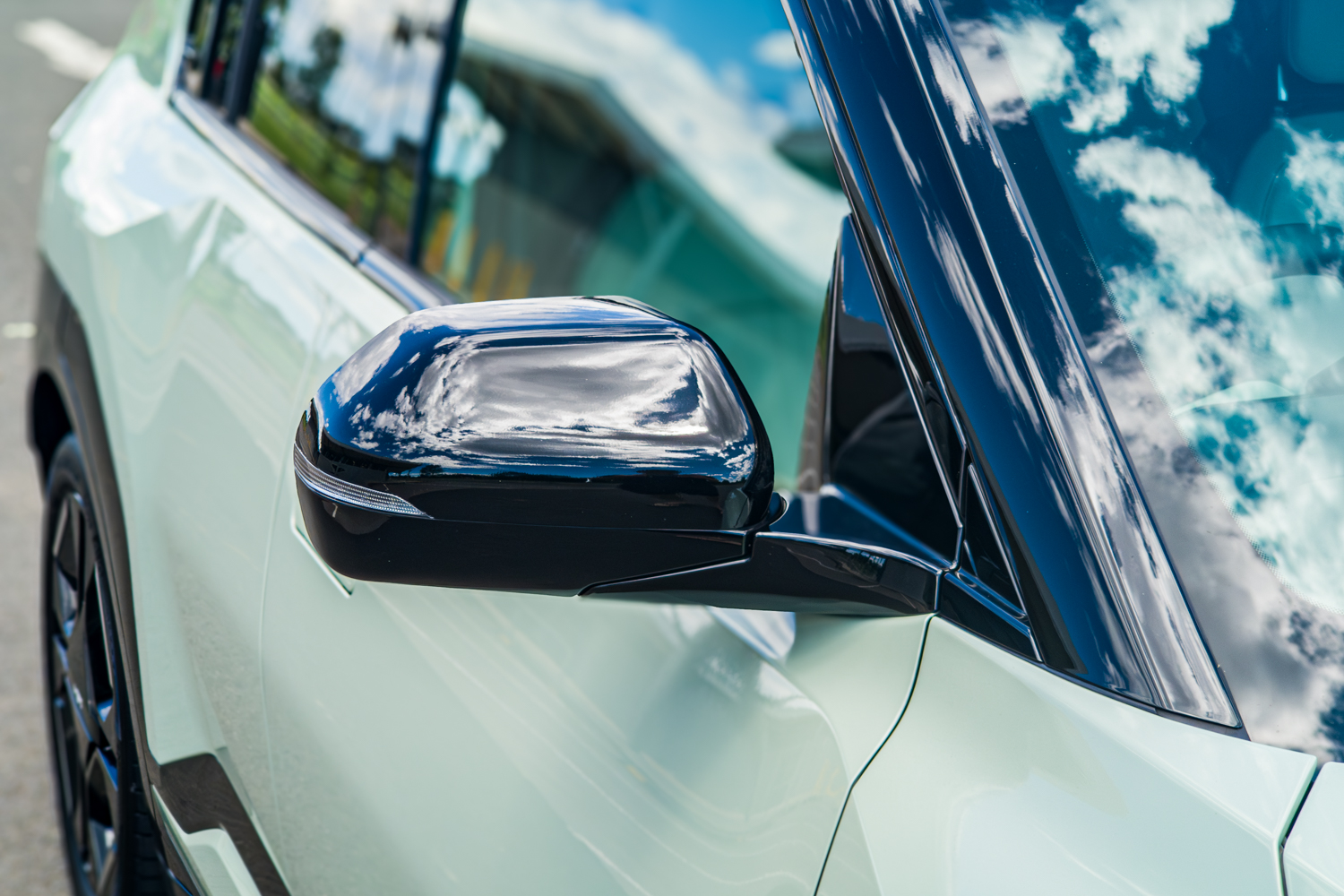
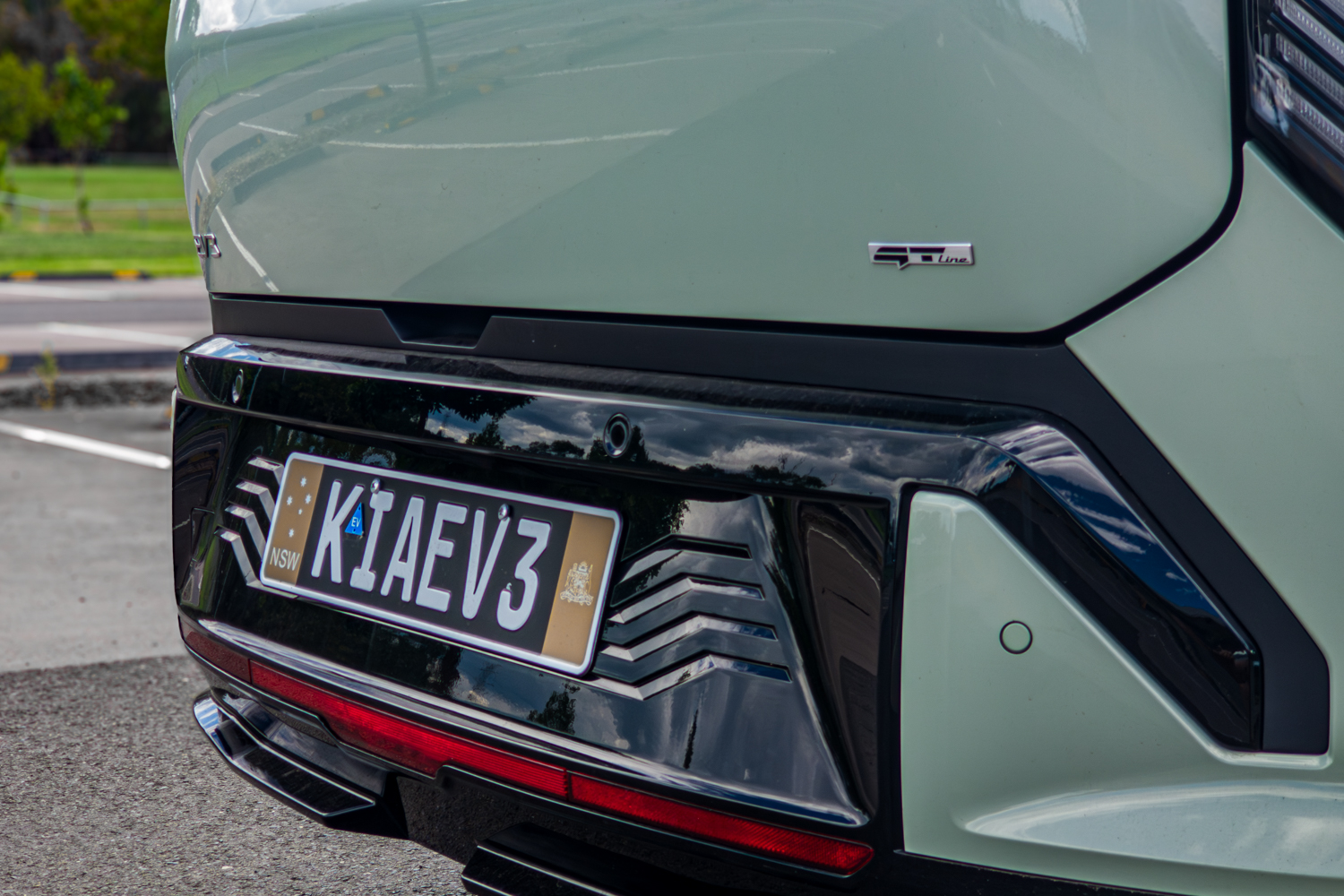
That shape is worth dwelling on. The EV3 wears softer, rounder edges than the boxier, more upright Kia EV5, and to my eye it is the more likeable of the two Kia siblings for it. It is distinctive in a segment where most rivals look like the same electric appliance in different shades. A low bar, admittedly, but the EV3 clears it comfortably.
What is the 2026 Kia EV3 GT-Line like inside?
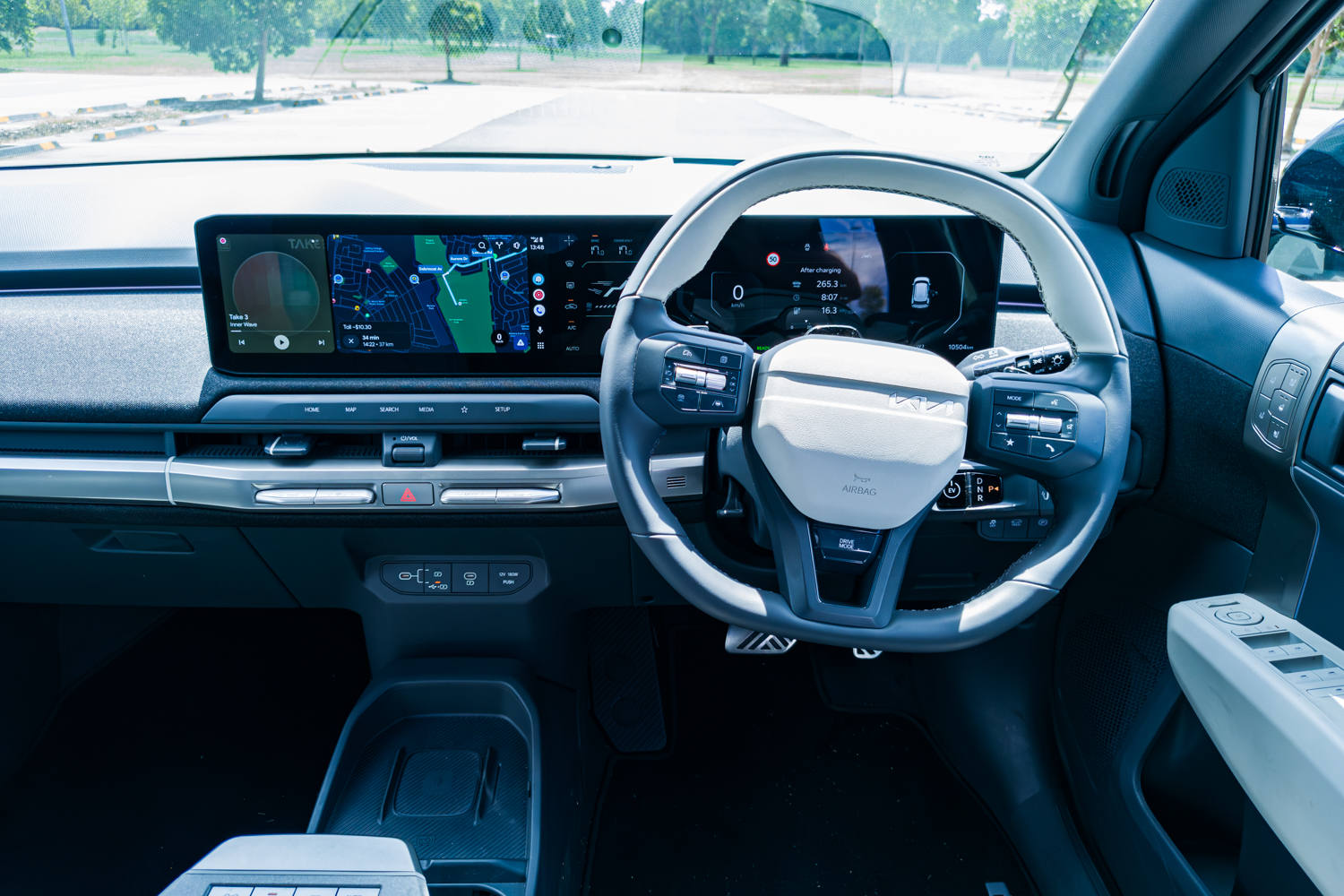
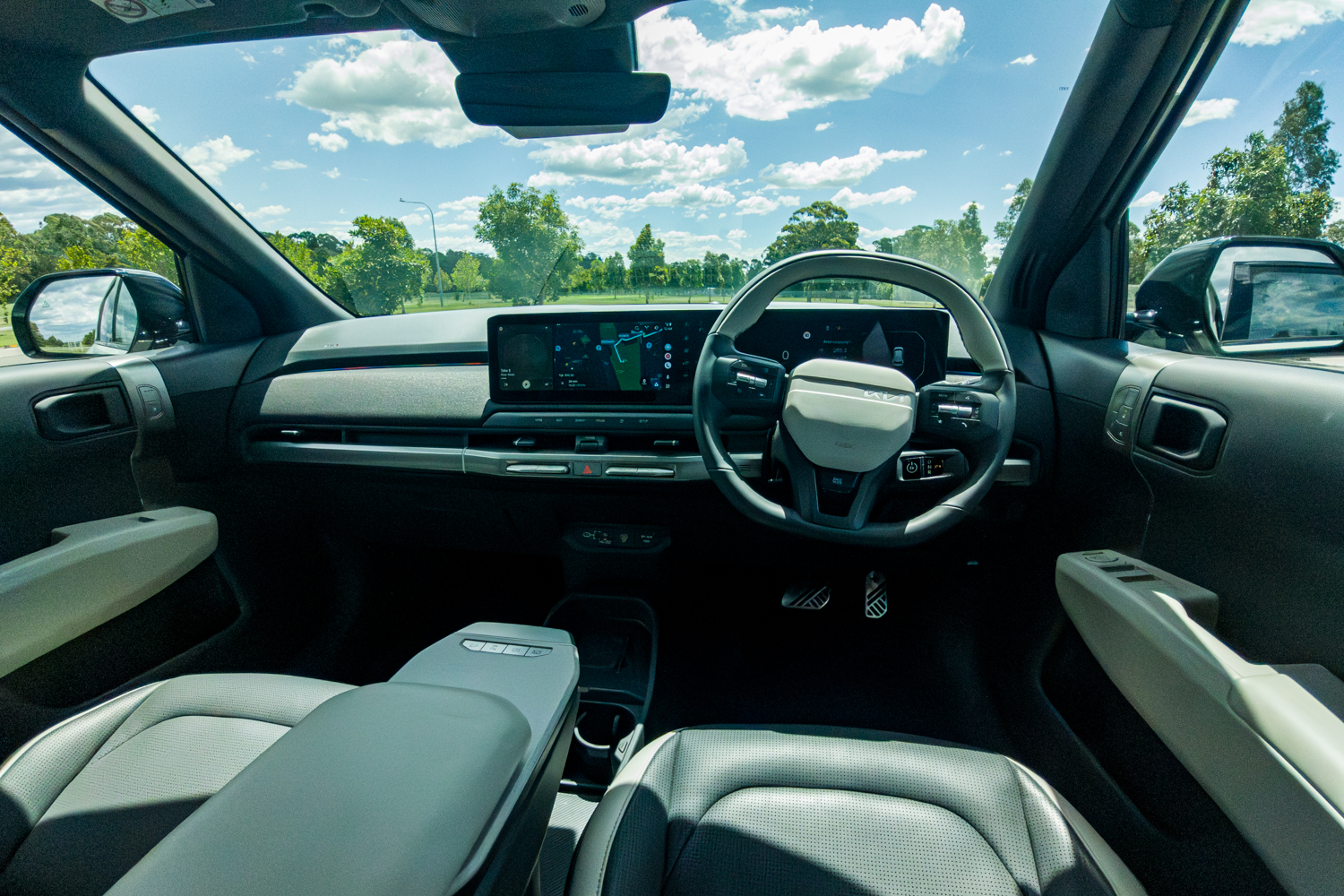
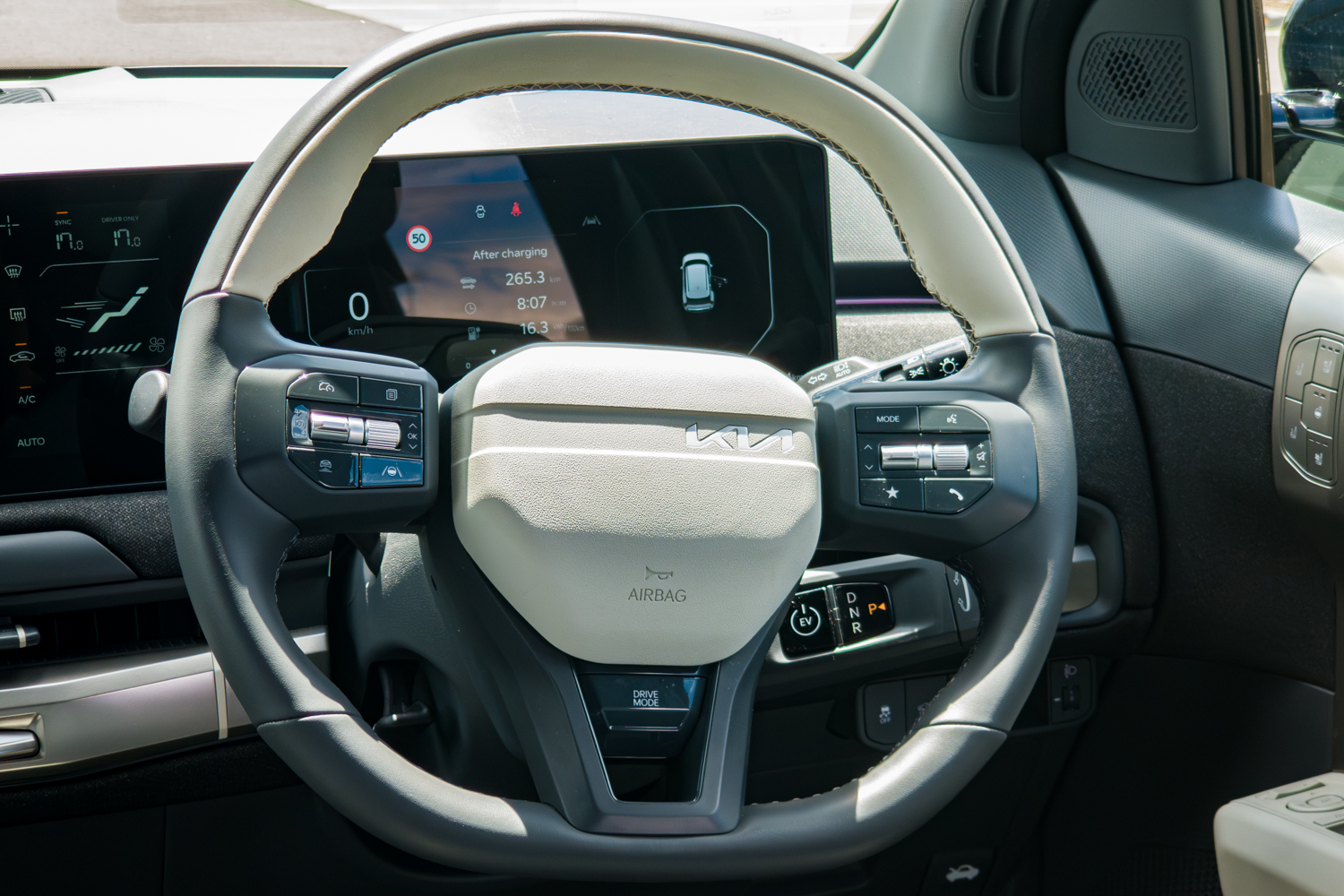
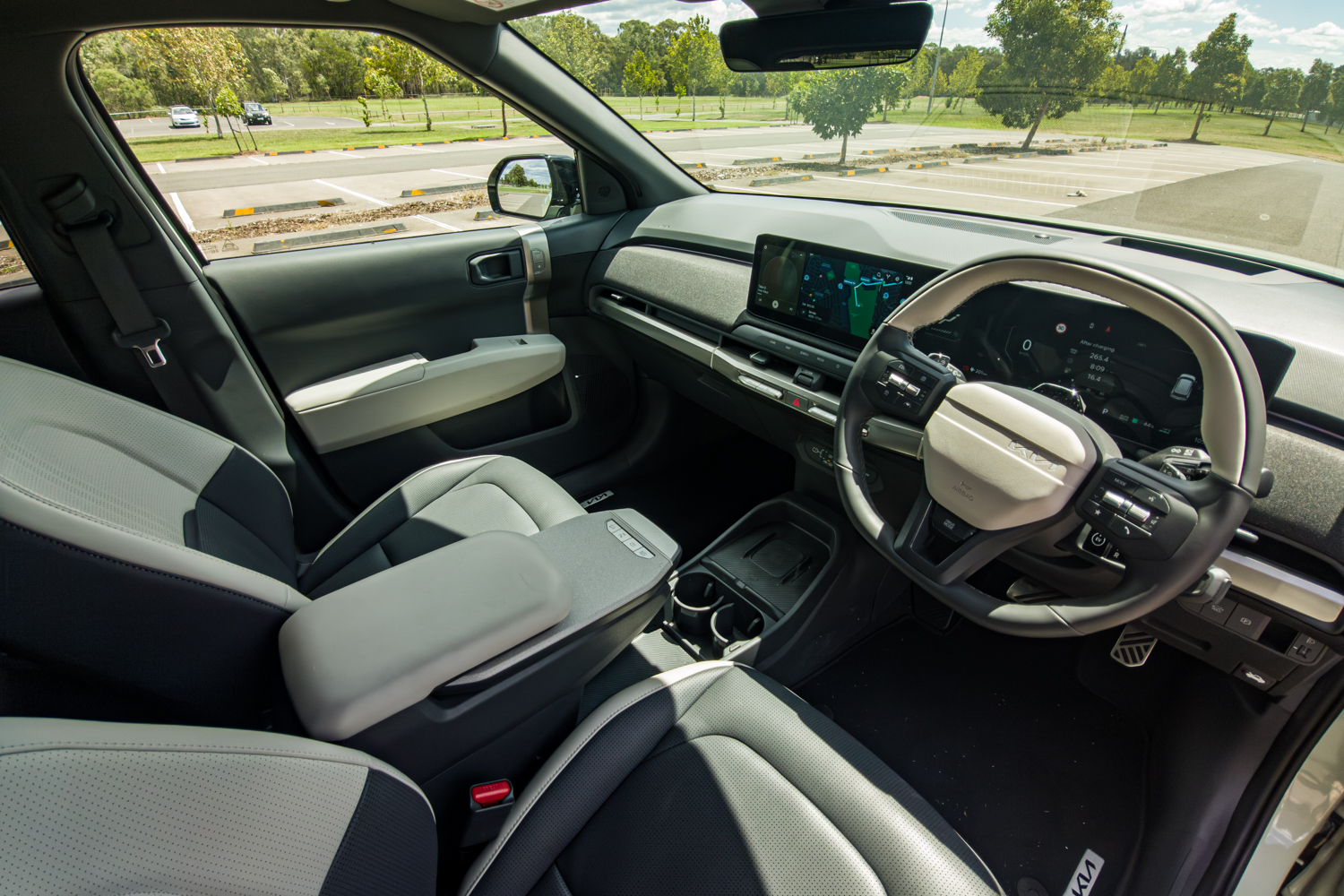
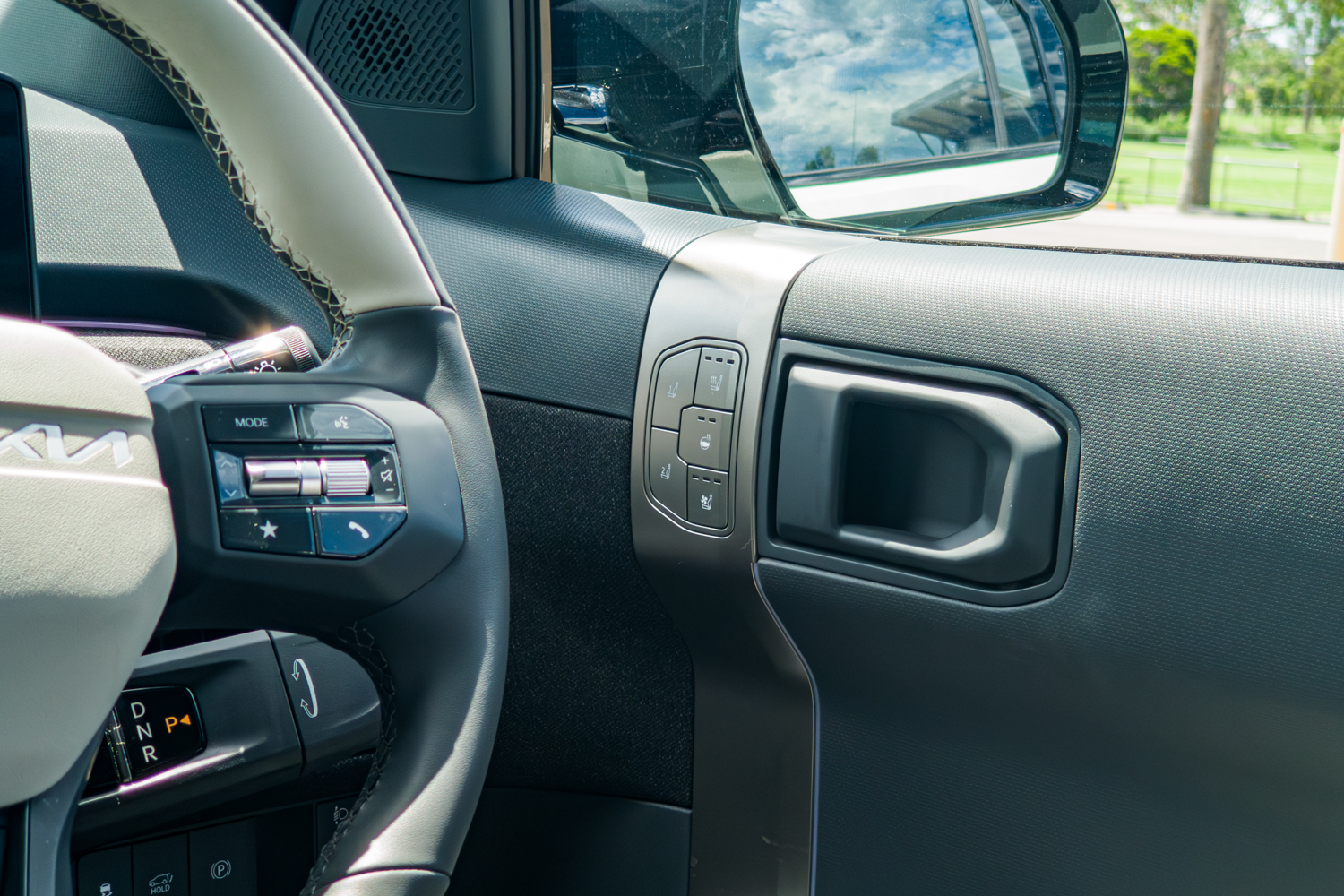
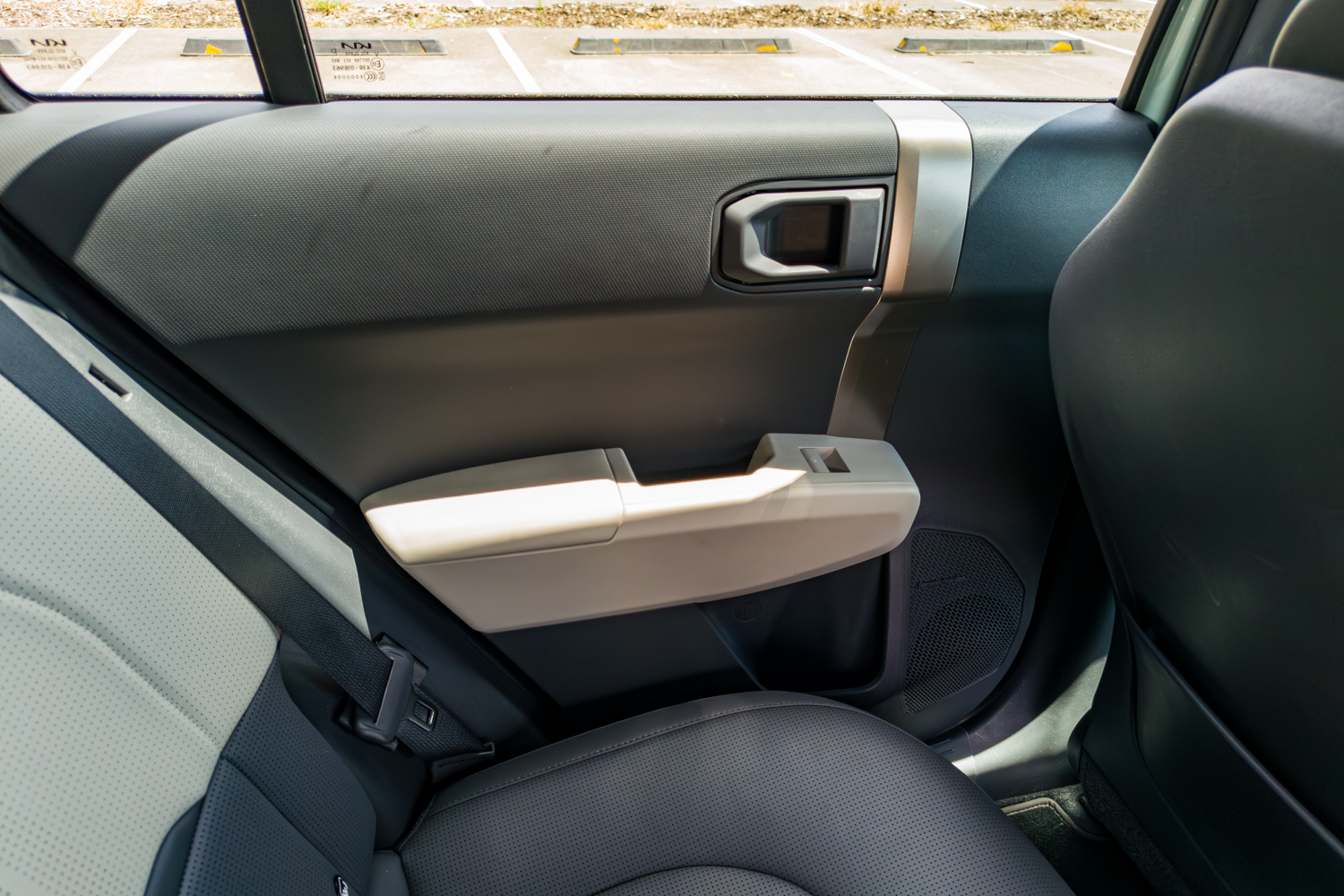
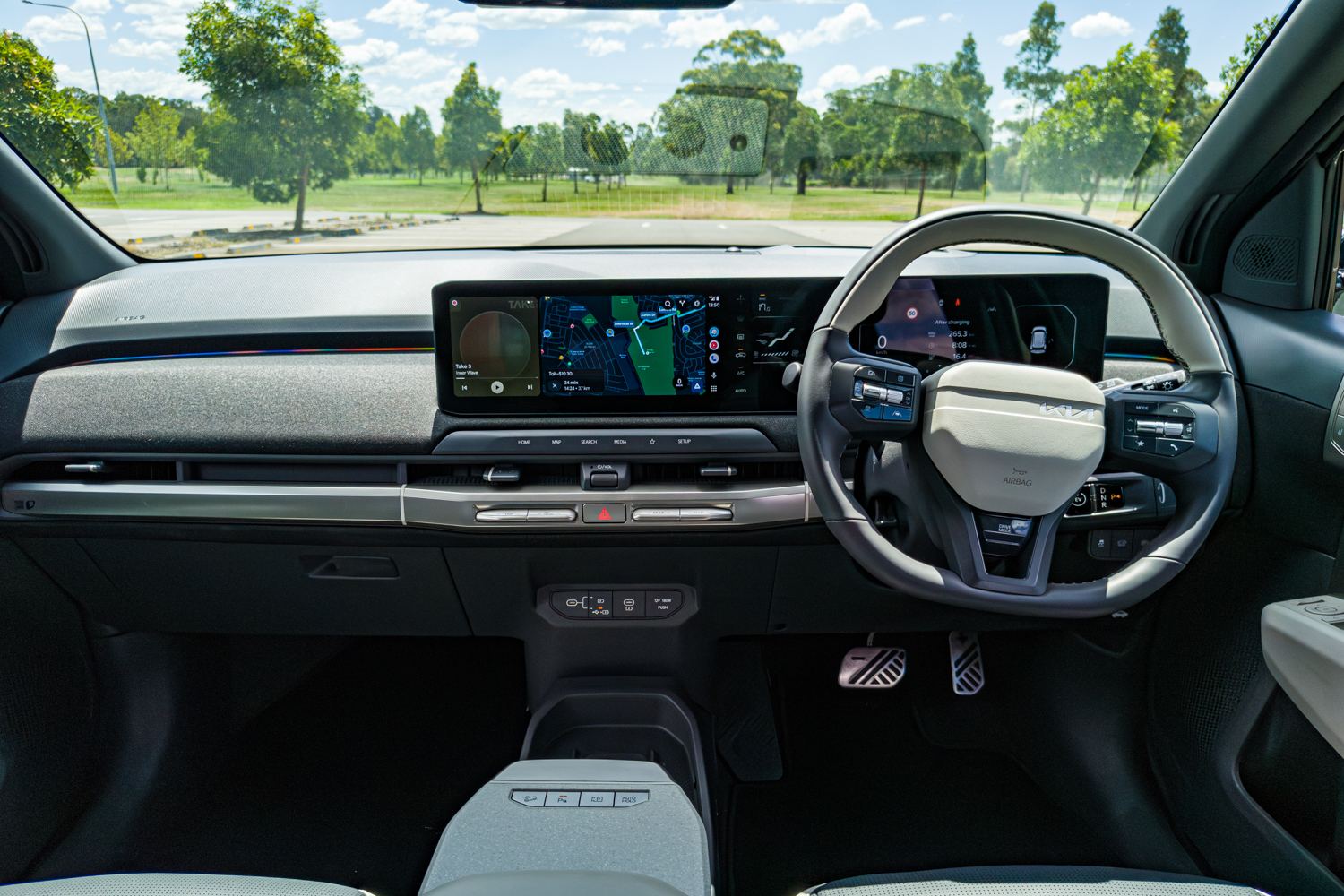
This, for me, is where the EV3 wins you over, and the GT-Line makes the strongest case of the lot. The completely flat floor and tall roofline make the cabin feel a class bigger than the exterior suggests, and our car’s grey two-tone scheme is calm and grown-up. Crucially, Kia has resisted the urge to bury every function in a touchscreen. Physical buttons handle the things you actually use, so you are not forever diving through menus, and the two-tone, three-spoke sports steering wheel is a genuinely nice shape with controls that fall easily to hand.
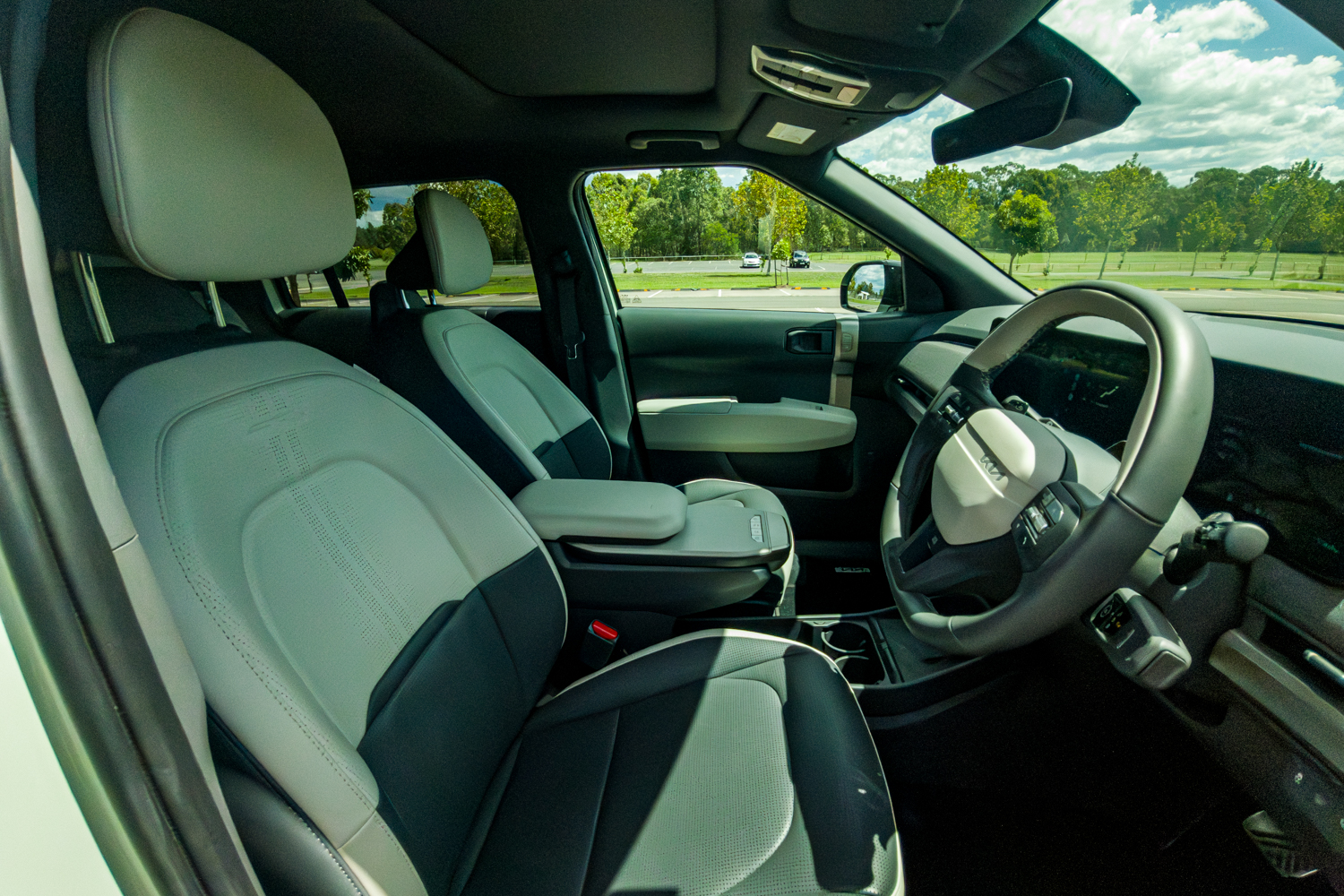
The GT-Line then adds the polish you are paying for. A wide sunroof brightens the cabin, although it is worth knowing the opening panel sits only over the front seats rather than sliding the full length of the glass. Ambient mood lighting, an eight-speaker Harman Kardon stereo and the relaxation front seats all lift the ambience a clear notch above the cheaper grades. None of it is essential, but it is the kind of everyday comfort that makes the car nicer to live with over years rather than minutes, which is rather the point of a flagship.
Storage
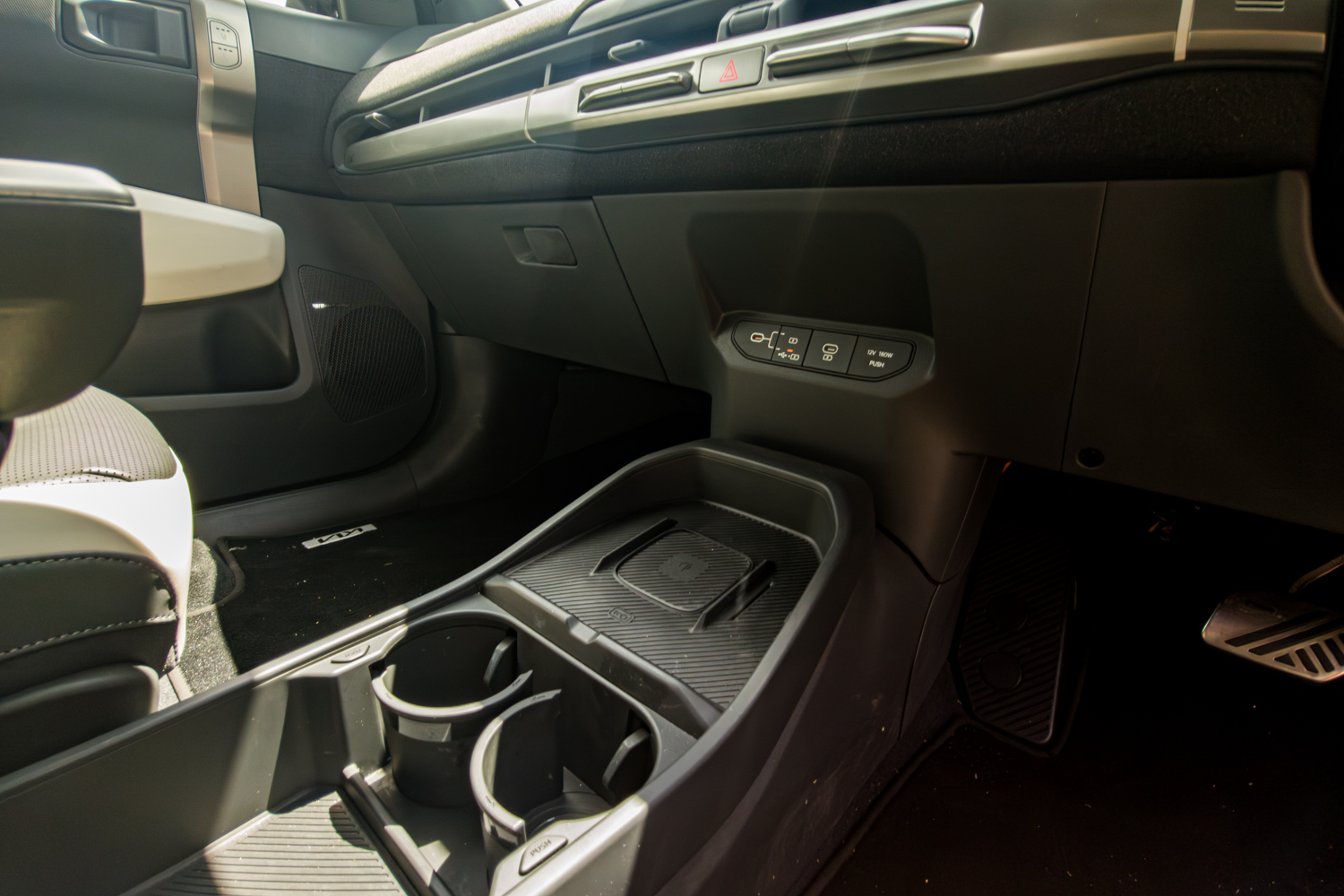
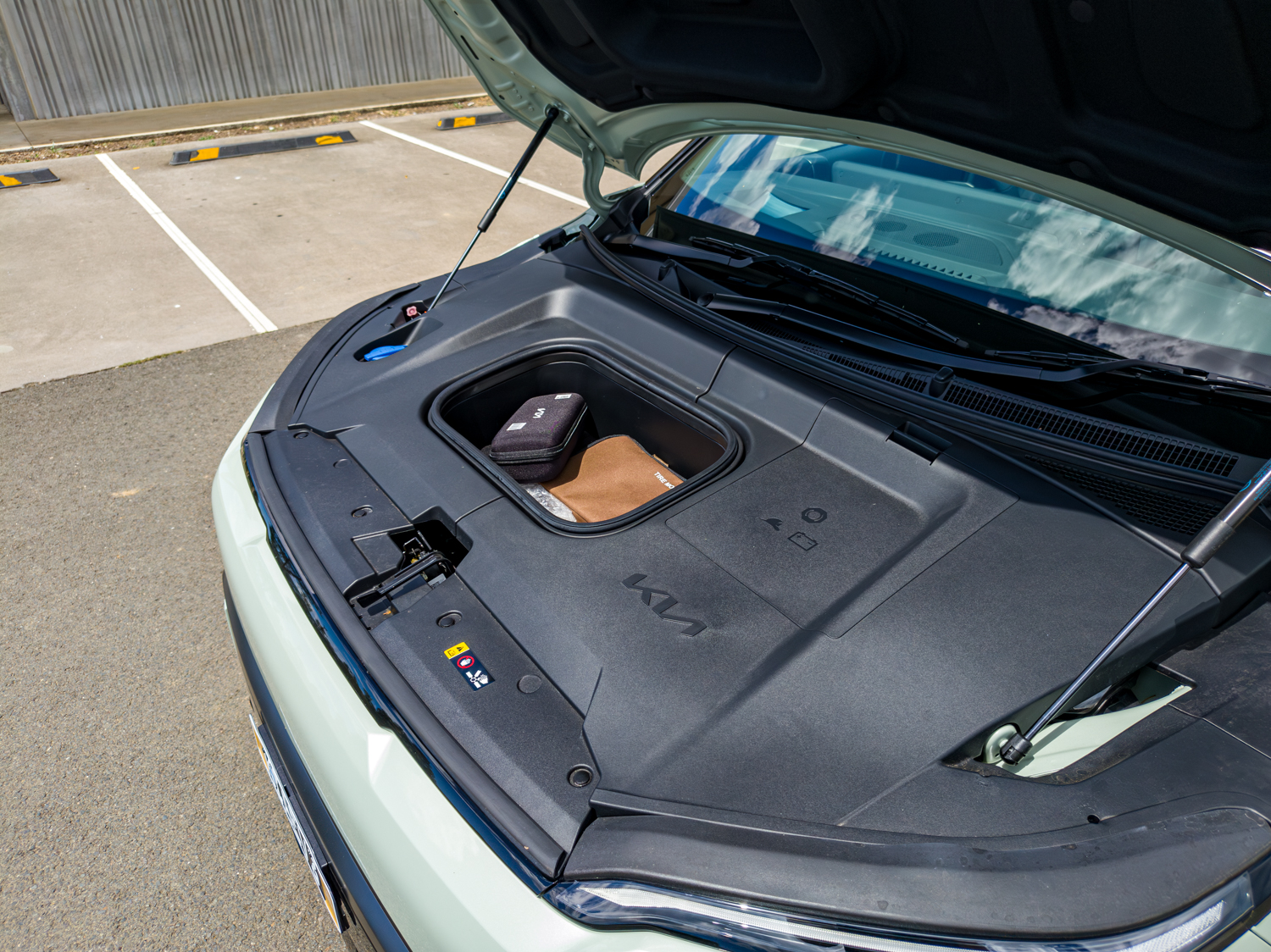
Practicality is baked in. The centre console carries an extendable table top, twin USB-C ports front and rear, a wireless phone charger, deep door bins and the usual clutch of cup and bottle holders. That fold-out table is a nice touch, though it works more as a mini table than an armrest. I ended up resting a 13-inch laptop on it a few times, which was never really the brief, but it did the job. Up front, under the bonnet, sits a 25-litre “frunk”. It is modest, but exactly the right size for stashing the charging cables so they are not rolling around the boot. It is the kind of thoughtful, everyday packaging that makes a car easy to live with rather than impressive on paper.
Rear seat and boot space
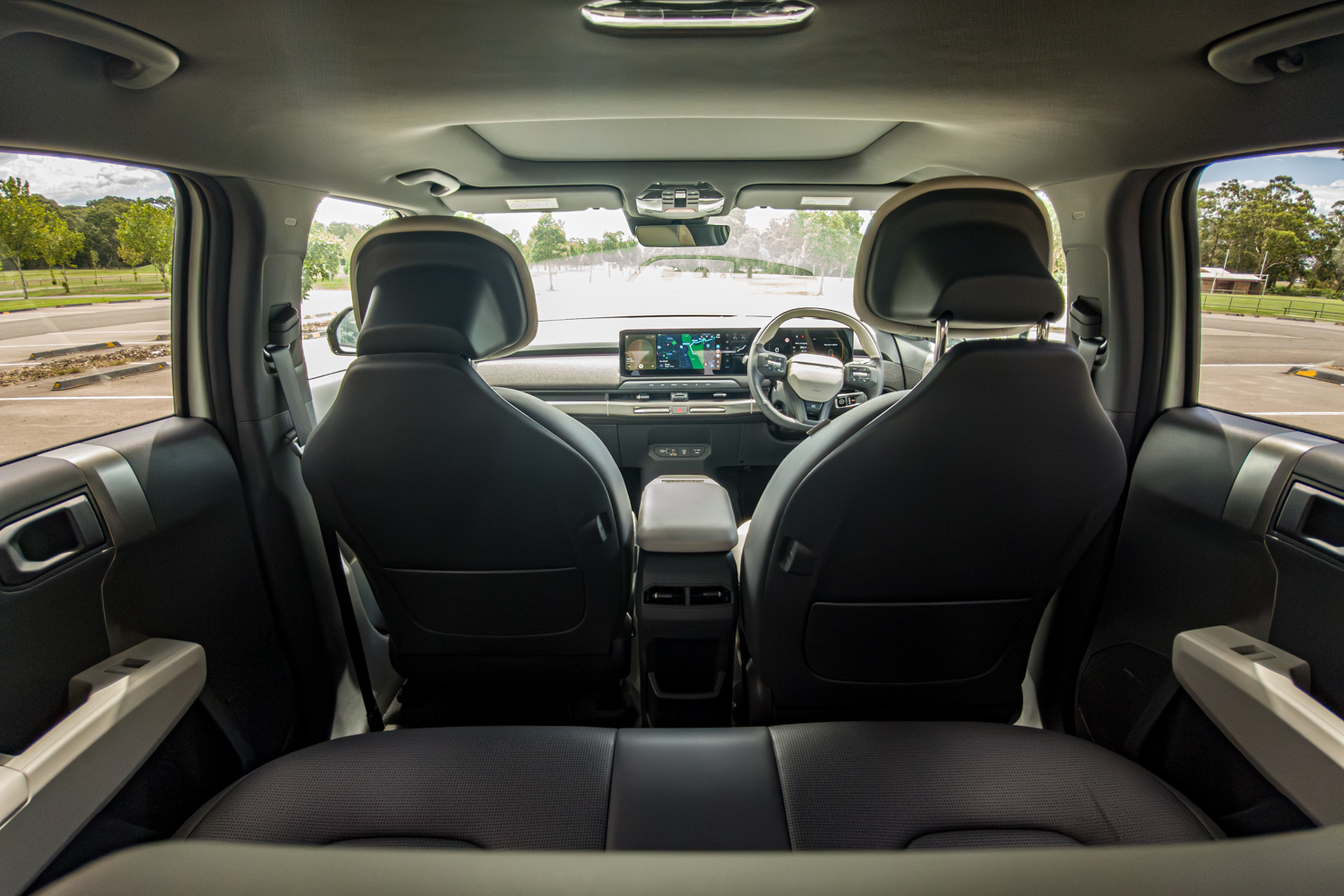
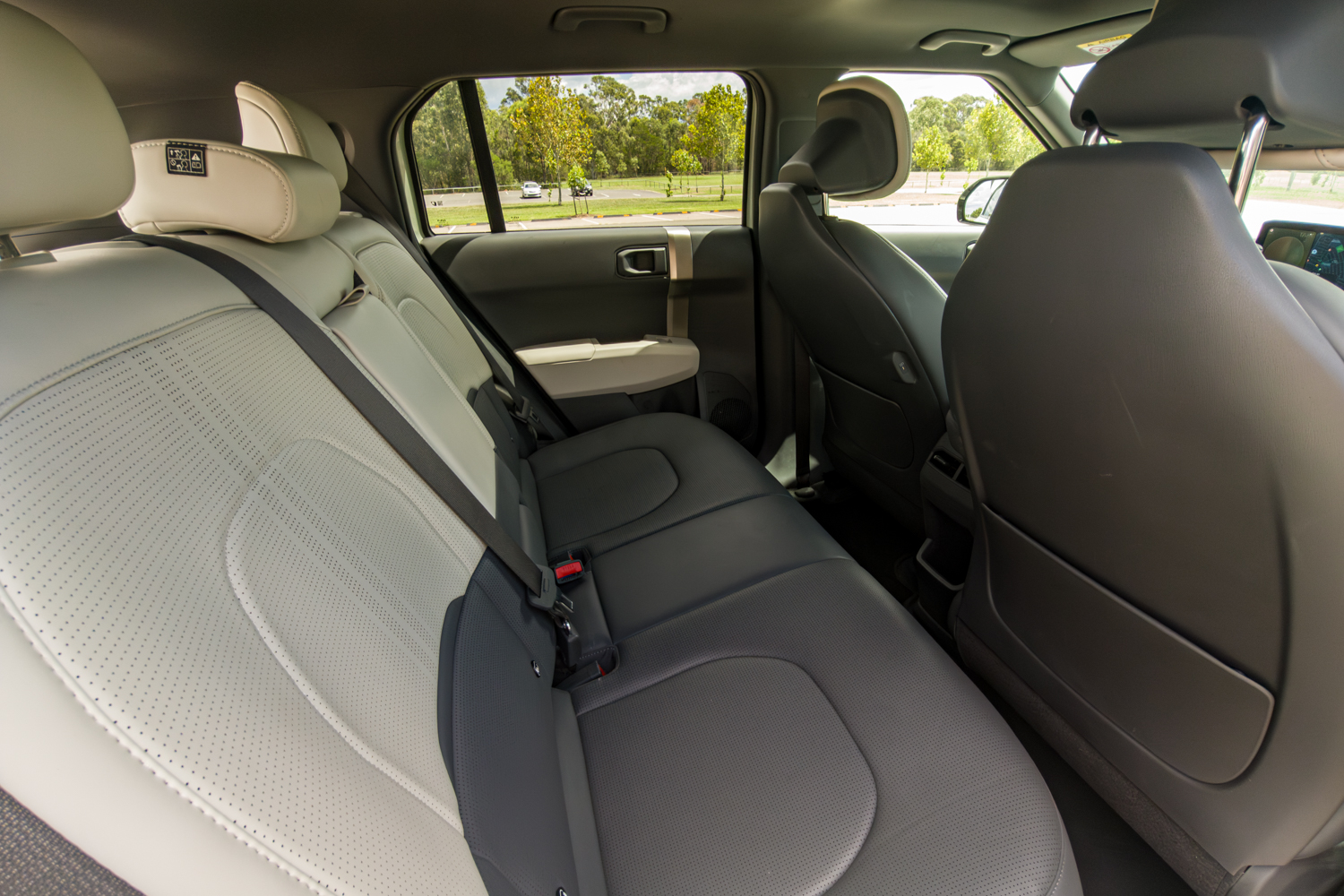
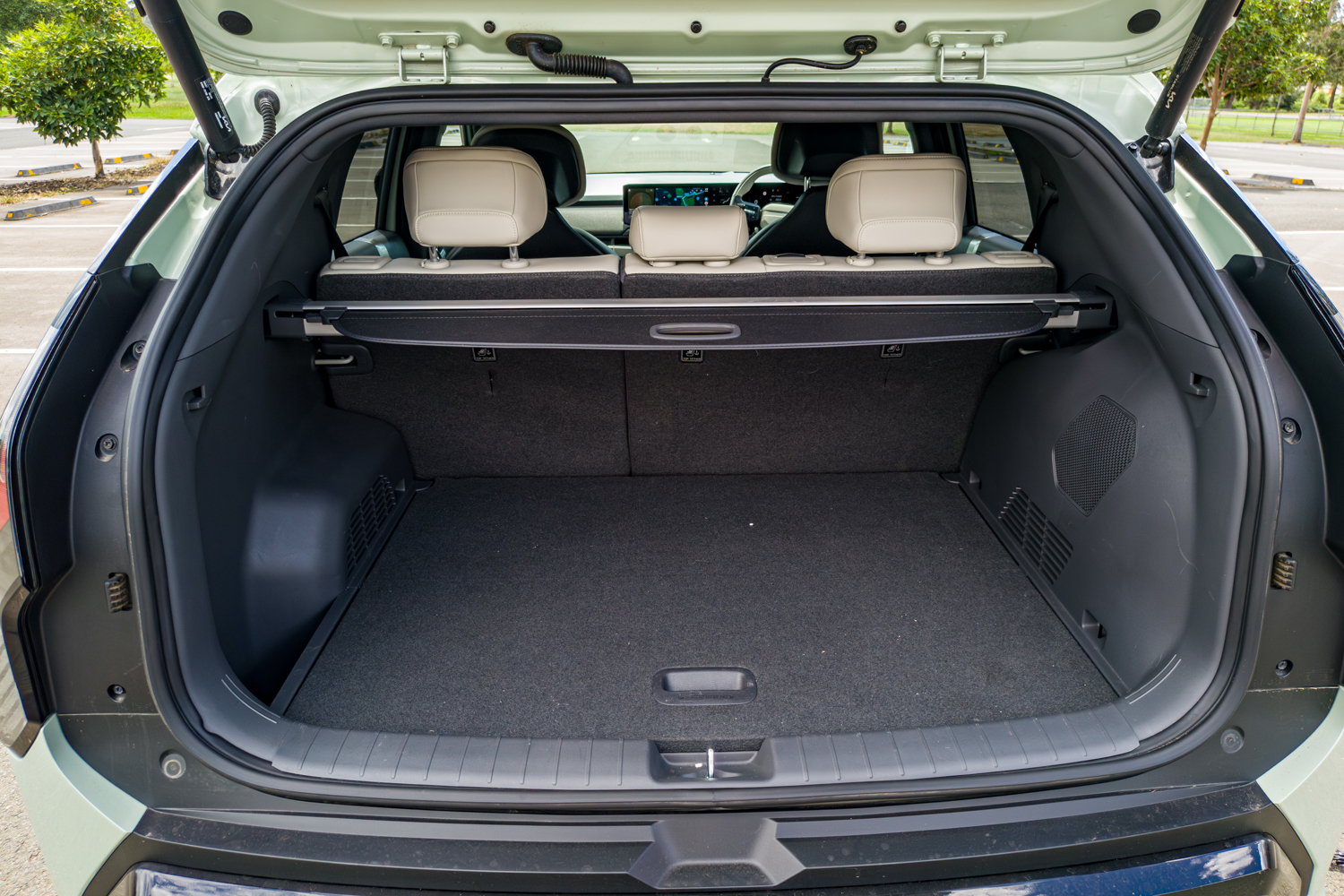
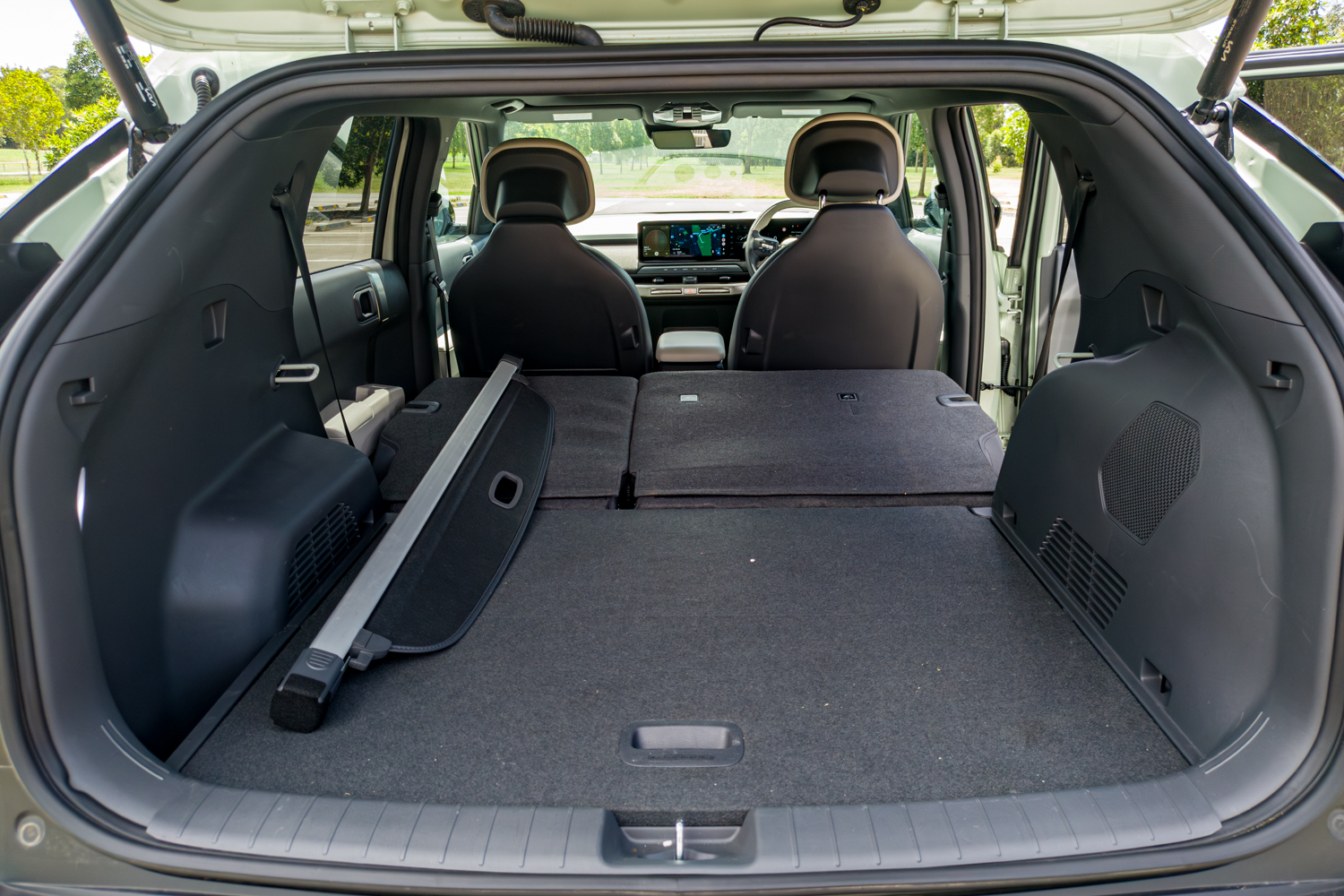
Thanks again to that flat floor and the 2,680mm wheelbase (the same as a Sportage), the back seat is airy and accommodating, with proper room for adults and a bright, glassy feel helped by the GT-Line’s sunroof. The boot holds 460 litres with the seats up, expanding to around 1,250 litres with the 60:40 rear seats folded flat. It is the smallest boot of the natural cross-shops, the larger EV5 and IONIQ 5 both hold a little more, but for a compact SUV the EV3 punches well above its class for usable space, and the flat load floor makes the litres easy to actually use.
Technology and connectivity
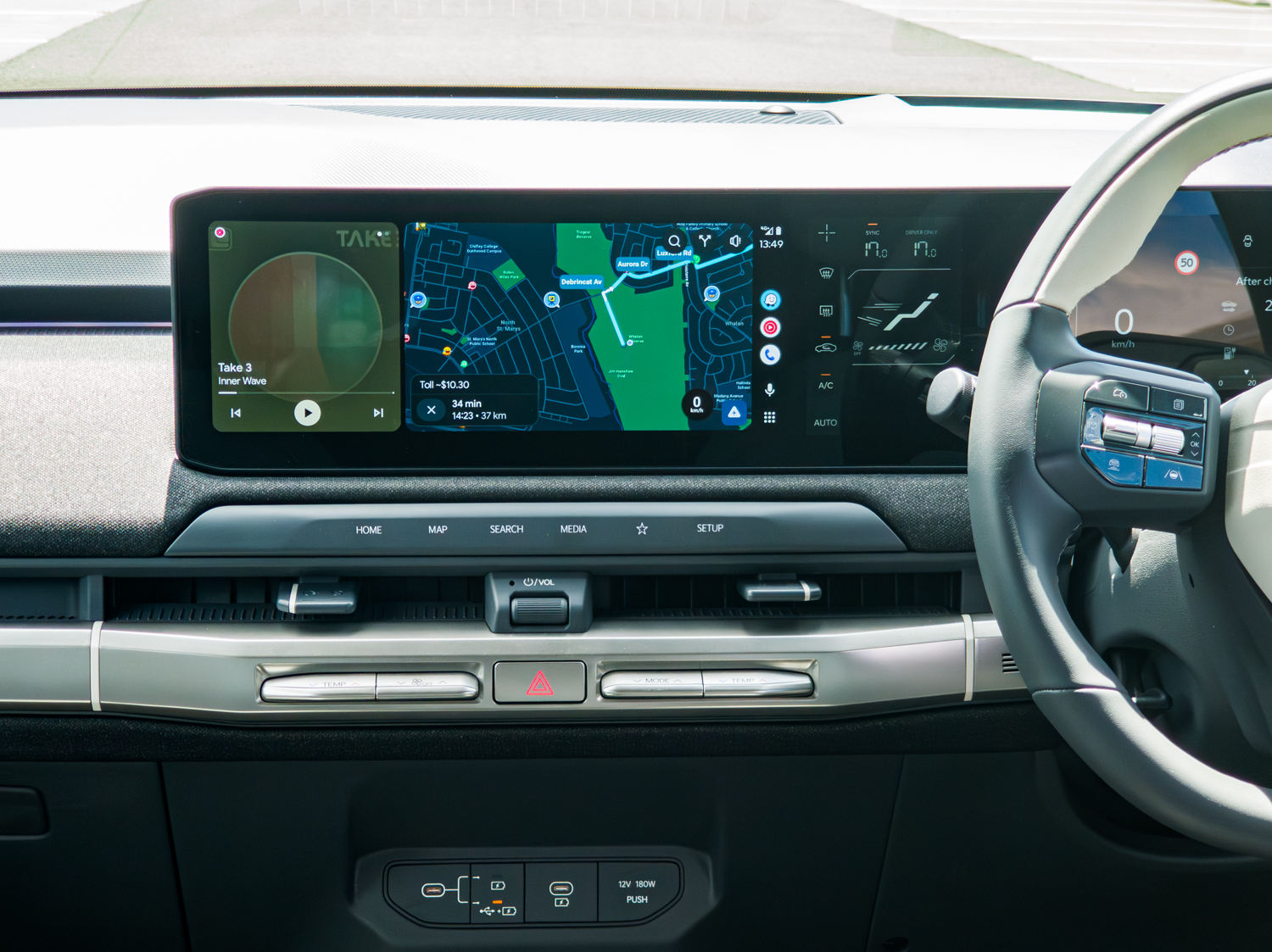
Every EV3 gets a triple-panoramic layout: a 12.3-inch driver display and a 12.3-inch touchscreen flanking a 5-inch climate strip. The GT-Line adds a head-up display and that eight-speaker Harman Kardon system on top. Wireless Apple CarPlay and Android Auto, DAB radio, satellite navigation, over-the-air updates and Kia Connect are all standard. The system is responsive and, more importantly, sensibly laid out. Those physical shortcut keys mean the screens stay out of your way rather than demanding constant attention, which after a week in some rivals feels like a small holiday.
Highlighted Features
- Vehicle-to-Load (V2L): run 220-240V appliances straight off the battery via the interior socket and adaptor, handy for camping, tools or a power cut.
- i-Pedal 3.0 one-pedal driving: smooth, well-judged regen that lets you drive largely on one pedal around town.
- Relaxation front seats with driver memory: GT-Line exclusive, they recline to let you rest in comfort while the car charges.
Engine and drivetrain
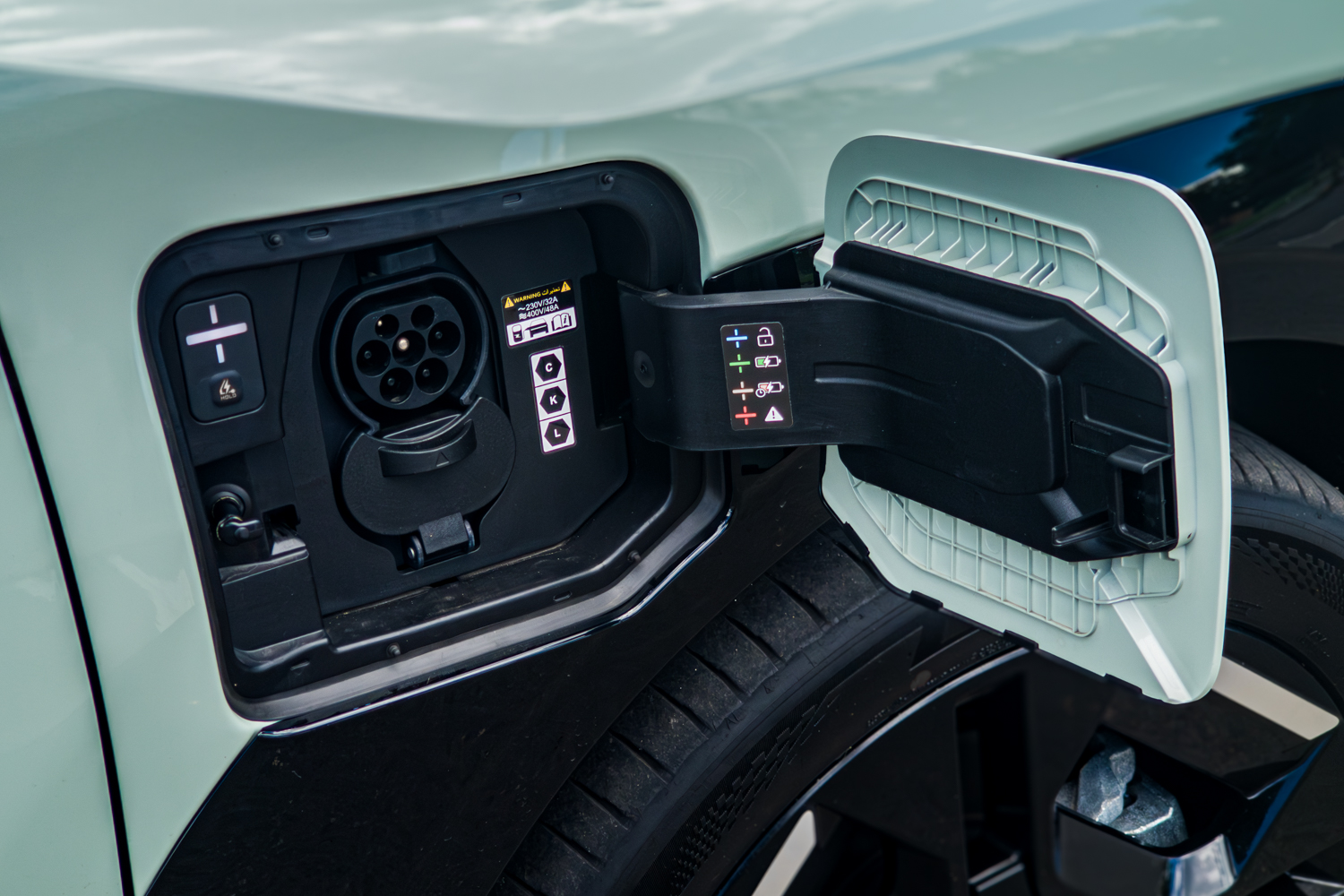
The GT-Line Long Range pairs a single front-mounted permanent-magnet motor with the larger 81.4kWh battery. That is 150kW and 283Nm through the front wheels, enough for a claimed 0 to 100km/h of 7.9 seconds. Charging is respectable rather than headline-grabbing. The EV3’s 400V system peaks at around 128kW, so on a 150kW DC charger, which is the current Australian norm, 10 to 80 per cent takes roughly 30 minutes. There is little point hunting out a 350kW ultra-rapid unit, because the car tops out well below what one can deliver anyway. A three-phase 11kW AC wallbox does 10 to 100 per cent in around seven and a half hours. The charge port lives on the driver’s side (the right, in our right-hand-drive cars) at the front. WLTP range is a strong 563km, and the real world, as it turns out, is not far off it.
What’s the 2026 Kia EV3 GT-Line like to drive?
Mechanically the GT-Line is identical to the rest of the Long Range EV3s, and it drives exactly like the mid-grade Earth I spent a week in, so the honest verdict carries straight over. The steering is fine. It is light, easy and perfectly judged for the car park, but nothing special, and at times it feels a little disconnected from the road, as though the assistance systems are quietly filtering the conversation. Performance tells a similar story. The 150kW motor is serviceable and gets on with the job, but it is no highlight; coming off punchier dual-motor EVs, it feels a touch sluggish. On wet uphill starts the front wheels can briefly scrabble for traction, a reminder that this is a near-1.9-tonne front-driver with instant torque. There is a small irony in the spec sheet, too: the cheapest, lightest Air Standard Range is actually the quickest EV3 of the lot.
What it does do, it does smoothly. The ride is absorbent and settled over Australian roads, even on the GT-Line’s larger wheels, the power is metered out without any jerkiness, and wind and road noise simply never registered over a week of driving, which is the mark of a quietly refined thing. The i-Pedal one-pedal mode is excellent, and the brake auto-hold takes the strain out of traffic. One word for the drive, then: composed.
Is the 2026 Kia EV3 GT-Line safe?
The EV3 carries a 5-star ANCAP rating from 2025, and it covers every version of the car, so the GT-Line is neither safer nor less safe than the cheapest Air. It scored 83% for adult occupant protection, 86% for children, 78% for vulnerable road users and 81% for safety assist, and the active-safety kit is comprehensive and standard right across the range.
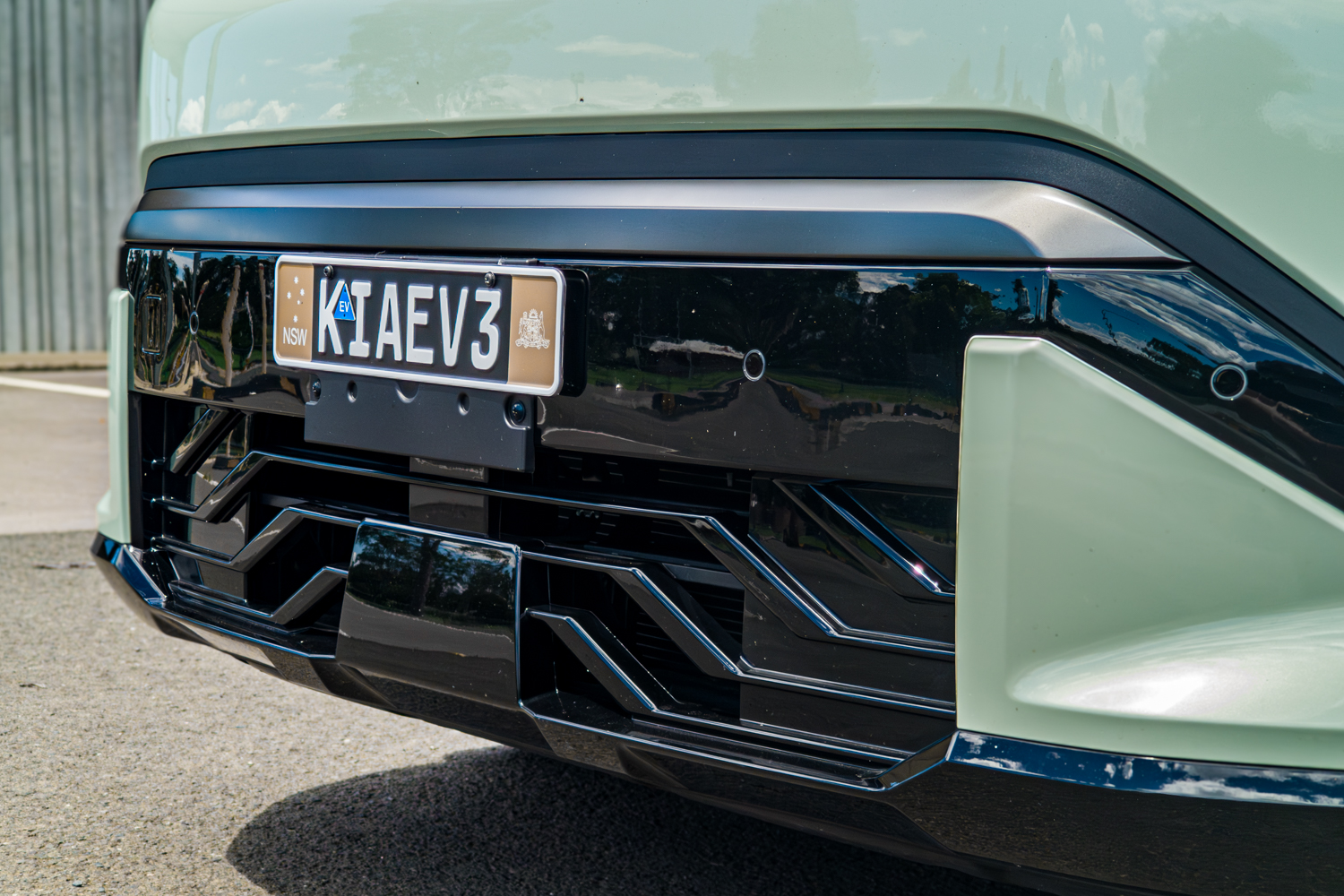
Two things nagged at me, though, and neither has much to do with how it does in a crash. Like every EV3, the driver-assist tech is a touch too eager: the speed-limit assist and the driver-attention monitor wanted switching off almost every drive, which wears thin fast. And even at this price, the GT-Line makes do with front and rear parking sensors and a reversing camera. No Australian EV3 gets a surround-view camera, and honestly, I didn’t miss it. A 360-degree camera is a lovely thing to have and a quick way to forget how to park without one.
- Autonomous Emergency Braking with car, pedestrian, cyclist and junction detection
- Lane Keeping Assist, Lane Following Assist 2 and Smart Cruise Control 2
- Blind-Spot Collision-Avoidance Assist with Rear Cross-Traffic alert and Safe Exit Warning
- Seven airbags, including a front-centre airbag; front and rear parking sensors with reversing camera
How much does the 2026 Kia EV3 GT-Line cost?
The GT-Line opens at $63,950 before on-road costs, which is roughly $68,000 drive-away depending on your state. That is roughly $5,000 above the mid-grade Earth. It is worth checking Kia’s live offers when you buy, as drive-away deals come and go.
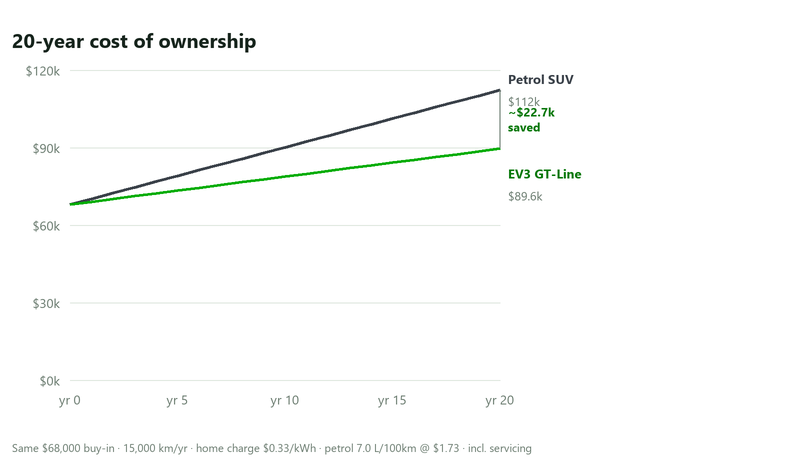
For that premium you get the visual GT-Line makeover (the LED cube headlights, full-LED tails, gloss-black trim, privacy glass and 19-inch alloys) plus the cabin upgrades that matter day to day: the sunroof, ambient lighting, head-up display, Harman Kardon audio, and the power-adjustable relaxation seats with driver memory. My honest read is that it is money well spent. Five grand is not a huge stretch on a car in this bracket, and these are comforts you will actually use for the life of the car, not showroom novelties you forget about in a fortnight.
How much does the 2026 Kia EV3 GT-Line cost to run?
On paper the ownership side is strong. Every EV3 gets Kia’s 7-year, unlimited-kilometre warranty, with the high-voltage battery covered for 7 years or 150,000km down to a 70% capacity floor. The one catch is servicing: Kia leaves its EVs out of the capped-price program its petrol cars enjoy, so you prepay instead, around $688 for three years, $1,308 for five or $1,929 for seven, with a visit due every 12 months or 15,000km. Roadside cover runs a year at a time and renews at each service for up to eight years.
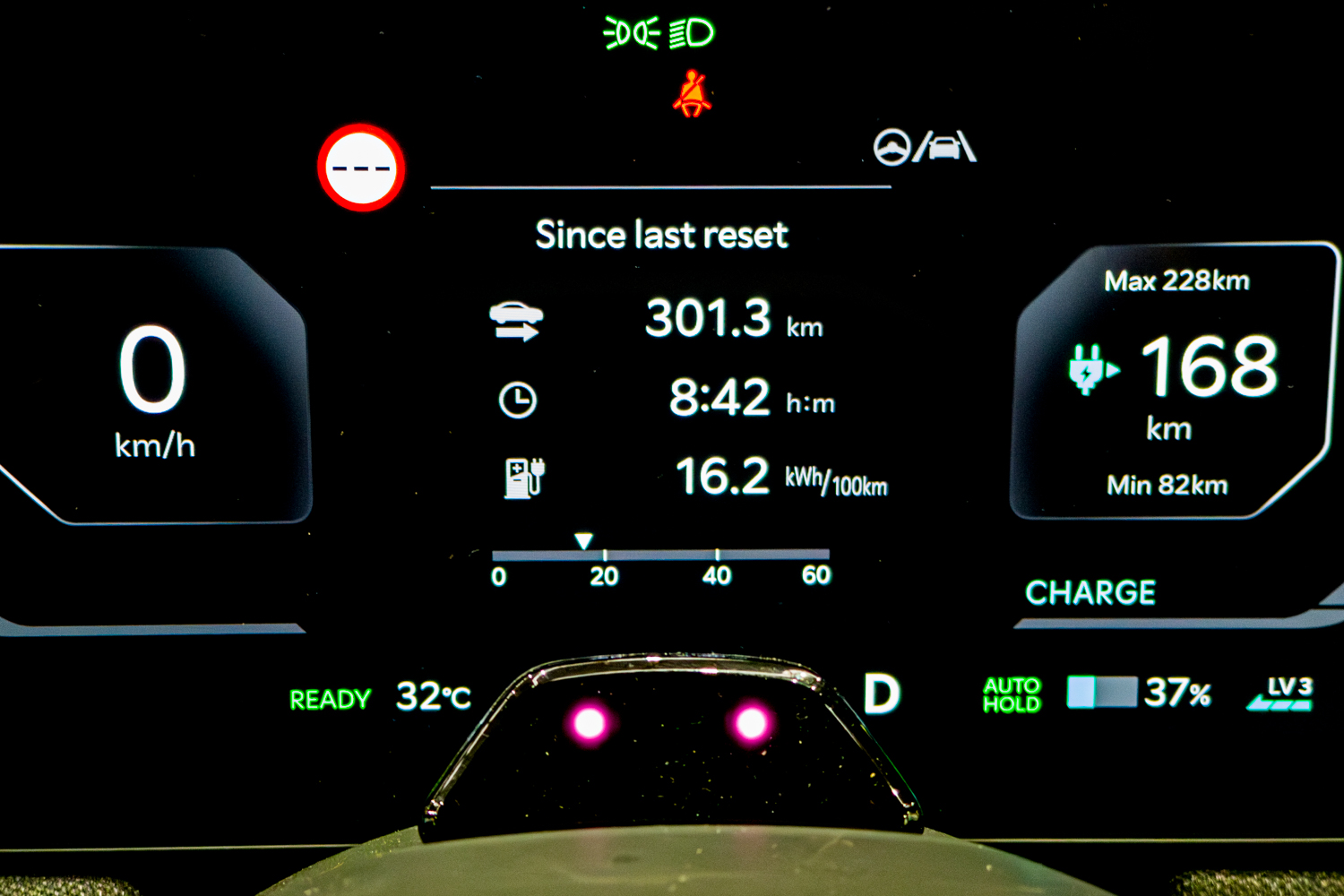
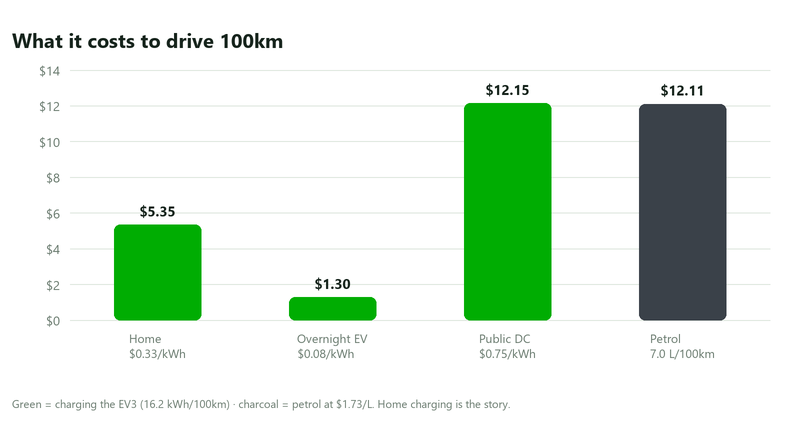
Running it is where an efficient EV pulls ahead. Over my week the GT-Line averaged 16.2kWh/100km, matching Kia’s claim to the decimal. Charge at home on a standard tariff around $0.33/kWh and that is about $5.35 per 100km; shift to a cheap overnight EV plan near $0.08/kWh and it drops to barely $1.30. Lean on premium public fast-charging at about $0.75/kWh, though, and it climbs to roughly $12 per 100km, so charging at home rather than out is where the savings really live. A 10 to 80 per cent top-up moves about 57kWh, so call it $19 at home or around $43 on public DC.
| Running costs | Details |
|---|---|
| Warranty | 7 years / unlimited km |
| Battery warranty (EV) | 7 years / 150,000km (to 70% capacity) |
| Servicing interval | 12 months / 15,000km |
| Capped-price servicing | Prepaid EV plan: ~$688 (3yr) / $1,308 (5yr) / $1,929 (7yr) |
| Roadside assist | Up to 8 years (renewed at each scheduled service) |
| Claimed economy / efficiency | 16.2kWh/100km (WLTP) |
| Observed economy / range | 16.2kWh/100km over 301km (dead on the claim); ~500km real-world |
| Energy / fuel cost | ~$5.35/100km home flat, ~$1.30/100km overnight EV plan, ~$12/100km public DC |
Final thoughts
The EV3 GT-Line is not the car for someone chasing pace or driver involvement. If that is you, keep walking, because the flagship badge changes nothing under the skin. What it is, is the plushest version of one of the most sensible, easy-to-live-with small EVs on sale: roomy beyond its size, impressively efficient, properly safe, and finished with a cabin that genuinely feels above its money. The difference on the GT-Line is that the extra $5,000 buys real, daily comfort rather than empty flash, which makes it easy to recommend to anyone keeping the car a while. If you only want the space and the safety net, the cheaper Earth still does the job. But if you can stretch, the GT-Line is the EV3 at its most likeable, and for a lot of buyers it will be all the electric SUV they ever actually need.
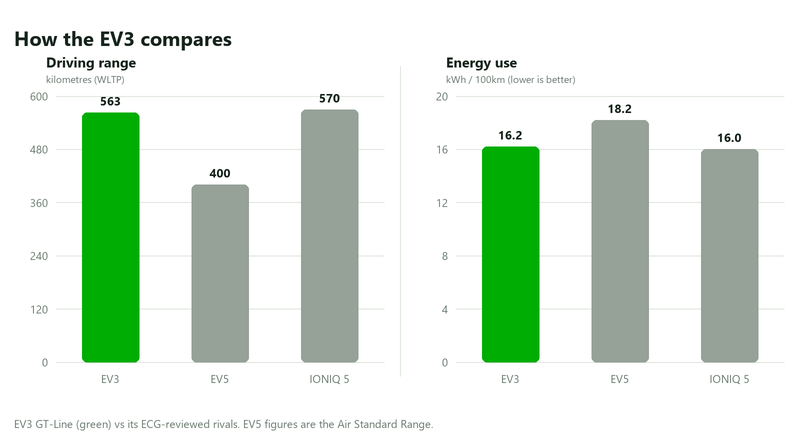
How does the 2026 Kia EV3 GT-Line compare?
The natural cross-shops are its own Kia family and the odd cousin. The larger Kia EV5 undercuts it and offers a bigger boot, but its Standard Range trades away range; the E-GMP Hyundai IONIQ 5 is roomier and longer-legged again, but steps up in size and price. The EV3’s pitch is efficiency and value in a tidier package. Note the figures below sit on slightly different price bases (the EV5 quoted drive-away, the others before on-roads), so confirm drive-away for your postcode.
| Spec | Kia EV3 GT-Line | Kia EV5 (Air SR) | Hyundai IONIQ 5 (Elite) |
|---|---|---|---|
| Price (from) | ~$63,950 (before on-roads) | ~$56,770 (drive-away) | ~$81,200 (before on-roads) |
| Power | 150kW | 160kW | 168kW |
| Range / economy | 563km · 16.2kWh/100km | 400km · 18.2kWh/100km | 570km · 16.0kWh/100km |
| Boot (min) | 460L | 513L | 520L |
| Warranty | 7 yr / unlimited km | 7 yr / unlimited km | 5 yr / unlimited km |
2026 Kia EV3 GT-Line — Frequently Asked Questions
How far does the Kia EV3 GT-Line go on a charge?
Kia claims 563km (WLTP) from the 81.4kWh battery. In our week of mixed driving it averaged 16.2kWh/100km, matching the official figure, which works out to roughly 500km of real-world range.
How much does the Kia EV3 GT-Line cost in Australia?
It is priced from $63,950 before on-road costs, or roughly $68,000 drive-away depending on your state. Always confirm the drive-away figure for your postcode.
Is the Kia EV3 GT-Line worth it over the cheaper EV3 Earth?
Yes, if you want the plusher cabin. The roughly $5,000 step adds a sunroof, Harman Kardon audio, a head-up display and relaxation seats, comforts you use every day, on the same efficient and sensible EV. If you only want the space and safety, the Earth saves you money.
What rivals should I cross-shop against the Kia EV3?
The obvious rivals are the BYD Atto 3, MG S5 EV, Geely EX5 and Volvo EX30, plus its larger sibling the Kia EV5 and the Hyundai IONIQ 5 if you need more space.
Kia EV3 GT Line Details
| Specification | Details |
|---|---|
| Model | 2026 Kia EV3 GT-Line 2WD Long Range |
| Model Price | $63,950 before on-roads (approx. $68,000 drive-away depending on state) |
| Engine | Single front permanent-magnet synchronous motor |
| Drivetrain | Front-wheel drive |
| Power | 150kW |
| Torque | 283Nm |
| Battery Capacity / type | 81.4kWh lithium-ion |
| Voltage / Capacity | 400V / 237.3Ah |
| Range (WLTP) | 563km |
| Economy / efficiency | 16.2kWh/100km claimed (16.2kWh/100km observed) |
| Fast Charge / Home | 10-80% ~30min on a 150kW DC charger (~128kW peak); 10-100% ~7h30m (11kW AC, 3-phase) |
| 0-100kmh / Top Speed | 7.9s / 170km/h |
| CO2 Emissions | 0g/km (tailpipe) |
| Safety | 5-star ANCAP (tested 2025) |
| Servicing | 12 months / 15,000km; prepaid EV plan ~$1,929 / 7 years |
| Warranty | 7 years / unlimited km (HV battery 7 years / 150,000km) |
| Roadside Assist | Up to 8 years (with continued Kia servicing) |
| Specification | Details |
|---|---|
| Overall Length | 4,310mm |
| Width | 1,850mm |
| Height | 1,570mm |
| Wheelbase | 2,680mm |
| Wheels | 19-inch GT-Line alloy |
| Tyres | 215/50 R19 |
| Kerb Weight | 1,930kg |
| Boot Min | 460L (5 seats up) |
| Boot Max | ~1,250L (seats folded) |
| Towing Capacity | 1,000kg braked (750kg unbraked) |
| Turning Circle | 10.4m |
| Max ground clearance | 140mm |
| Payload (kg) | ~425kg |
| GVM (kg) | 2,355kg |
For the latest pricing and to book a test drive, head to the official Kia Australia site.
2026 Kia EV3 GT-Line — Buyers could also look at:
The score, itemised
7.5 overall- 7.0 Behind the Wheel
- 8.0 Comfort
- 8.0 Equipment
- 6.0 Performance weakest
- 7.0 Ride and Handling
- 8.0 Practicality
- 8.0 Fit for Purpose
- 8.0 Style / Appeal
- 8.0 Technology / Connectivity
- 7.0 Value for Money