The 2026 Genesis GV70 2.5T Advanced is a 224kW turbo-four luxury SUV at approximately $80,300 before on-road costs, built for an upmarket family that wants the finer things and the practicality.
It’s smooth, quiet and sprightly, the cream cabin calms the drive, the back seat took me at six foot three, and the rotary controls keep your fingers off the 27-inch screen. Worth weighing up before you buy: 10.3 litres per 100km claimed, on 95 RON, an ANCAP rating from 2021 that expires in December 2027, and the Signature’s Bang & Olufsen, rear climate and heated wheel aren’t on this grade. We scored it 7.9 out of 10.
Turbochargers are meant to make cars more efficient. That’s the whole reason there’s a 2.5-litre four under the bonnet of the Genesis GV70 2.5T Advanced instead of the 3.5-litre V6, and it’s why a petrol SUV is getting a week on Eco Car Guide. Genesis claims 10.3 litres per 100km for the four against 11.3 for the six, with 224kW instead of 279kW.
The Advanced is the entry point to the GV70, at approximately $80,300 before on-road costs, and it lands among the BMW X3, Mercedes-Benz GLC, Audi Q5, Lexus NX and Volvo XC60. The electric version of the same car, the Electrified GV70, sits more than $50,000 above it on current listings.
2026 Genesis GV70 2.5T AWD |
Advanced — at a glance |
|---|---|
| Price | Approximately $80,300 before on-road costs (roughly $86,000 drive-away, depending on your state) |
| Powertrain | 2.5-litre turbo-petrol four-cylinder, 8-speed automatic, all-wheel drive |
| Power / torque | 224kW / 422Nm |
| 0–100 km/h | 7.2 seconds (claimed) |
| Fuel economy (claimed) | 10.3 L/100km combined (ADR 81/02), 95 RON |
| Fuel economy (observed) | Not Published |
| Warranty / servicing | 5 years / unlimited km; 5 years / 75,000km complimentary servicing |
| ANCAP | 5 stars (2021, expires December 2027) |
| The Good | The Not-So-Good |
|---|---|
| Smooth, quiet and sprightly, with a cabin that calms the drive. | 10.3 L/100km claimed, on 95 RON. The efficiency case is relative to the V6, not to a hybrid. |
| The interior is the standout, and the rotary controls let you work the screen without touching it. | The 5-star ANCAP rating is a 2021 result and expires at the end of 2027. |
| Five years of free servicing, a real spare wheel, and a back seat that took a six-foot-three adult. | The Advanced misses the Signature’s 16-speaker Bang & Olufsen, rear climate zone, heated wheel and Nappa leather. |
A week with the Genesis GV70
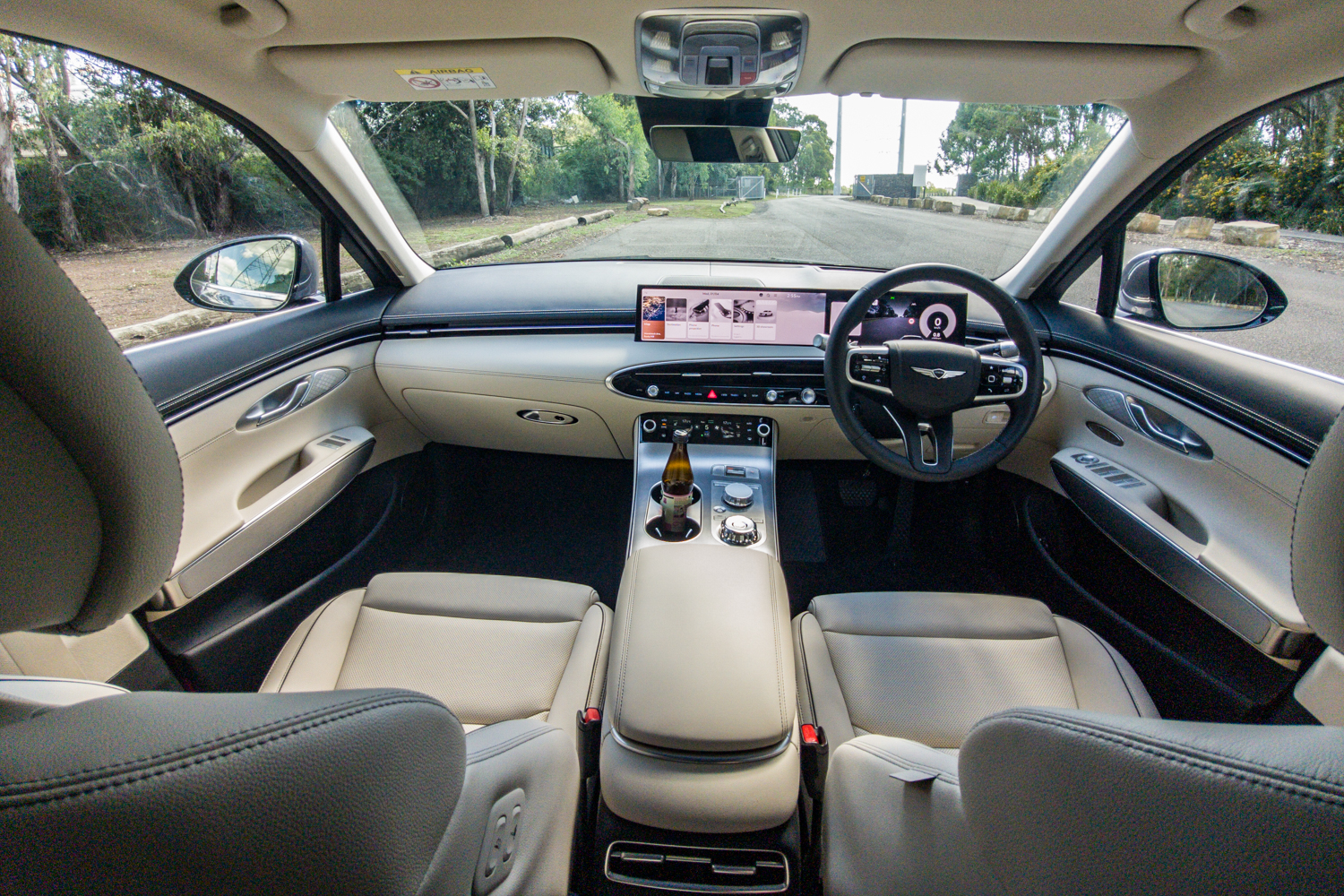
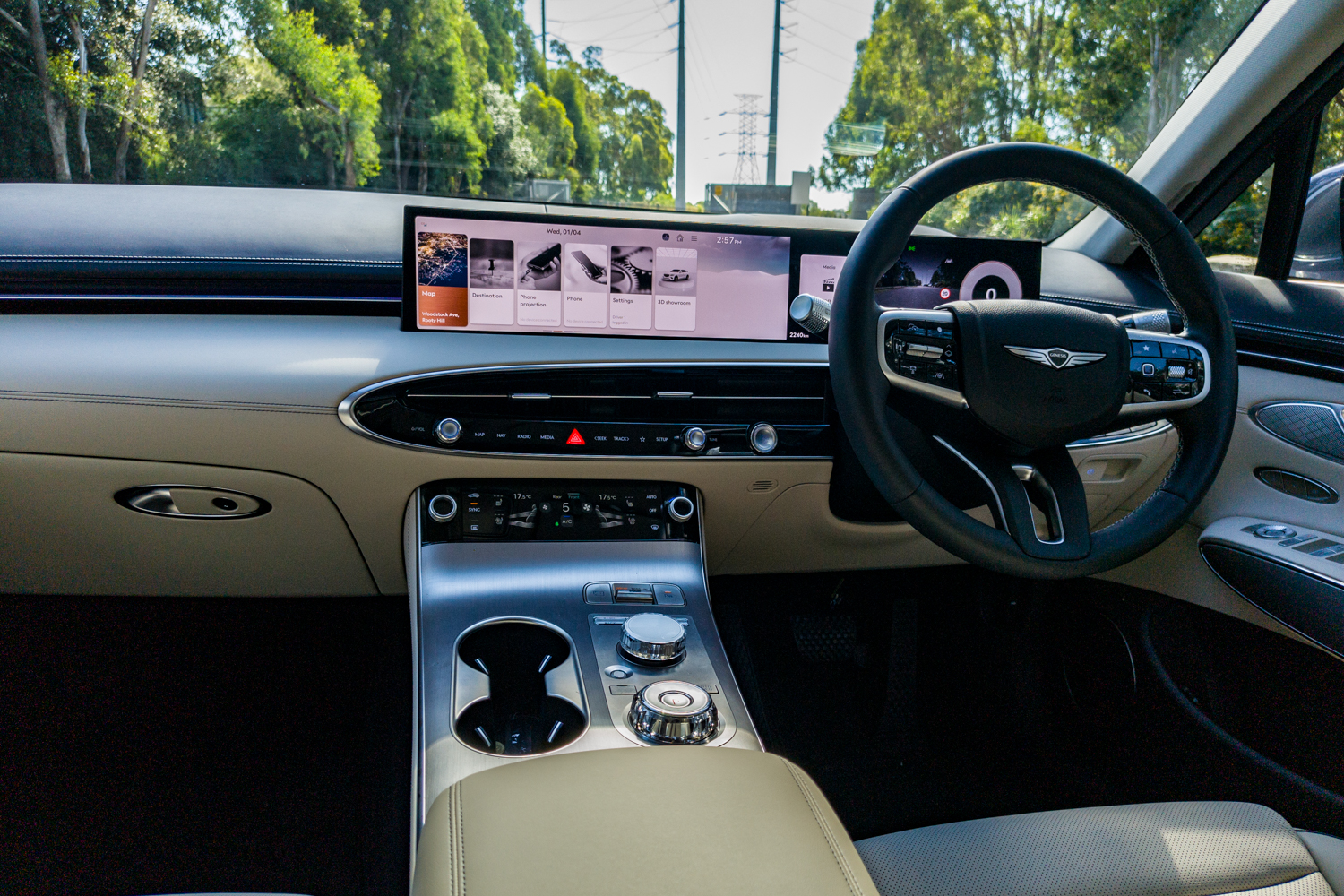
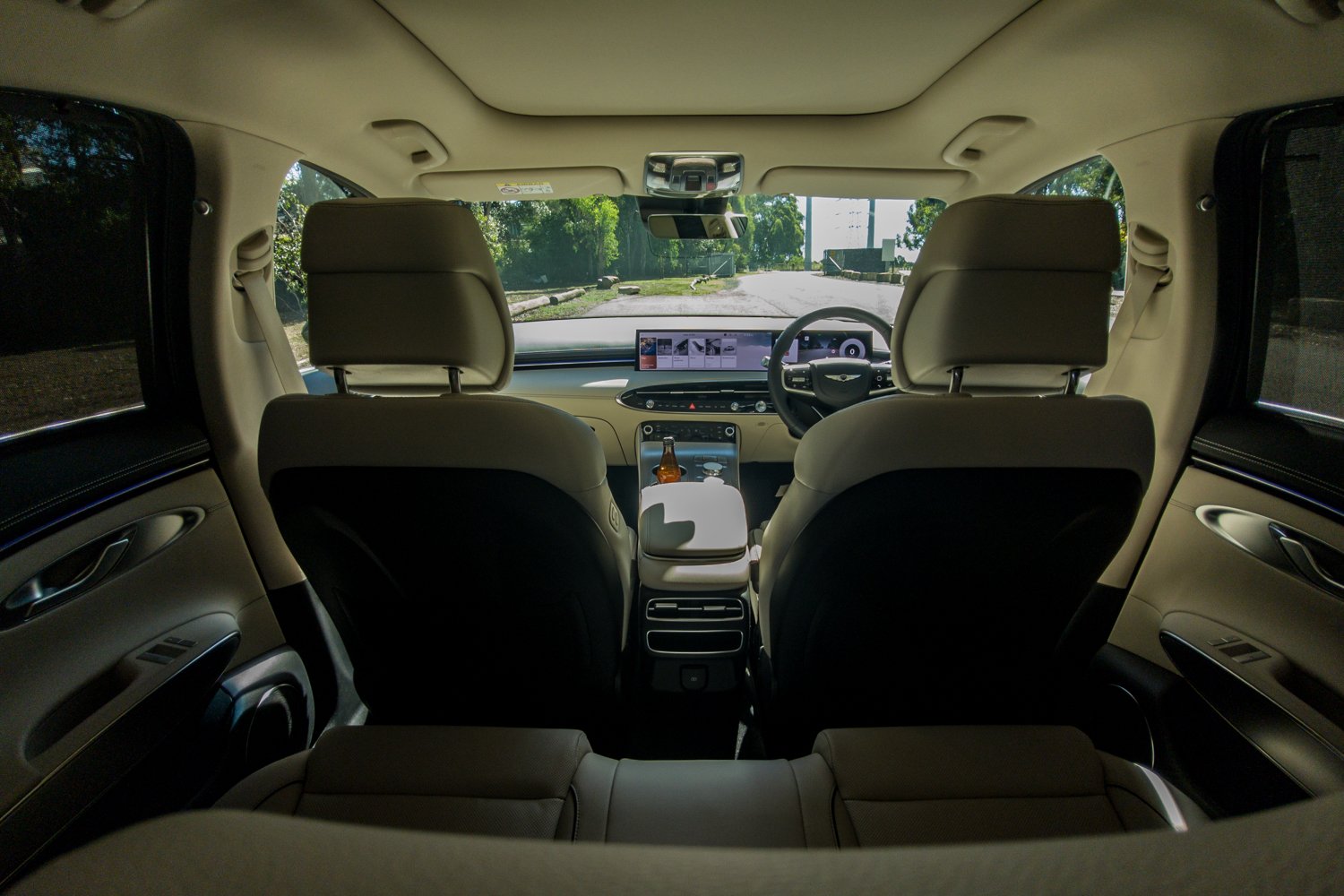
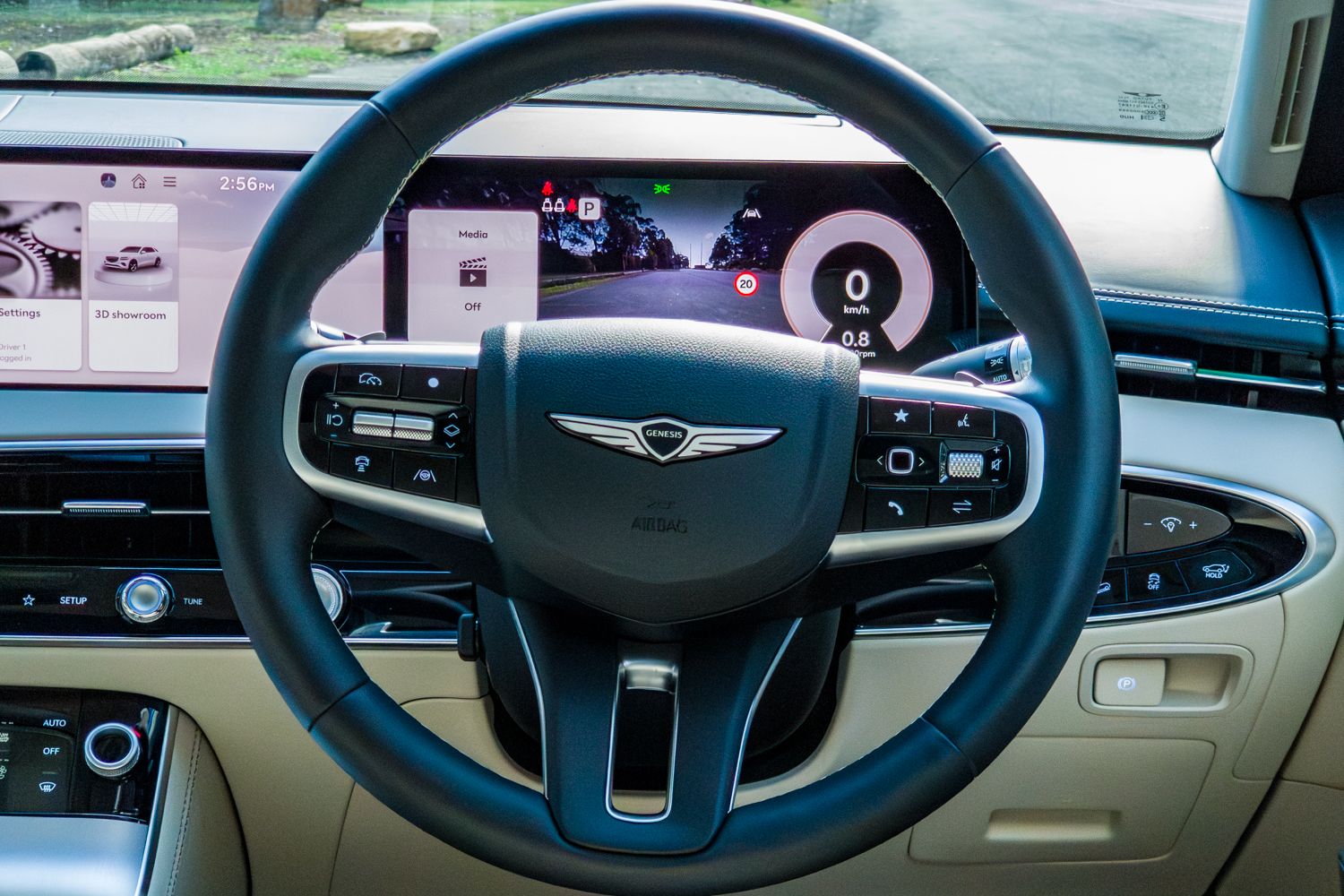
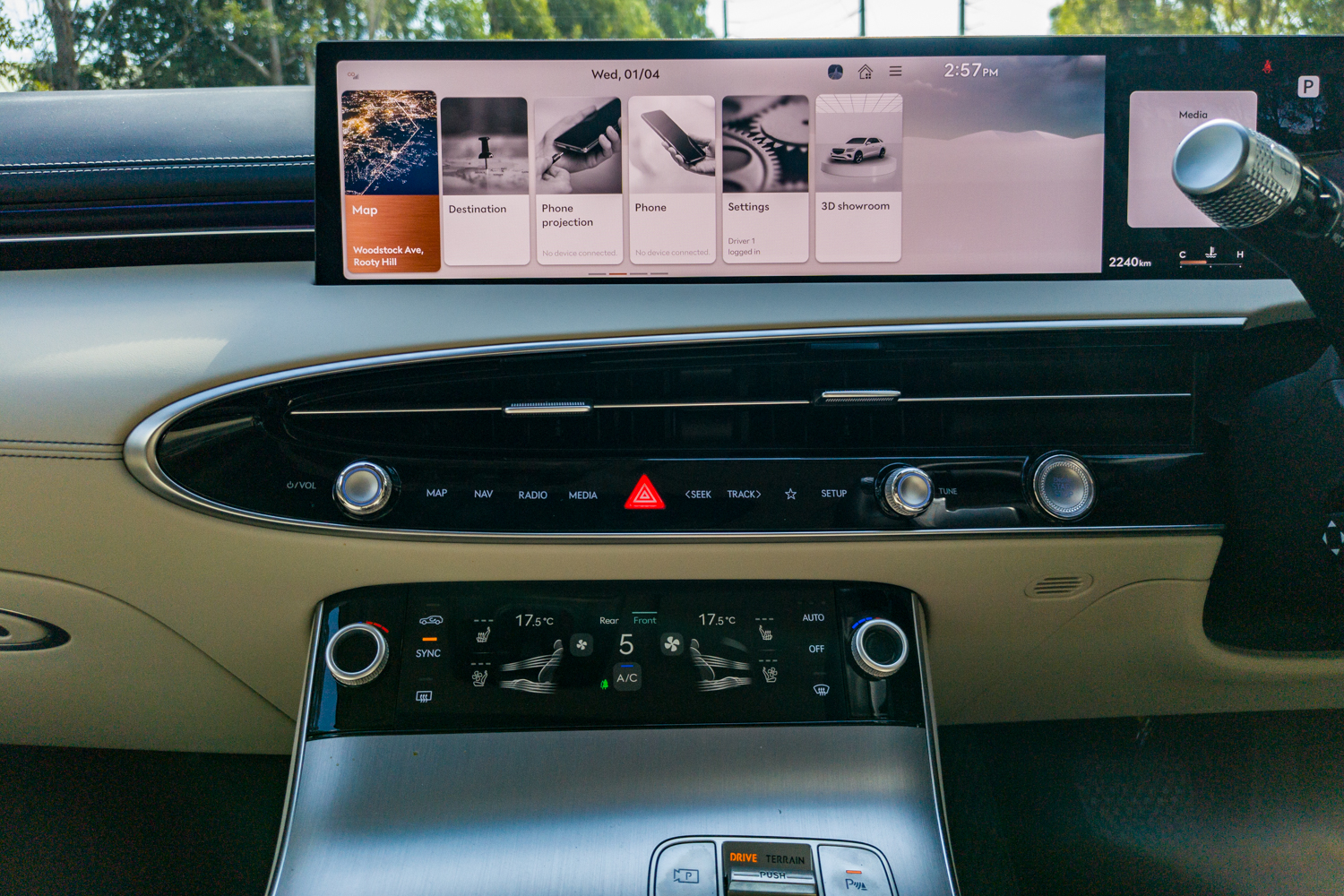
The interior was the standout of the week. The cabin is cream leather, brushed aluminium and one 27-inch OLED panel running from behind the wheel to the middle of the dash, and it gave the car a calming sensation while it was driving. That’s not a line about the ride. It’s the cabin doing the work.
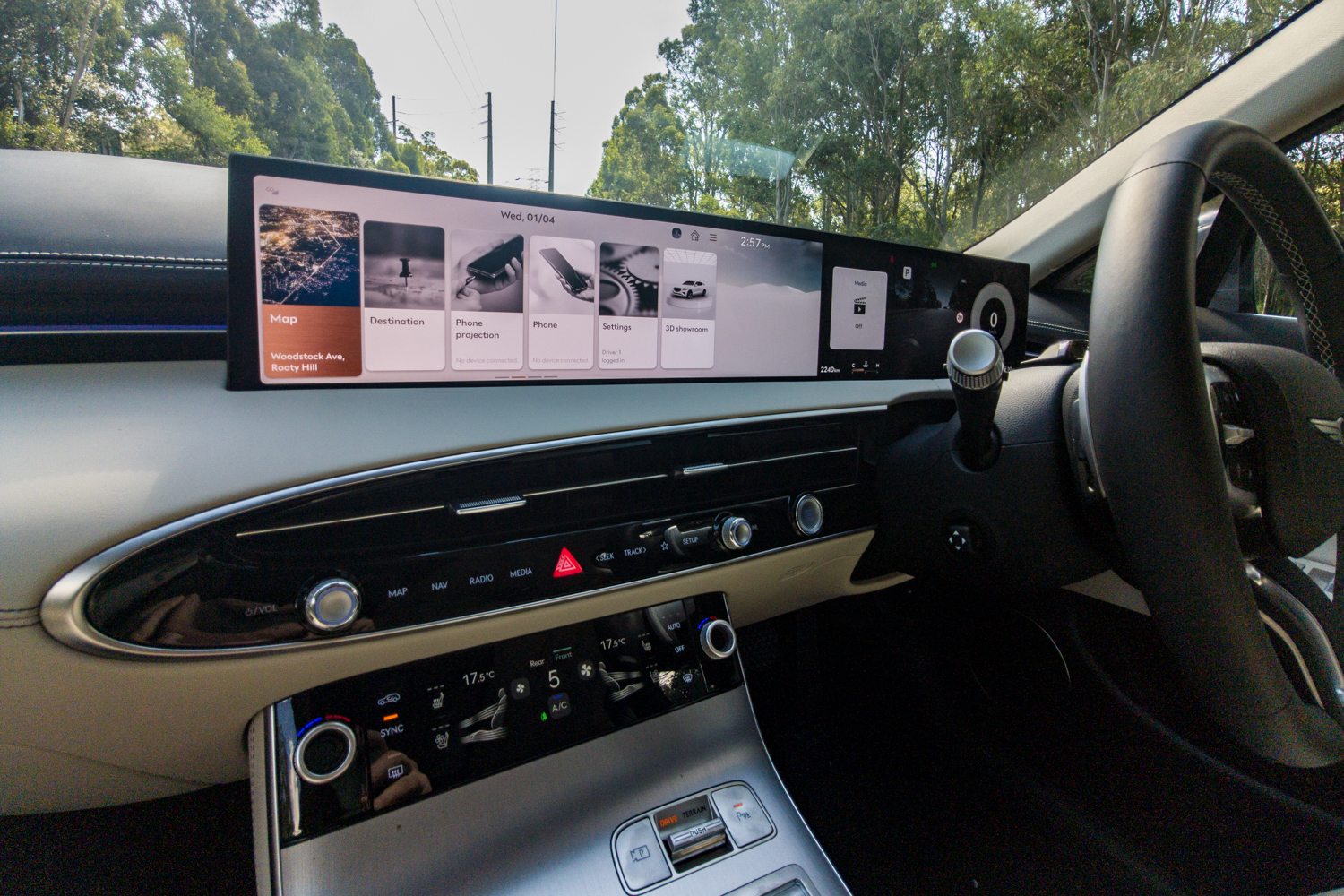
I ran the screen from the rotary controller on the console and the thumbwheels on the wheel, and flicked between the driver-display views the same way. It was intuitive, it did the quick tasks well, and I got through the week without putting my fingers all over the screen. In 2026 that counts as a luxury feature.
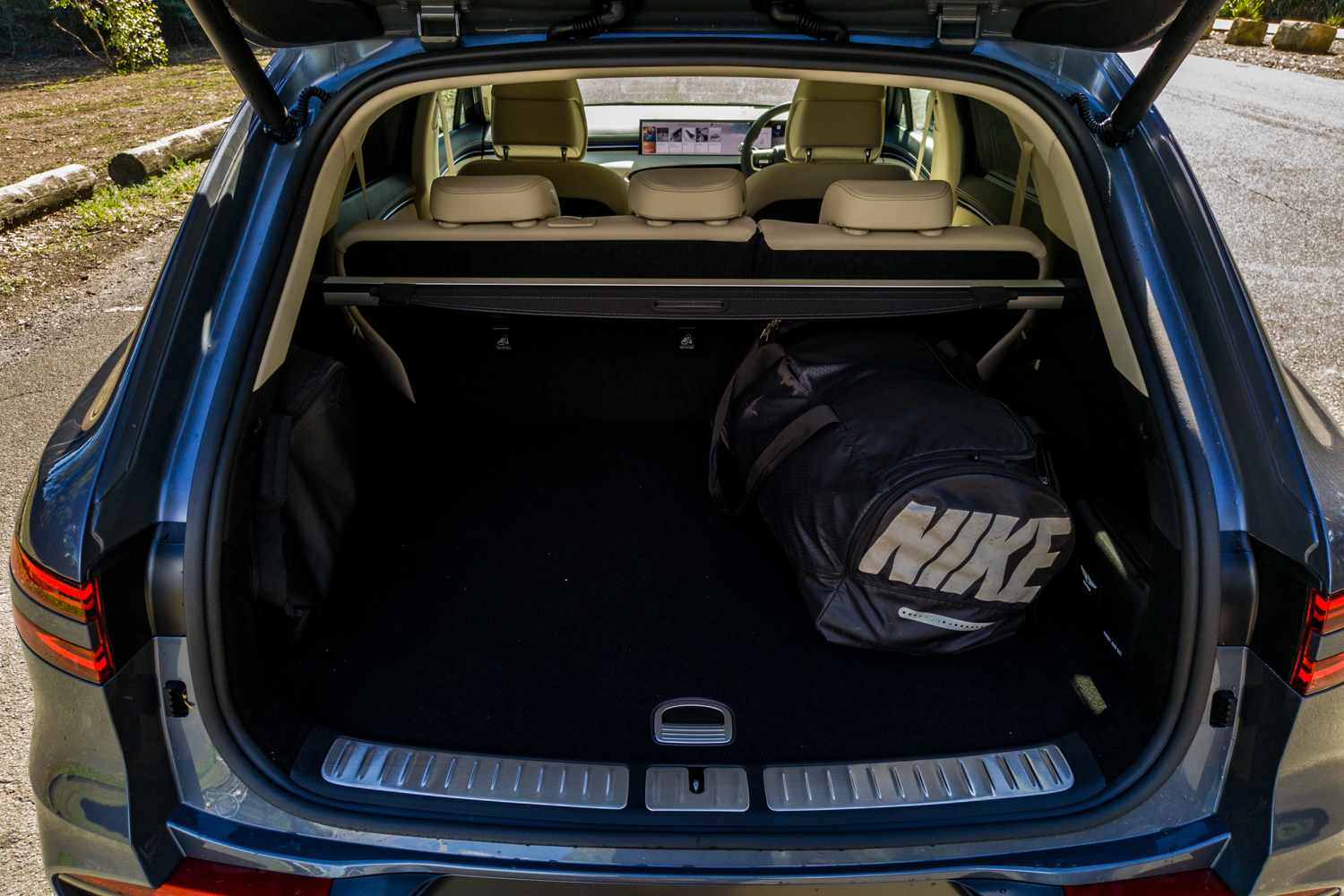
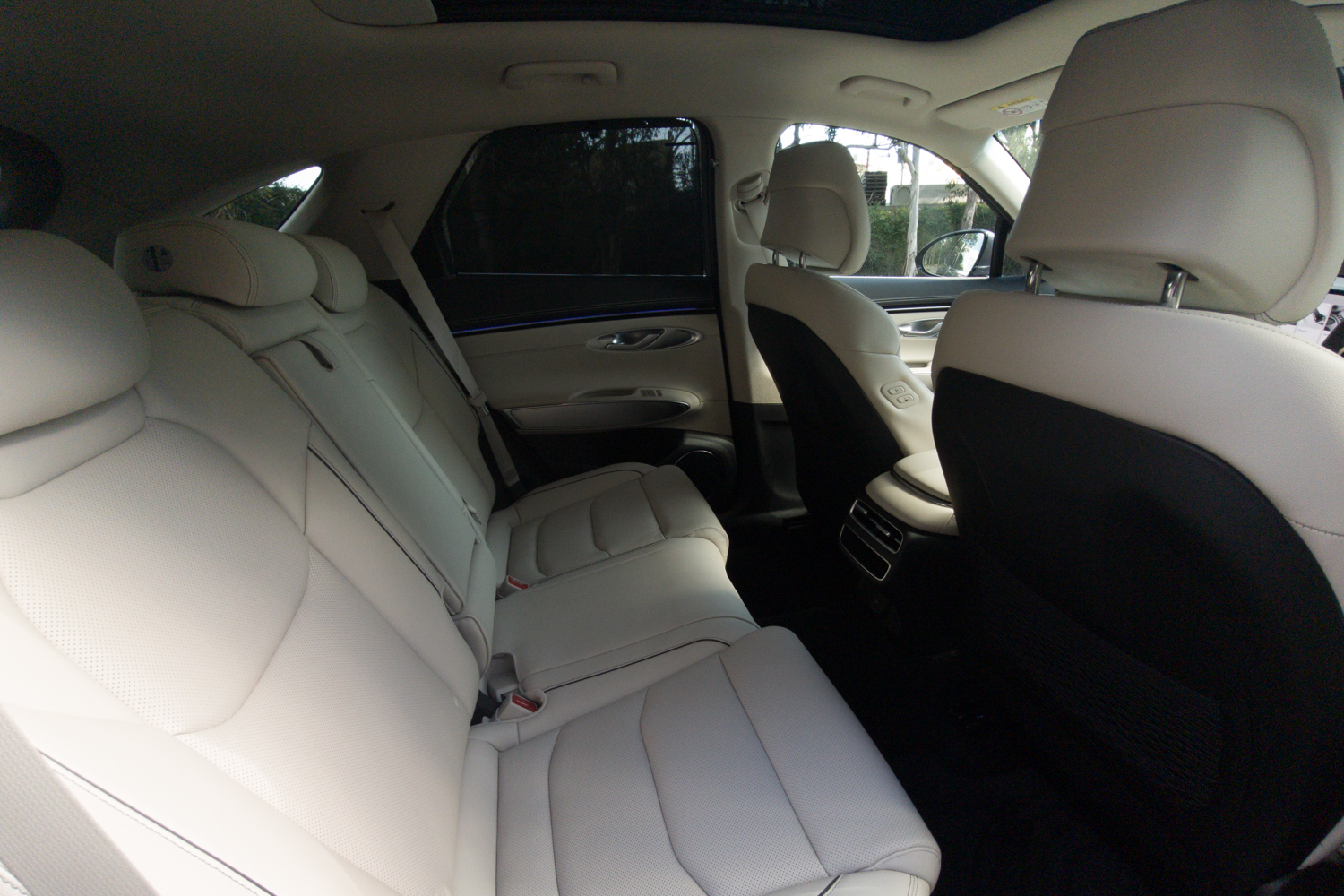
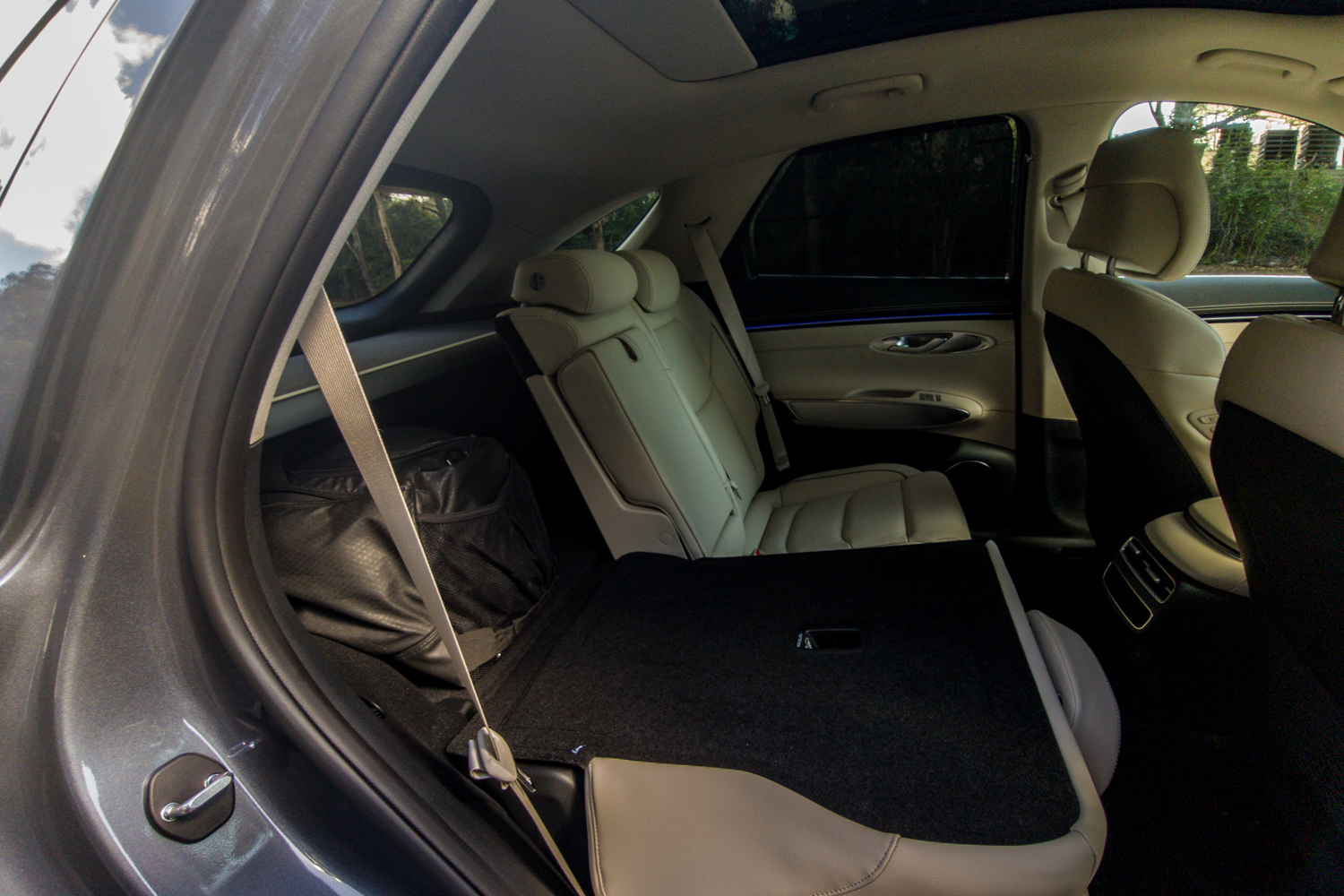
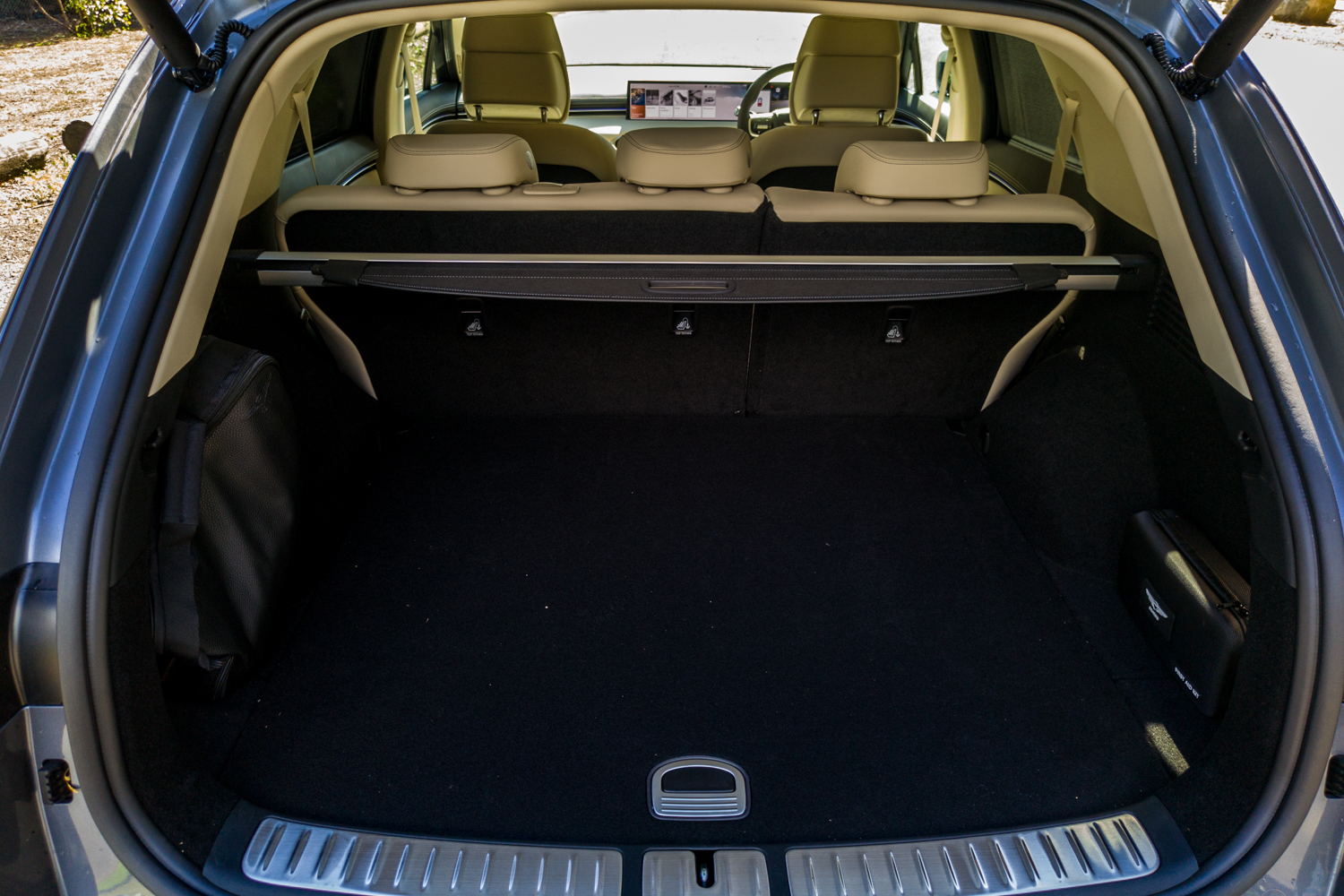
I sat in the back, and at six foot three it wasn’t claustrophobic. The seats were comfy and the privacy shutter on the rear door was a nice addition. The boot took my gym bag, which is full of my freezer work gear and goes everywhere with me, so it’s my standard frame of reference for boot space. It fitted with room to spare.
I didn’t note the trip computer, so there’s no fuel figure from me in this review. Genesis’s own claim is the number in the tables, and it’s labelled as a claim.
What does the Genesis GV70 look like?
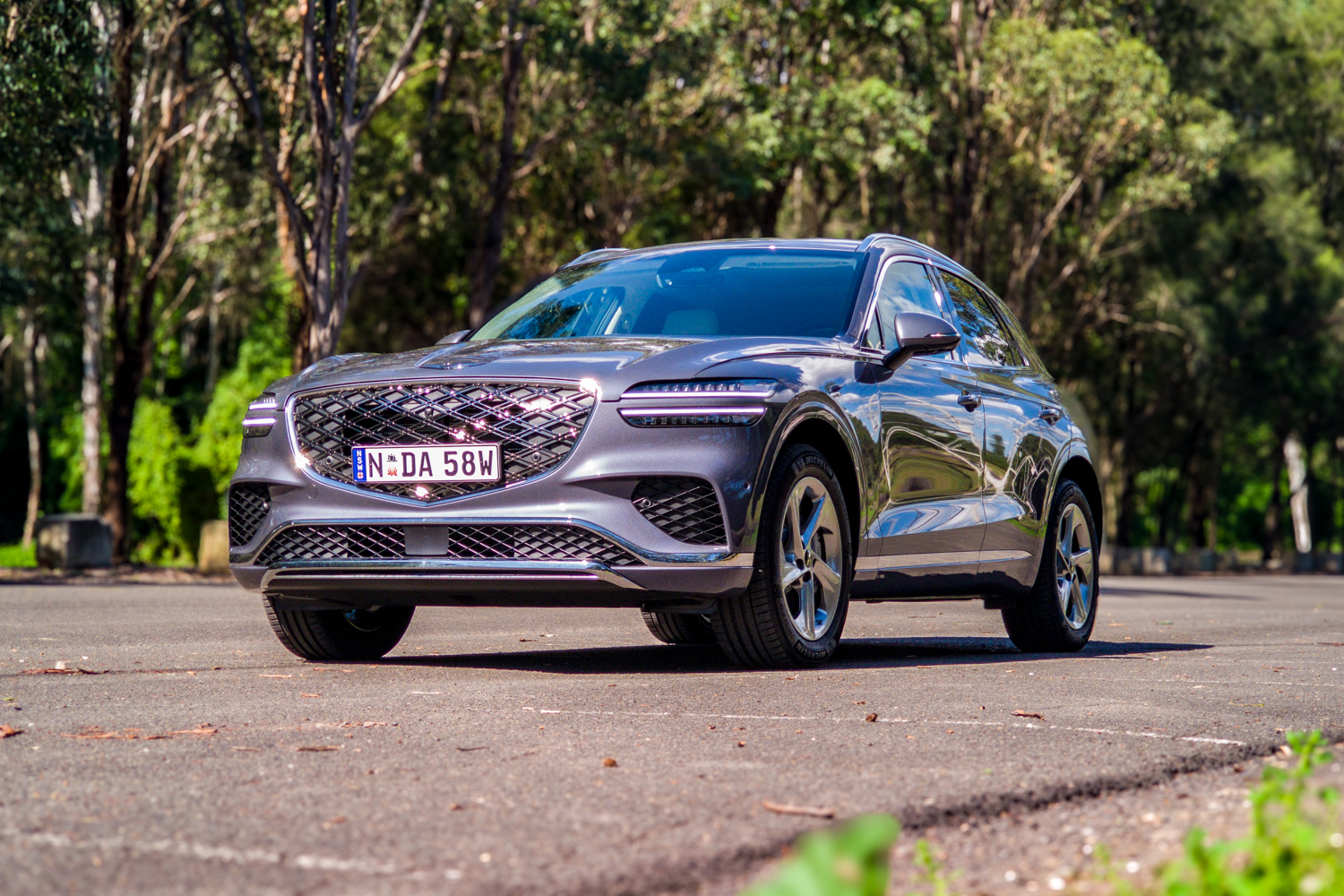
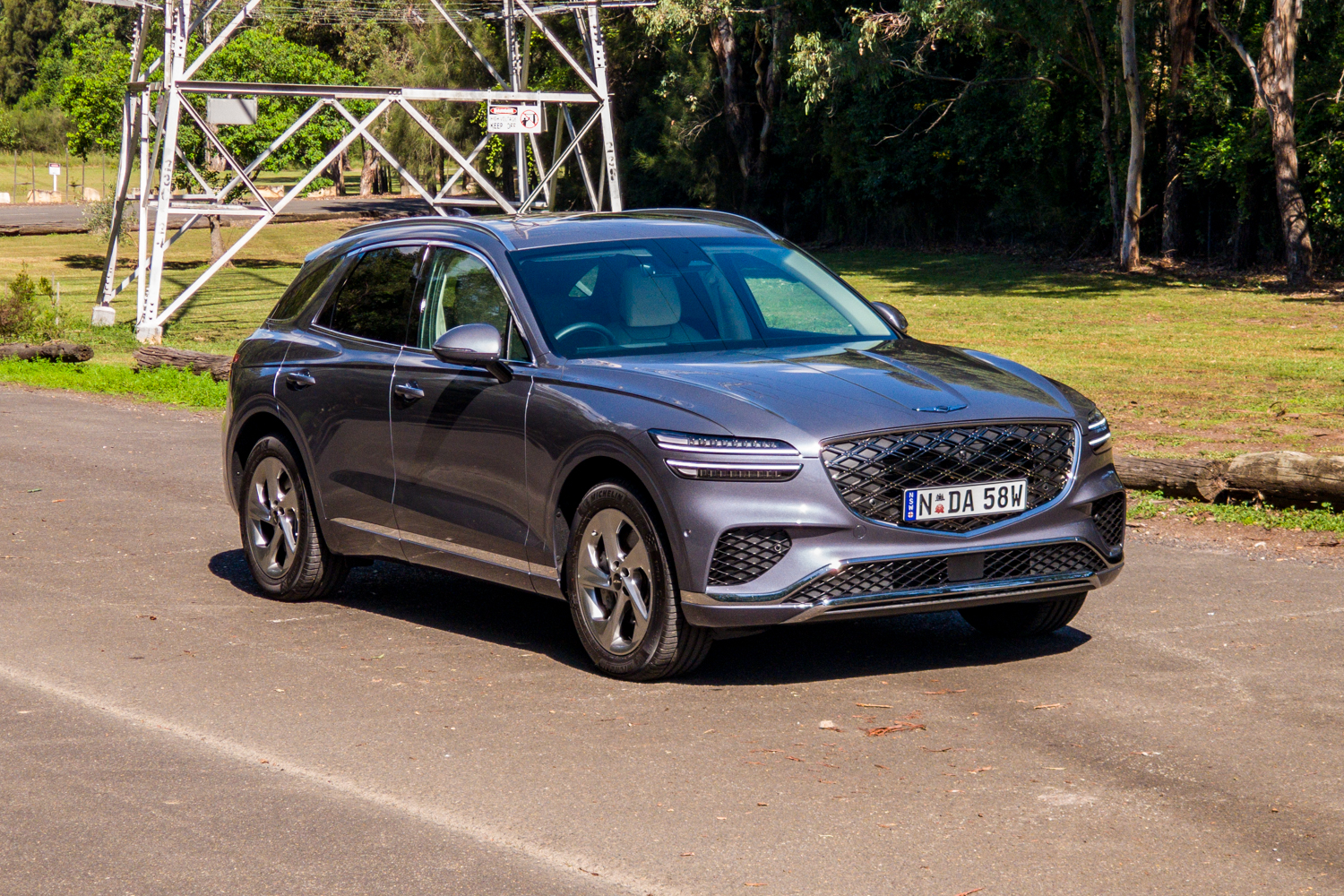
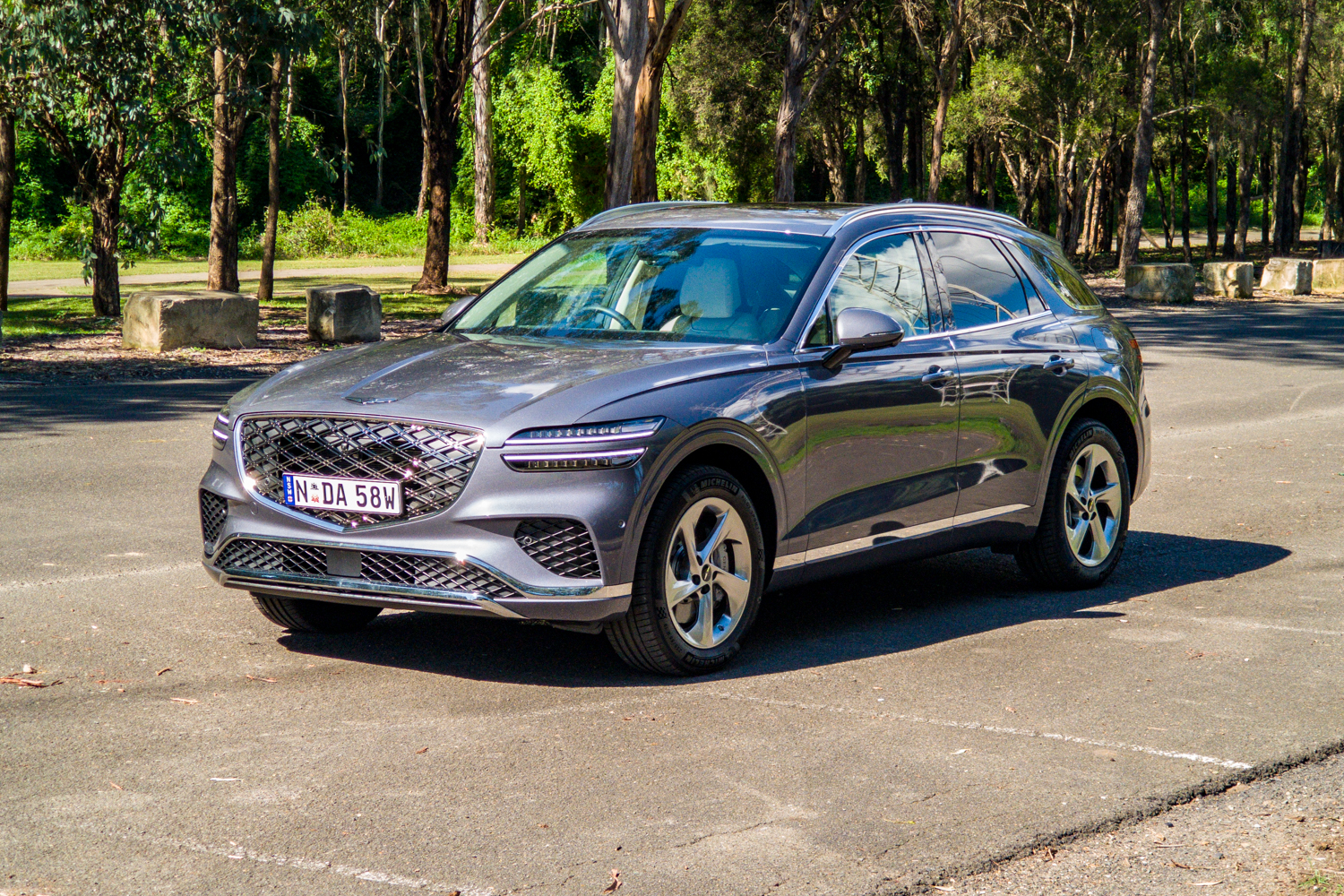
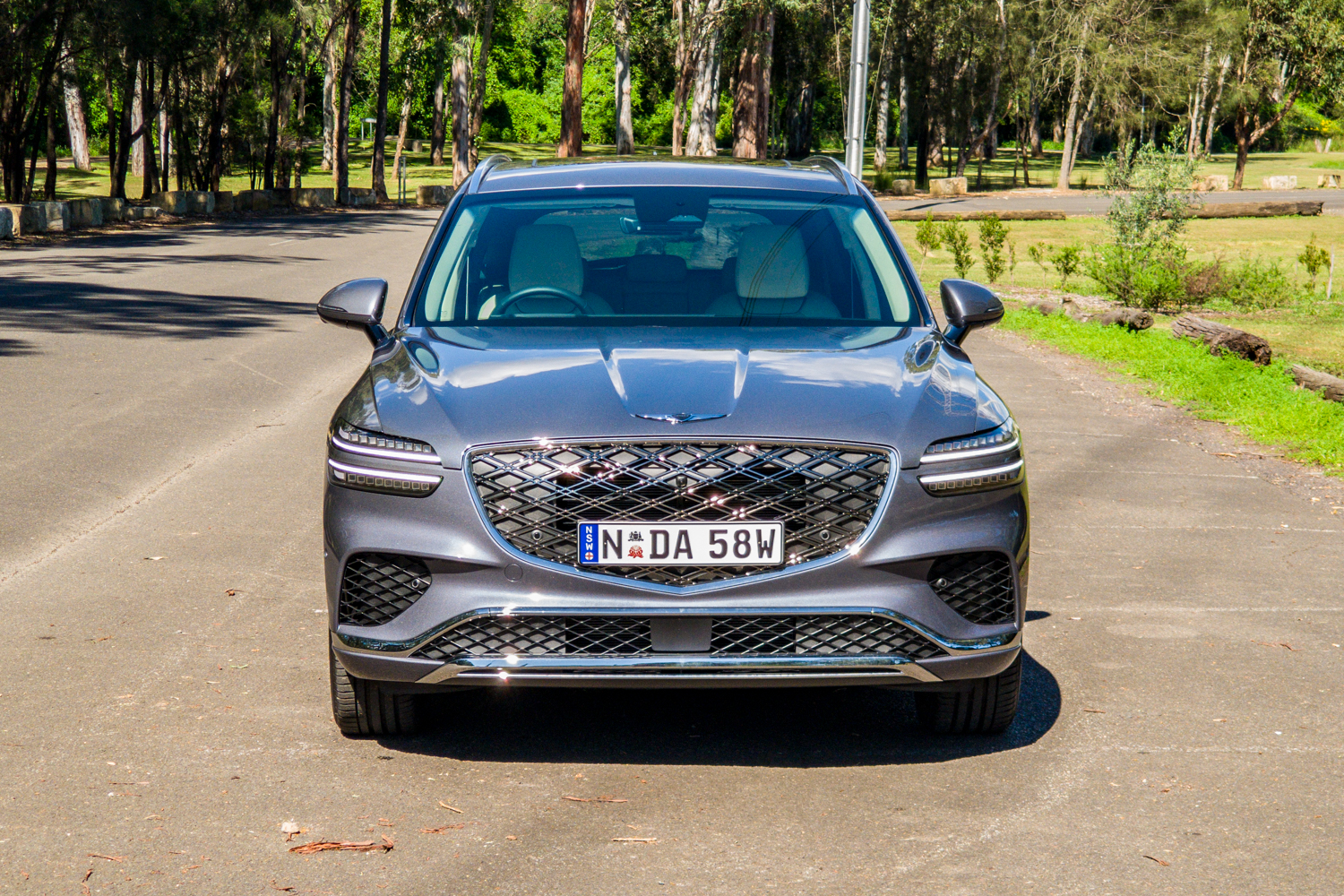
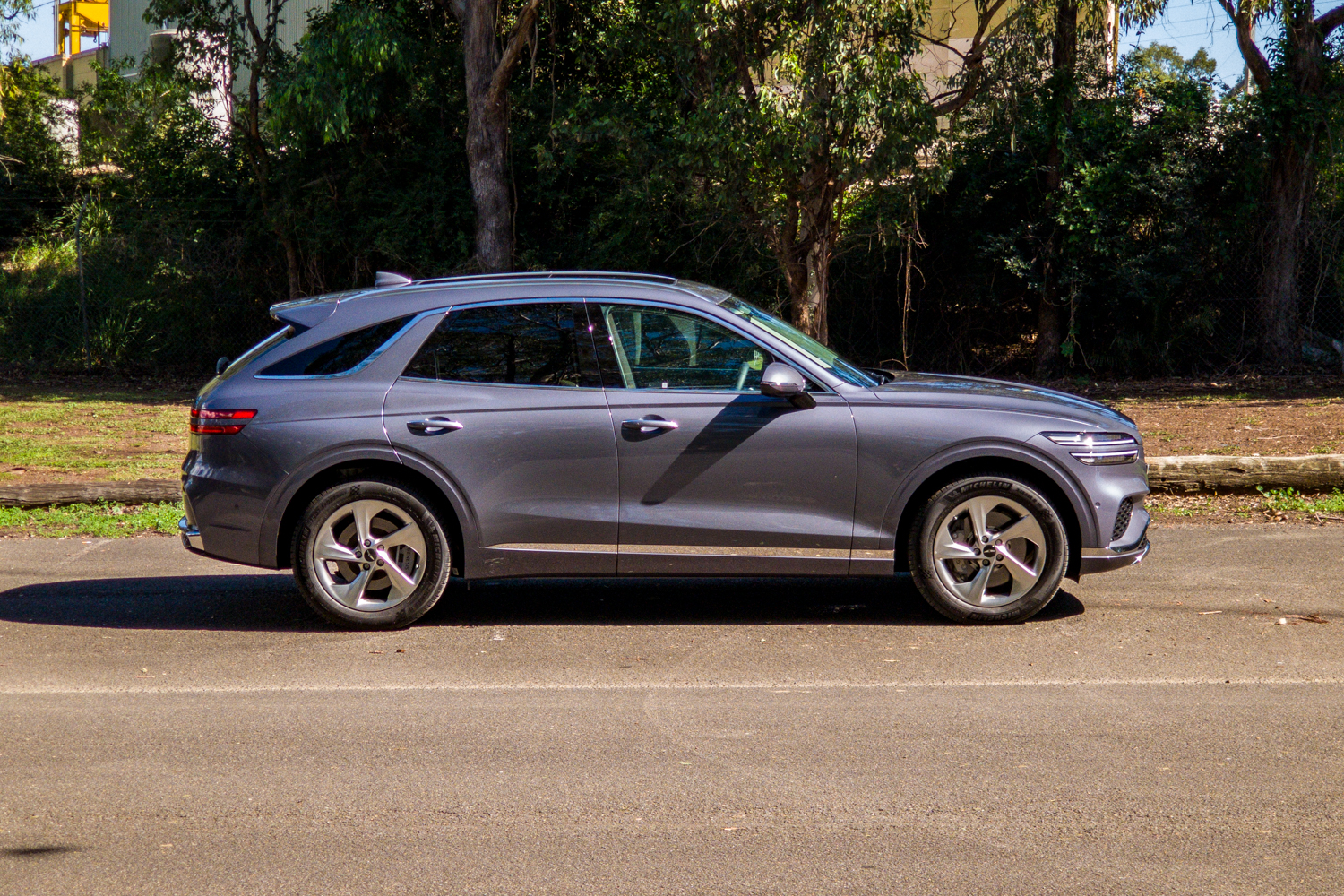
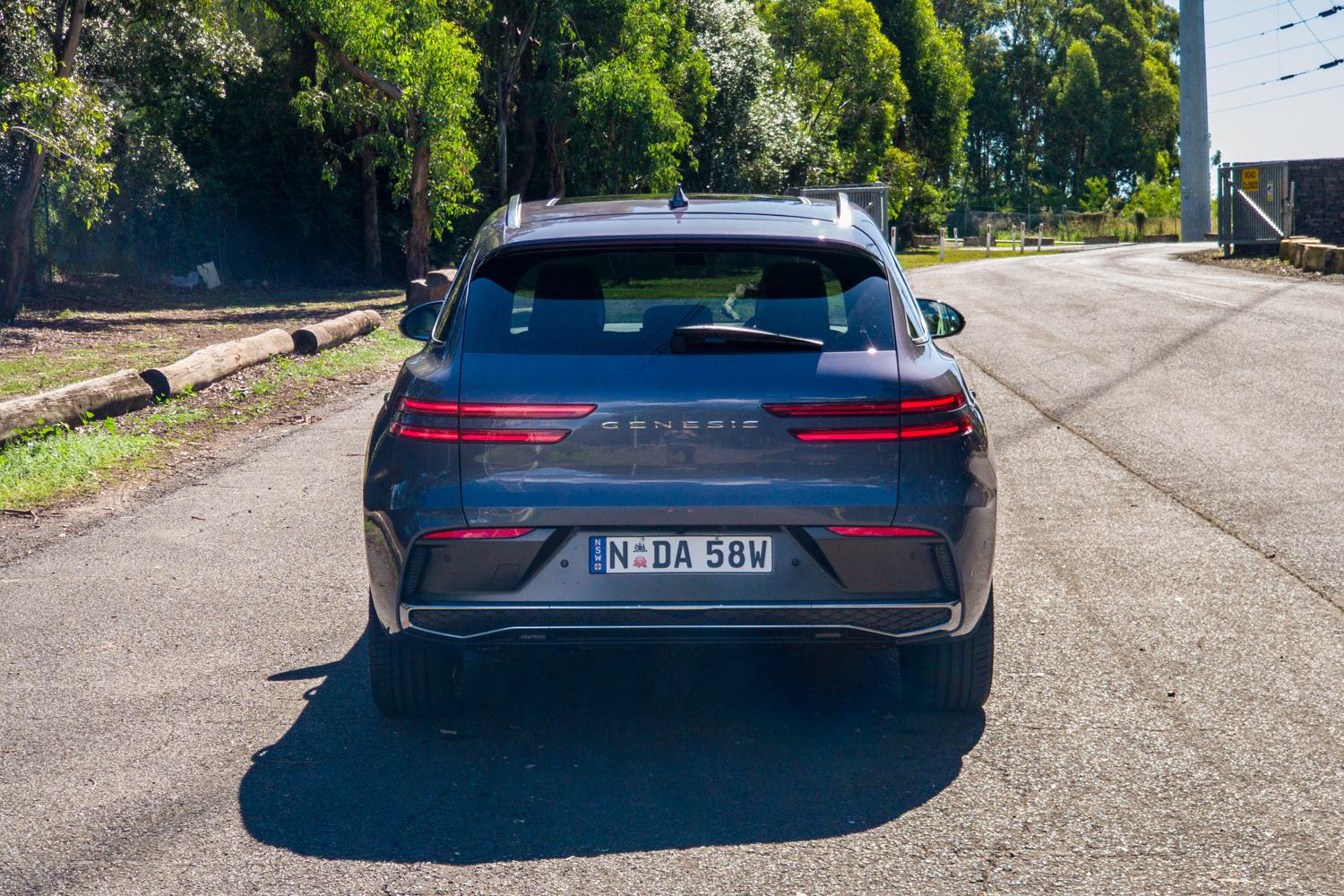
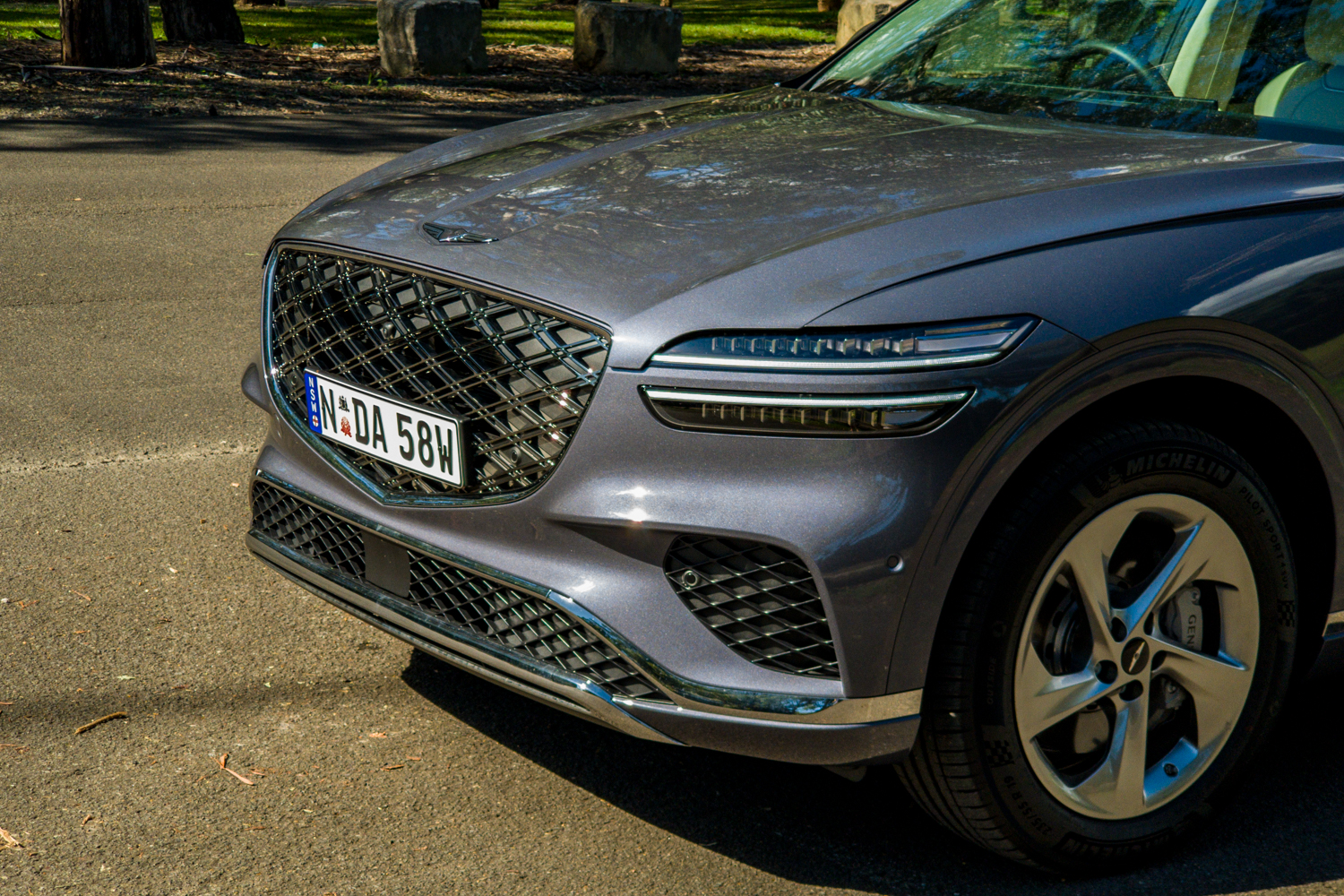
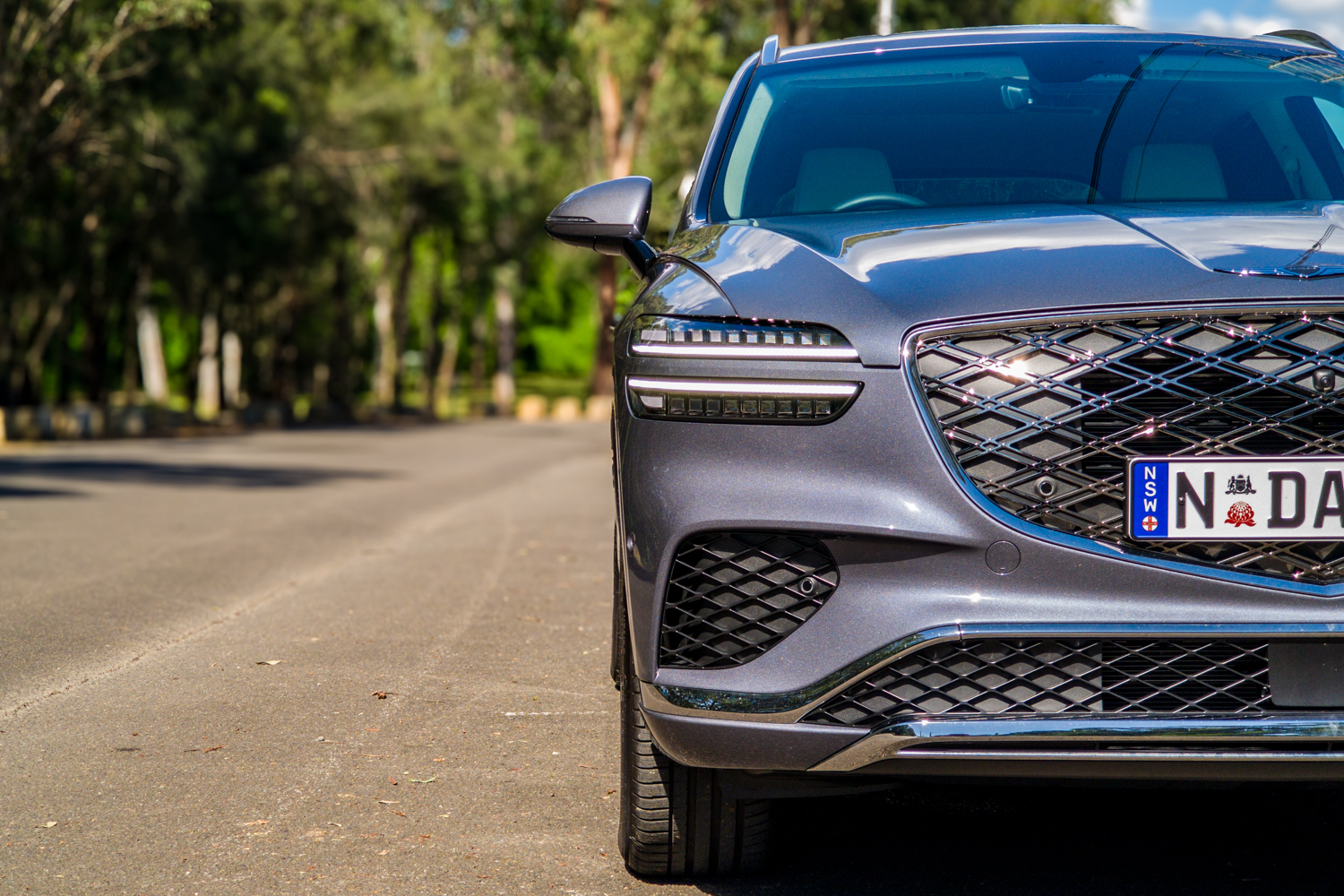
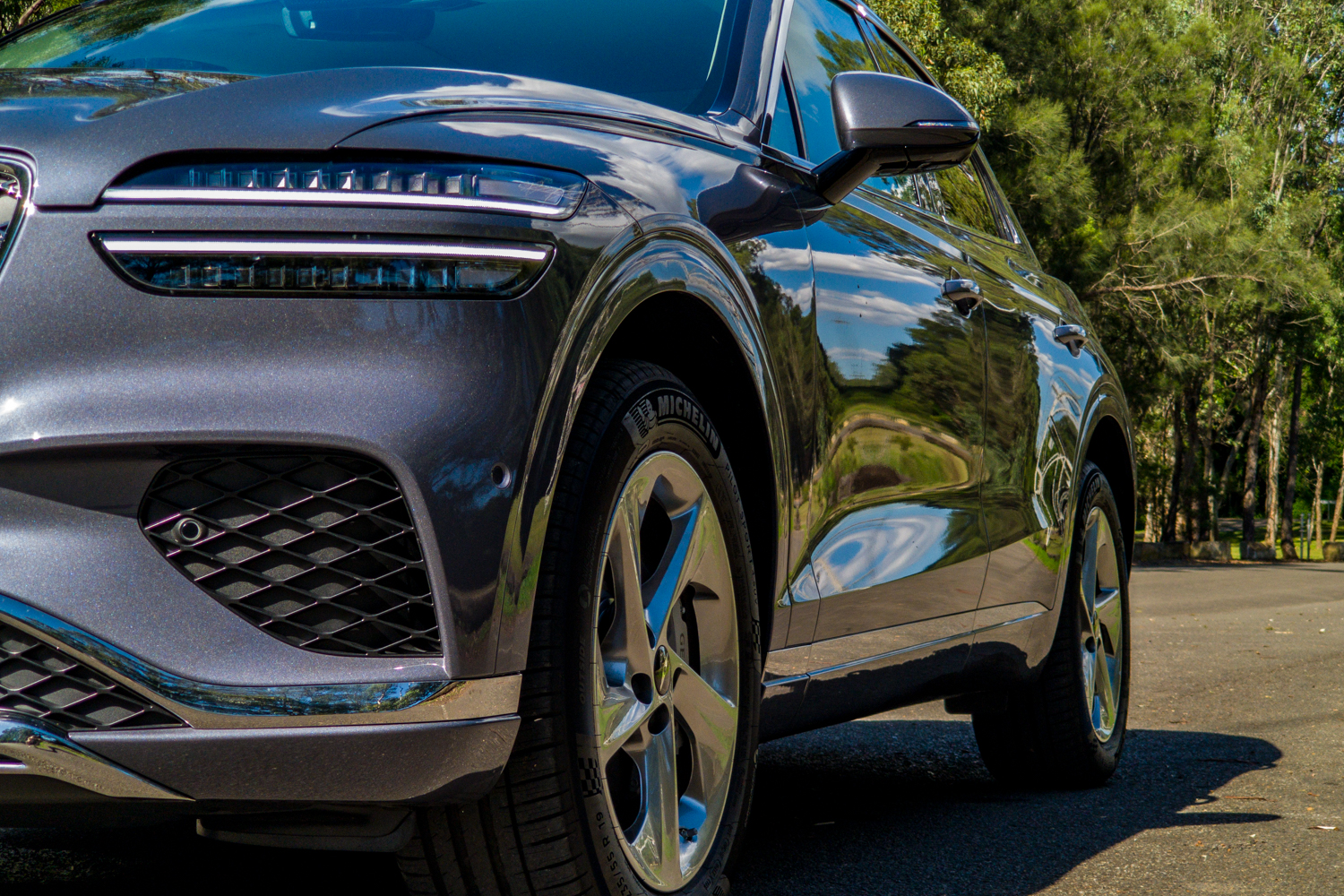
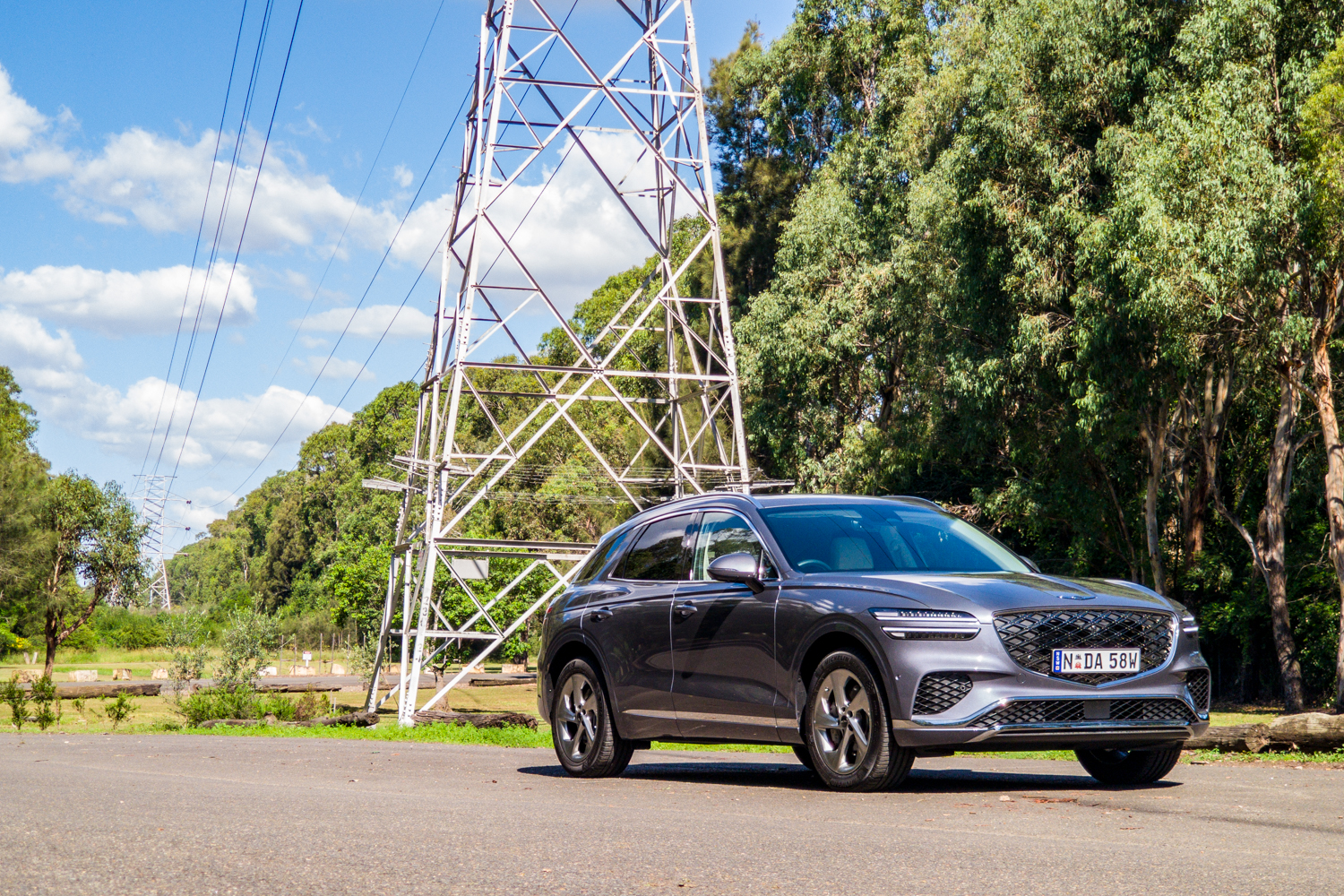
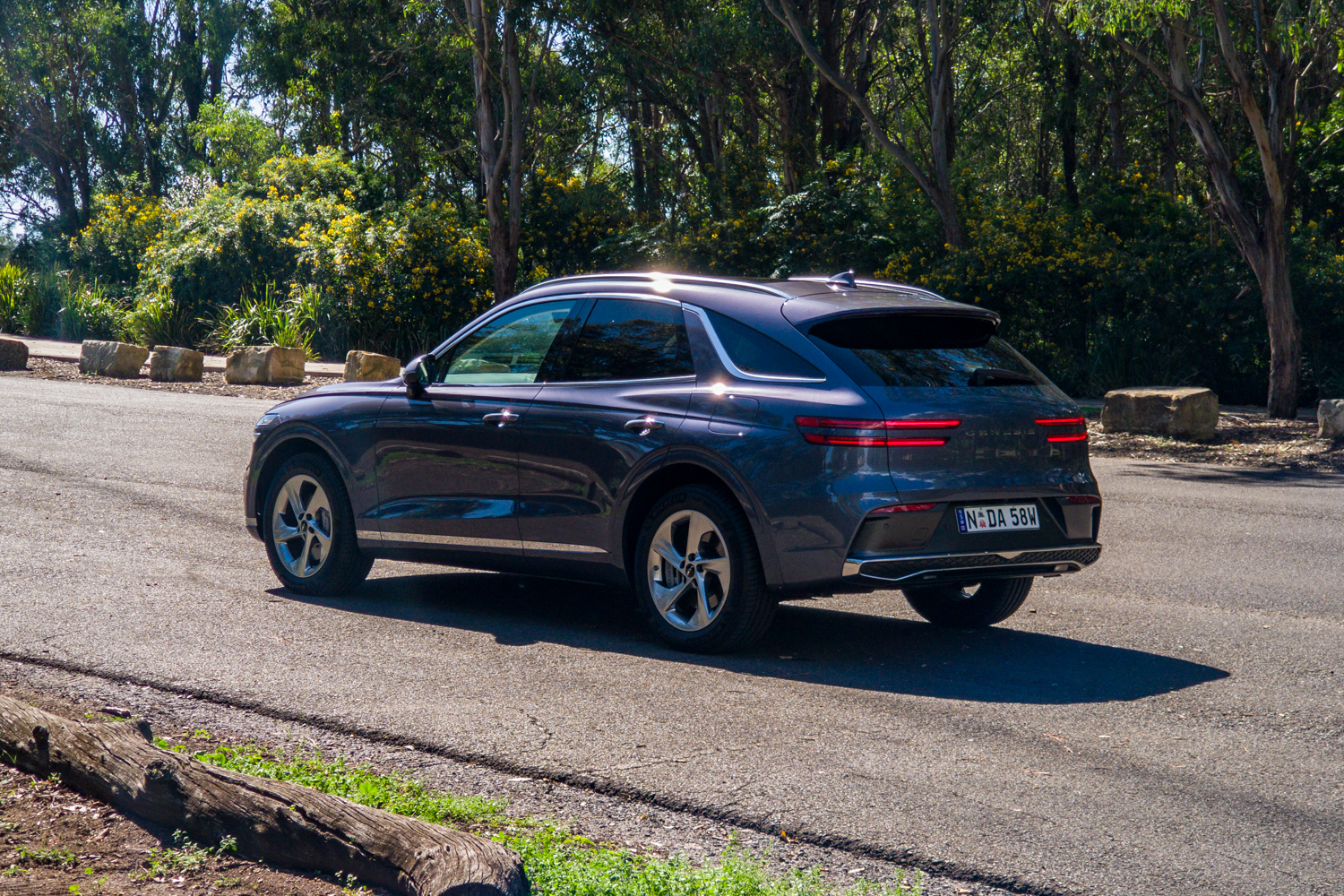
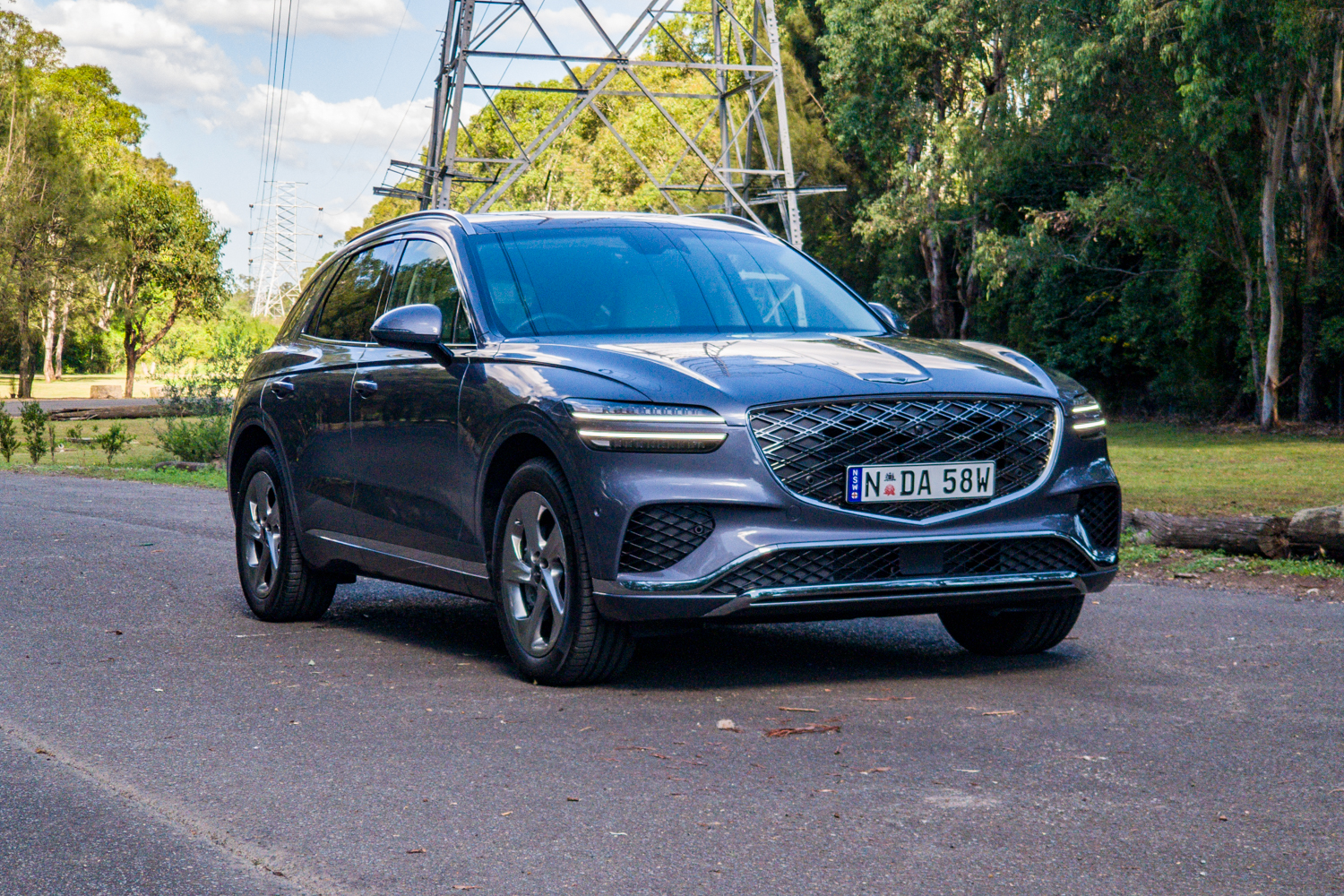
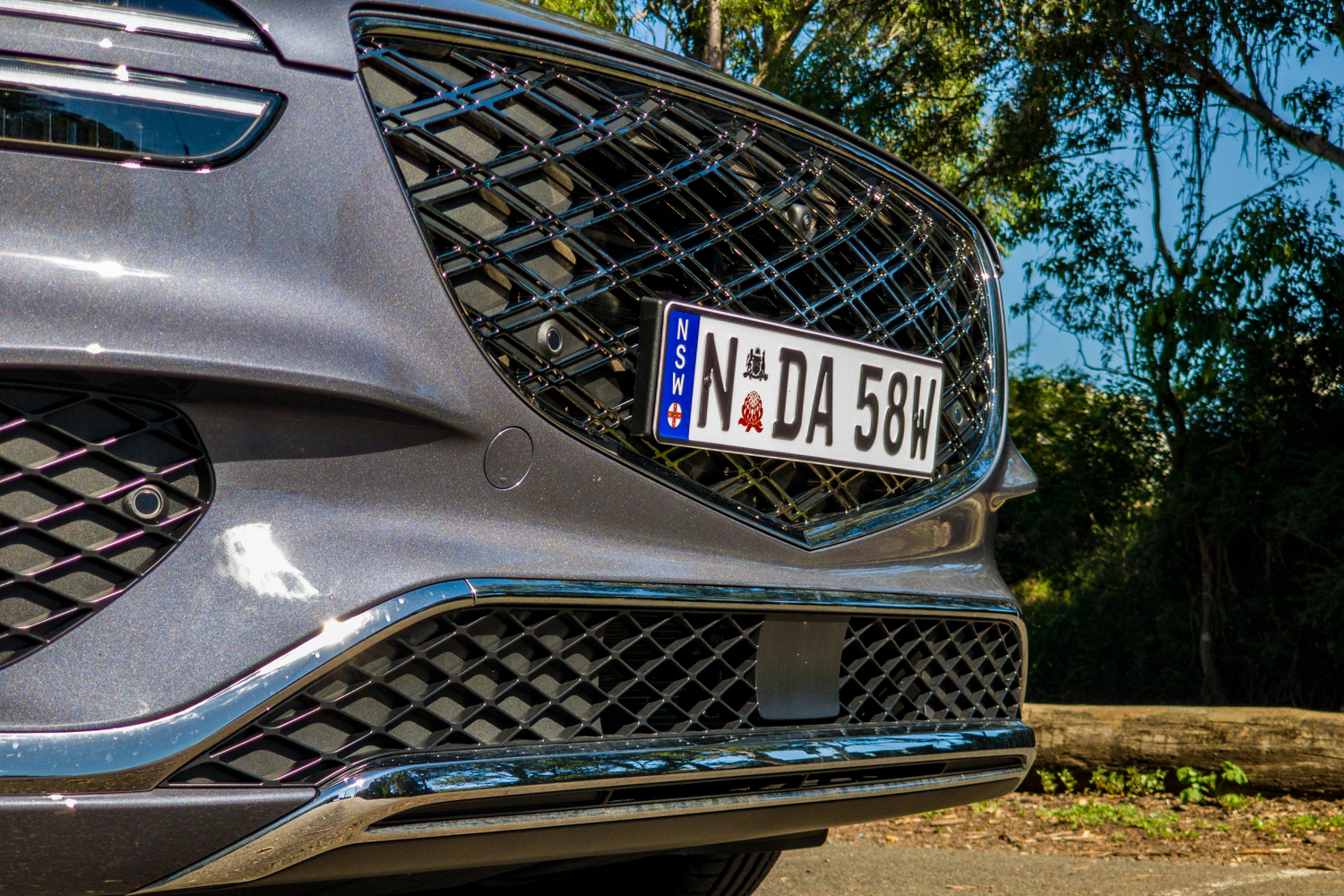
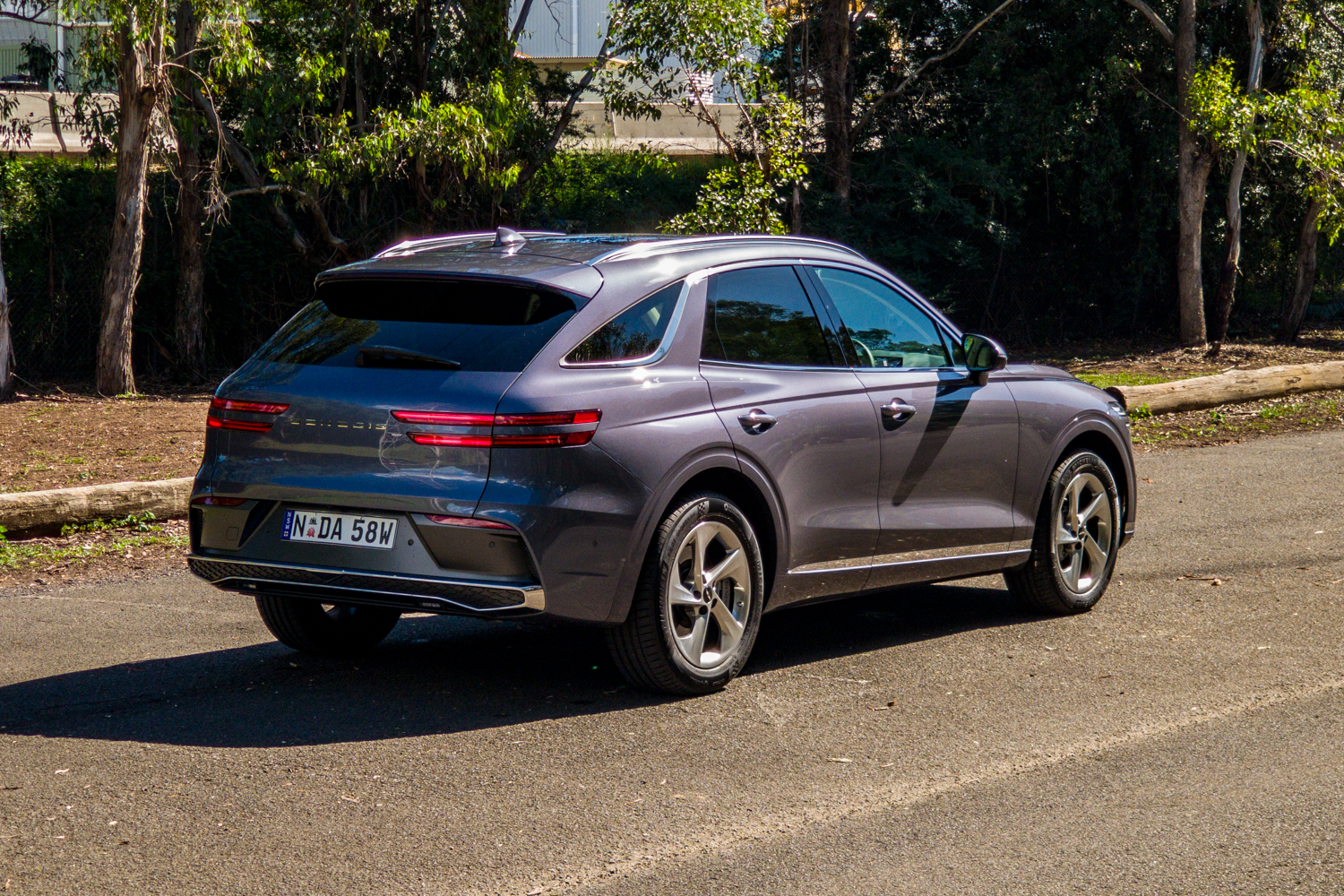
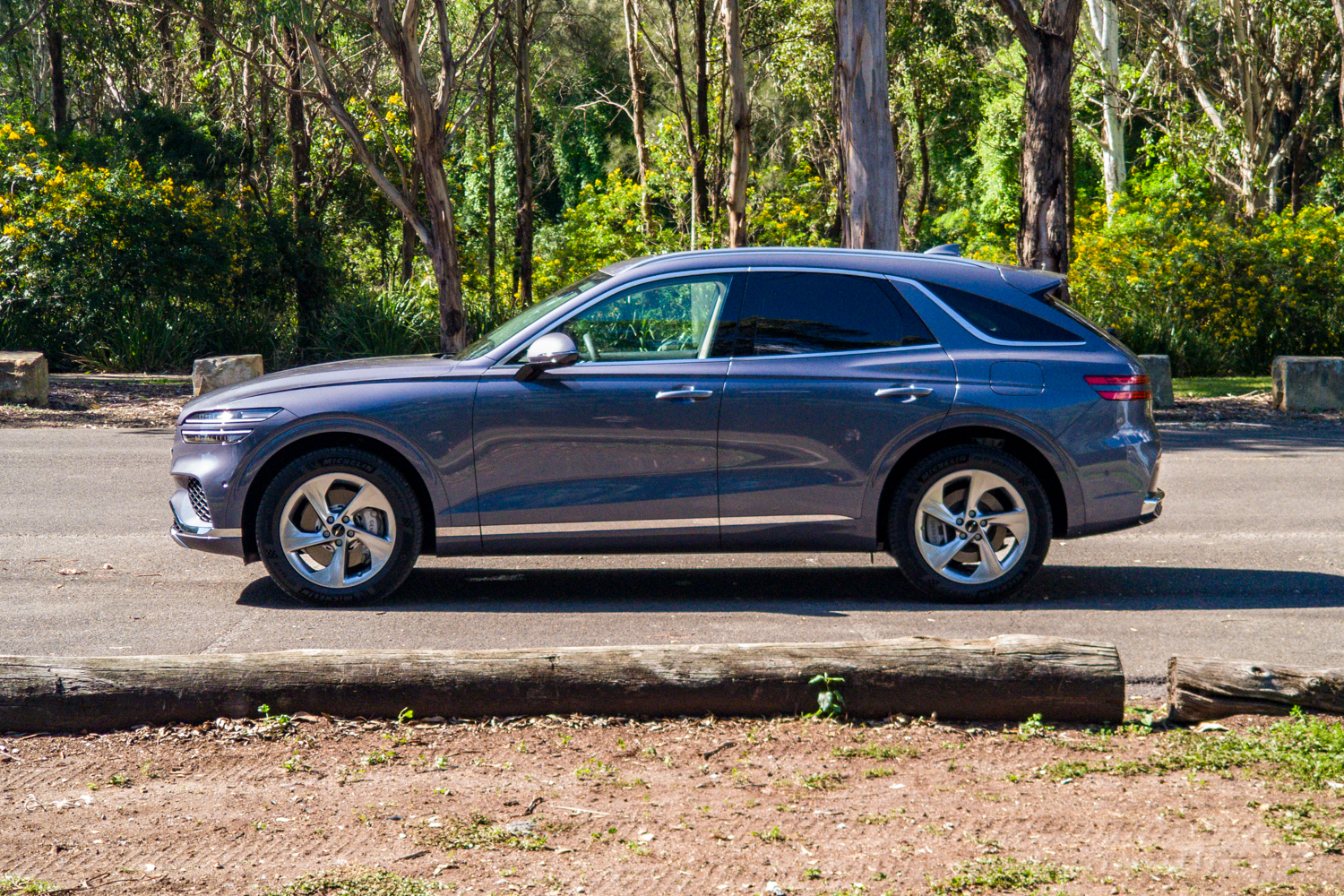
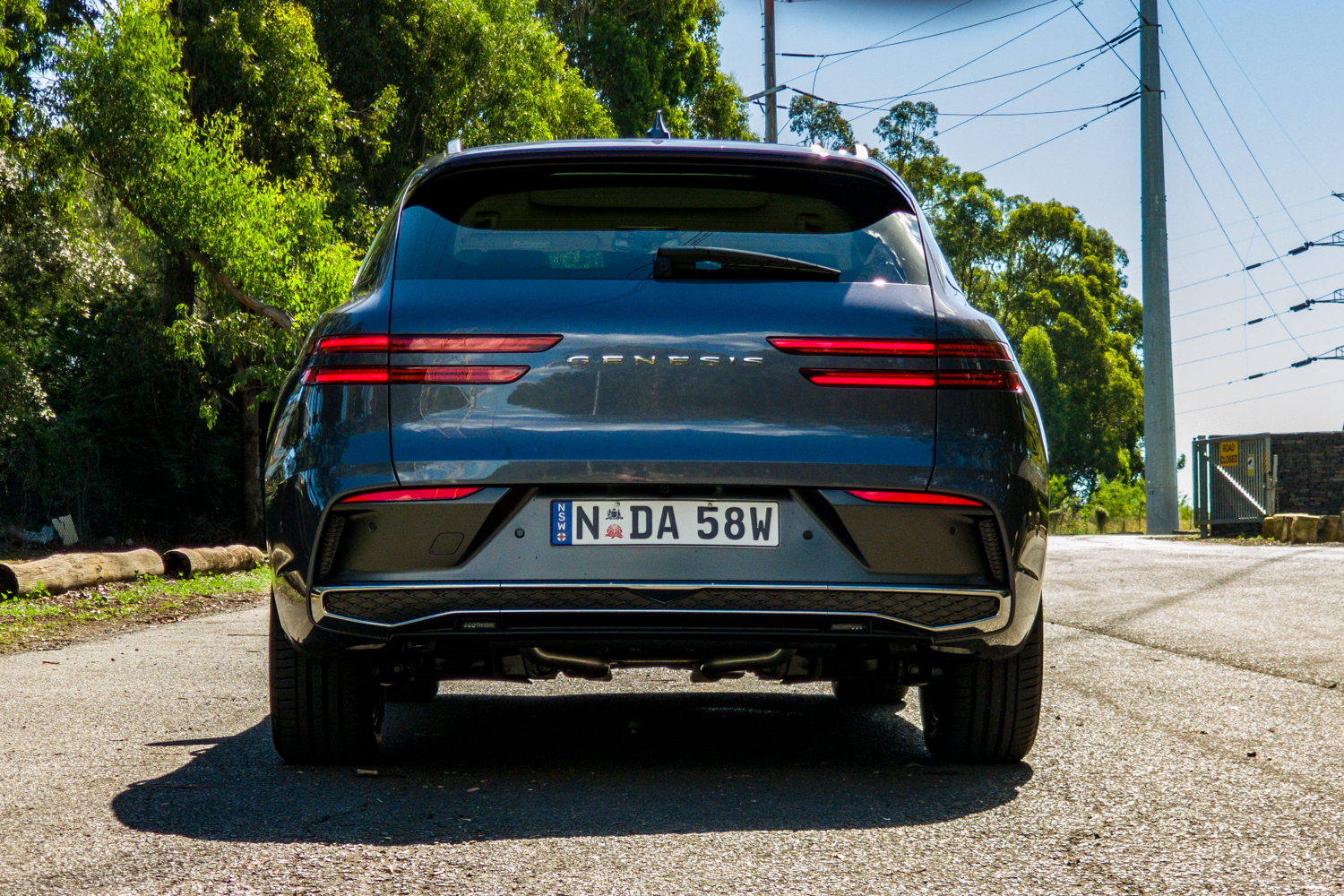
It seemed like a luxury sedan front with an SUV rear. The front is the crest-shaped double-mesh grille with the two-line headlights either side, and the back is a sloping tailgate with two-line tail lights and GENESIS spelled out across it. Genesis dropped the GV70 badge for 2026, so the wordmark is all you get. It’s a luxury sedan and an SUV joined somewhere around the B-pillar, and it works.
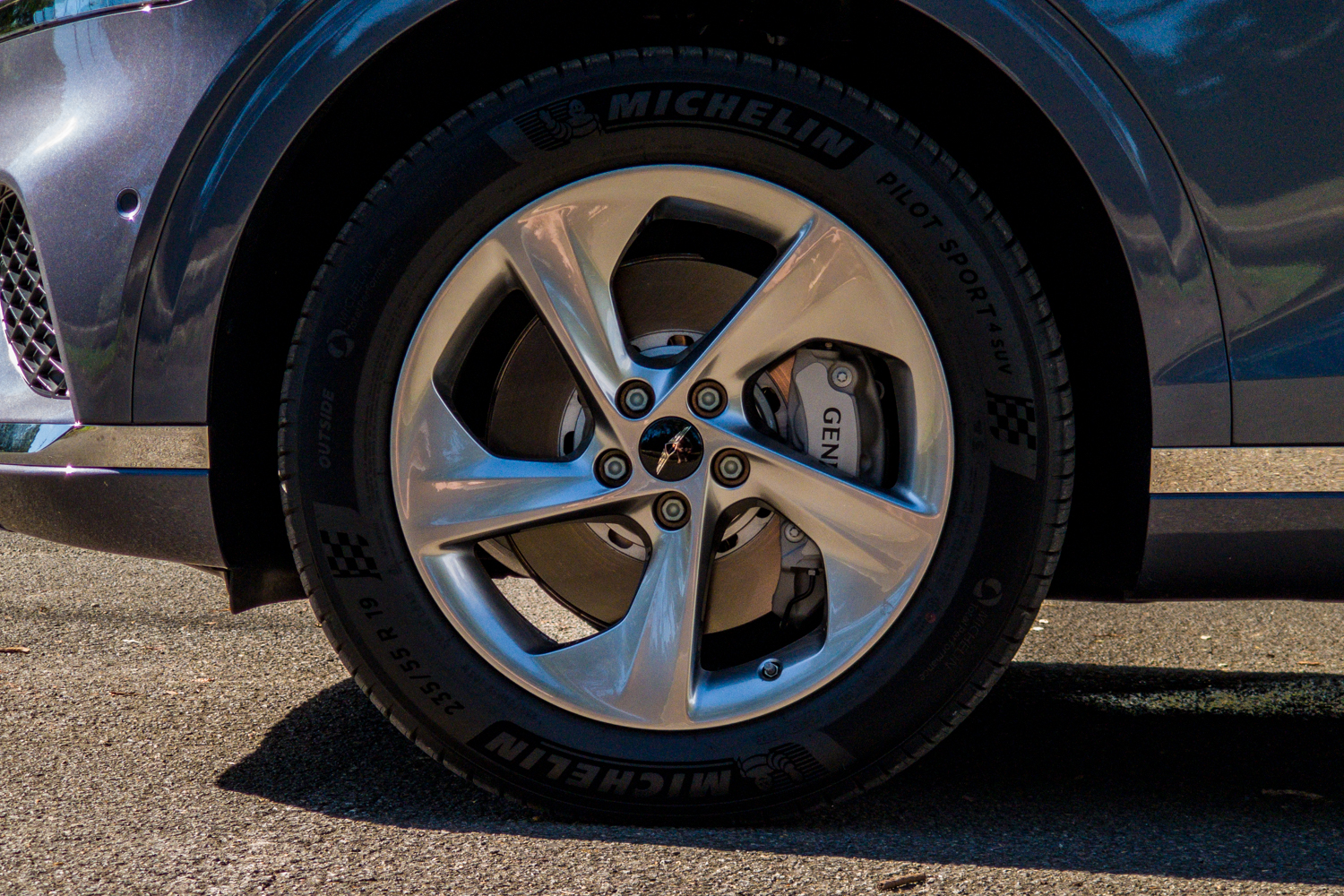
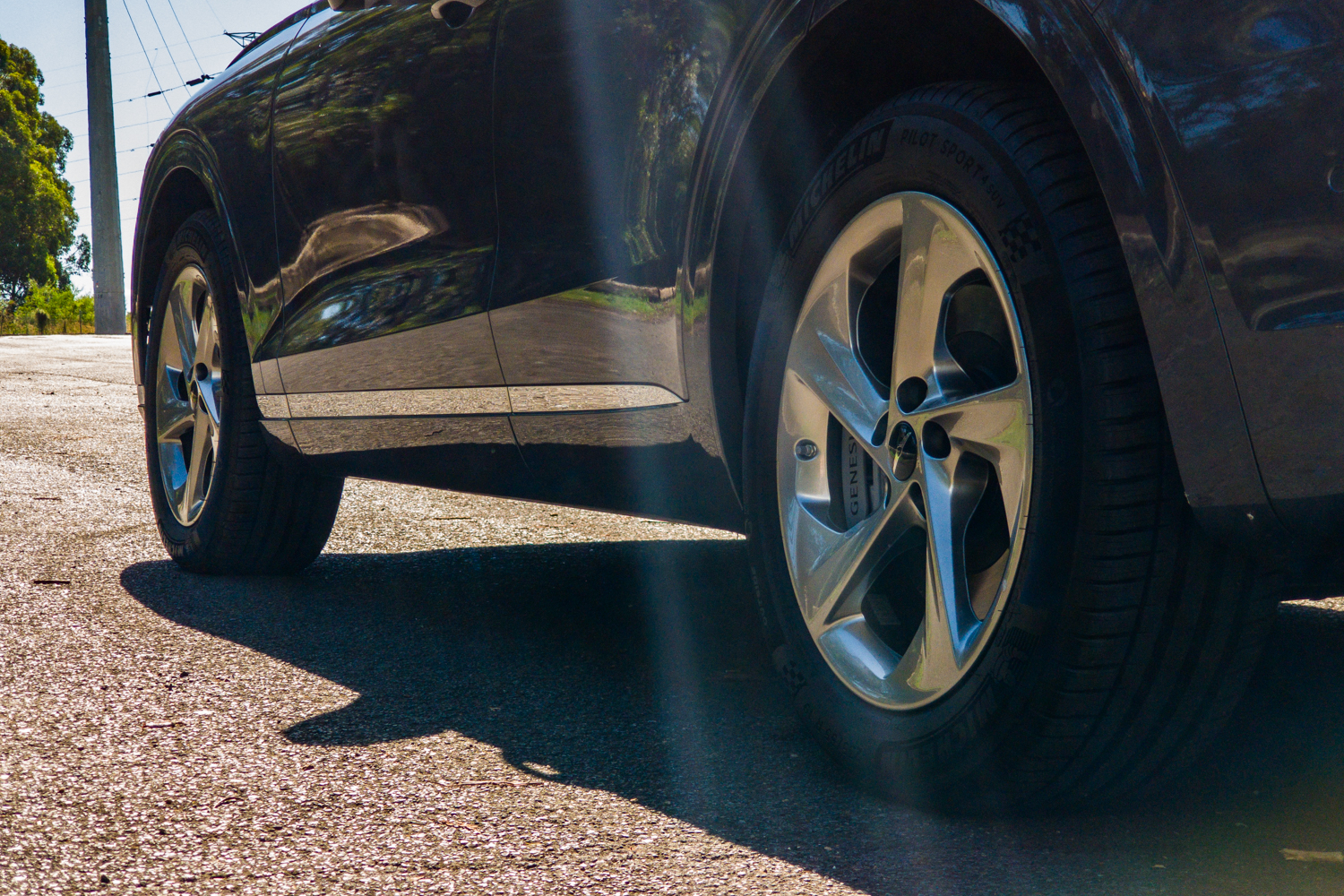
The front lower three-quarter or the low straight-on front looks best. Mine was a metallic grey-blue on the Advanced’s 19-inch wheels, with chrome on the grille, window line, sill strip and bumper blade. At 4,715mm long, 1,910mm wide and 1,630mm tall on a 2,875mm wheelbase, it’s a size up from the small SUVs and a size under the seven-seaters.

What is the Genesis GV70 like inside?
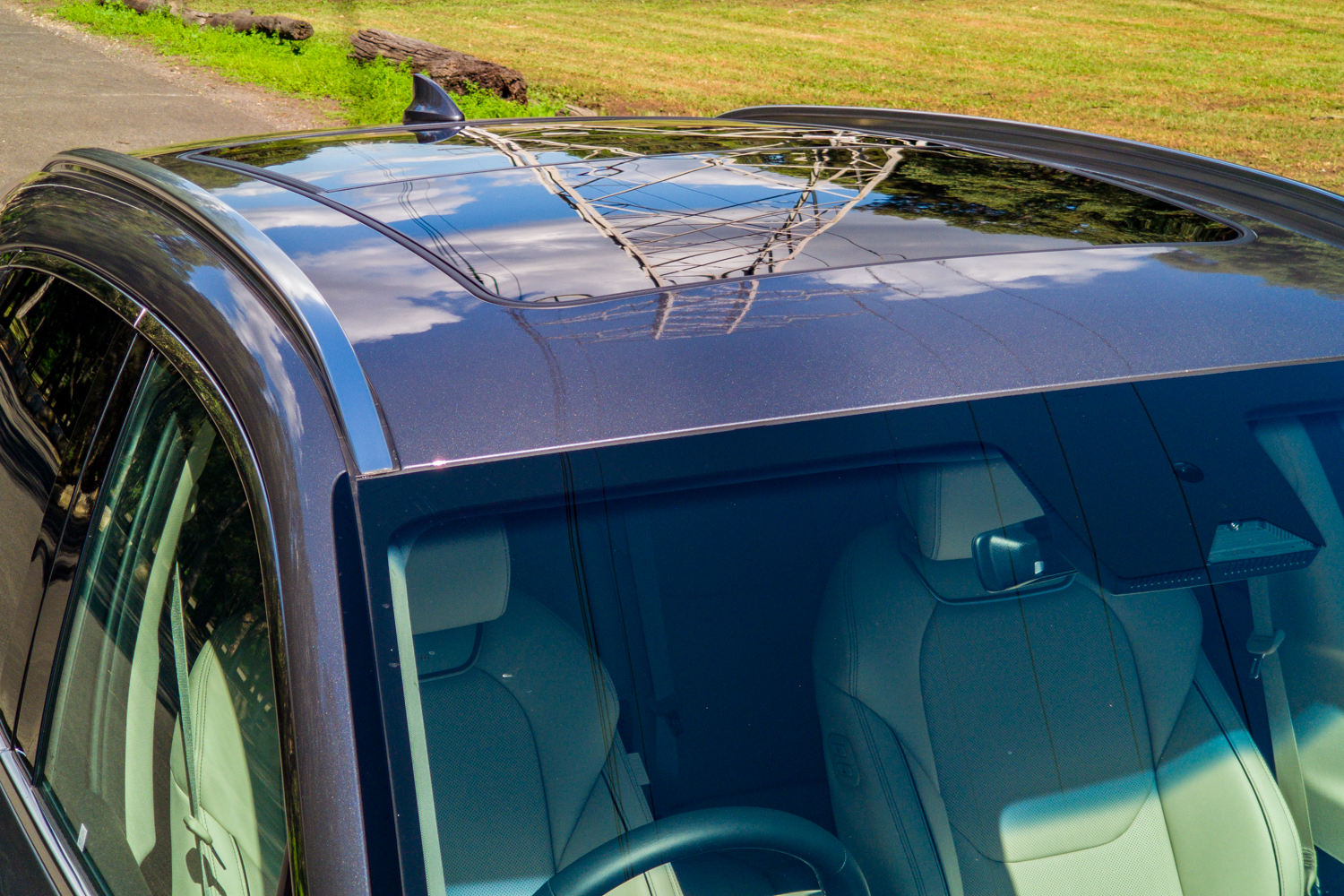
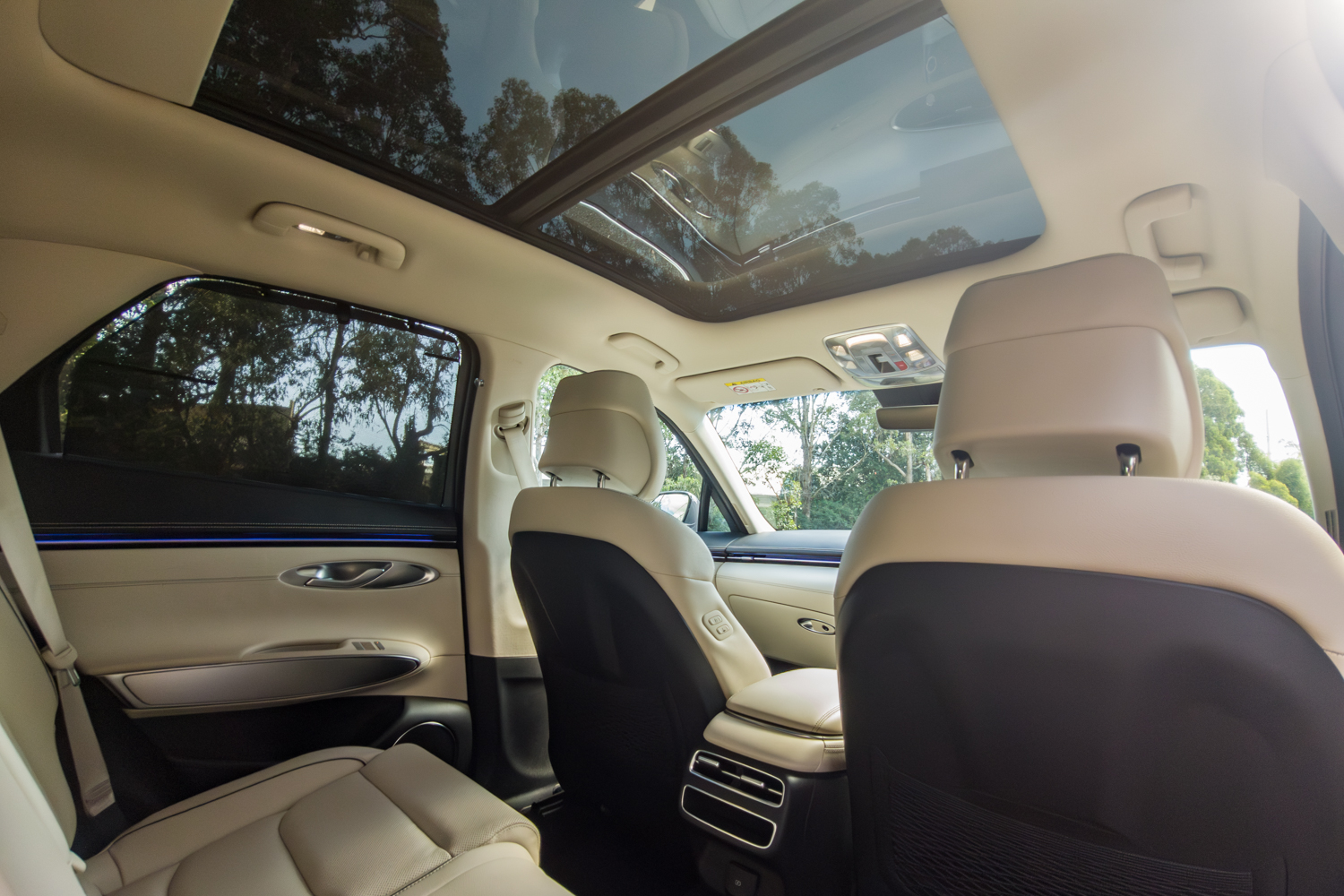
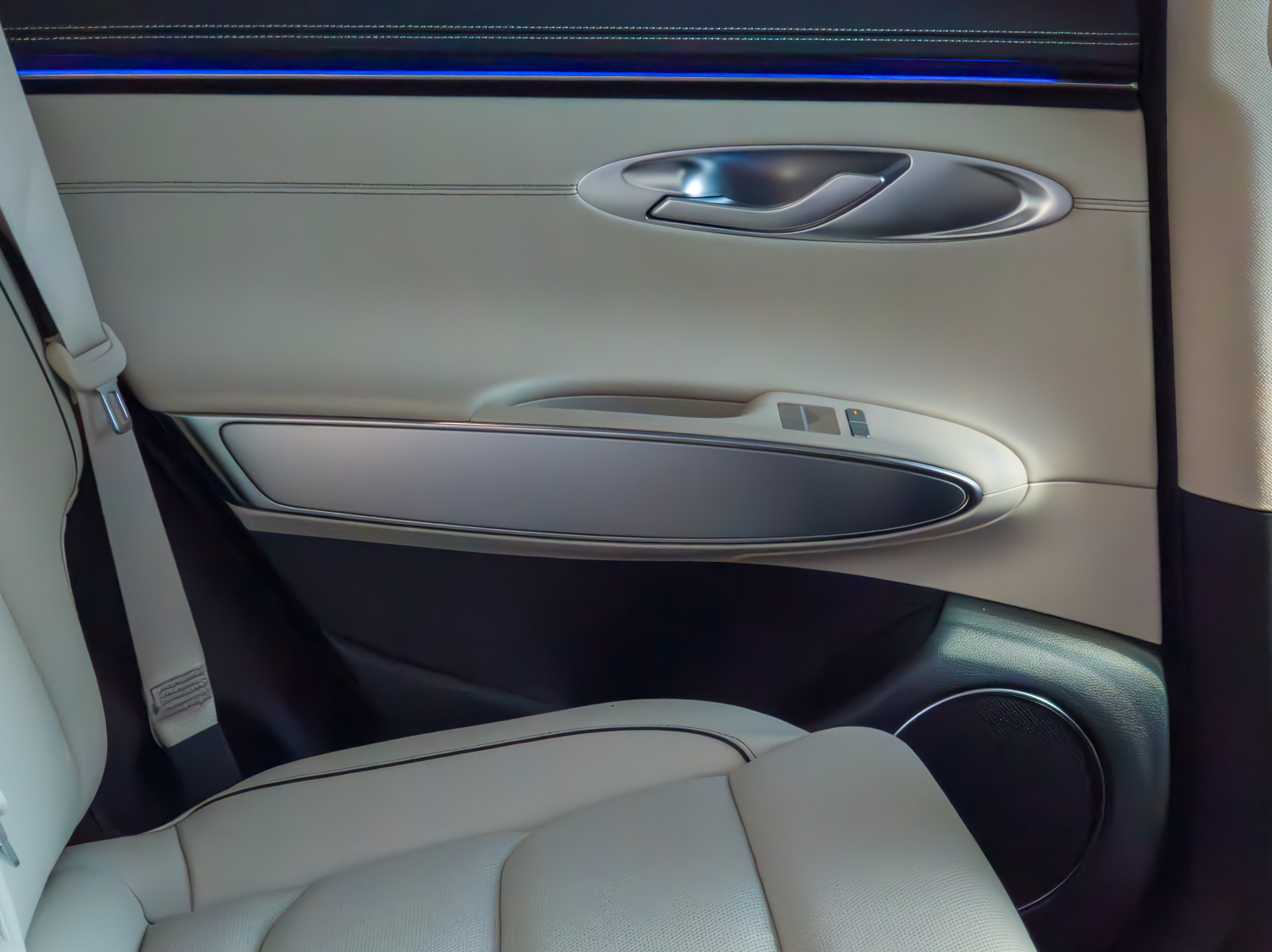
Cream leather-appointed seats, a cream dash and doors with contrast stitching, brushed aluminium on the console and door armrests, and an oval bar of physical buttons and two knobs under the screen. The driver’s seat is 12-way power with four-way air lumbar and memory, the passenger’s is power too, and both are heated and ventilated. A dual-panel panoramic sunroof with a power shade is standard.
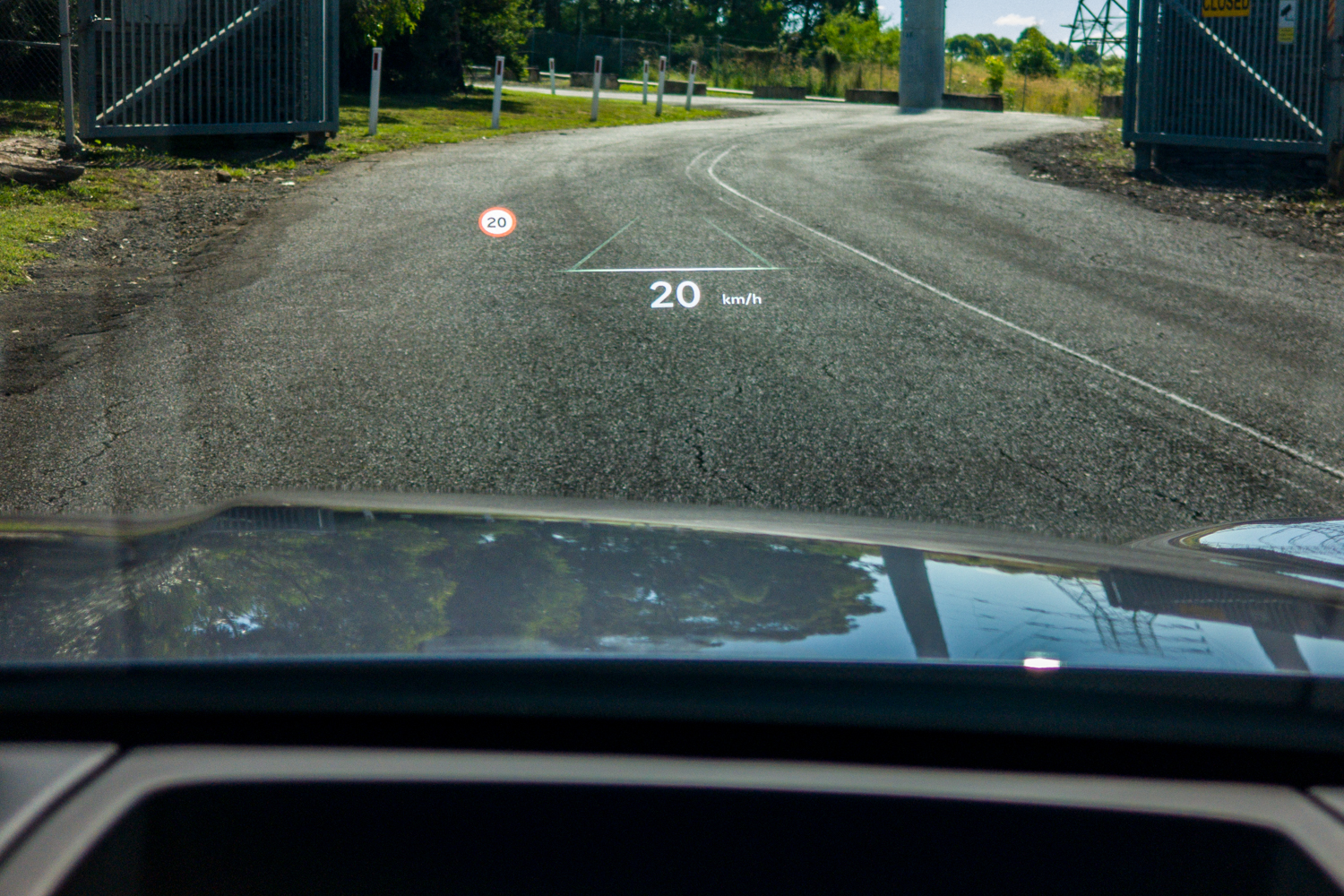
The 27-inch OLED is one panel doing two jobs, cluster on the right and navigation on the left, with a head-up display on the windscreen as well. Genesis quotes 980mm of front headroom and 1,048mm of legroom, and the numbers feel right from the seat.
What the Advanced doesn’t get is the Signature’s Nappa leather, suede headlining, 18-way seats with the stretching function, heated steering wheel, heated rear seats or the aroma diffuser. The headlining here is cloth. None of that stopped the cabin being the standout.
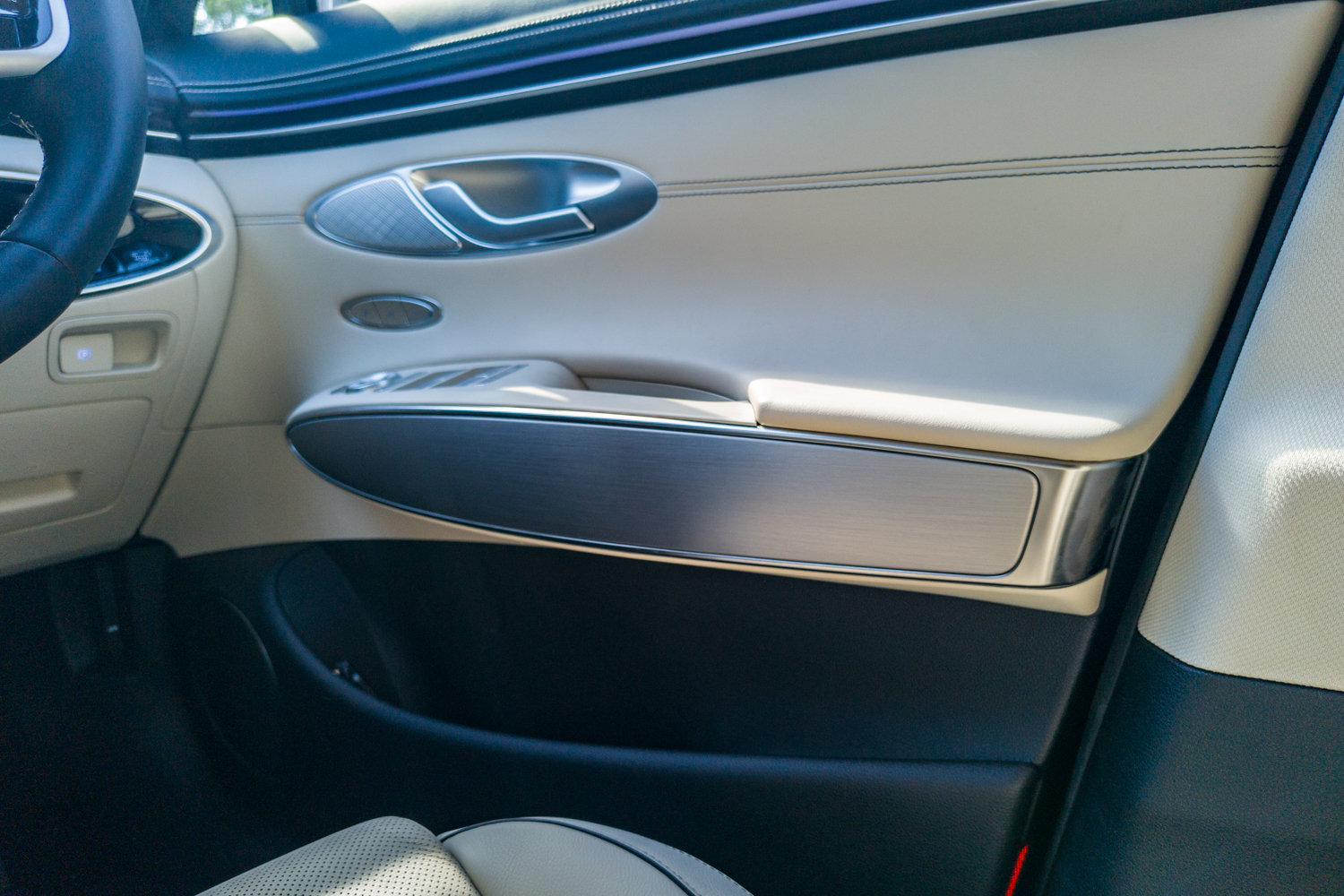
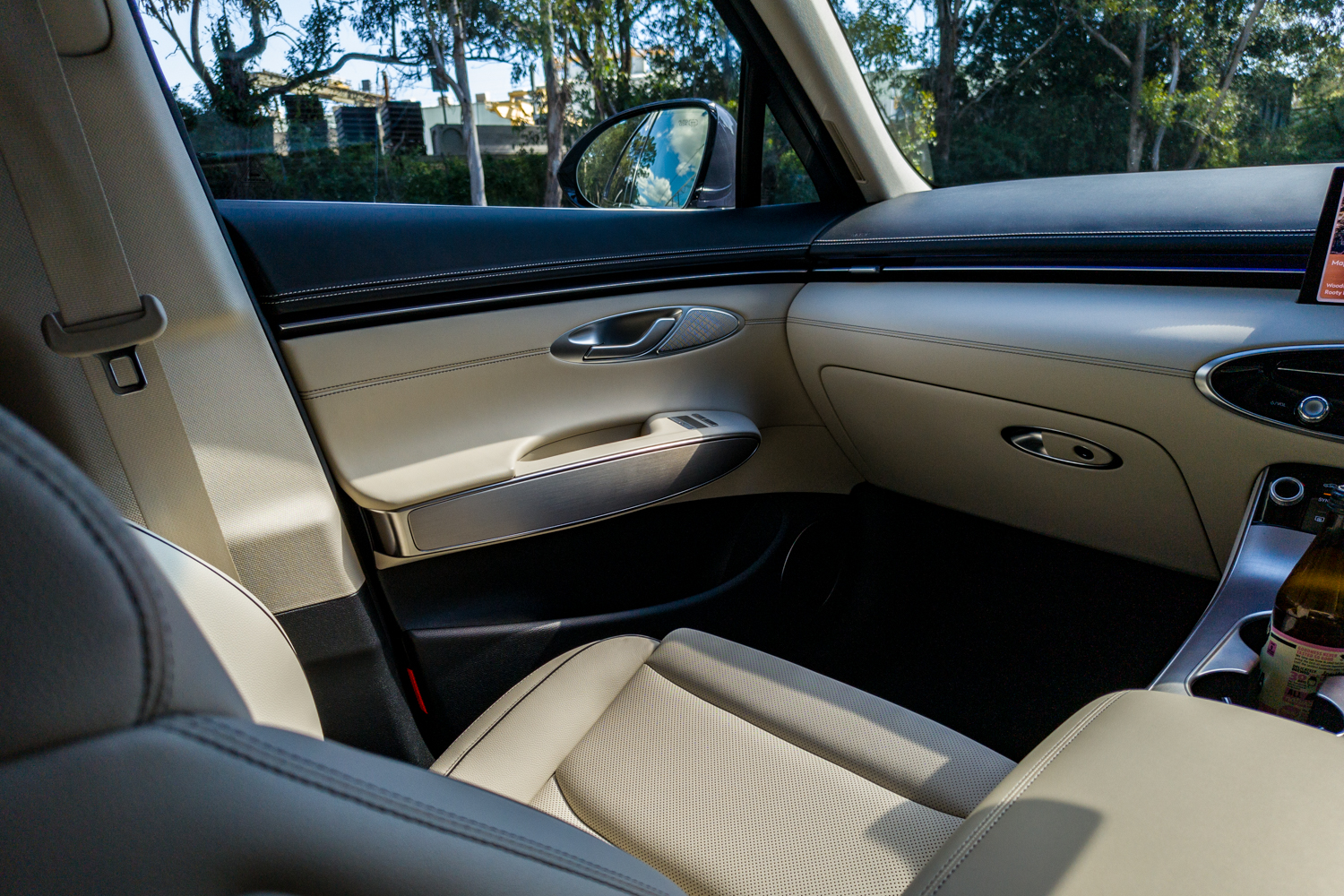
Storage
Up front there’s a covered console box with a removable tray, two cupholders, a phone slot with cooled Qi wireless charging, a lockable glovebox, a sunglasses holder, door bottle holders and map pockets, plus two USB-C ports and a 12-volt outlet. The back gets cupholders in the fold-down armrest, seatback pockets, door bottle holders and two more USB-C ports. The boot has a 12-volt outlet, a luggage net, a side storage recess with its own net and an underfloor compartment.
Rear seat and boot space
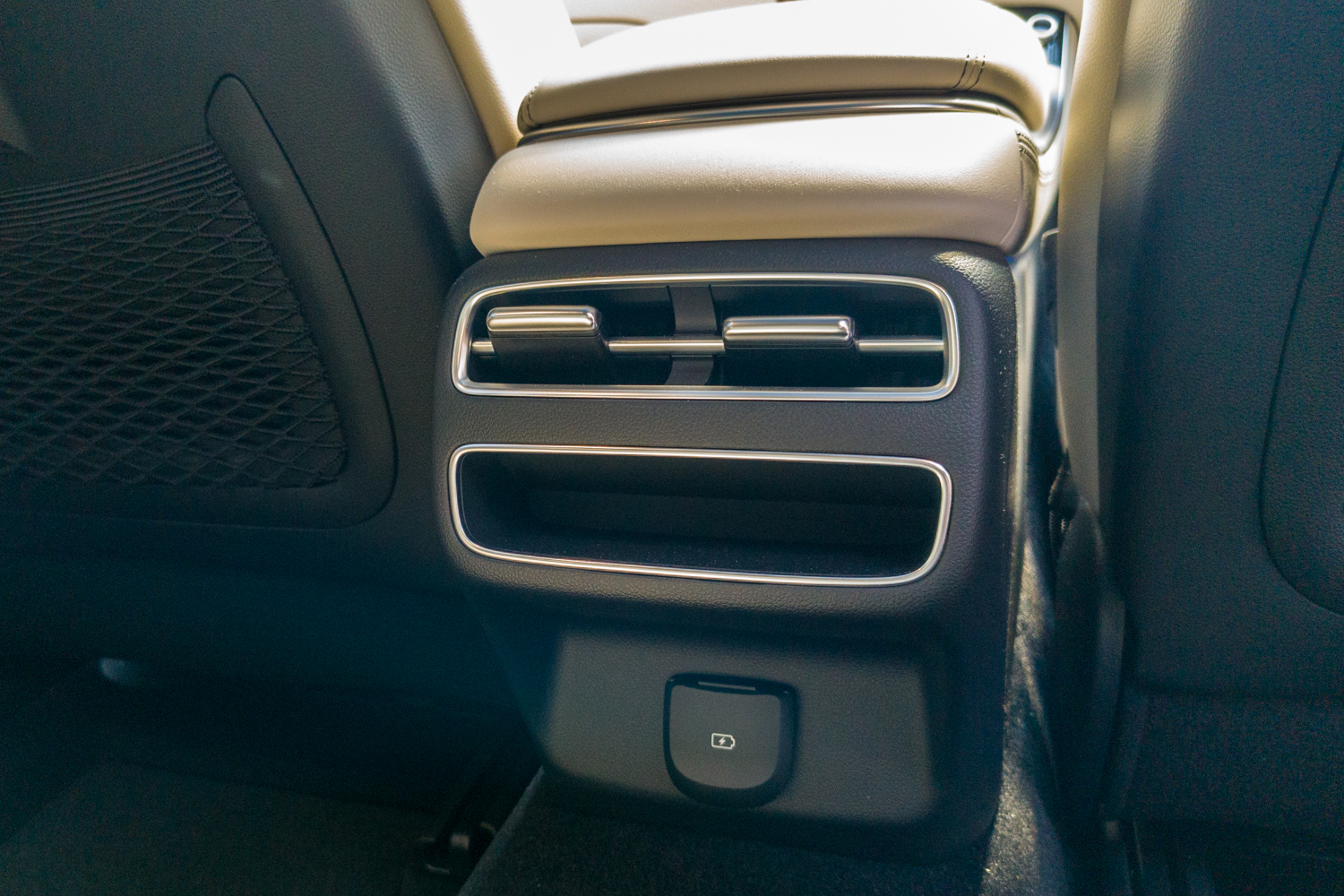
I did sit in the back, and it wasn’t claustrophobic. The seats were comfy, and the manual privacy shutter on each rear door was a nice addition. Genesis quotes 972mm of rear headroom and 945mm of legroom, with a 60:40 split, a centre armrest, rear vents through the console and floor ducts, two ISOFIX points and top tethers on all three seats. Rear passengers get vents but no temperature control of their own on this grade.
The boot is 542 litres with the seats up and 1,678 litres folded, on a flat floor behind a hands-free power tailgate you can set for height and speed. There’s a retractable blind, and under the floor a temporary alloy spare, which is rarer than it should be at this price. My freezer-gear gym bag went in with room to spare, and that bag is my yardstick.
Technology and connectivity
The driver cluster customisation and the way you use it were the good surprise. The cluster side of the 27-inch OLED switches between trip, driving-assist and turn-by-turn views, and the circle controls, the rotary dial on the console and the wheels on the steering wheel, flick between them without a touch. It was intuitive, and it did the quick tasks without fingerprints.
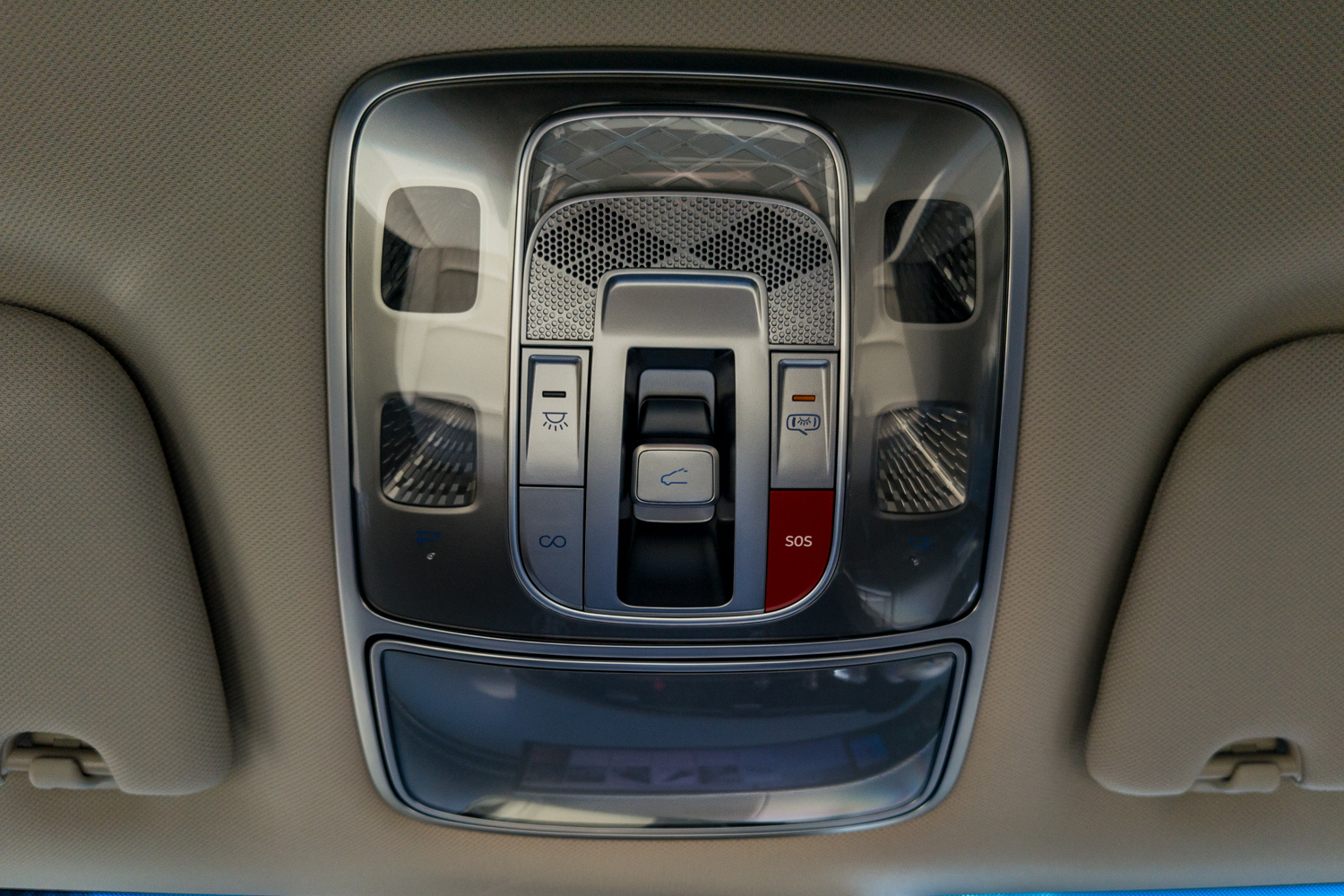
Wireless Apple CarPlay and Android Auto, satellite navigation with an augmented-reality view, DAB+, and a nine-speaker Genesis audio system are standard. The 16-speaker Bang & Olufsen is Signature-only. Fingerprint authentication starts the car and loads your profile, Digital Key 2 puts the key on your phone, and Genesis Connected Services is free for five years with an SOS button, remote climate and over-the-air updates.
Highlighted Features
- 27-inch OLED display: cluster and navigation on one panel, run from a rotary controller and thumbwheels rather than touch.
- Remote Smart Parking Assist 2: parks and unparks itself from the key fob. You stand on the footpath and supervise.
- Fingerprint start and Digital Key 2: your finger or your phone, no key required.
- Blind-Spot View Monitor: a camera feed of your blind spot in the cluster when you indicate.
Engine and drivetrain
The 2.5-litre turbocharged four makes 224kW at 5,800rpm and 422Nm from 1,650 to 4,000rpm, through an eight-speed automatic with paddles to all four wheels. Genesis claims 7.2 seconds to 100km/h on the Advanced’s 19-inch wheels, 240km/h flat out, and 10.3 litres per 100km combined on 95 RON from a 66-litre tank. The 3.5T V6 has 279kW and an electronic limited-slip differential, and claims 5.2 seconds and 11.3 litres.
The chassis is MacPherson strut and multi-link up front, five-link at the rear, on passive dampers here, with the adaptive Road Preview suspension reserved for the V6. Brakes are 360mm ventilated discs with four-piston monobloc calipers in front, and the tyres are 235/55R19 Michelin Pilot Sport 4 SUVs. Towing is 2,200kg braked, and the turning circle is 11.5 metres.
What’s the Genesis GV70 like to drive?
Smooth and quiet, and quite a sprightly car. That’s the drive in one line. The 2.5T has enough in it that you don’t miss the V6, and the eight-speed gets on with it in the background.
The interior gave it a calming sensation as it was driving. That sounds like an odd thing to say about a drive, but it’s the truth of the week. The cabin is quiet enough and the seats are good enough that the car settles you, and the sprightly bit is there when you ask for it.
Compared to its EV counterparts, you’d be hard pressed to tell the difference. It’s as quiet as an EV but it takes fuel, so the long trips are never a hassle. The only giveaway is that the trip ends at a servo instead of a queue.
Is the Genesis GV70 safe?
The GV70 holds a five-star ANCAP rating awarded in 2021, covering the 2.5T petrol and the Electrified but not the 3.5T V6: 89 percent for adult occupant protection, 89 percent for child occupant protection, 64 percent for vulnerable road users and 87 percent for safety assist. It was tested under the 2020 to 2022 protocol, so it isn’t directly comparable with a 2025 or 2026 result, and the rating expires in December 2027.
Eight airbags are standard, including a front-centre airbag and a driver’s knee airbag, plus an active bonnet for pedestrians. I don’t remember any real nags from the driver-assist systems over the week.
- Forward Collision-Avoidance Assist 2 with junction turning and crossing, lane-change oncoming and side detection, and evasive steering
- Highway Driving Assist 2 with navigation-based smart cruise, stop and go, lane following and lane change assist
- Blind-Spot Collision Avoidance with Blind-Spot View Monitor, Rear Cross-Traffic Collision Avoidance and Safe Exit Assist
- Surround View Monitor with 3D view, Remote Smart Parking Assist 2, Parking Collision Avoidance front, side and reverse, and Driver Attention Warning with an in-cabin camera
How much does the Genesis GV70 cost?
The 2.5T Advanced is approximately $80,300 before on-road costs, which works out to roughly $86,000 drive-away depending on your state. Genesis doesn’t publish a national drive-away price. The 2.5T Signature is approximately $89,228, the Signature Sport approximately $91,228, and the 3.5T V6 grades start at approximately $99,728. Matte paint is $2,000; gloss colours are no cost.
The Advanced is the one without the Signature’s Nappa leather, Bang & Olufsen audio, 21-inch wheels, heated wheel and rear seats, and rear climate zone. What it does have is everything that made my week: the 27-inch OLED, the head-up display, the rotary controls, the panoramic roof, heated and ventilated front seats, the full driver-assist suite and the fingerprint start.
How much does the Genesis GV70 cost to run?
Genesis pays for the first five years or 75,000km of scheduled servicing, at 12-month or 15,000km intervals, and collects and returns the car from within 70km of a Genesis location while it does. The warranty is five years with no kilometre limit, roadside assistance runs five years, and Connected Services is free for five. Capped prices after year five aren’t published.
The fuel is the cost. At Genesis’s claimed 10.3 litres per 100km and about $1.80 a litre for 95 RON, that’s roughly $18.50 per 100km. The V6’s 11.3 claim adds about $1.80 to that, which is the whole of the turbo-four efficiency argument in dollars. For contrast, an electric SUV using around 17kWh per 100km costs about $5.60 per 100km at a typical 33-cent home tariff. I didn’t record a figure of my own, so the table below carries the claim only.
| Running costs | Details |
|---|---|
| Warranty | 5 years / unlimited km |
| Servicing interval | 12 months / 15,000km |
| Servicing cost | Complimentary for 5 years / 75,000km; capped prices beyond that Not Published |
| Roadside assist | 5 years (extendable to 10 with annual Genesis servicing) |
| Claimed economy | 10.3 L/100km combined (ADR 81/02); 15.1 urban, 7.5 extra-urban; 95 RON |
| Observed economy | Not Published |
| Fuel cost | About $18.50 per 100km at the claimed figure and $1.80/L for 95 RON |
| CO2 | 235 g/km (ADR 81/02) |
Final thoughts
It’s definitely for a more upmarket family, one wanting the finer things but also the practicality. That’s who it’s for, and the Advanced covers the brief without the Signature’s extra $9,000. The cabin is the standout, the controls are the best kind of old-fashioned, and the back seat and boot passed my own tests.
The people who should walk past it are anyone wanting an EV or a hybrid, because this is neither. The turbo four is more efficient than the V6 it replaces, and that’s the limit of the claim. The closest thing to it that I’ve driven is the IM6 Performance, an electric SUV at about $77,990 before on-road costs, bigger at 4,904mm and a different kind of quick. The Electrified G80 I drove earlier this year shows what Genesis itself does without a fuel tank, at almost twice the money, and the Audi Q6 e-tron is the premium electric SUV a step up, at more than $120,000. Against the X3, GLC, Q5, NX and XC60, the Genesis argues on cabin, kit and five years of free servicing.
Compared to its EV counterparts, you’d be hard pressed to tell the difference from the driver’s seat. It’s as quiet as an EV. It just takes fuel.
2026 Genesis GV70 2.5T Advanced — Frequently Asked Questions
How much fuel does the Genesis GV70 2.5T use?
Genesis claims 10.3 litres per 100km combined for the GV70 2.5T on the Australian ADR 81/02 test, split 15.1 urban and 7.5 extra-urban, on 95 RON premium unleaded. The 3.5T V6 claims 11.3. We did not record a trip-computer figure during our week, so we cannot quote a real-world number. The tank holds 66 litres.
How much does the 2026 Genesis GV70 2.5T Advanced cost in Australia?
The GV70 2.5T Advanced AWD is priced from approximately $80,300 before on-road costs, with the 2.5T Signature from approximately $89,228, the Signature Sport from approximately $91,228 and the 3.5T V6 grades from approximately $99,728. Matte paint adds $2,000. Genesis includes five years or 75,000km of complimentary scheduled servicing.
Is the Genesis GV70 2.5T Advanced safe?
Yes. The GV70 2.5T holds a 5-star ANCAP rating from 2021, with 89 percent for adult occupant protection, 89 percent for child occupant protection, 64 percent for vulnerable road users and 87 percent for safety assist. The rating expires in December 2027. Eight airbags and the full Genesis Active Safety suite are standard; the 3.5T V6 is unrated.
Does the Genesis GV70 come with free servicing?
Yes. Every new GV70 comes with five years or 75,000km of complimentary scheduled servicing at 12-month or 15,000km intervals, a five-year unlimited-kilometre warranty, five years of roadside assistance and Genesis To You, which collects and returns the car for service within 70km of a Genesis location. Capped prices beyond year five are not published.
Specification |
Details |
|---|---|
| Model | 2026 Genesis GV70 2.5T AWD Advanced |
| Model Price | Approximately $80,300 before on-road costs |
| Engine | 2.5-litre (2,497cc) turbocharged four-cylinder petrol, MPi and GDi, Euro 5 |
| Drivetrain | 8-speed automatic, all-wheel drive, paddle shifters |
| Power | 224kW at 5,800rpm |
| Torque | 422Nm at 1,650 to 4,000rpm |
| Fuel economy | 10.3 L/100km combined (ADR 81/02); observed Not Published |
| Fuel type / tank | 95 RON premium unleaded (E10 compatible) / 66 litres |
| 0-100kmh / Top Speed | 7.2 seconds / 240km/h (19-inch wheels) |
| CO2 Emissions | 235 g/km (ADR 81/02) |
| Safety | 5-star ANCAP (2021, expires December 2027); 8 airbags |
| Servicing | 12 months / 15,000km; complimentary 5 years / 75,000km |
| Warranty | 5 years / unlimited km |
| Roadside Assist | 5 years |
Specification |
Details |
|---|---|
| Overall Length | 4,715mm |
| Width | 1,910mm (excluding mirrors) |
| Height | 1,630mm |
| Wheelbase | 2,875mm |
| Ground Clearance | 185mm |
| Wheels | 19 x 8.0J alloy |
| Tyres | 235/55R19 Michelin Pilot Sport 4 SUV (temporary alloy spare) |
| Suspension | MacPherson strut and multi-link front, five-link rear |
| Brakes | 360mm ventilated front discs, 4-piston monobloc calipers; 345mm ventilated rear |
| Tare Weight | 2,013kg |
| Gross Vehicle Mass | 2,500kg |
| Boot Min | 542 litres (VDA, seats up) |
| Boot Max | 1,678 litres (VDA, seats folded) |
| Towing Capacity | 2,200kg braked / 750kg unbraked; 159kg tow ball |
| Turning Circle | 11.5m |
| Seats | 5 |
For the latest pricing and to book a test drive, head to the official Genesis Australia site.
The score, itemised
8.2 overall- 8.0 Behind the Wheel
- 9.0 Comfort
- 8.0 Equipment
- 7.5 Performance weakest
- 8.0 Ride and Handling
- 8.0 Practicality
- 8.5 Fit for Purpose
- 8.5 Style / Appeal
- 9.0 Technology / Connectivity
- 7.5 Value for Money