Front-End Accessories – Kia’s arrival in the ute segment with the Tasman has drawn plenty of attention from buyers who want a capable dual-cab without giving up modern technology and efficiency.
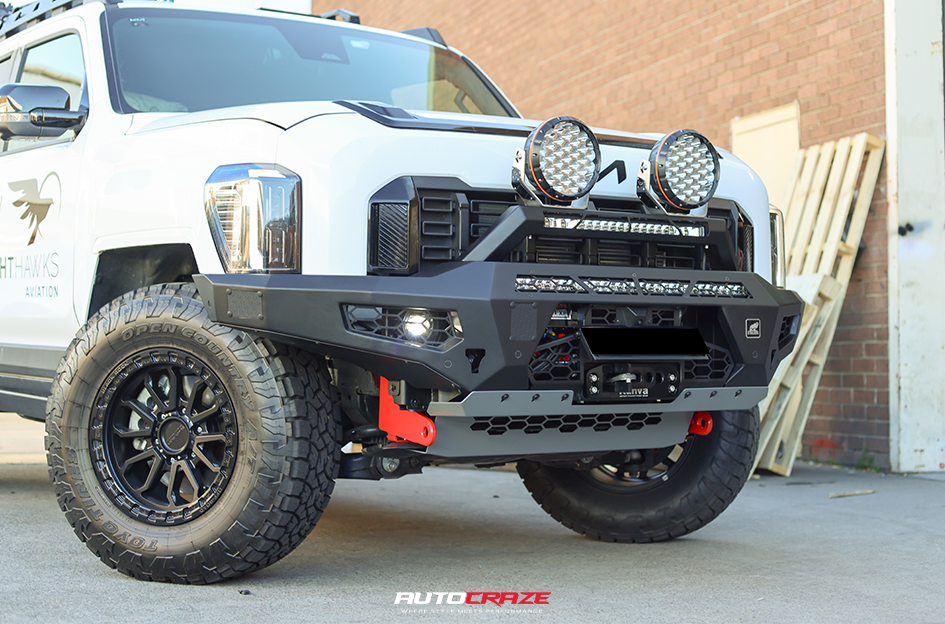
As with any ute, many owners will add accessories to suit their lifestyle, and a bull bar is among the most common. What is less often discussed is the effect those accessories have on fuel consumption, which matters for drivers who care about running costs and emissions.
Weight and Aerodynamics: The Two Costs of a Bar
Two physical factors determine how much a front-end accessory affects efficiency. The first is mass. Every extra kilogram increases the energy needed to accelerate and climb hills, and the effect is most noticeable in stop-start driving. A heavy steel bar with a winch and lights can add several dozen kilograms to the front of the vehicle.
The second is aerodynamics. A bar increases the frontal area and disrupts the way air flows around the front of the vehicle. The concept is explained in detail on Wikipedia, which describes how the shape of a vehicle determines its resistance to air at speed. At highway speeds, aerodynamic drag becomes the dominant force the engine has to overcome, so changes at the front of a ute can show up in fuel use on long trips.
Neither effect is dramatic for a single accessory, but they add up when combined with roof racks, light bars, and other additions. Owners who care about efficiency benefit from considering the whole package rather than each item alone.
Choosing Materials With Efficiency in Mind
Material choice is the easiest way to limit the penalty. Steel offers excellent strength but is the heaviest option. Aluminium alloy cuts the weight substantially while still providing solid protection, and polymer designs are lighter again and often shaped to work with the vehicle’s existing front end.
For a driver who mostly uses the ute around town and on sealed highways, a lighter design makes sense, since the extreme strength of a heavy-duty bar is unlikely to be needed. A buyer who regularly drives remote tracks or rural roads has a different set of priorities, and the added weight may be a fair trade for protection.
The Technology Factor
Modern utes rely on radar and cameras for driver assistance, and these systems are central to the vehicle’s safety. A bar must be designed around them, and owners should confirm that the features still operate correctly after installation. That is as relevant to efficiency as to safety, because adaptive cruise control is one of the more effective tools for maintaining steady speeds and avoiding wasteful acceleration.
Owners researching a kia tasman bullbar will find options ranging from heavy-duty steel to lighter designs aimed at everyday use. Comparing weight figures alongside appearance and price helps match the product to the way the vehicle will actually be driven.
Efficiency is likely to matter even more in the years ahead. As more utes add hybrid and electric powertrains, range becomes a headline number. Anything that adds drag or weight is felt more clearly by owners watching their consumption. Accessories chosen carefully today are less likely to feel like a compromise. When the driving habits and expectations of ute owners continue to shift towards lower running costs.
Habits That Save More Than Any Accessory Choice
Even a well-chosen accessory has a smaller effect on fuel use than driving habits and basic maintenance. Correct tyre pressure is the simplest example. Under-inflated tyres increase rolling resistance and waste fuel. Removing unused roof racks and cargo when they are not needed cuts both weight and drag. Smooth acceleration and anticipating traffic reduce the energy lost to braking.
Servicing on schedule keeps the engine running efficiently. Keeping unnecessary weight out of the tray makes a noticeable difference over time. A few of these habits can offset the cost of a heavier accessory entirely.
For drivers who want to compare the efficiency of different vehicles. The Australian Government’s Green Vehicle Guide provides fuel consumption and emissions information for new vehicles sold in Australia. It is a useful starting point for understanding a baseline figure before accessories are added. And it helps put the real-world effect of modifications in perspective.
The takeaway for Tasman owners is simple. Protection and efficiency do not have to be in conflict. Choosing a bar that suits actual use, keeping weight sensible. And maintaining good habits delivers the best balance between capability and running costs.