The 2026 Jaecoo J5 EV Summit is one of the cheapest electric SUVs in Australia, a 155kW front-drive small SUV with 402km of claimed range, and it’s $35,990 before on-road costs. My week of commuting returned 16.4kWh/100km and 300km from a full charge to 9 percent, and the glass roof, ventilated seats and 360-degree camera all come standard at that price. Worth weighing up before you buy: the seats feel designed for smaller people, the aircon struggled on a 30-degree day and keeps switching itself back to its default mode, and the eight speakers turn metal tinny. We scored it 6.7 out of 10.
The Jaecoo J5 EV is $35,990 before on-road costs. I had the single-grade Summit for a week in early September, in Stone Grey. It did my 36km commute all week, with coworkers dropped home along the way.
It’s a well priced EV for the features it has, and that’s the pitch. On price it sits under the Leapmotor B10, the BYD Atto 3, the MG S5 EV and the Geely EX5, and a long way under the Kia EV3 Earth I drove earlier this year. Of that lot I’ve driven the B10 and the EV3, and the B10 is the one this car kept reminding me of.
| 2026 Jaecoo J5 EV Summit — at a glance | |
|---|---|
| Price | $35,990 before on-road costs |
| Powertrain | Single permanent-magnet motor, front-wheel drive |
| Power / torque | 155kW / 288Nm |
| 0–100 km/h | 7.7 seconds (claimed) |
| Battery / range | 58.9kWh lithium iron phosphate, 402km WLTP |
| Efficiency | 16.4kWh/100km observed over a 300km commuting week |
| Warranty | 8 years / unlimited km (battery 8 years / unlimited km) |
| ANCAP | Unrated (not yet tested as of August 2026) |
| The Good | The Not-So-Good |
|---|---|
| $35,990 before on-road costs with a glass roof, heated and ventilated seats, a 360-degree camera and a power tailgate all standard. | The driver’s seat doesn’t go low enough for a tall driver, and the cushion feels designed for smaller people. |
| 300km from full to 9 percent at 16.4kWh/100km in a commuting week, and it’s surprisingly quick for the cost. | The aircon struggled on a 30-degree day, and it keeps switching itself back to smart mode. |
| An 8-year unlimited-kilometre warranty and $1,520 of capped-price servicing over 8 years. | The eight speakers turn metal tinny, and the front wheels scrabble if you ask for everything at once. |
A week with the 2026 Jaecoo J5 EV
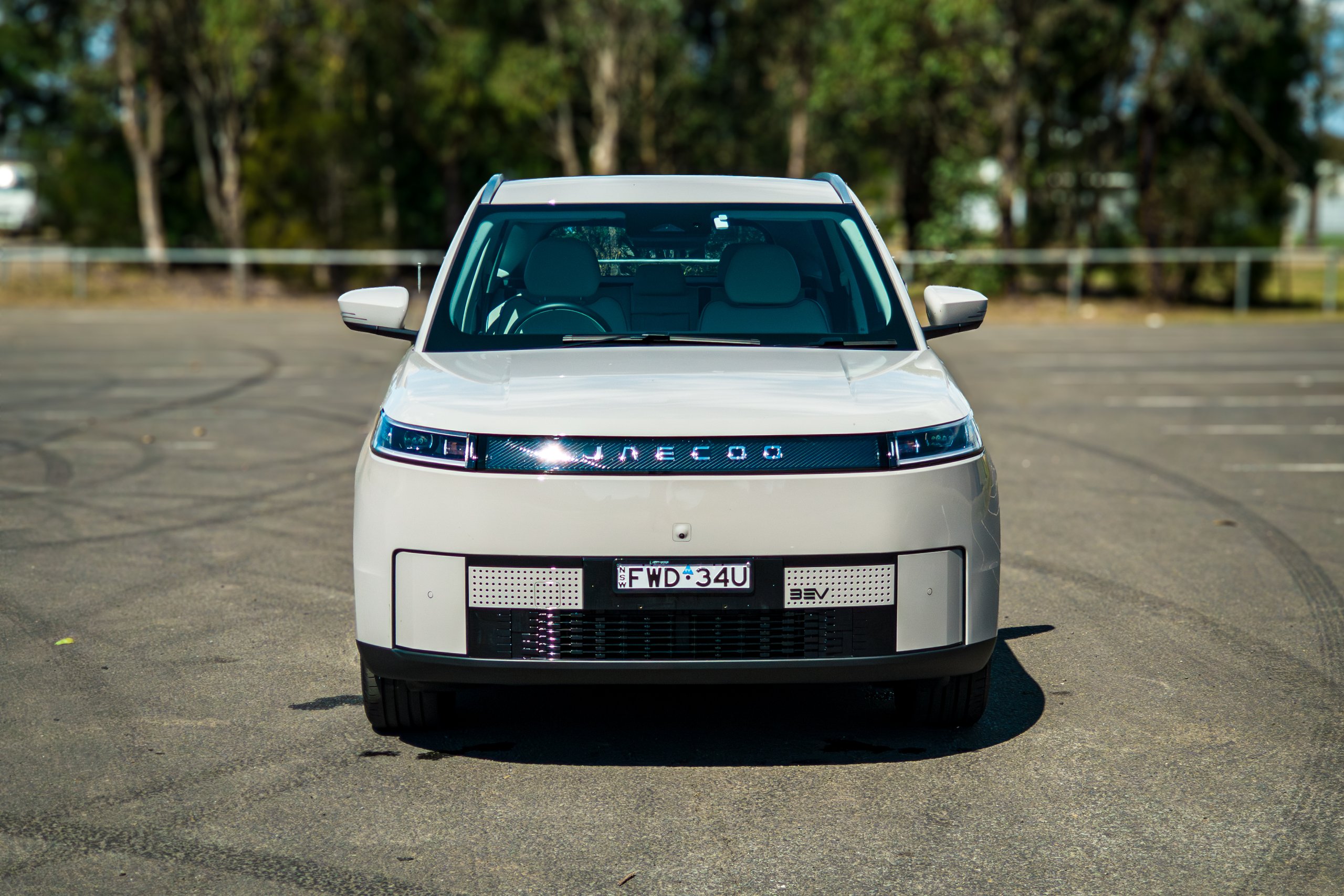
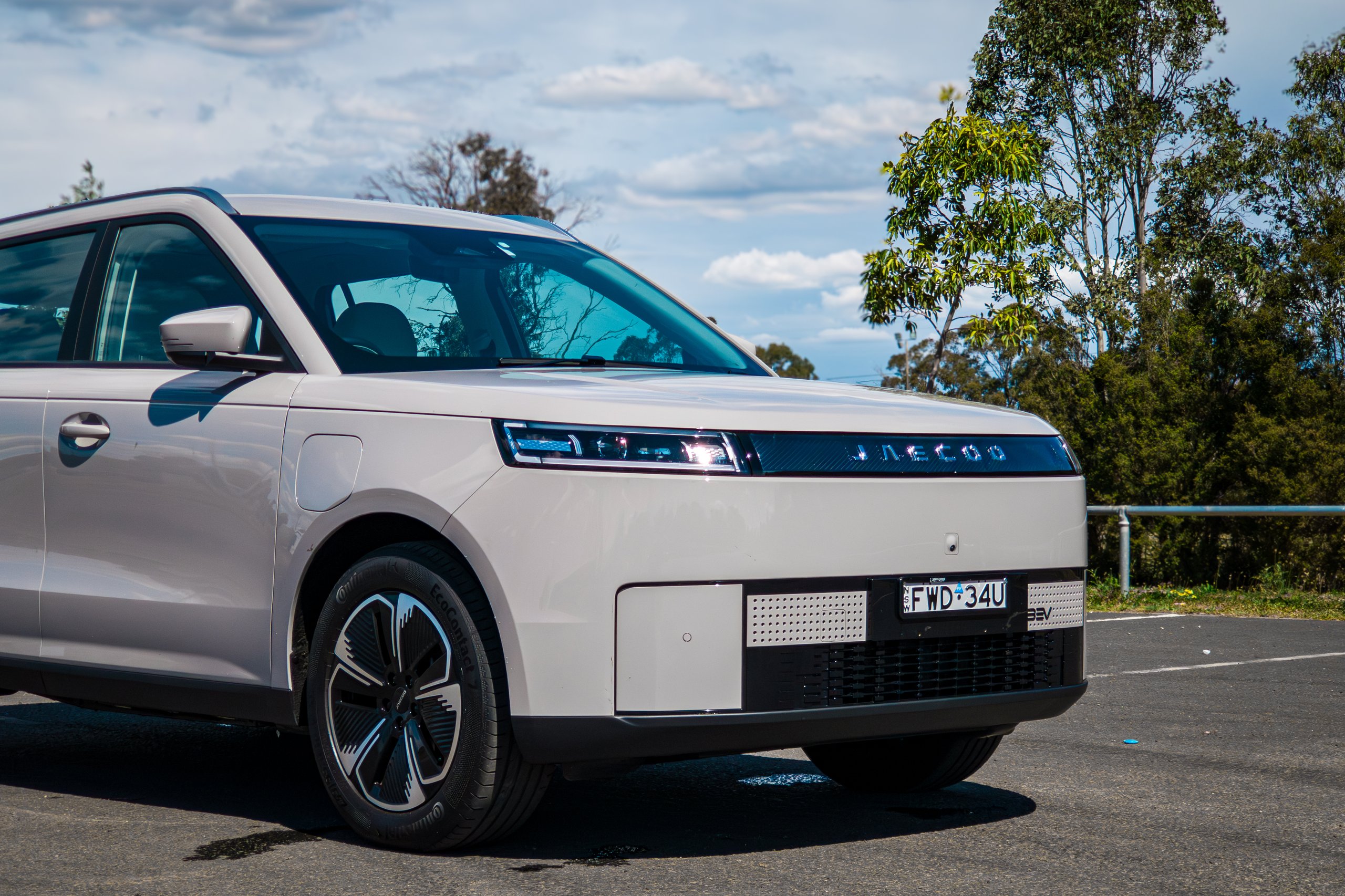
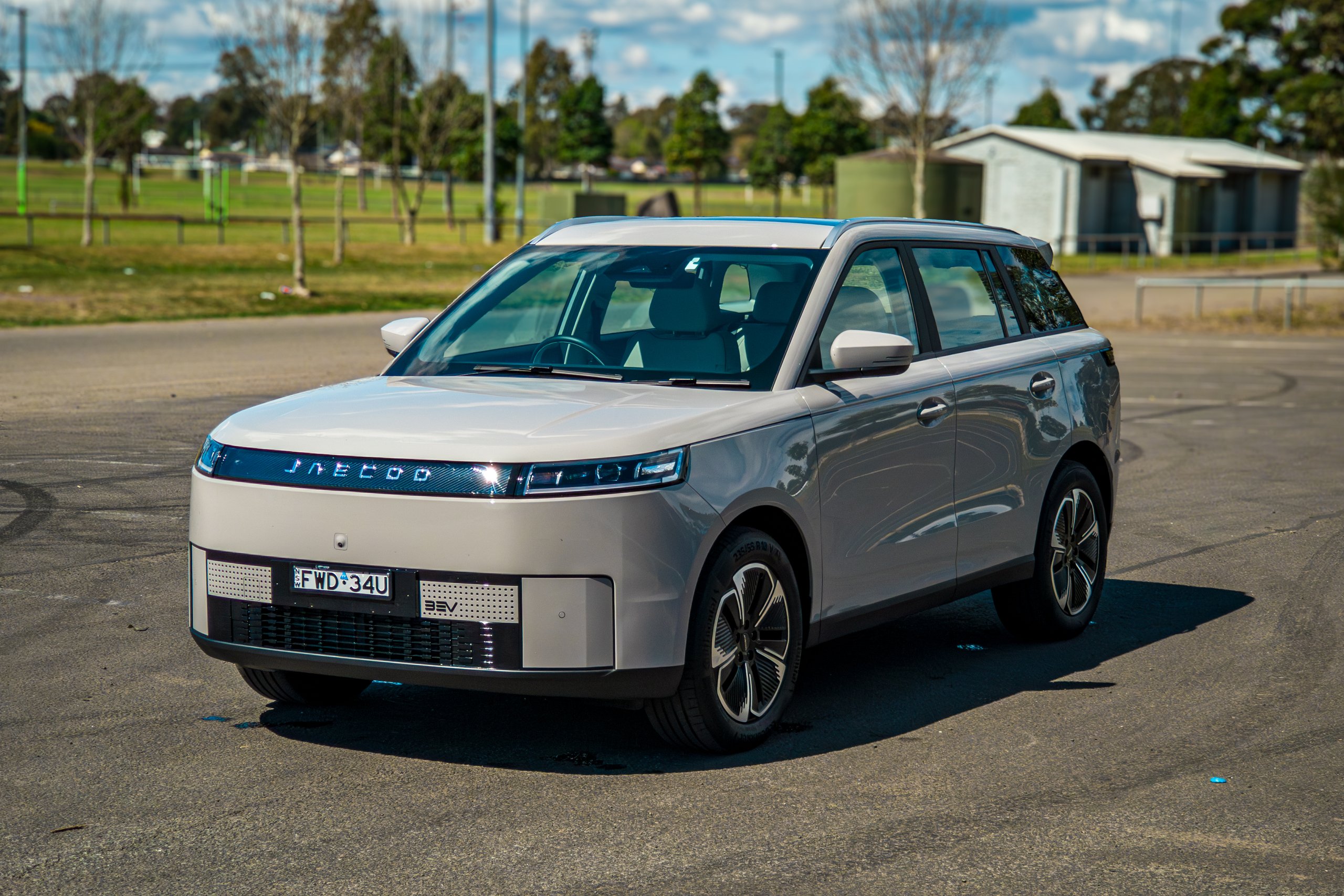
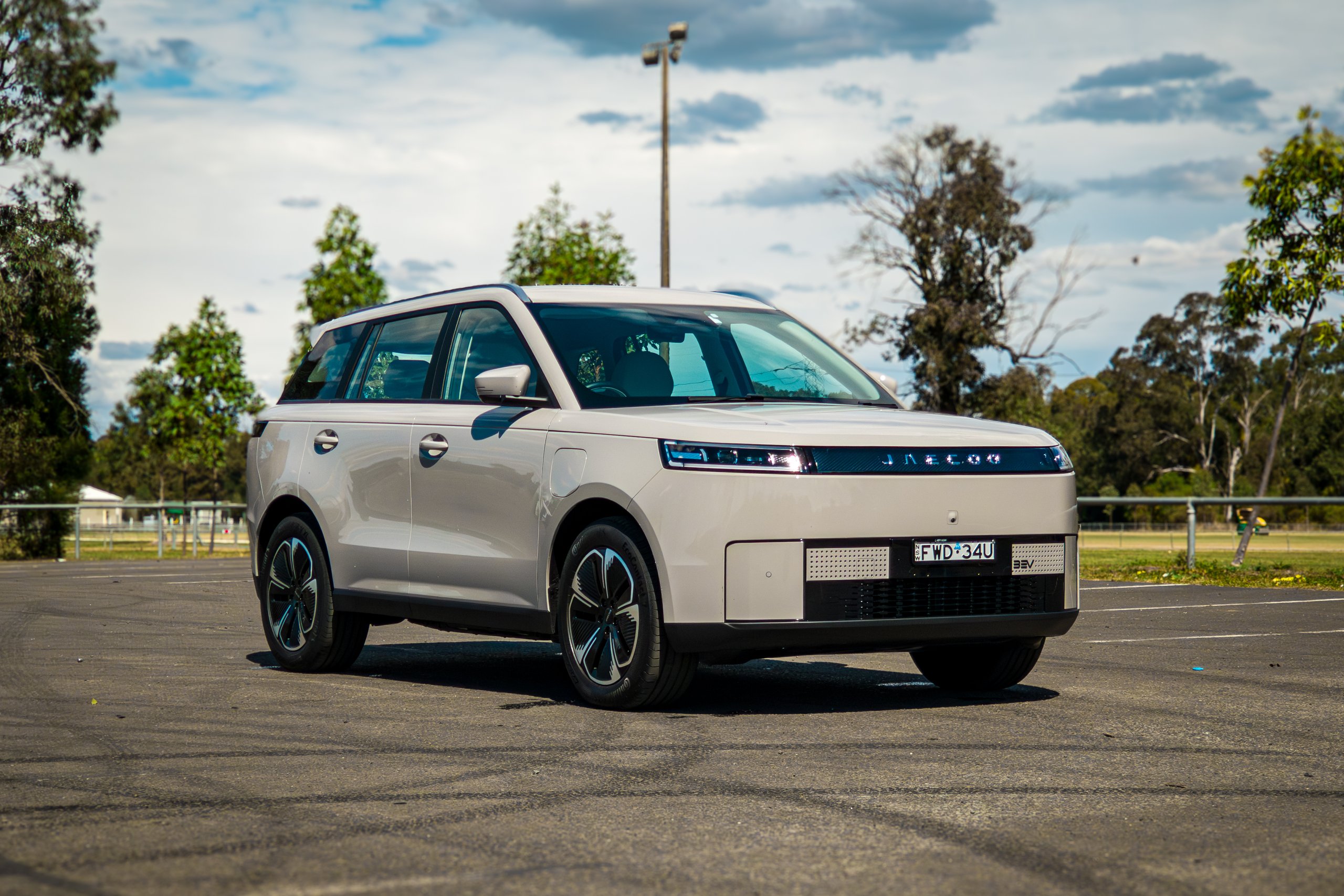
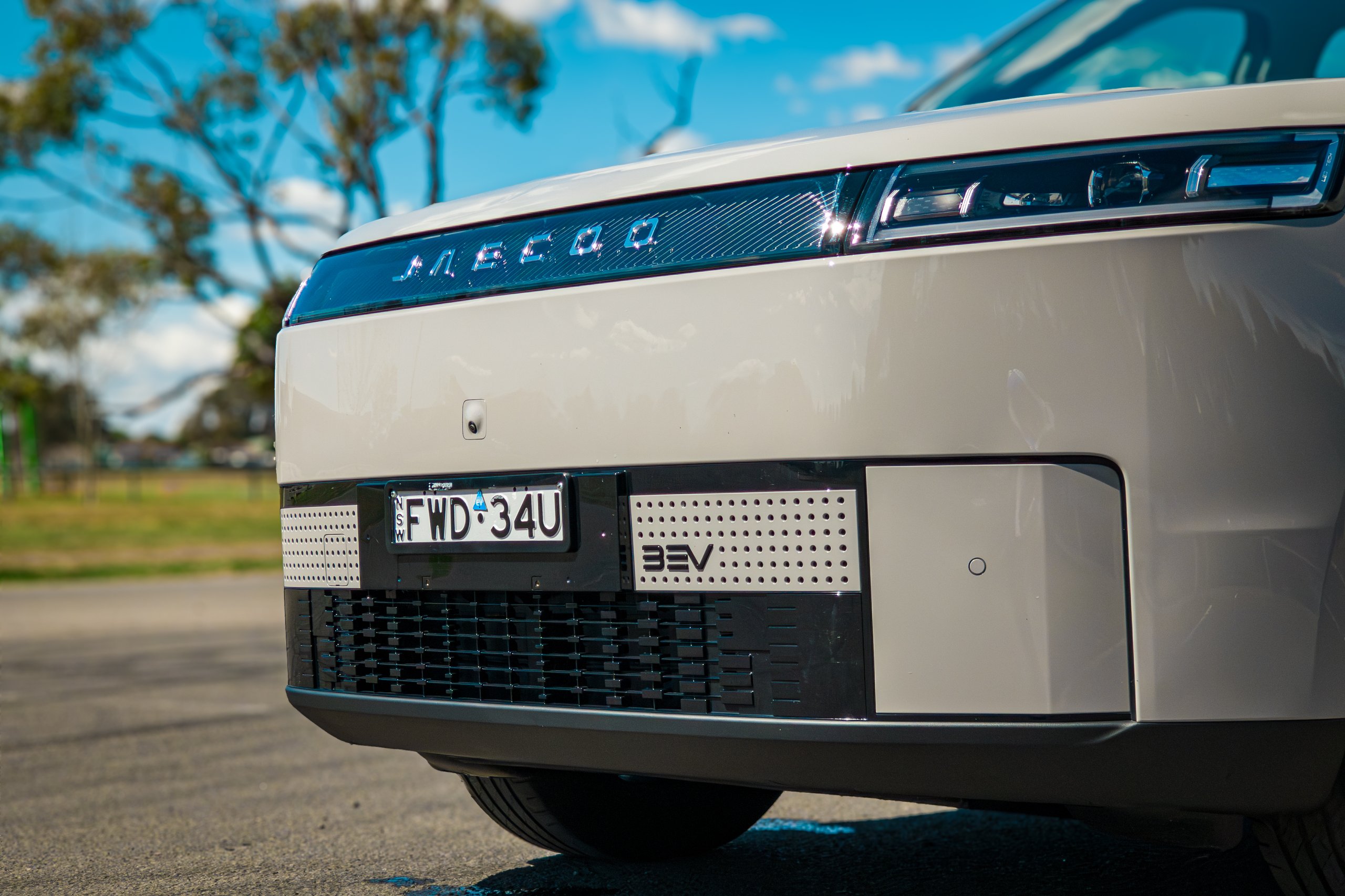
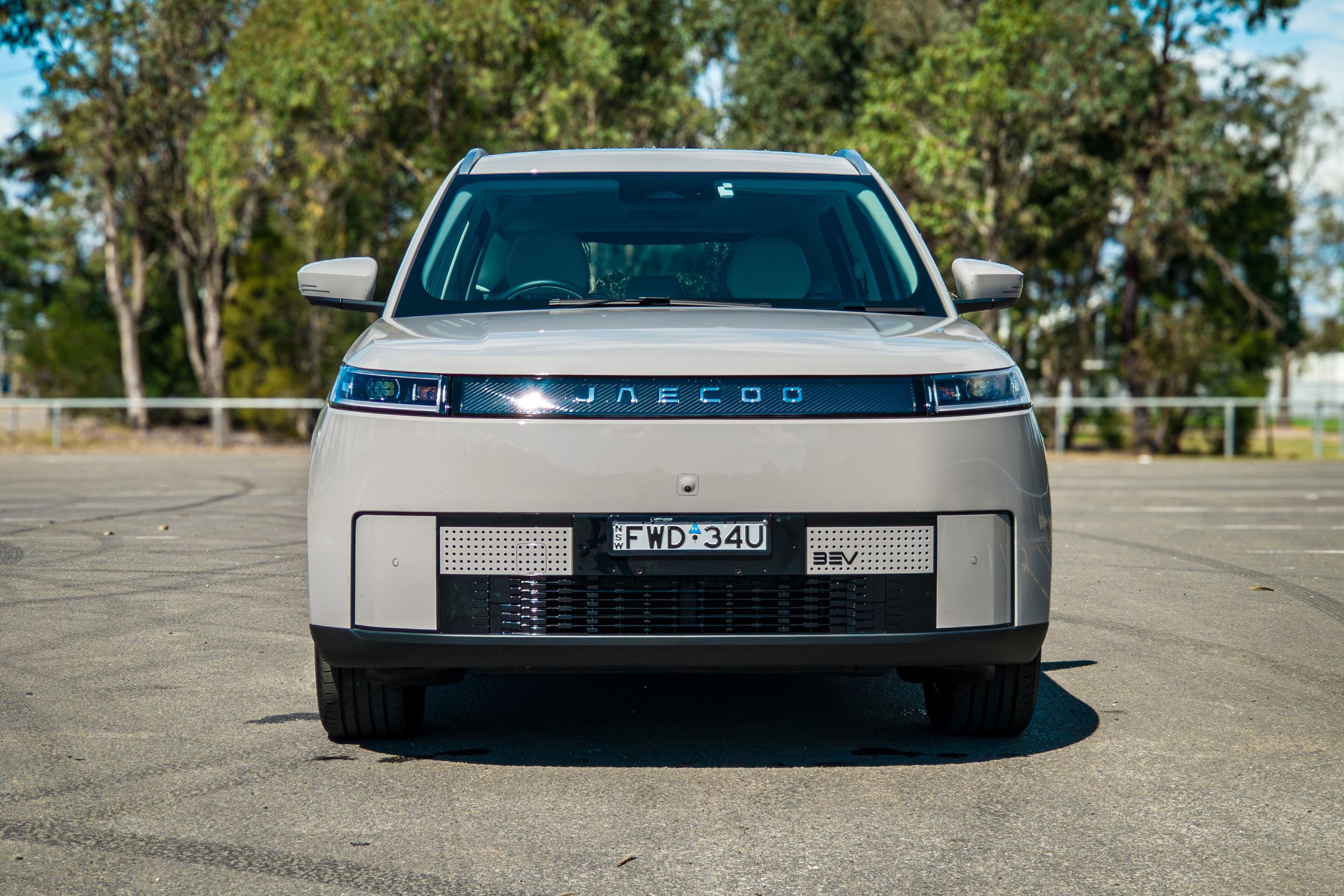
Walking up to it on pickup day, what hit me was how plain it looks. There’s an easy way to tell an EV and that’s the lack of a grille, and having grown up around cars with grilles, it looks odd to me without one, and on this car it stood out. I could tell straight away it was a Chinese EV, and nothing about it made me go, wow, that’s a nice car. The price is where I can be more forgiving, because for about $36,000 it’s a beggars can’t be choosers situation.
I have a very narrow driveway that I go up and down every day, so I’ve got a good sense of how much room there is on either side, and I’m used to proximity sensors going off. I was zipping down it in reverse the way I normally do when the car came to a complete stop, with nothing directly behind it. Every day down that driveway without incident, and the J5 has decided that was luck.
It was a 30-degree day and the aircon struggled to cool the car down, even at full blast with the ventilated seats going and the sunshade shut. I spend my afternoons in a freezer warehouse, so I notice how quickly a car’s aircon does its job, and this one took its time. I had to switch it from smart mode to rapid cooling to get a noticeable change, and even that took around 20 minutes. It also keeps changing itself back to smart mode, so the fix had to be redone, and because changing it means looking at the screen, the driver monitoring told me off for being distracted while I did it. The car changes its own aircon, then flags the driver for changing the aircon. Someone in that cabin is distracted, and it isn’t me.
The numbers: 300km from a full charge down to 9 percent, and 16.4kWh/100km on the trip readout, mostly commuting with a stint in Sport and a stint in the most conservative mode. The car’s own long-run counter, which nobody had reset since it joined the press fleet, showed 16.8kWh/100km over 3,246km, so my week was a touch better than its average. Ten minutes on a 75kW charger, the only one I could get to, took it from 9 to 30 percent. At around 75 cents a kilowatt hour, the going rate at public fast chargers, that works out to about $9 of electricity.
A coworker I was dropping home asked what the sound was. It was the speed-limit chime, which makes a little honking noise, and that was the only second opinion the car got all week.
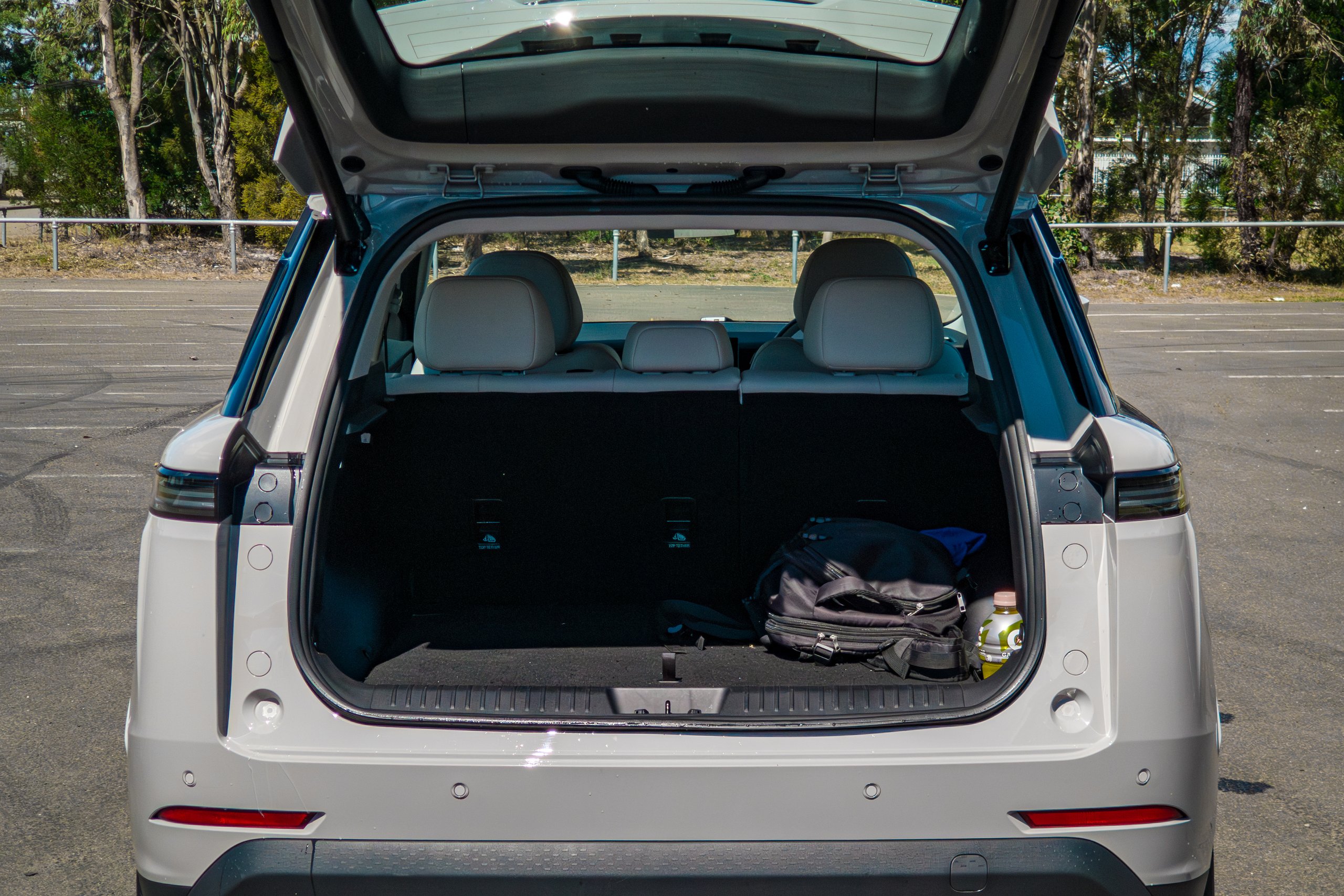
What does the 2026 Jaecoo J5 EV look like?
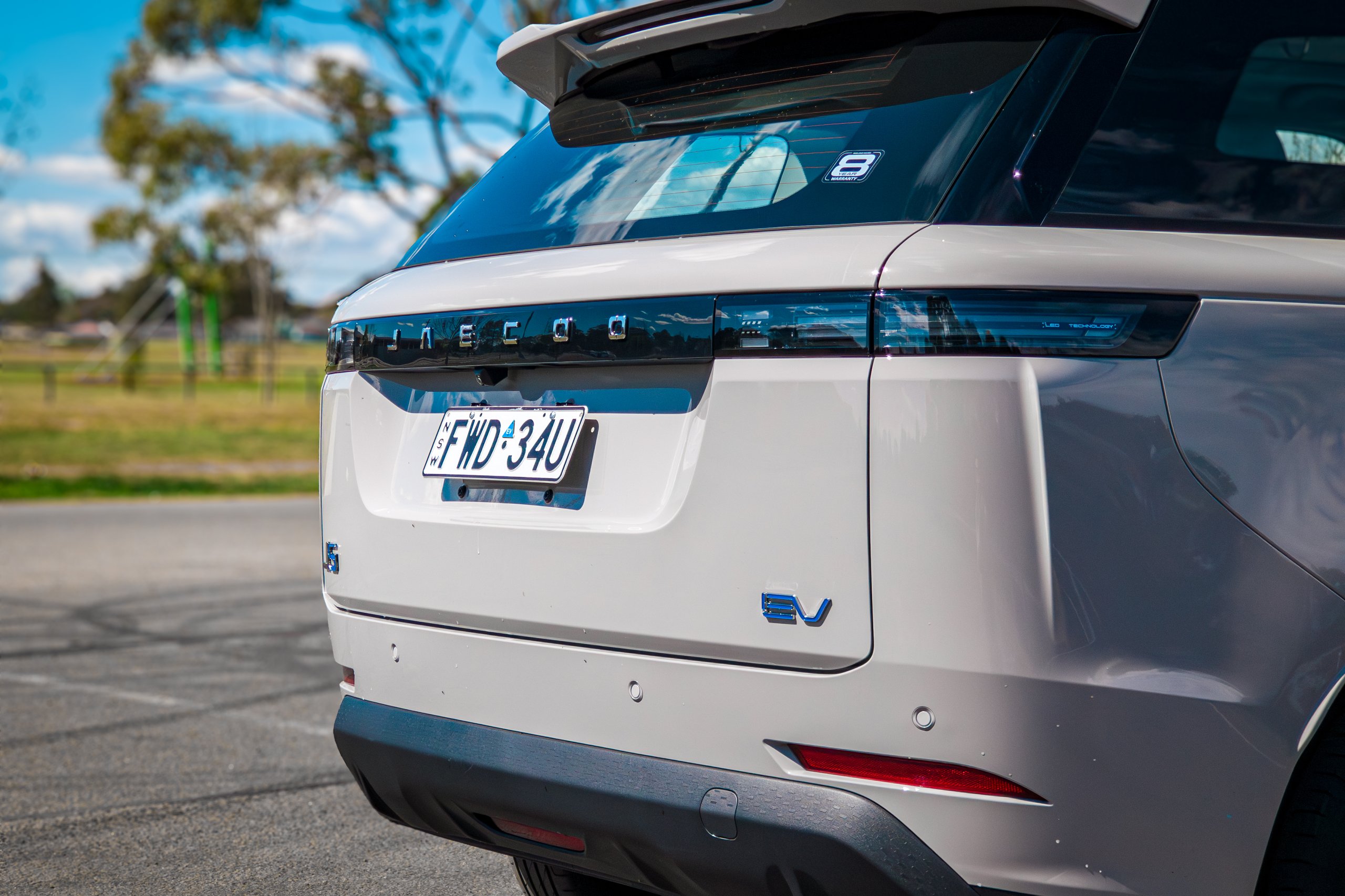
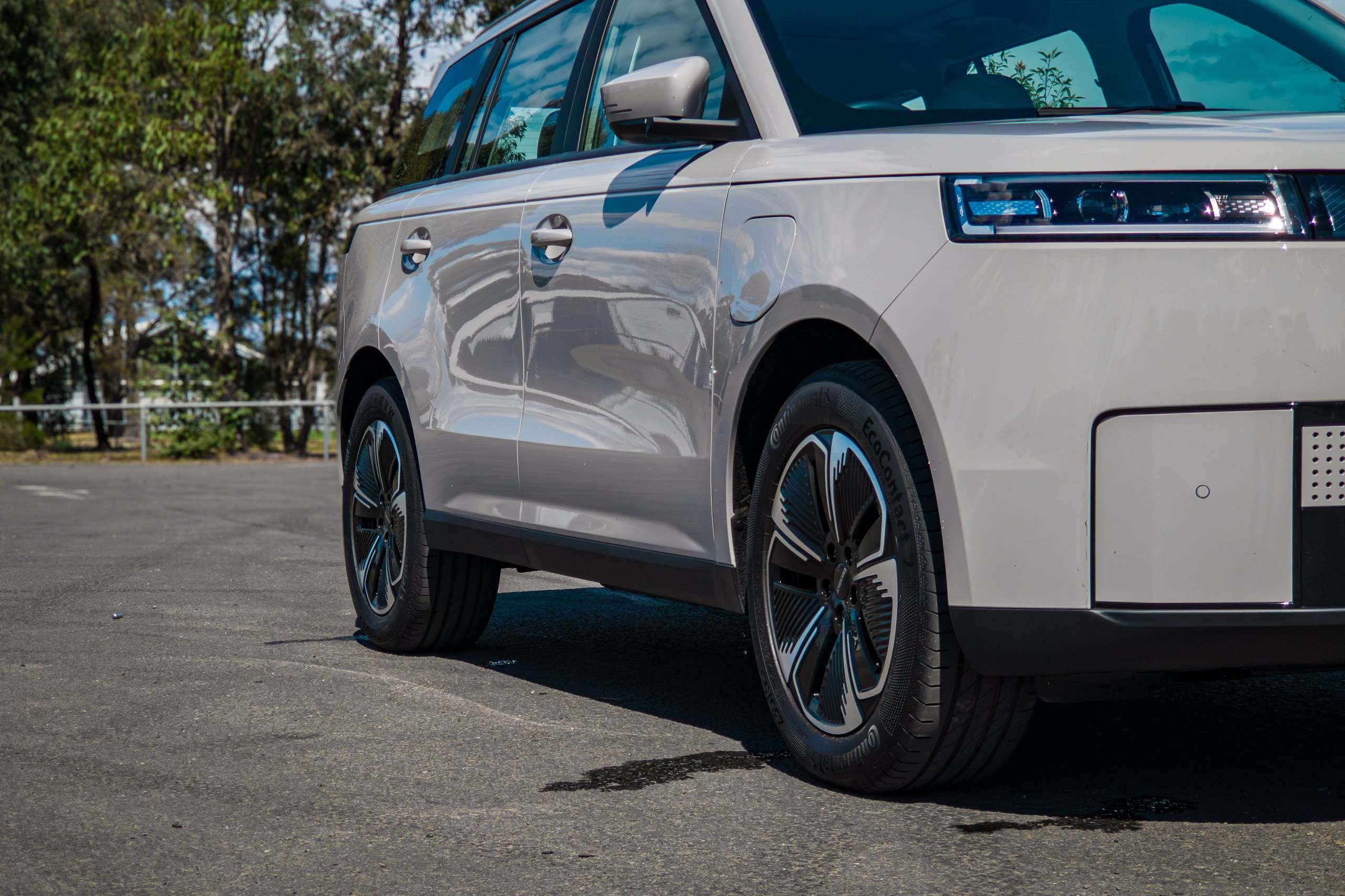
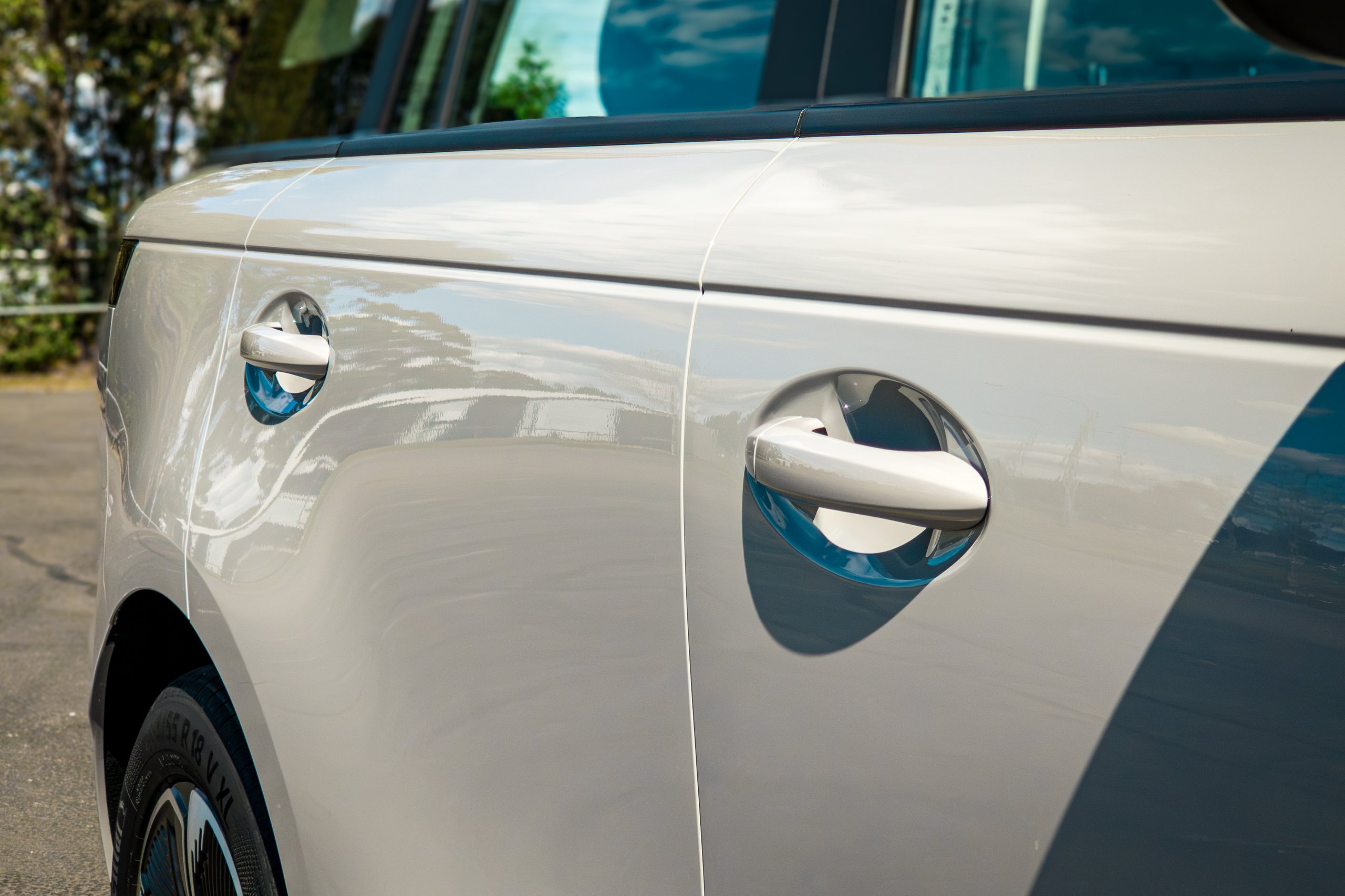
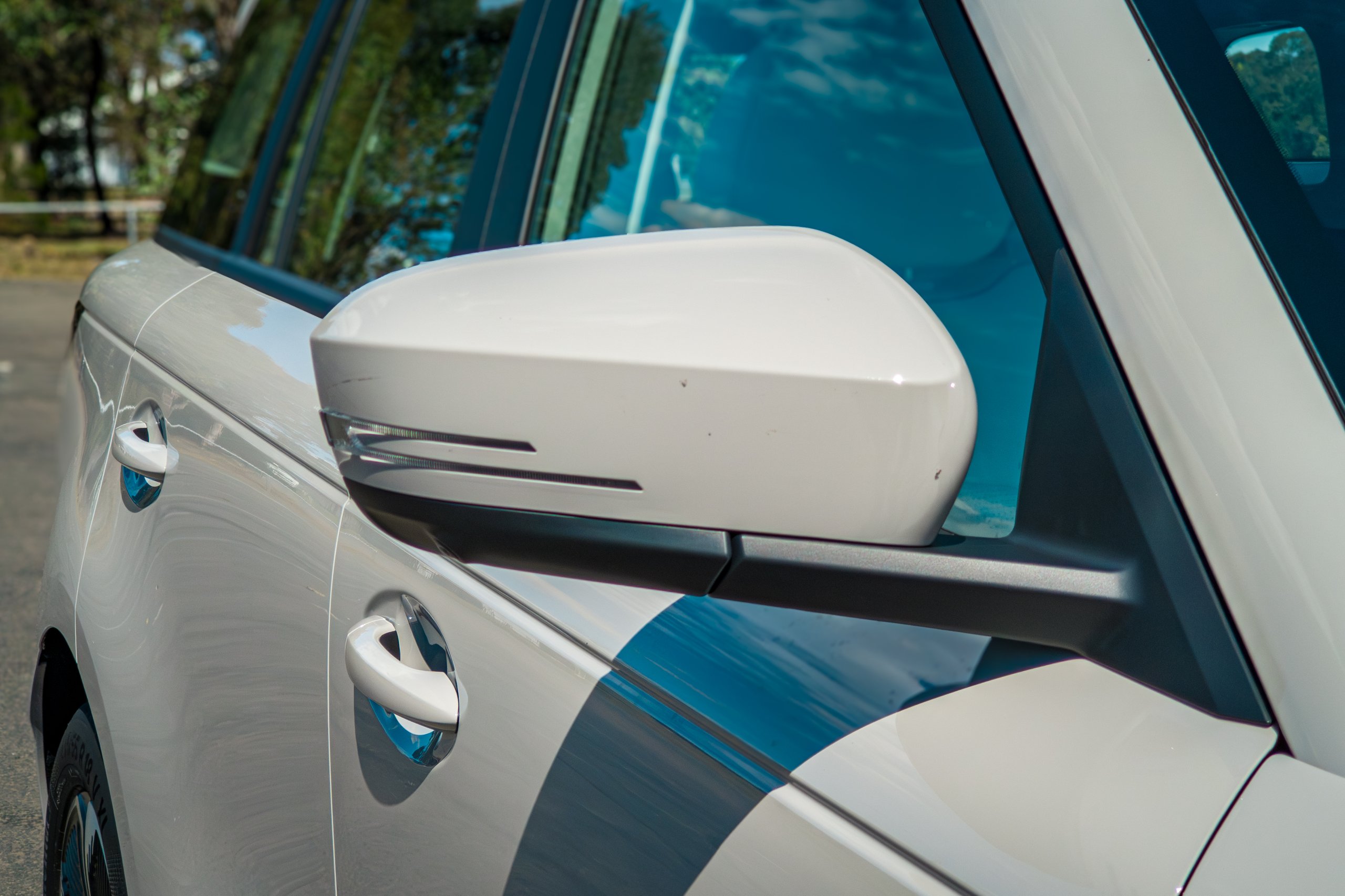
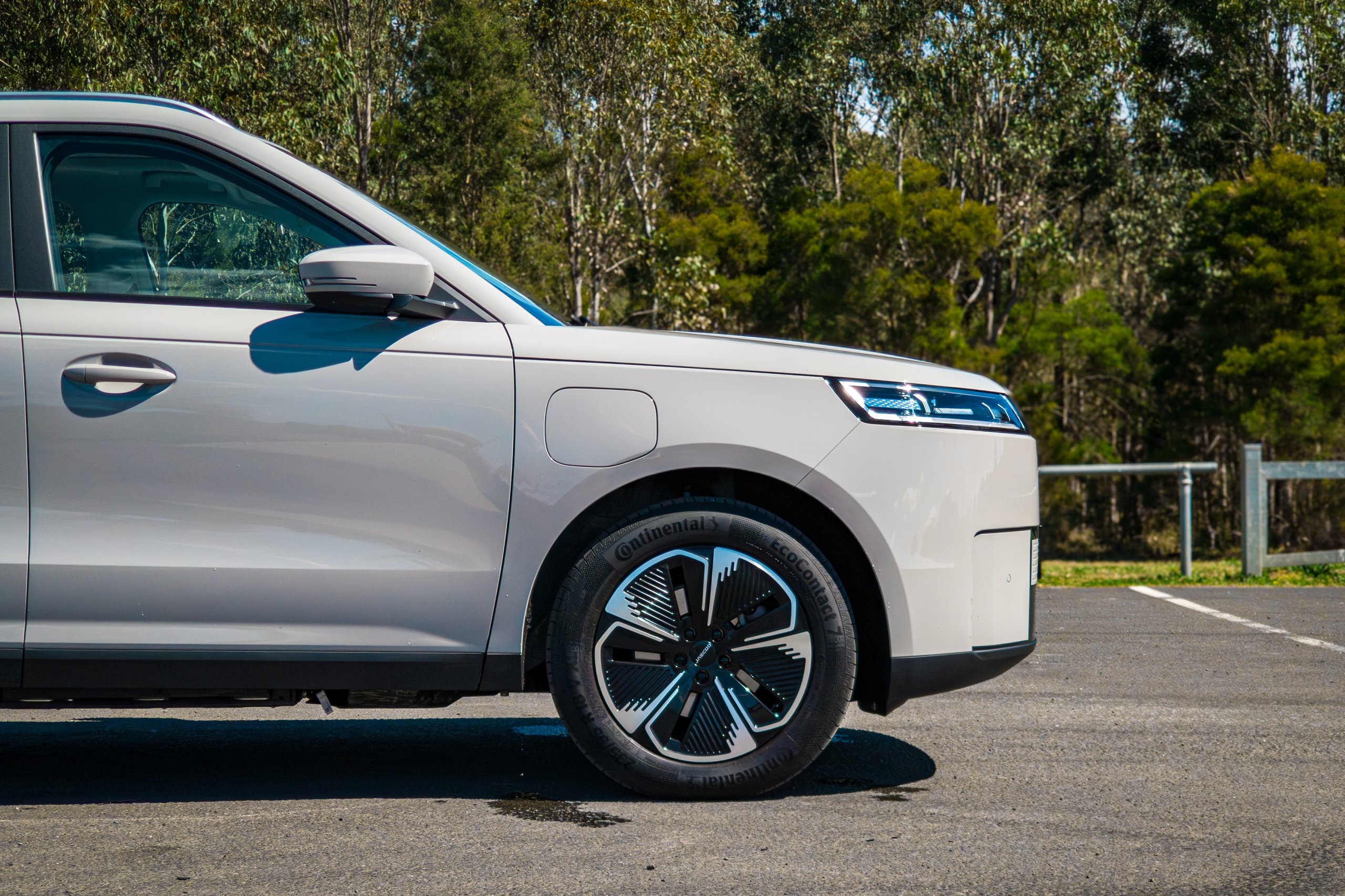
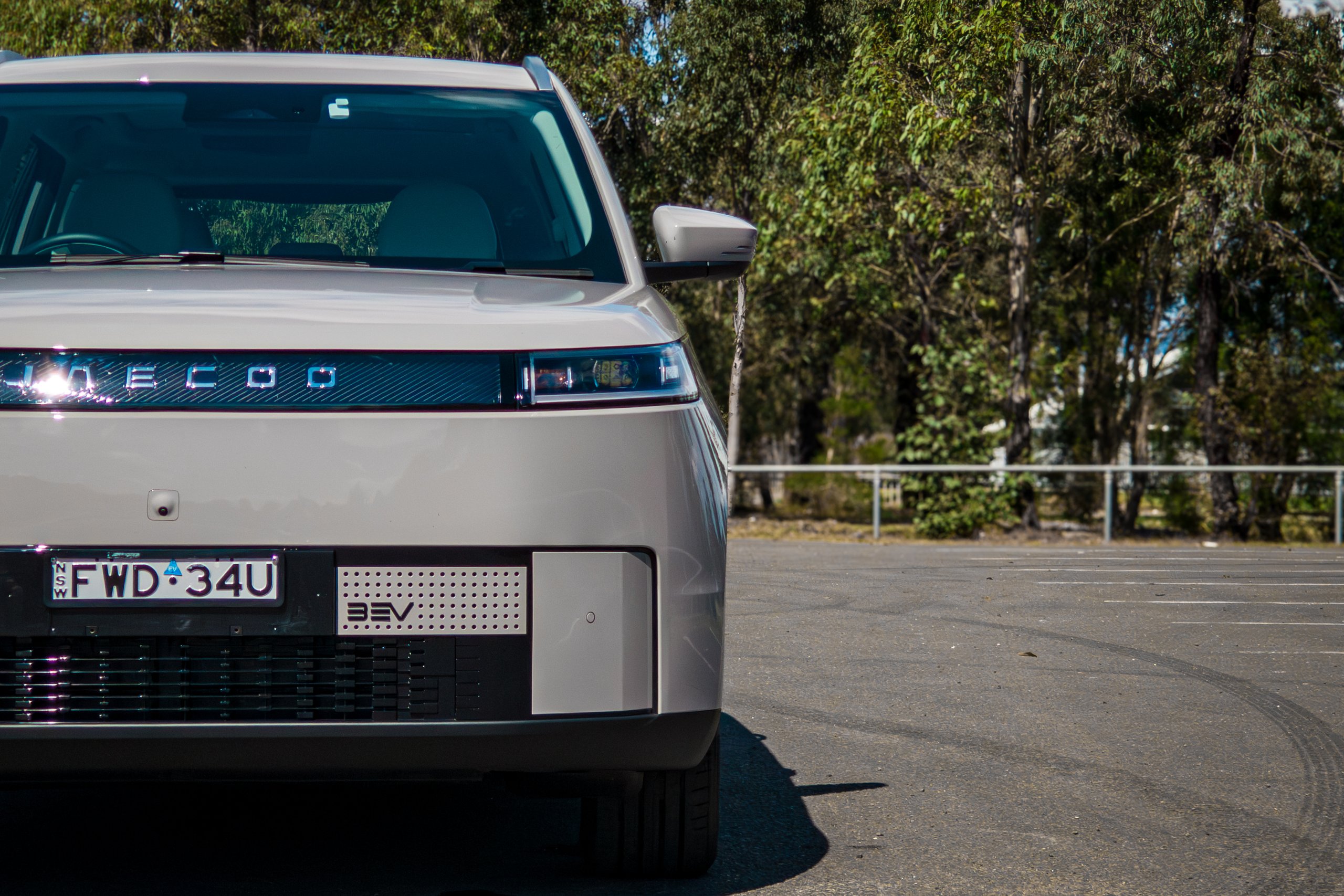
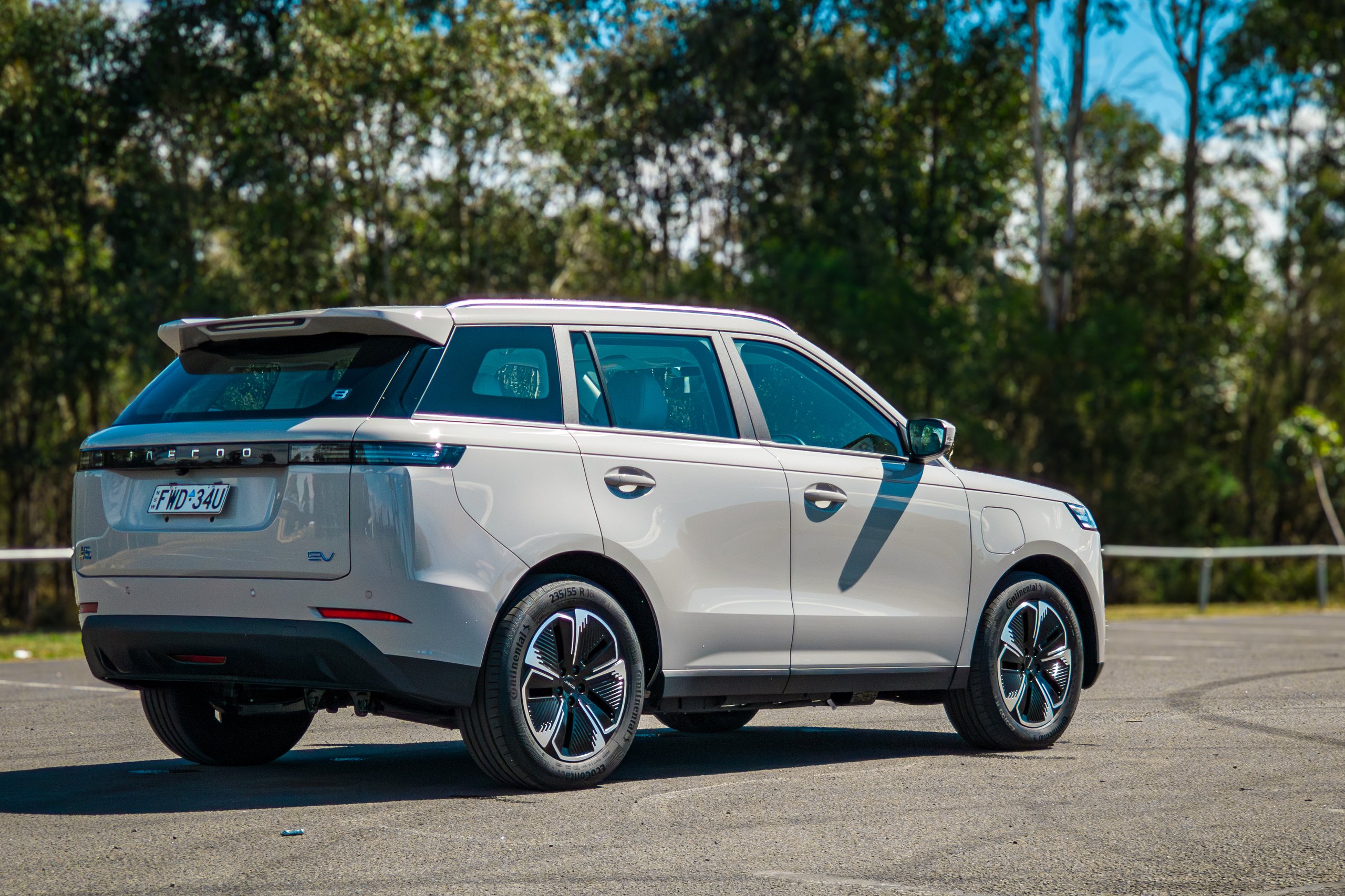
It’s plain. There’s a panel where the grille would be, with active air flaps behind it, but it reads as no grille. The best angle is low and straight on from the front, and the rear three-quarter isn’t bad, but the front three-quarter is the one I don’t like. It doesn’t sit right with the rest of the car, and that’s usually the angle every car looks best from.
At 4,380mm long, 1,860mm wide and 1,650mm tall on a 2,620mm wheelbase it’s a small SUV. Roof rails, a rear spoiler, LED projector headlights and LED tail lights are standard, and it rides on 18-inch aero alloys with 235/55 Continental EcoContact 7 tyres. Stone Grey is the only no-cost colour, and Arctic White, Carbon Black and Stormy Blue cost extra.
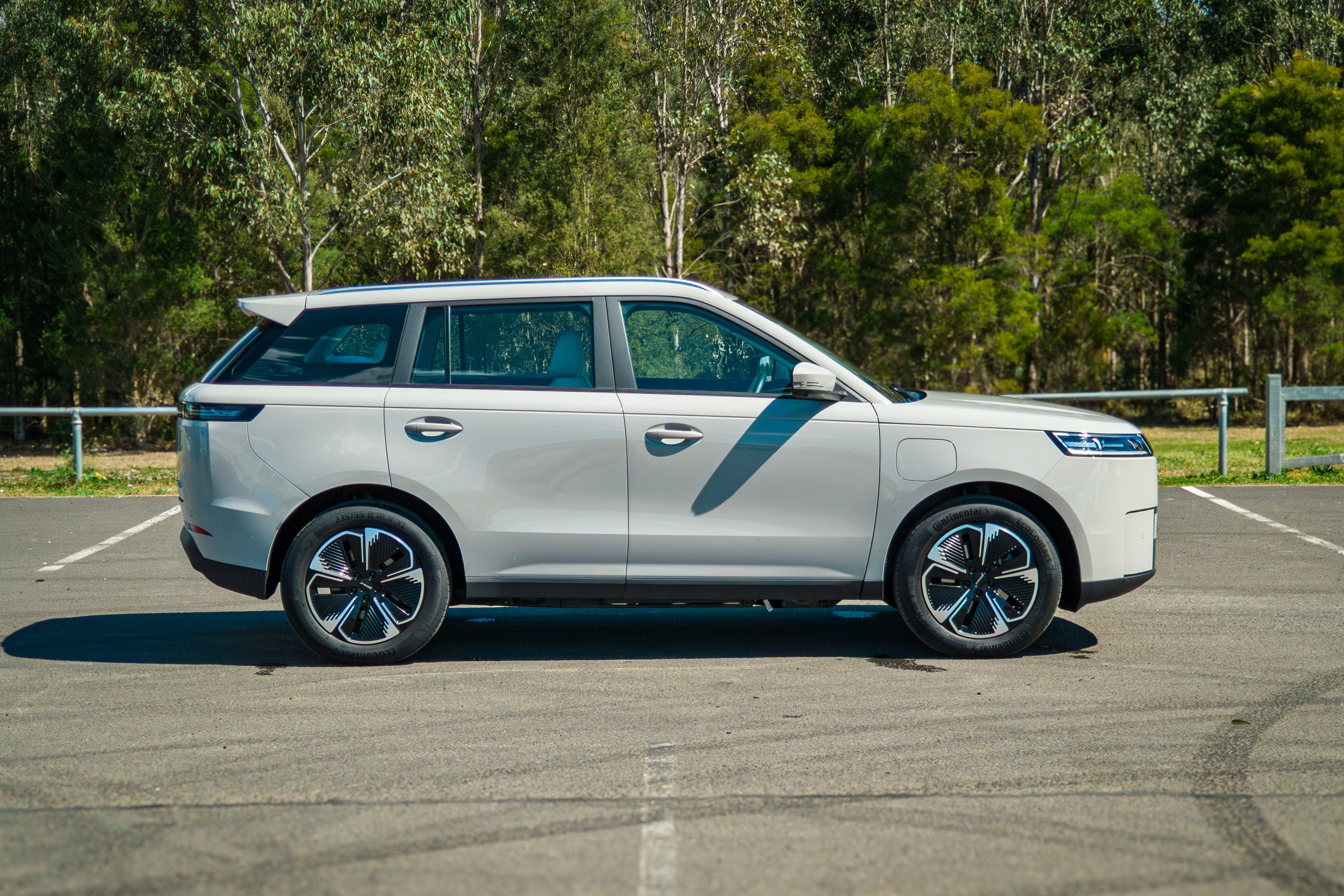
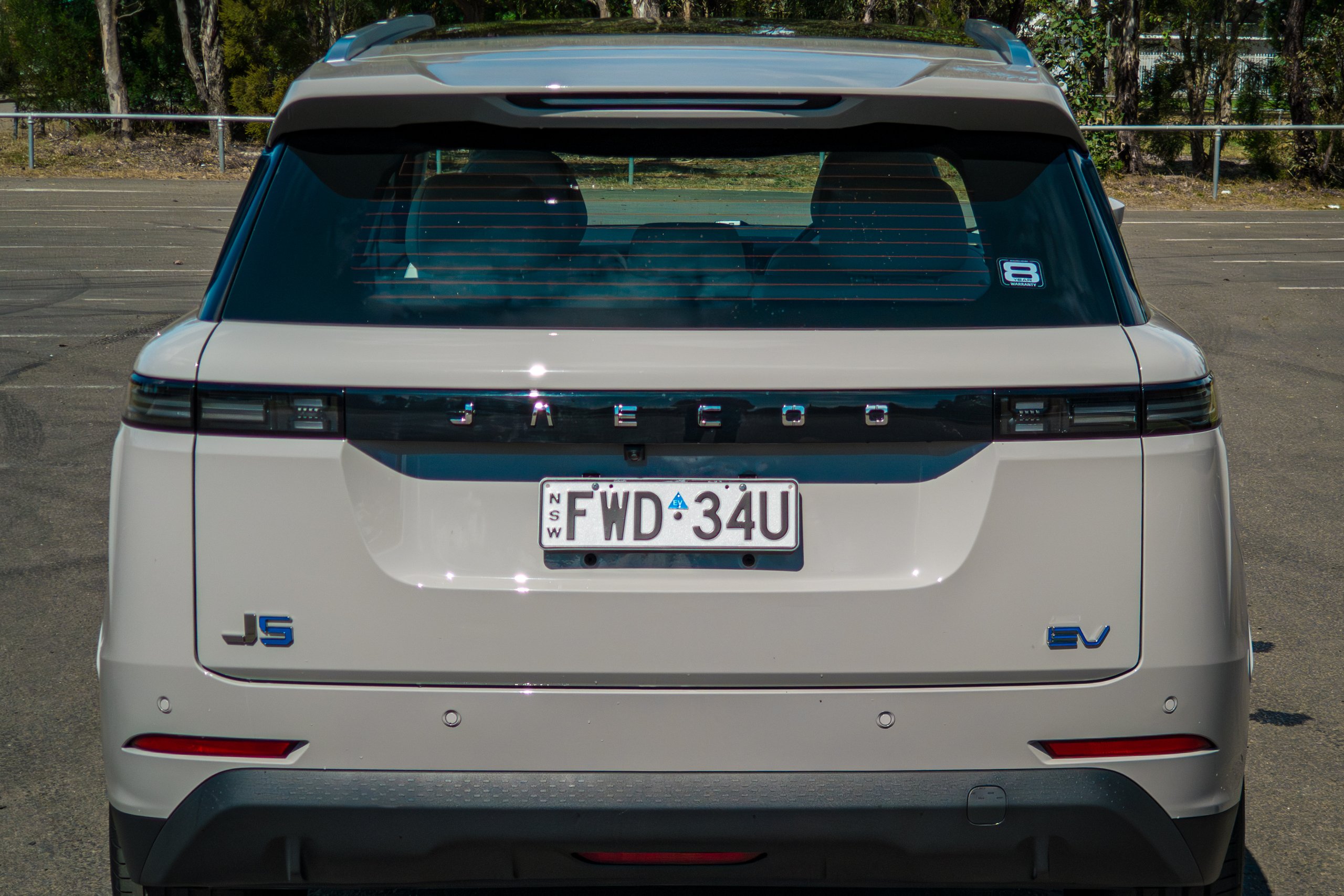
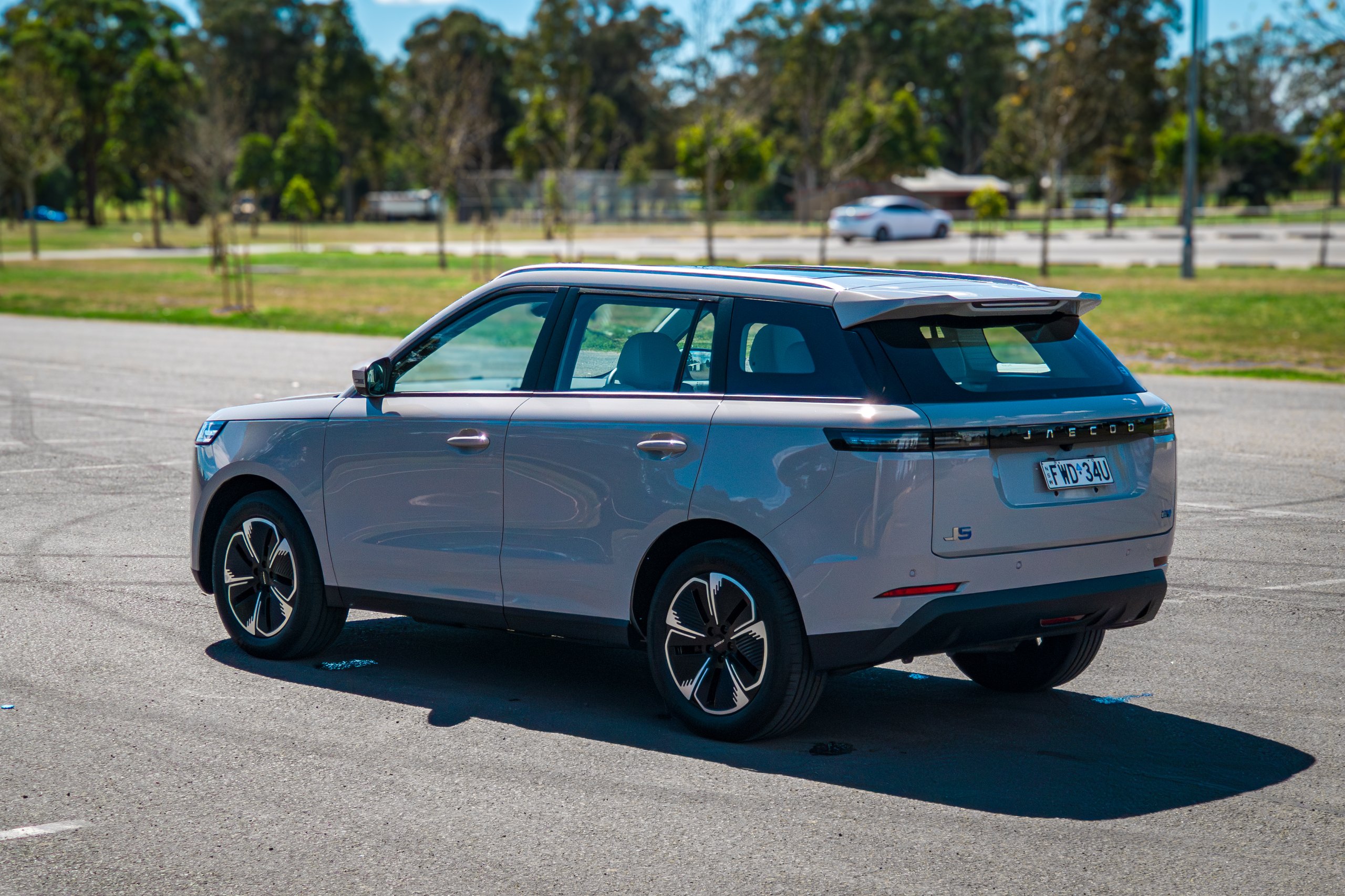
What is the 2026 Jaecoo J5 EV like inside?
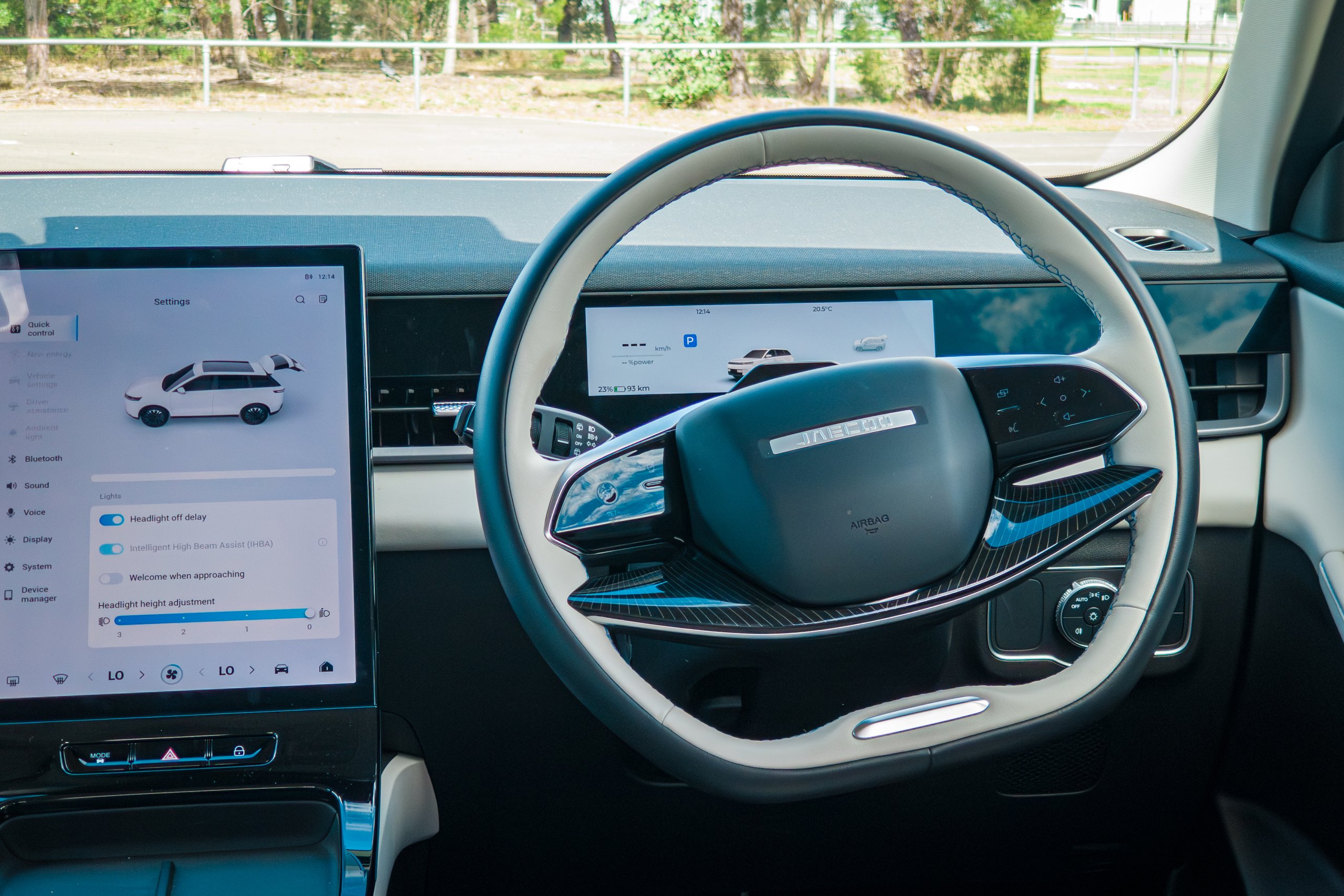
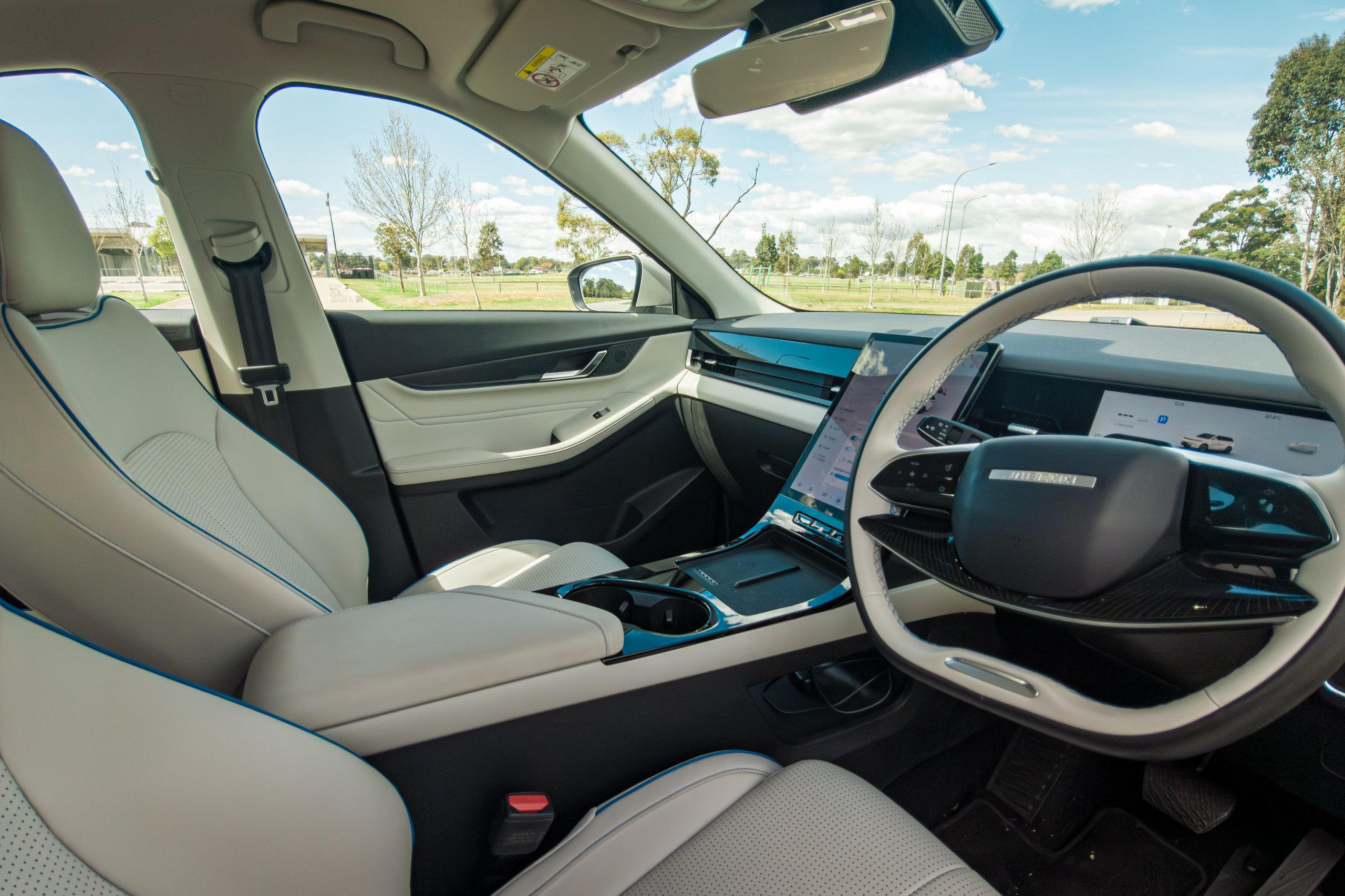
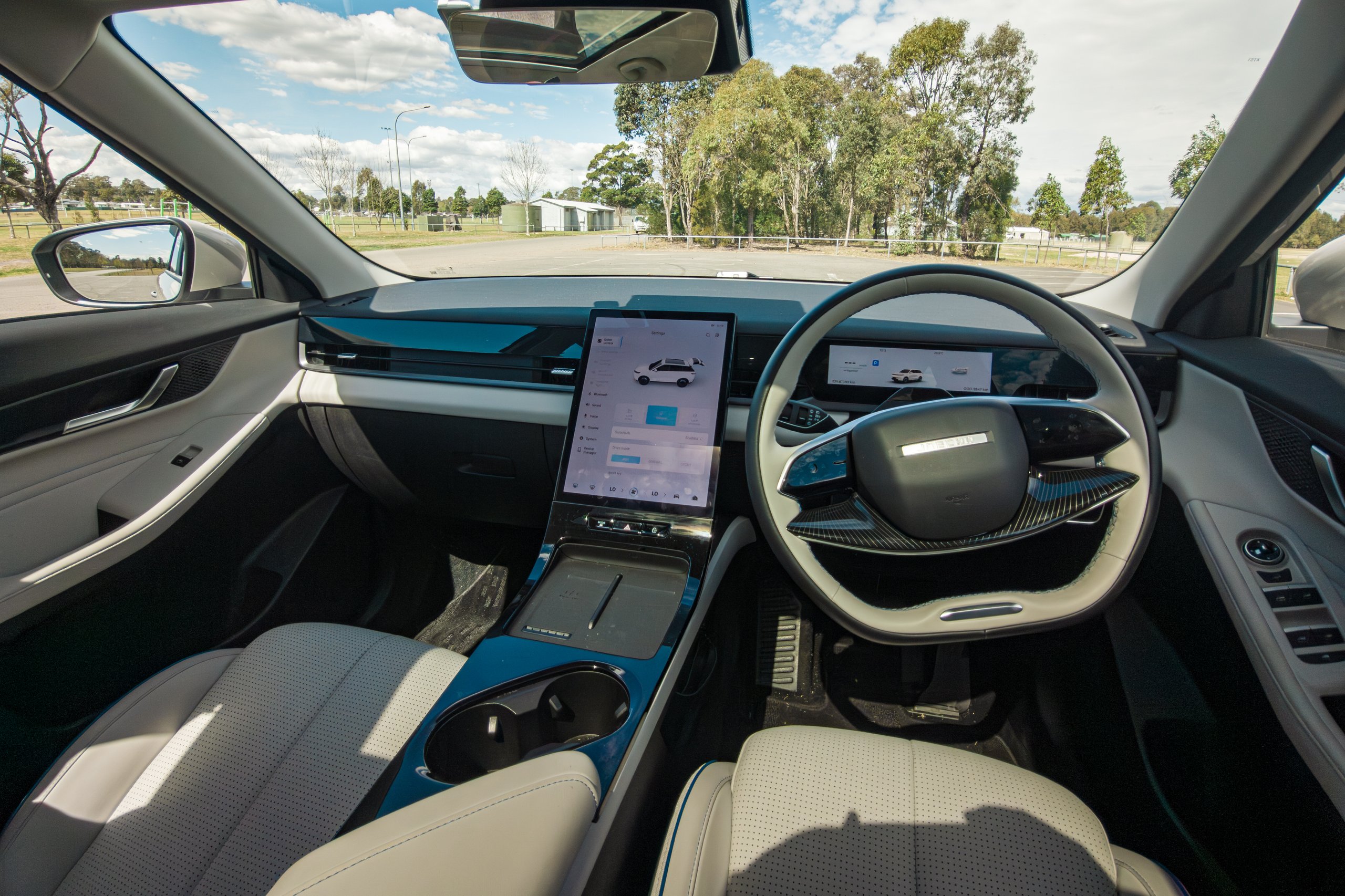
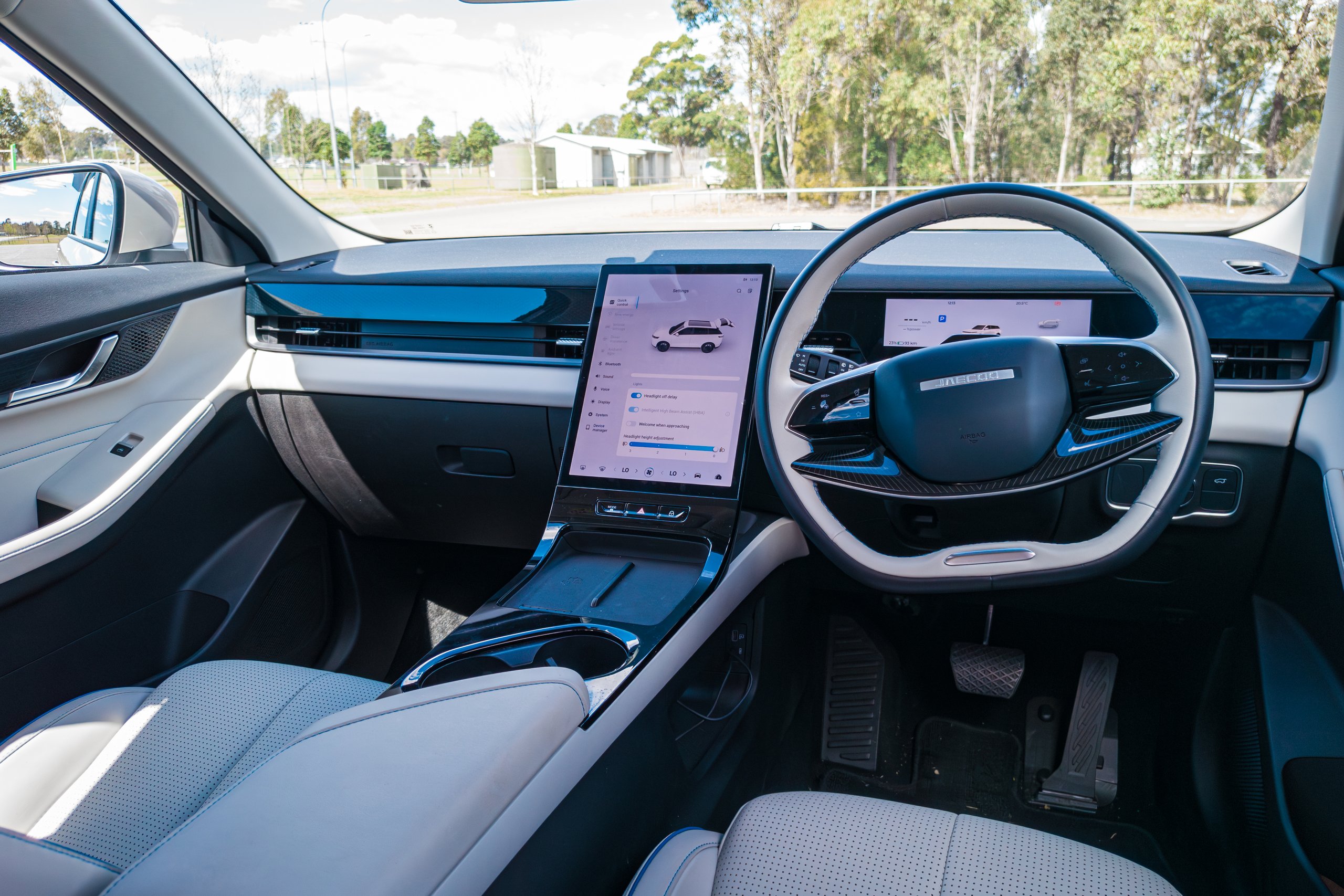
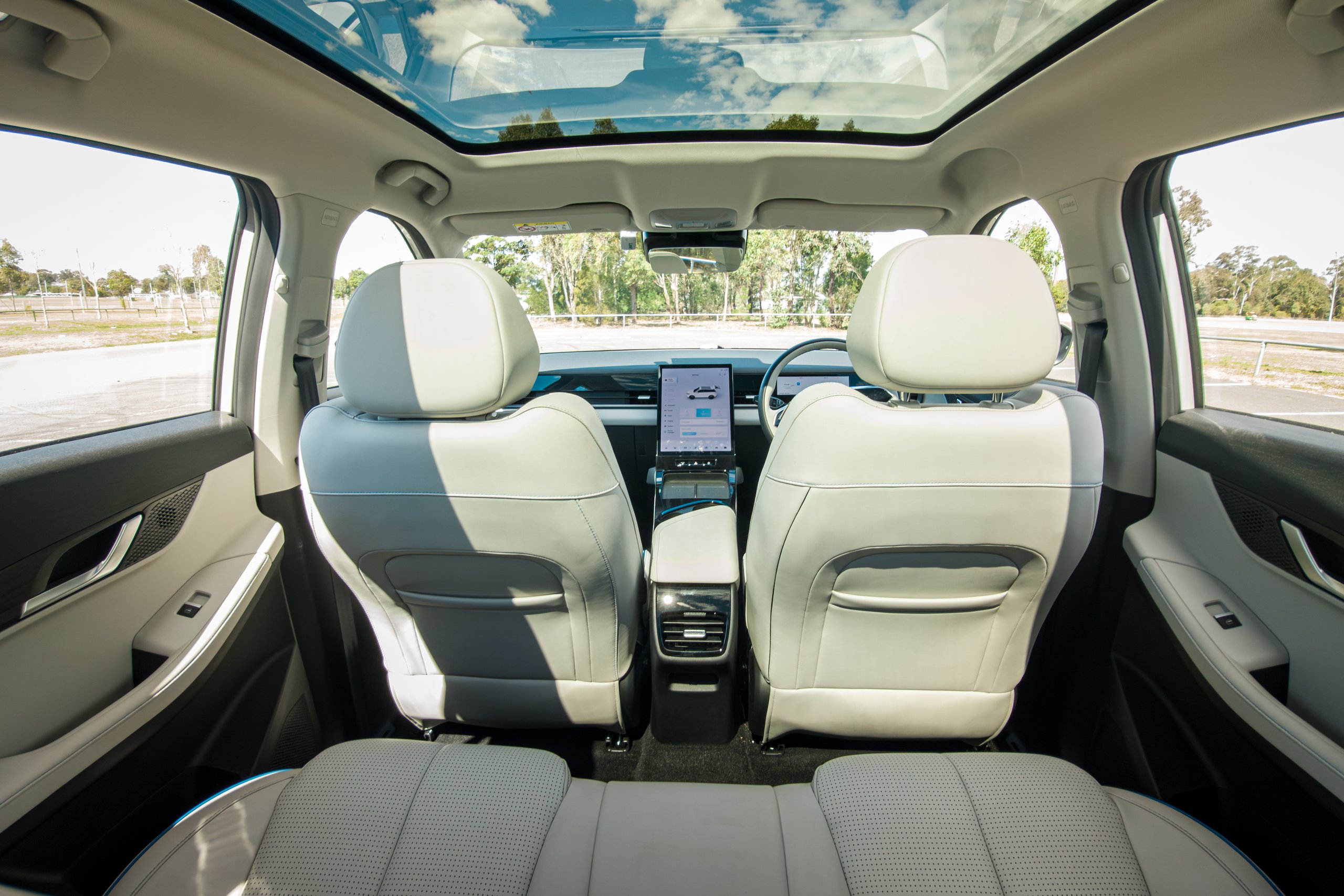
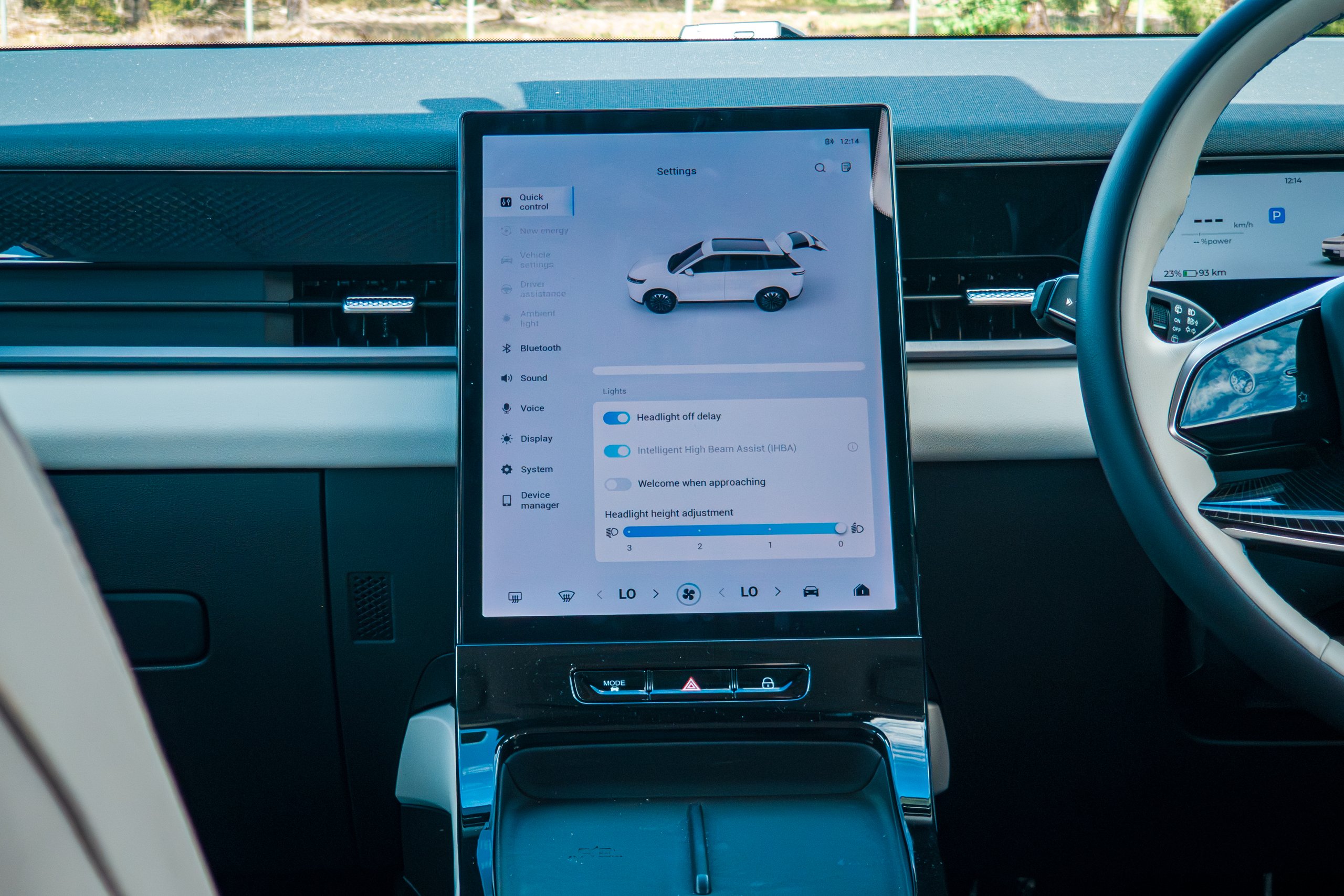
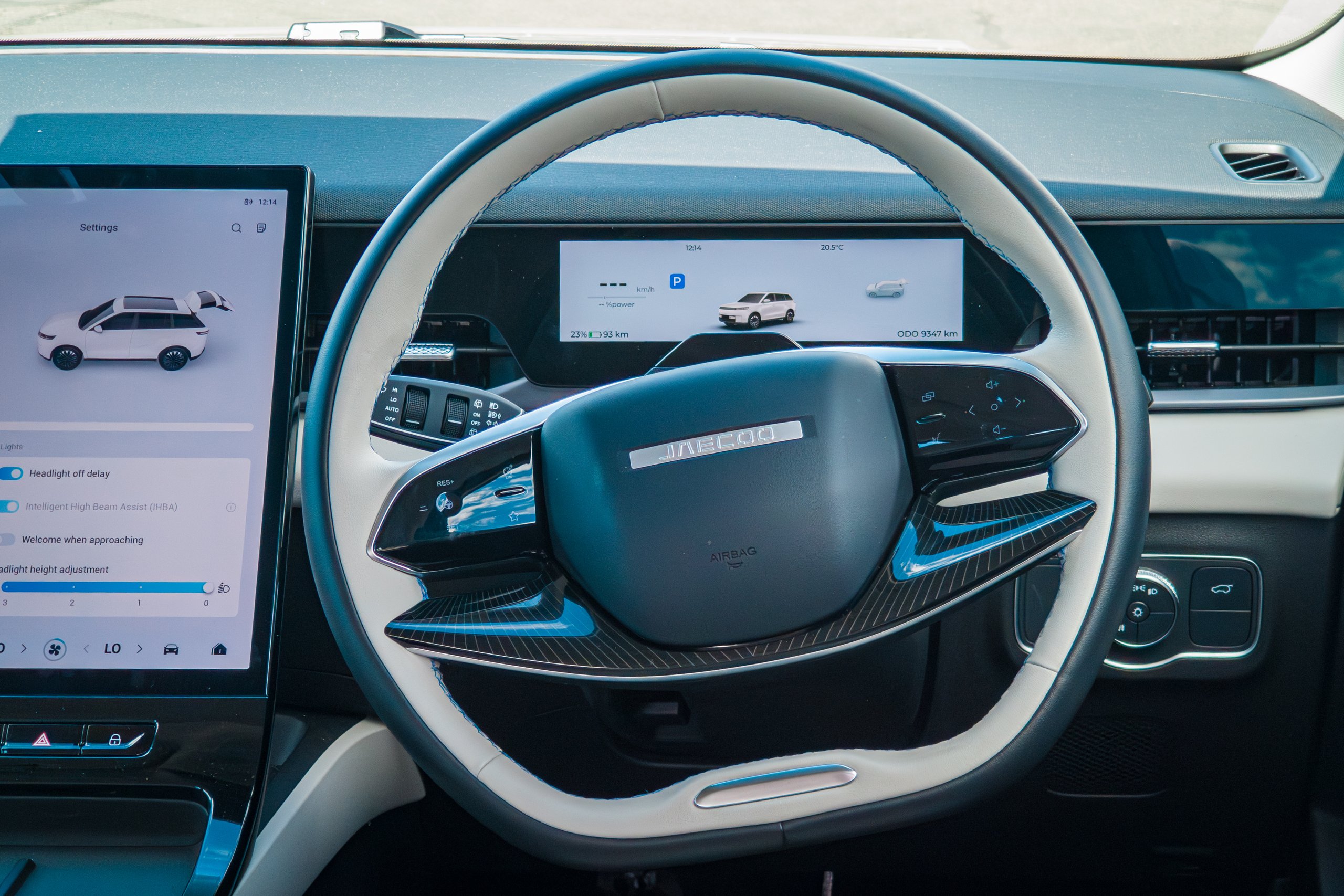
The interior is plain too, a light synthetic leather with blue piping. I liked the blue lining, though not everyone will. Jaecoo calls the seats pet-friendly, with a TÜV SÜD certificate for scratch resistance and easy cleaning. The 13.2-inch centre screen is vertical, which I like, because it doesn’t stick up above the sightlines and it uses the whole centre of the dash. The driver’s cluster is 8.88 inches, and I chuckled when I first saw it. I’ve been spoilt by cars that run a display across the whole dashboard, and this one is tiny in comparison. It works the same, it just feels different to look at. It’s small, but it’s there. It does everything the big ones do, at a size you have to go looking for.
The seats don’t suit me. I’m 6’3″ and the six-way powered driver’s seat doesn’t go down far enough, and the cushion feels designed for smaller people, to the point where it feels like I’ve got things in my back pocket when I’m sitting in it. The seat has a shape in mind, and it isn’t mine. Heated and ventilated front seats are standard, and the ventilation got a workout.
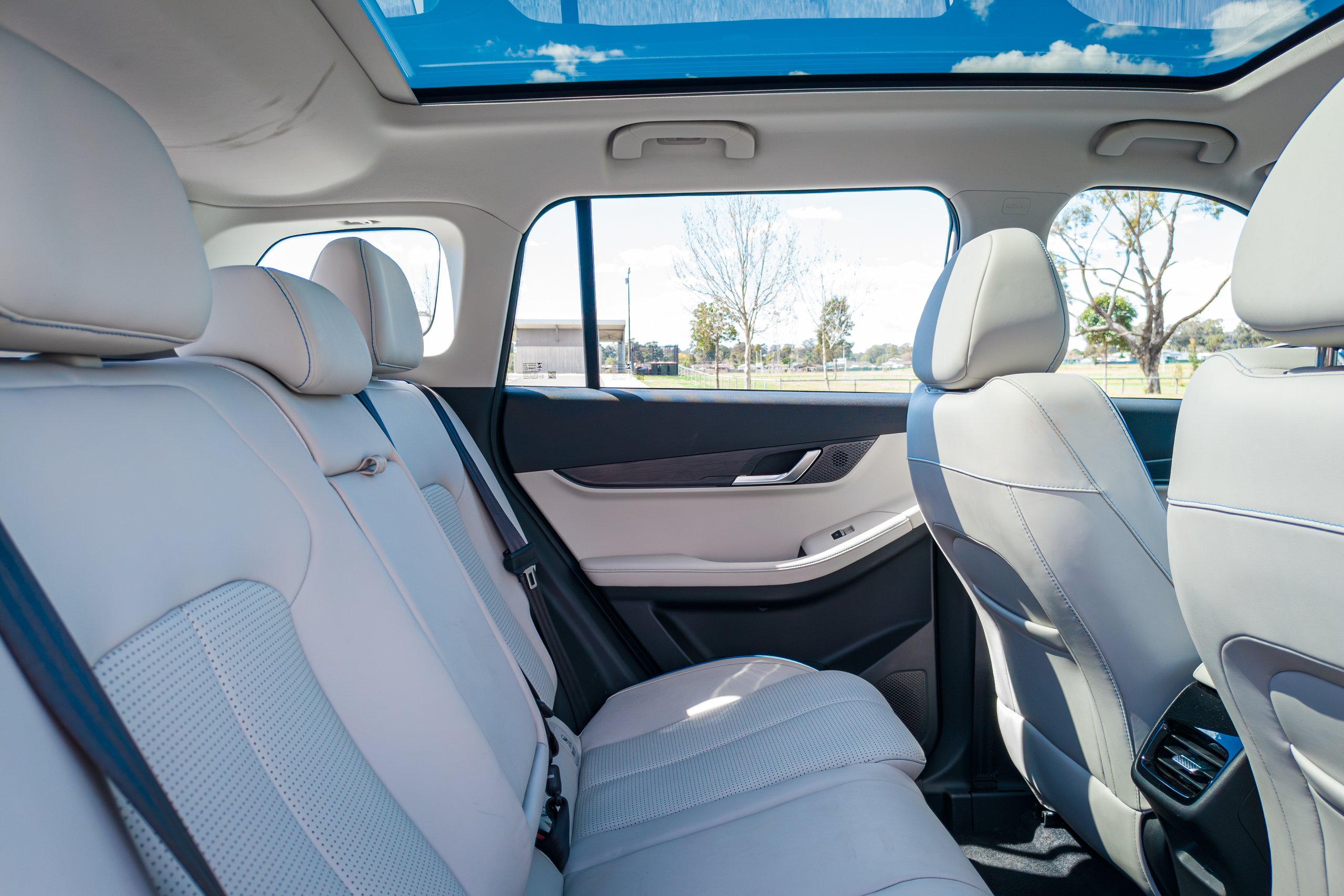
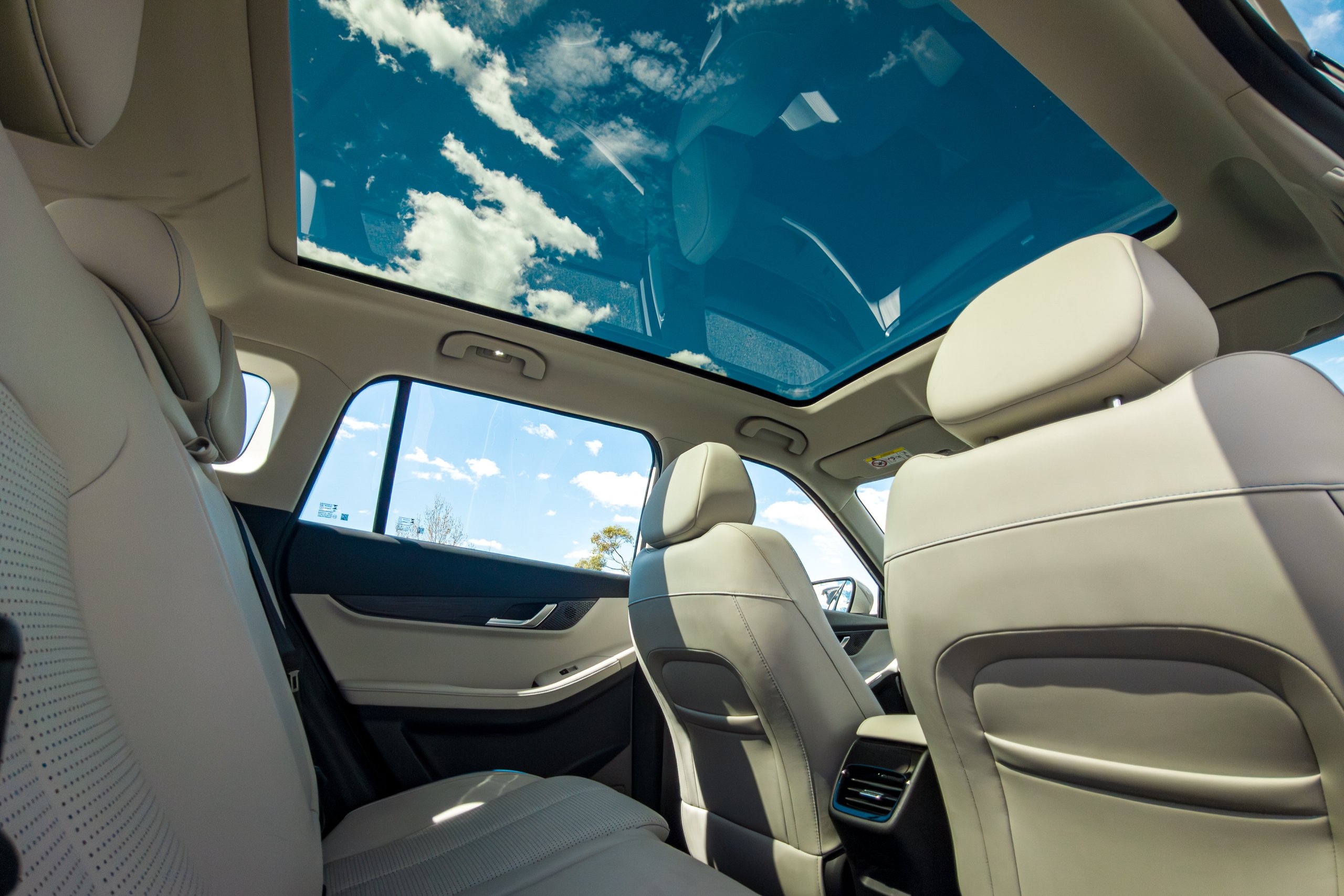
The steering wheel buttons work, but they feel a bit tacky compared to competitors, and you have to press them with intention for anything to happen. There are no physical buttons for the screen, and the gear selector is a column stalk. The glass roof is massive and spans most of the car, with a powered sunshade, and the visibility from the big front and side windows was one of the good surprises.
Storage
The centre console has an armrest with a storage box underneath, two cupholders, a 50W wireless charging pad, a USB-A port for data and a fast-charge USB-C. There’s a 12-volt outlet up front and another in the boot, map pockets on the front seat backs, two coat hooks and door bins. The spec sheet doesn’t list any storage under the bonnet.
Rear seat and boot space
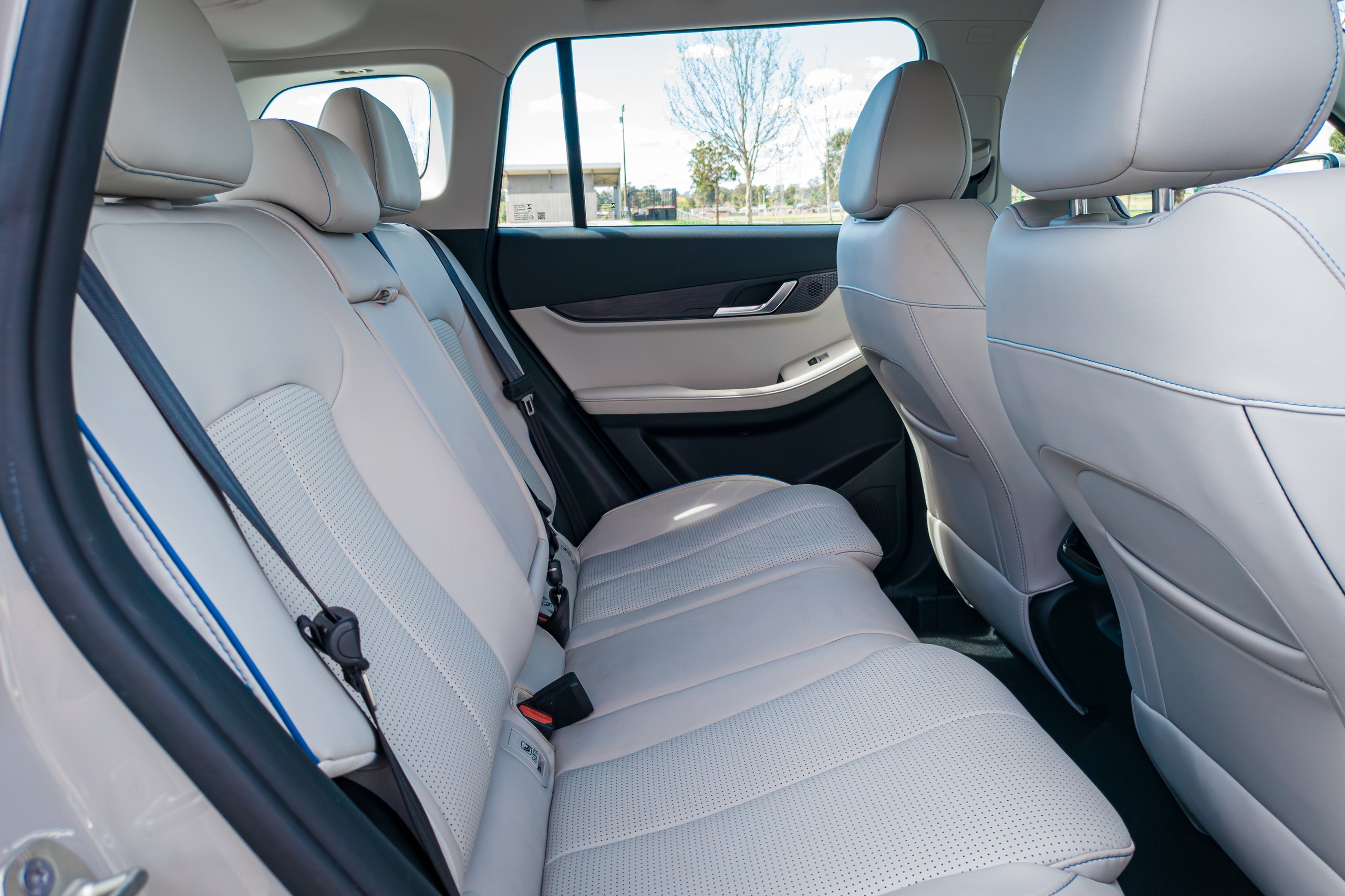
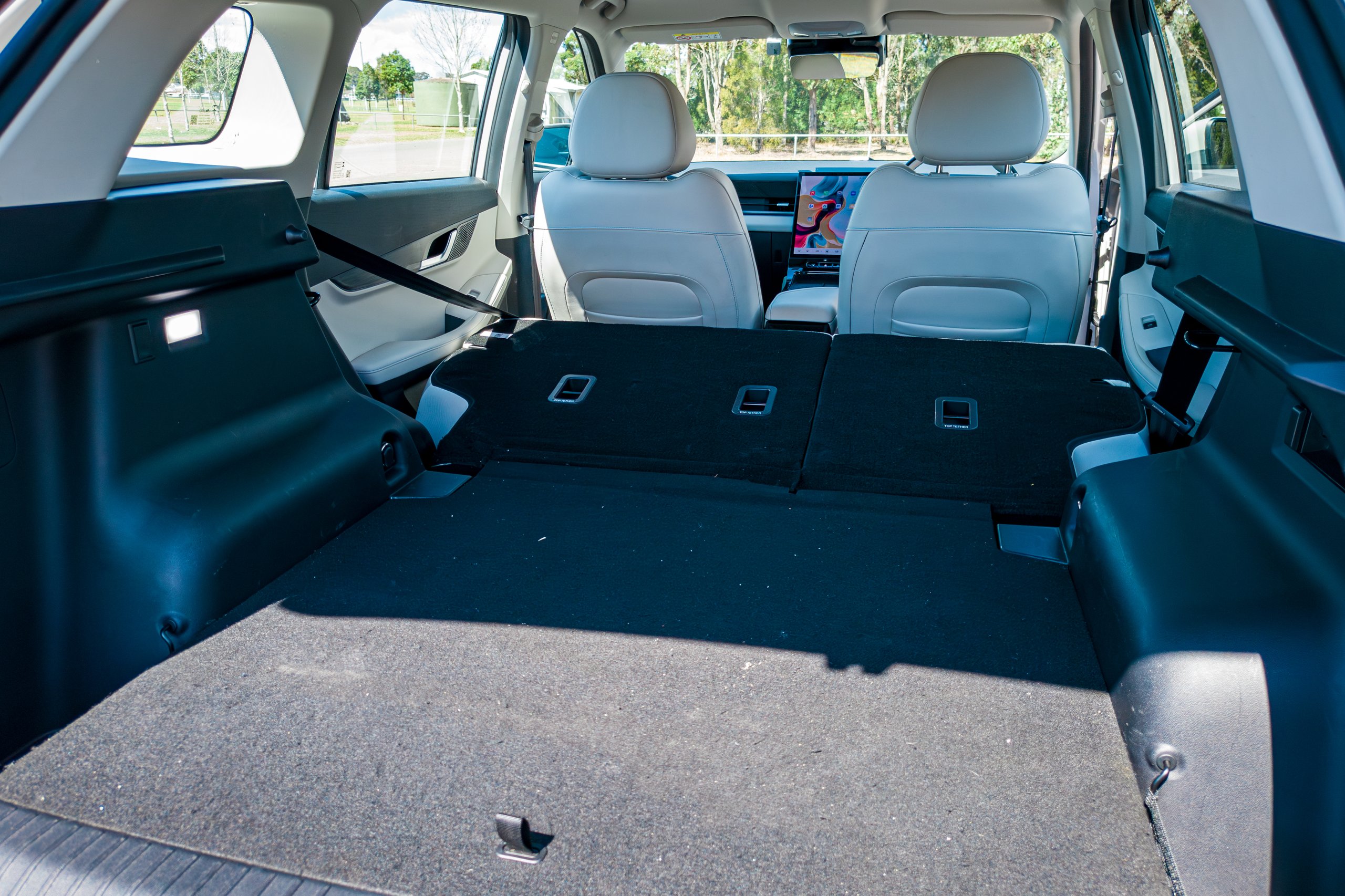
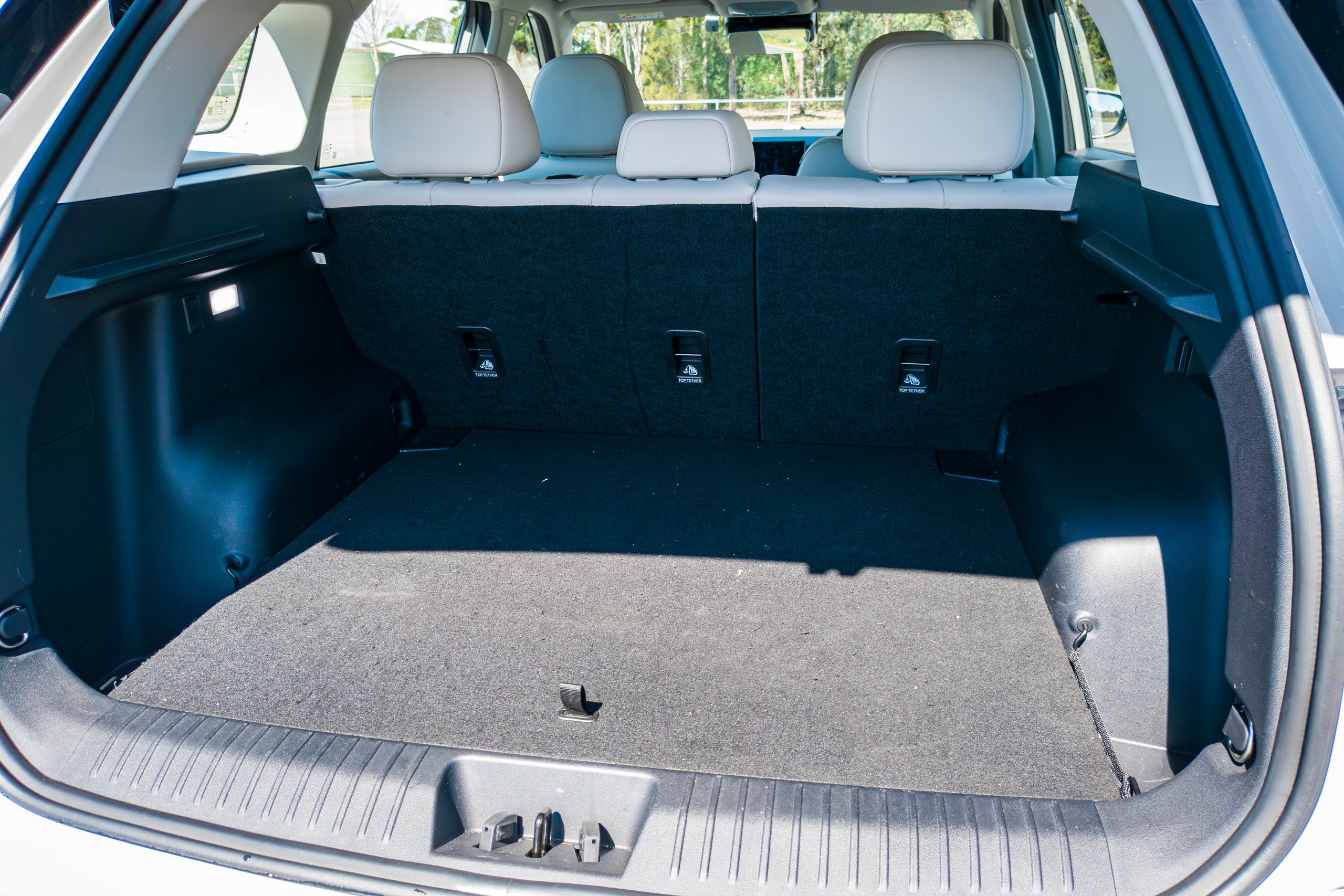
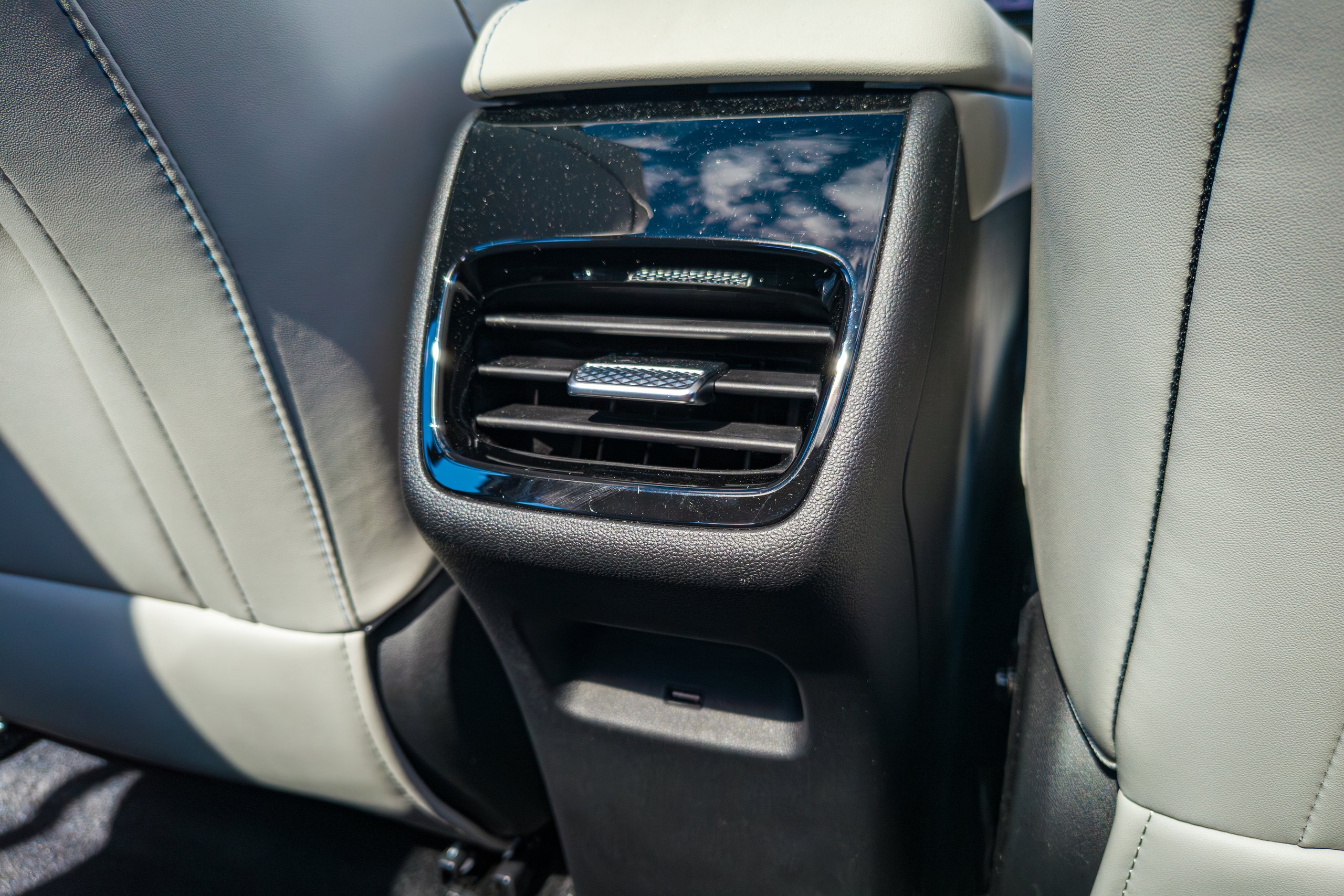
The back seat gets air vents in the console and at foot level, a USB-A port, a folding centre armrest with two cupholders, two ISOFIX points and three top tethers. Getting in behind my own driving position was a struggle, and I bumped my head jumping into the back in a hurry. It feels a bit claustrophobic back there with the front seat back fairly far, so a shorter driver’s passengers will have more room.
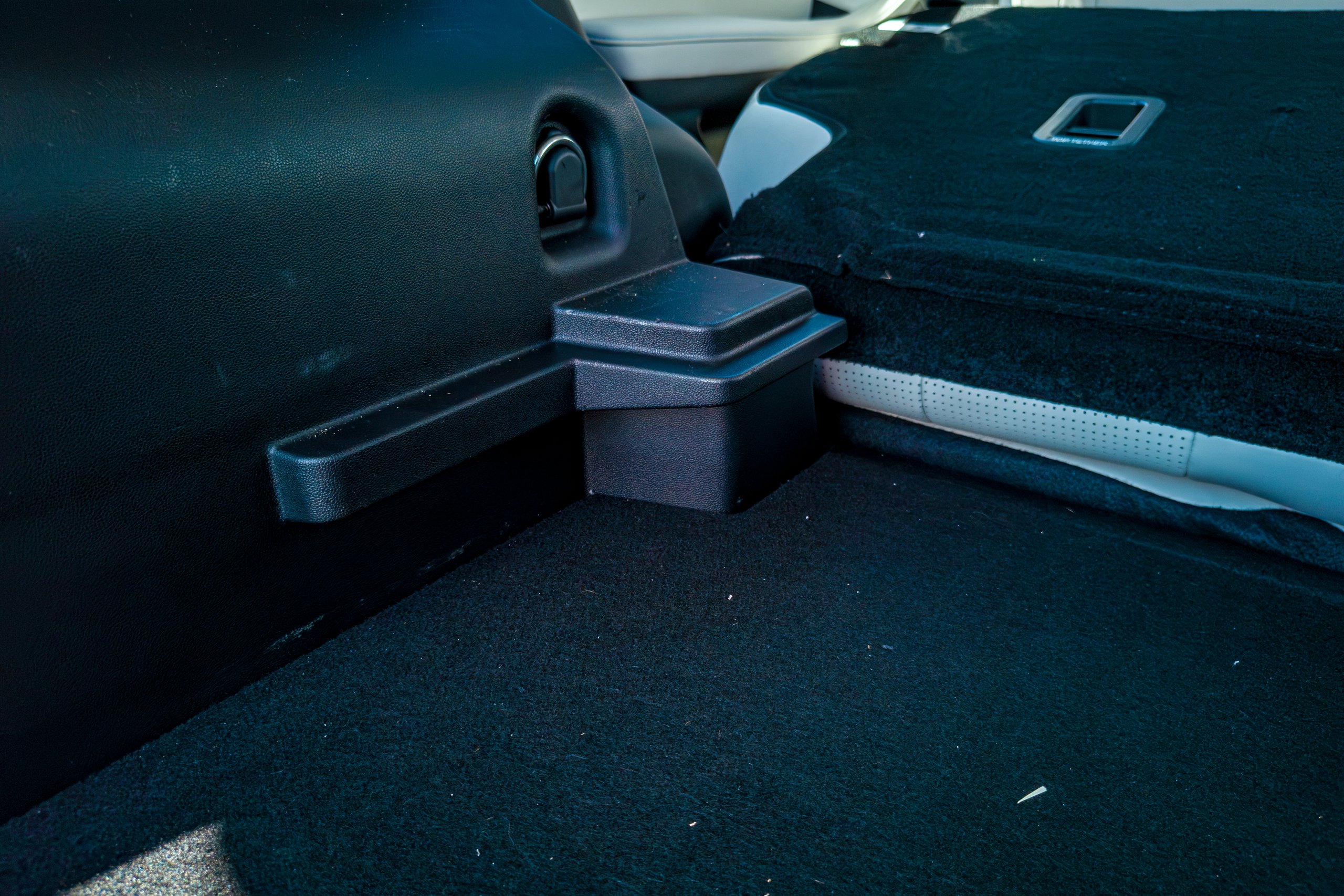
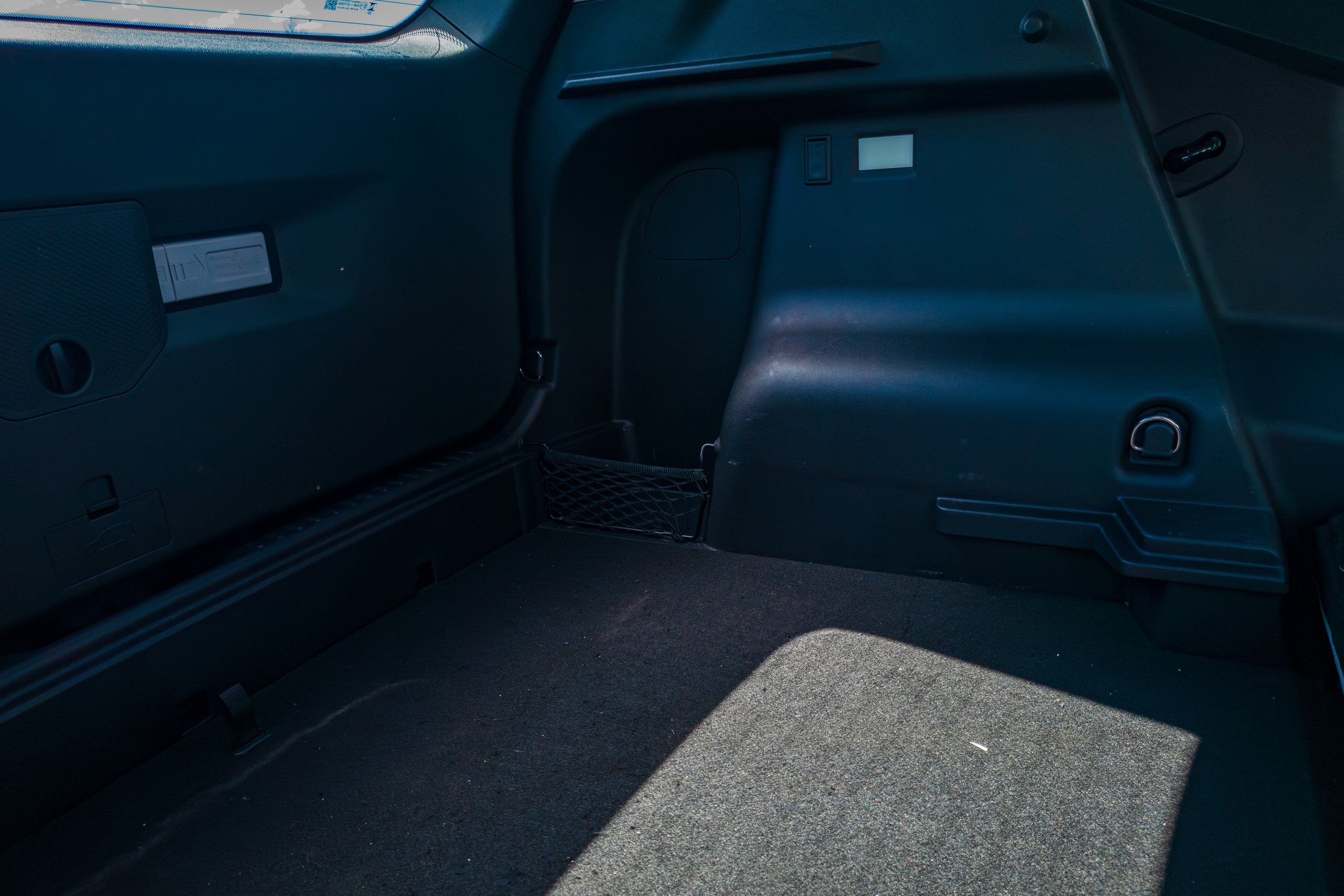
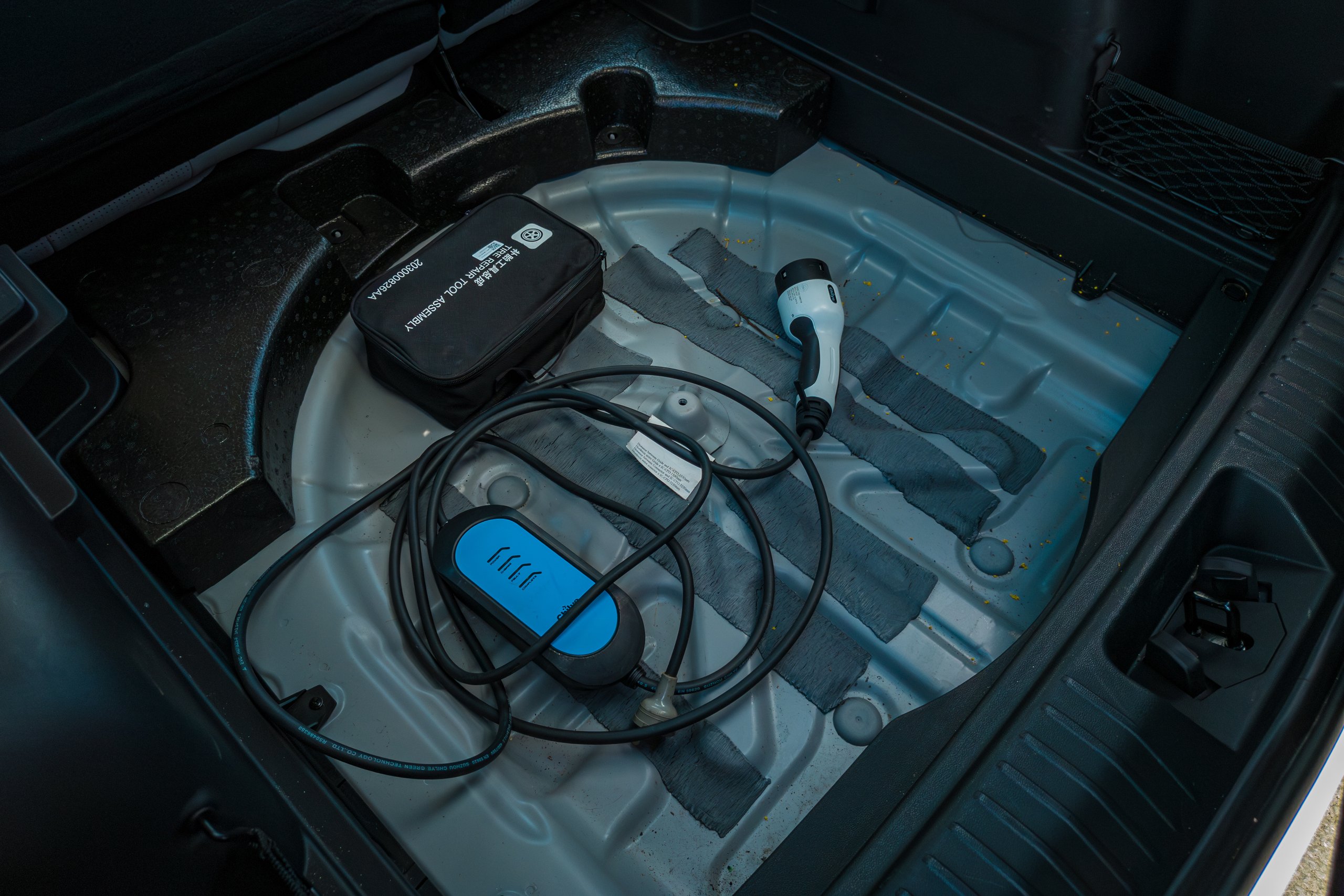
The boot is 384 litres to the cargo cover and 480 litres to the roof, with a 60:40 split, and it’s big enough that my duffle bag and backpack fit, plus a coworker’s gear. The power tailgate opens from the key and has a button on the lid for closing. There’s a tyre repair kit rather than a spare wheel, but the well under the floor looks like it could fit one, and the floor cover sits at two heights, so there’s a bit of extra space to squeeze out. Towing is 750kg unbraked or 1,250kg braked, with a 75kg towball limit.
Technology and connectivity
The aircon is done through the 13.2-inch screen, but a swipe up from the bottom brings up the quick options, so it’s easy to get to. CarPlay and Android Auto are wired and wireless, and Android Auto worked, though it dropped out about three times and once took about 15 minutes to reconnect. That’s not specific to this car, a lot of wireless Android Auto setups do it, but it happened. There’s a Hello Jaecoo voice assistant, DAB radio, Bluetooth and a 360-degree camera, which I wasn’t expecting at this price.
The aircon has four modes: smart mode as the default, rapid cooling, rapid heating and smart deodorisation. Rapid cooling is the one that works on a hot day, and the car keeps changing itself back to smart. The speakers barely do the job. There are eight of them, four speakers and four tweeters, and EDM works, but metal, which uses the highs and lows, comes out tinny. Vehicle-to-load is listed, through an adapter, but I went looking for an outlet in the usual spots inside the car and couldn’t find one, so ask about the adapter if you want it.
Highlighted Features
- Glass roof with powered sunshade: spans most of the car and is standard on the only grade.
- 360-degree camera: surround view with front and rear parking sensors, standard.
- Heated and ventilated front seats: both powered six ways, standard at $35,990 before on-road costs.
- Vehicle-to-load: household power from the battery through an adapter.
Engine and drivetrain
A single motor drives the front wheels with 155kW and 288Nm, and Jaecoo quotes 7.7 seconds to 100km/h. The battery is 58.9kWh of lithium iron phosphate under the floor, so charging to 100 percent is normal, and the claimed range is 402km WLTP. There are three regen levels and Eco, Normal and Sport drive modes, plus an Extreme Energy Saving mode below Eco that got me a few extra kilometres out of each percent.
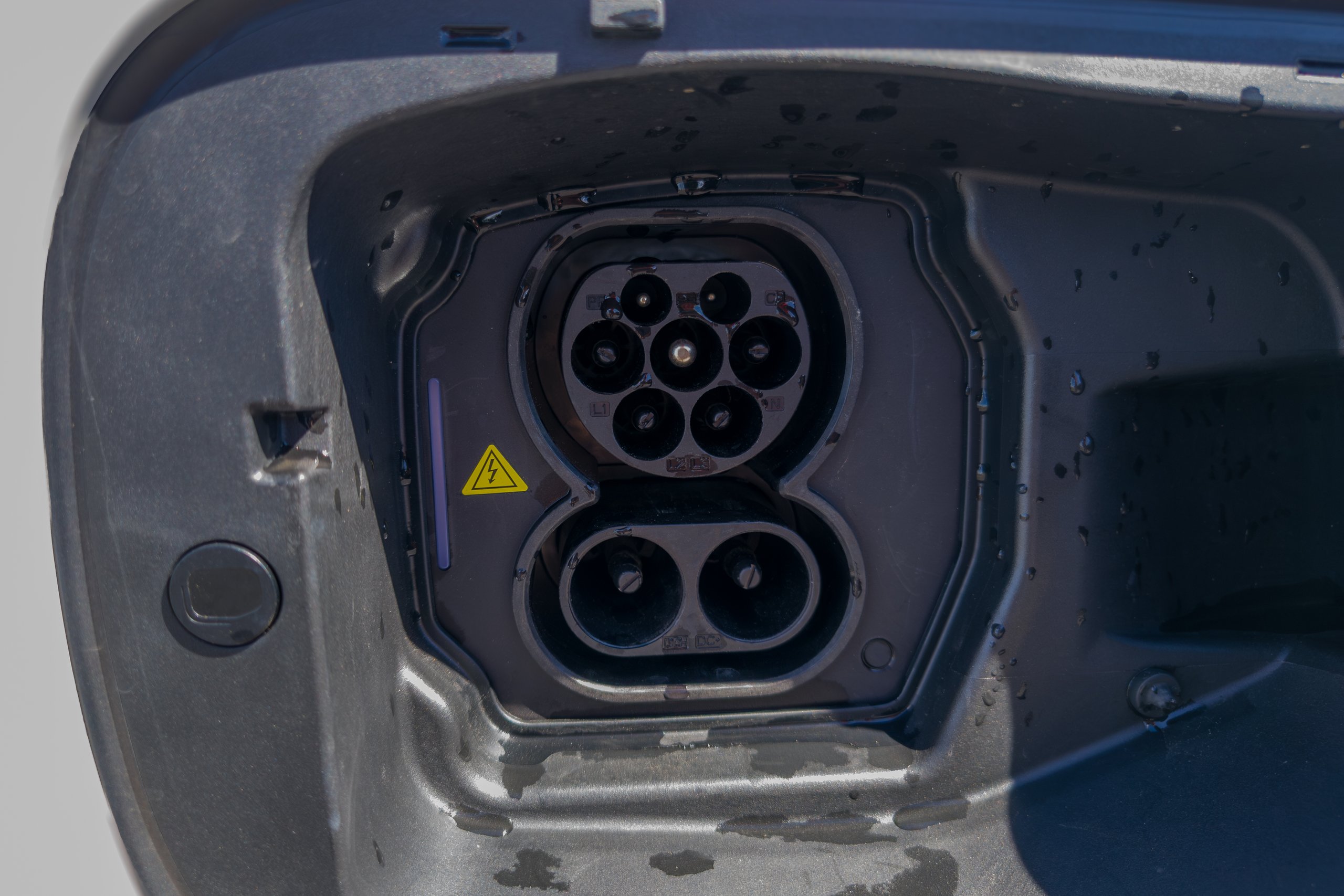
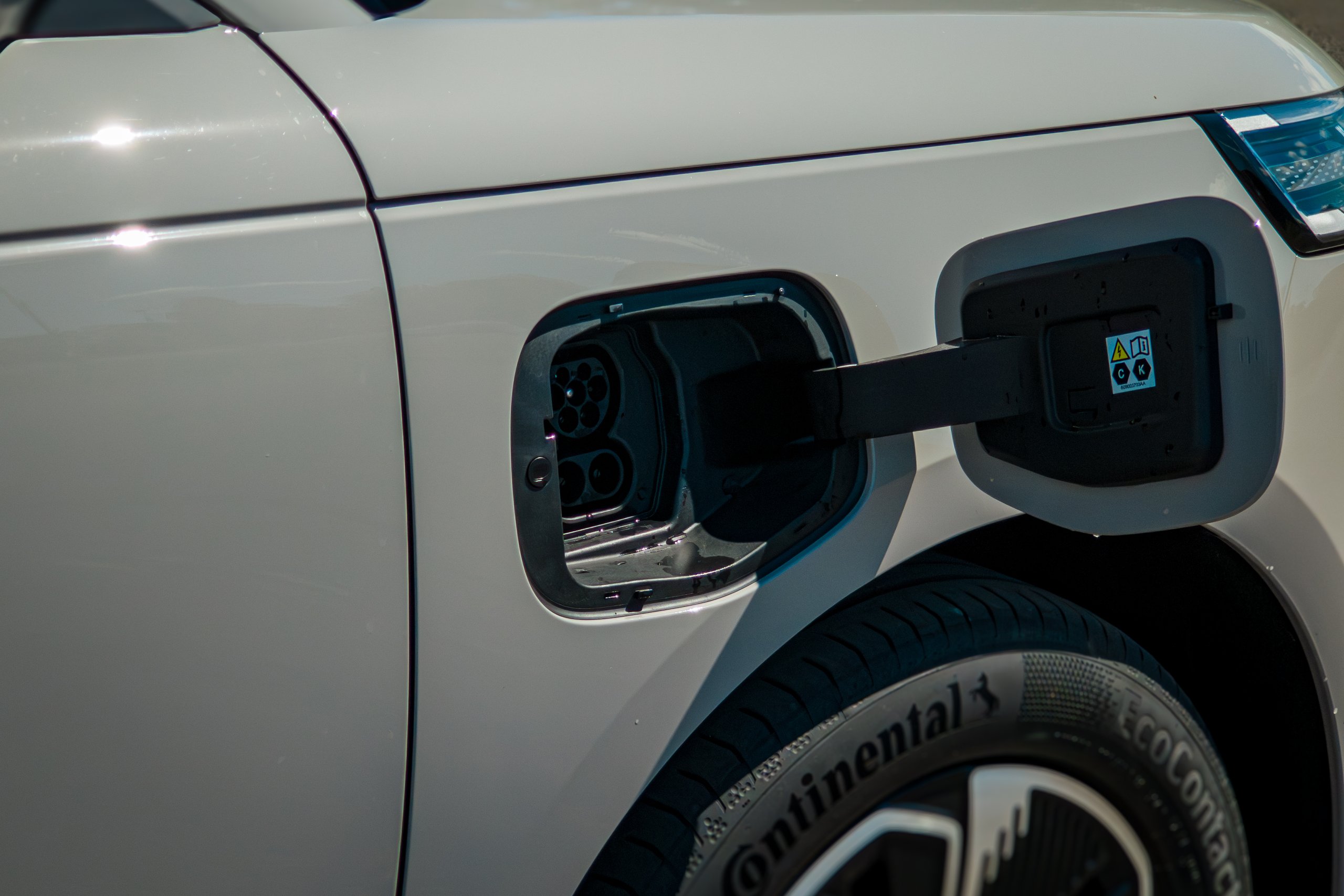
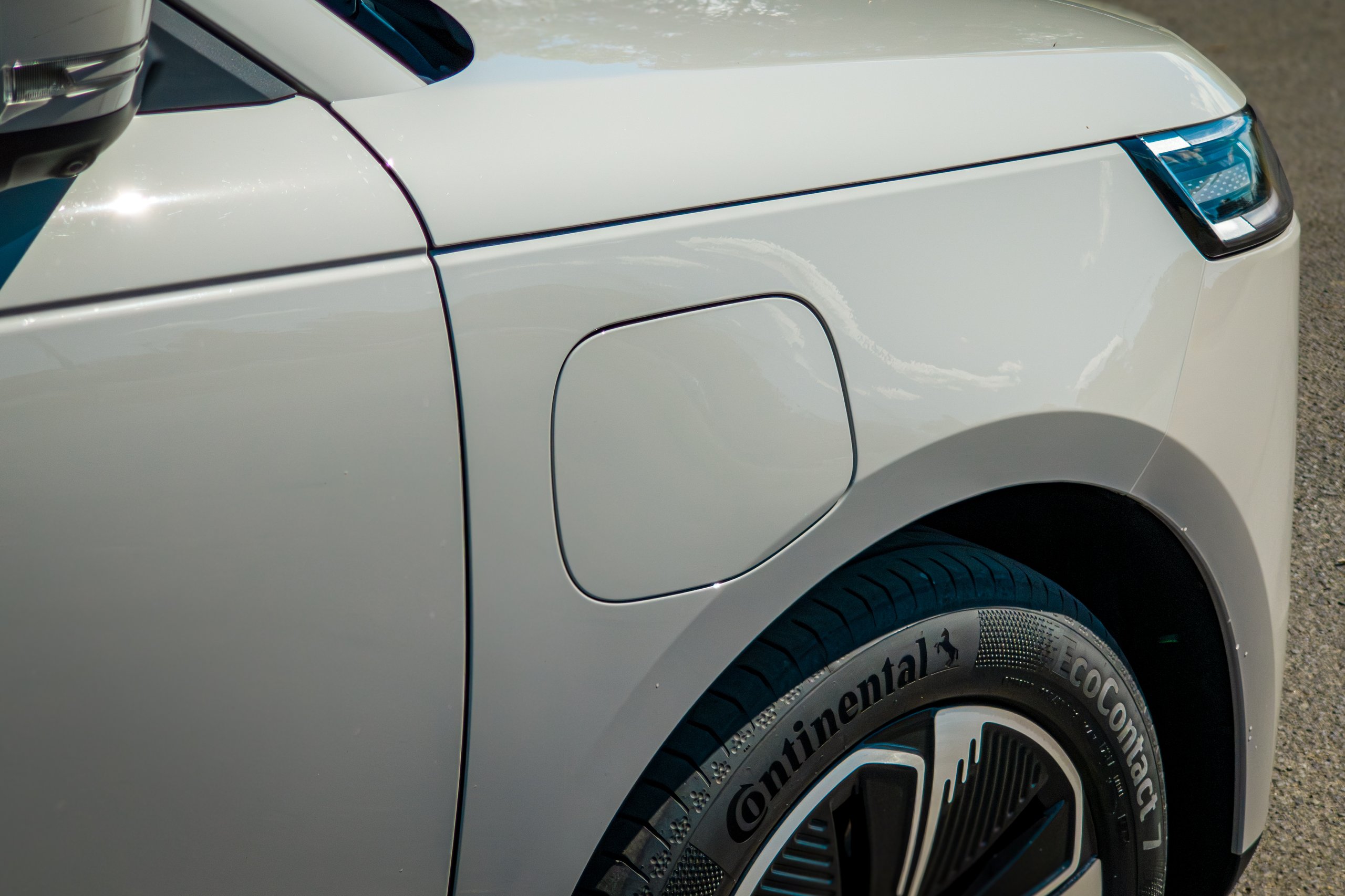
DC charging peaks at 130kW, with 30 to 80 percent claimed in about 28 minutes. I could only get to a 75kW charger, which it held the whole time, going from 9 to 30 percent in 10 minutes, so the peak went untested. AC is 6.6kW single-phase or 10.3kW three-phase, so a full charge takes around nine hours on a single-phase wallbox and a bit under six on three-phase, while at home on my trickle charger it only pulled 1.5kW, so that’s a top-up, not a full charge. The charge port is on the driver’s side front guard.
What’s the 2026 Jaecoo J5 EV like to drive?
Competent. That’s my one word for it. The ride is OK, nothing special or of note, and it does the job without feeling spongy. Road noise is there, not crazy loud but more noticeable than in other cars, and on a particularly windy day on the highway there was wind buffeting on top of it. With the aircon off there’s also a white noise from somewhere in the car. The longest single drive was home to work, about 36km of highway and normal roads, and I felt fine getting out, though it’s only 36km.
It doesn’t like to put the power down straight away, building up to it instead, and I noticed the front wheels scrabbling for traction a couple of times on a rolling start around a corner. In Sport the accelerator is a lot more touchy, which I’d expect, and the scrabbling is more obvious, but it’s surprisingly quick for the cost. The Leapmotor B10 is the closest thing I’ve driven to it, the same size and price, but it drives the rear wheels and pushes you along rather than pulling. Seeing the difference between front and rear drive in the same size car was interesting, and the J5 feels a little quicker off the mark.
The regen takes some getting used to. Even on level 1 there’s no coasting, so lift off and it starts slowing almost instantly, and you keep slight pressure on the accelerator to hold speed. On level 3 you have to be super light, because let off too much and your head rocks. It doesn’t stop the car, so it isn’t one-pedal driving. In the Extreme Energy Saving mode with level 3 regen I got a few extra kilometres per percent, but my head was rocking back and forth like I was at a concert. Level 3 slows the car with real conviction, and the passengers with it.
Is the 2026 Jaecoo J5 EV safe?
The J5 EV hadn’t been crash-tested by ANCAP at the time of writing, so it carries no rating, though Jaecoo has said it’s aiming for five stars. Seven airbags are standard: driver and passenger, two front side, a front centre airbag between the front seats and two curtains. Two ISOFIX points and three top tethers are in the back.
The driver-assist list is long, and the car is fairly relaxed with its warnings. The reverse braking is the exception, and it’s the one that stopped me in my own driveway. The driver monitoring is OK, not too intrusive, but it false flagged a couple of times and once told me off for changing the aircon, and the speed-limit chime is there, not overly loud or overbearing, with a little honking sound.
- Autonomous emergency braking, forward collision warning and multi-collision braking
- Adaptive cruise control, traffic jam assist, integrated cruise assist, lane departure warning and prevention, and emergency lane keeping
- Blind spot detection, lane change assist, rear collision warning, rear cross-traffic alert and braking, and door opening warning
- Speed limit information, speed control assist, driver monitoring, front and rear parking sensors, a reversing camera and a 360-degree camera
How much does the 2026 Jaecoo J5 EV cost?
There’s one grade, the Summit, at $35,990 before on-road costs. At the time of writing Jaecoo was running a $36,990 drive-away offer on the Summit in Stone Grey with no options. It launched in January as a first-1,000-cars deal and has been extended more than once, so check what’s current before you buy. Stone Grey is the no-cost colour and the other three cost extra. The Leapmotor B10 Design is $41,990 drive-away on its own offer, and the Kia EV3 Earth is around $63,000 drive-away, with the EV3 GT-Line dearer again.
The kit list is longer than the price suggests. Glass roof with a powered sunshade, heated and ventilated powered front seats, the 13.2-inch screen with wireless CarPlay and Android Auto, a 50W wireless charger, a 360-degree camera, a power tailgate, dual-zone climate, LED lighting, the full driver-assist suite and vehicle-to-load are all standard. There’s no options list. The price on the sign is the price, which is rarer than it should be.
How much does the 2026 Jaecoo J5 EV cost to run?
The ownership package is the strongest part of the deal. The warranty is 8 years with unlimited kilometres, and the high-voltage battery gets the same. Servicing is every 12 months or 20,000km, capped for 8 years or 160,000km at $155 and $225 alternating, which is $1,520 over the full 8 years and an average of $190 a year. Roadside assistance runs up to 8 years, one year included and renewed at each dealer service.
At the 16.4kWh/100km I saw, home charging at a typical 33 cents a kilowatt hour is about $5.41 per 100km, on a cheap overnight EV plan at 8 cents it’s about $1.31, and public DC at around 75 cents is closer to $12.30. A full charge of the 58.9kWh battery at home on the flat rate is roughly $19. Charging at home is where the savings are.
On range, 300km from 100 down to 9 percent points to about 330km in the real world rather than the 402km on the sticker. Budget on the smaller number.
| Running costs | Details |
|---|---|
| Warranty | 8 years / unlimited km |
| Battery warranty | 8 years / unlimited km |
| Servicing interval | 12 months / 20,000km |
| Capped-price servicing | 8 years / 160,000km; $155 and $225 alternating, $1,520 total (about $190 a year) |
| Roadside assist | Up to 8 years (renewed at each dealer service) |
| Claimed efficiency | Not Published (402km WLTP from 58.9kWh implies about 14.7kWh/100km) |
| Observed efficiency / range | 16.4kWh/100km; 300km from 100 to 9 percent in a commuting week |
| Energy cost | About $5.41 per 100km at home ($0.33/kWh), about $1.31 on an $0.08/kWh overnight EV plan, or about $12.30 on public DC at $0.75/kWh |
Final thoughts
It’s a solid budget EV, just try the seats and sound system first. That’s what I’d tell a mate. It’s for people looking for an entry into the EV market without breaking the bank on luxury, and the range, the running costs, the warranty and the kit are all ahead of the price. I’d be walking past if you can afford to spend more on a more refined brand.
The closest rival is the Leapmotor B10. They’re similar cars and both have their strengths: the J5 feels a little quicker off the mark, it comes with a physical key, and it’s fairly relaxed with its warnings apart from the reverse brake. The B10 just edges it out. The Kia EV3 Earth is the nicer car and a long way up the price list, and if you want smaller again, the Hyundai Inster is there for similar money. The Atto 3, the S5 EV and the EX5 are the other cross-shops at this price, and I haven’t driven them.
2026 Jaecoo J5 EV — Frequently Asked Questions
How far does the 2026 Jaecoo J5 EV go on a charge?
Jaecoo claims 402km on the WLTP cycle from the J5 EV’s 58.9kWh lithium iron phosphate battery. In our week of commuting the trip readout showed 16.4kWh/100km and the car covered 300km from a full charge down to 9 percent, which points to roughly 330km of real-world range in mixed driving.
How much does the 2026 Jaecoo J5 EV cost in Australia?
The Jaecoo J5 EV comes in a single Summit grade at $35,990 before on-road costs, which makes it one of the cheapest electric SUVs on sale in Australia. Jaecoo has run a $36,990 drive-away offer on Stone Grey cars since launch, so check what is current before you buy. The three other colours are premium paint at extra cost.
How long does the Jaecoo J5 EV take to charge?
Jaecoo claims 30 to 80 percent in about 28 minutes on a DC charger that can deliver its 130kW peak. In our week a 75kW charger took the battery from 9 to 30 percent in 10 minutes. On AC the onboard charger runs at 6.6kW single-phase or 10.3kW three-phase, so a full charge on a home wallbox takes around nine hours single-phase or a bit under six hours on three-phase.
Does the Jaecoo J5 EV have a spare wheel?
No. The Jaecoo J5 EV comes with a tyre repair kit rather than a spare wheel, and it has a tyre pressure monitoring system with a display. Boot space is 384 litres to the cargo cover and 480 litres to the roof, with a 60:40 split-fold rear seat and a power tailgate.
| Specification | Details |
|---|---|
| Model | 2026 Jaecoo J5 EV Summit |
| Model Price | $35,990 before on-road costs |
| Engine | Single permanent-magnet synchronous electric motor, front axle |
| Drivetrain | Front-wheel drive, single-speed |
| Power | 155kW |
| Torque | 288Nm |
| Battery Capacity / type | 58.9kWh, lithium iron phosphate (LFP), under floor |
| Range (WLTP) | 402km |
| Economy / efficiency | Not Published (claimed); 16.4kWh/100km observed |
| Fast Charge / Home | 130kW DC max, 30 to 80 percent in approximately 28 minutes (claimed) / 6.6kW single-phase or 10.3kW three-phase AC |
| Regenerative braking | 3 levels |
| 0-100kmh / Top Speed | 7.7 seconds (claimed) / Not Published |
| CO2 Emissions | 0g/km (tailpipe) |
| Safety | ANCAP unrated (as of August 2026); 7 airbags |
| Servicing | 12 months / 20,000km; capped price for 8 years / 160,000km ($1,520 total) |
| Warranty | 8 years / unlimited km; battery 8 years / unlimited km |
| Roadside Assist | Up to 8 years (renewed at each dealer service) |
| Specification | Details |
|---|---|
| Overall Length | 4,380mm |
| Width | 1,860mm |
| Height | 1,650mm |
| Wheelbase | 2,620mm |
| Wheels | 18-inch aero alloy |
| Tyres | 235/55 R18 Continental EcoContact 7 (tyre repair kit, no spare wheel) |
| Suspension | MacPherson strut front, multi-link rear |
| Tare Weight | 1,710kg |
| Gross Vehicle Mass | 2,185kg |
| Boot Min | 384 litres (to cargo cover) |
| Boot Max | 480 litres (to roof) |
| Towing Capacity | 750kg unbraked / 1,250kg braked; 75kg towball download |
| Turning Circle | Not Published |
| Ground Clearance | Not Published |
| Seats | 5 |
For the latest pricing and to book a test drive, head to the official Jaecoo Australia site.
The score, itemised
6.7 overall- 6.5 Behind the Wheel
- 6.5 Comfort
- 8.5 Equipment
- 6.5 Performance
- 6.5 Ride and Handling
- 8.0 Practicality
- 5.5 Fit for Purpose weakest
- 5.5 Style / Appeal
- 6.0 Technology / Connectivity
- 7.0 Value for Money